

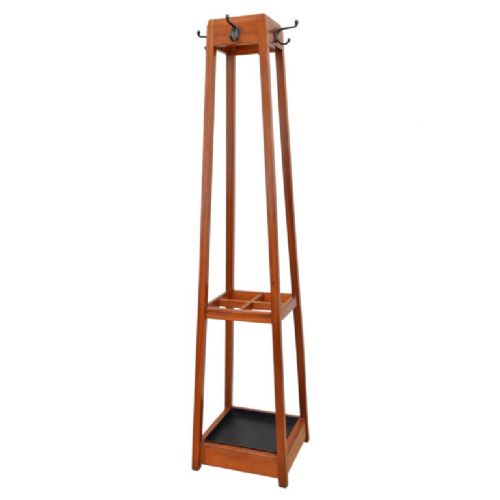
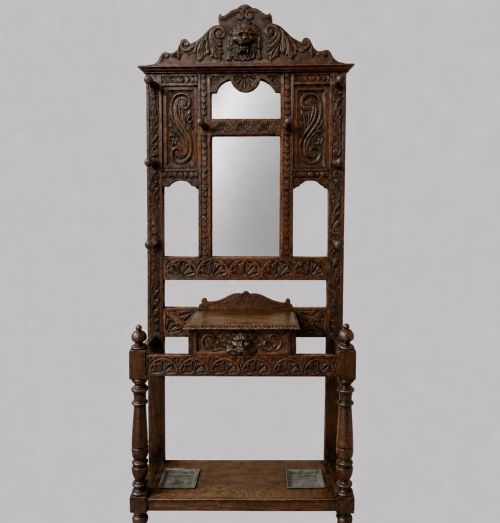

Oak Hat Stand
When choosing an oak hat stand, you are selecting a functional hallway centrepiece designed to organise daily outdoor wear.
Oak Hat Stand
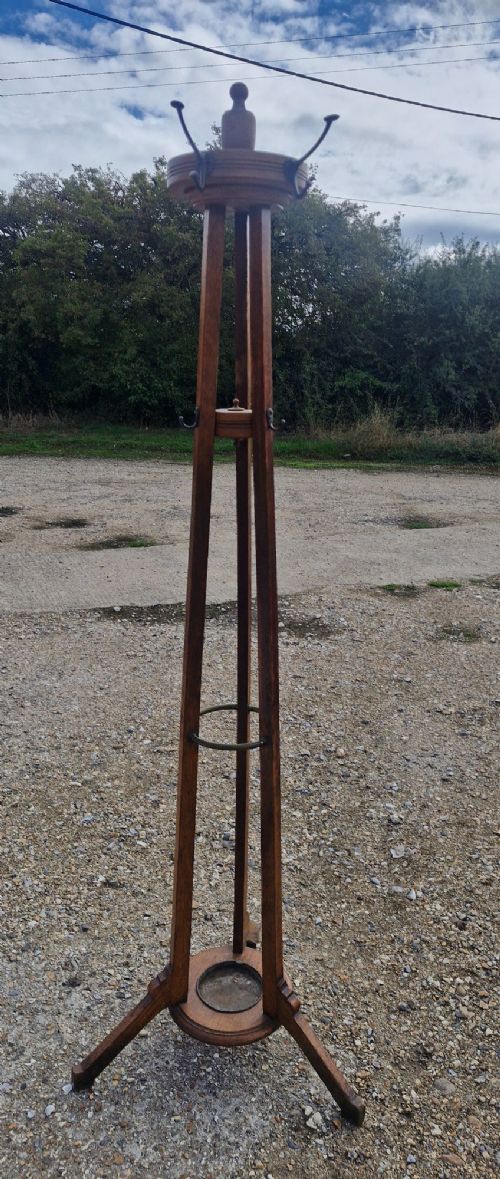
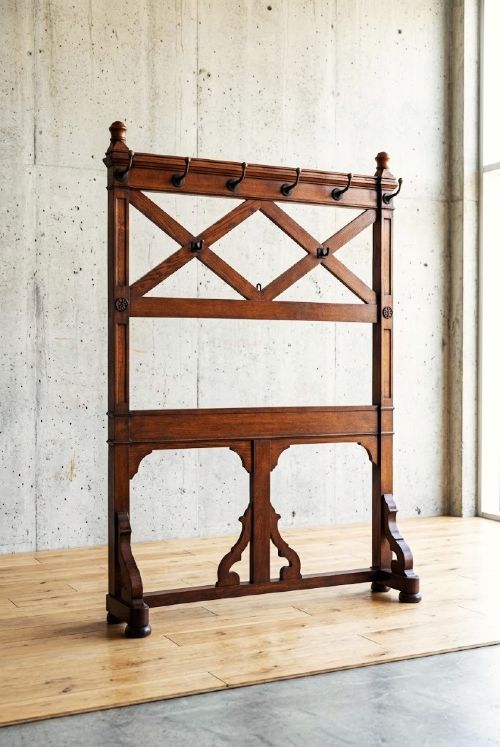
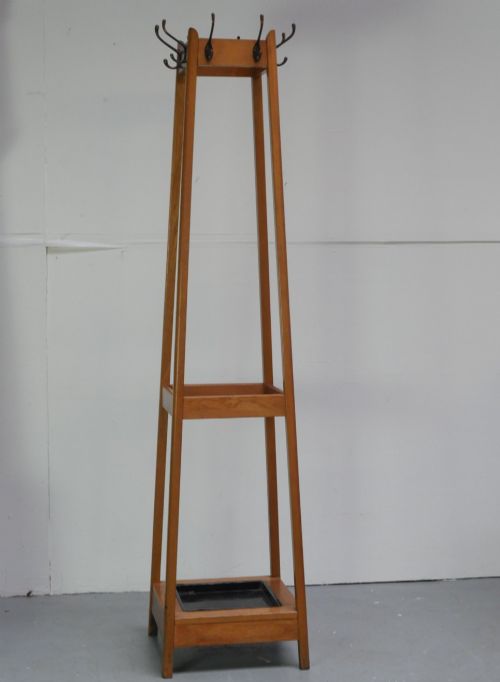
An oak hat stand serves as a traditional piece of hallway furniture combining upright timber framing with metal hooks or pegs specifically arranged for holding hats, coats, and scarves. The evidence shows that most examples encountered here date from the Victorian and Edwardian periods, stretching into the early twentieth century.
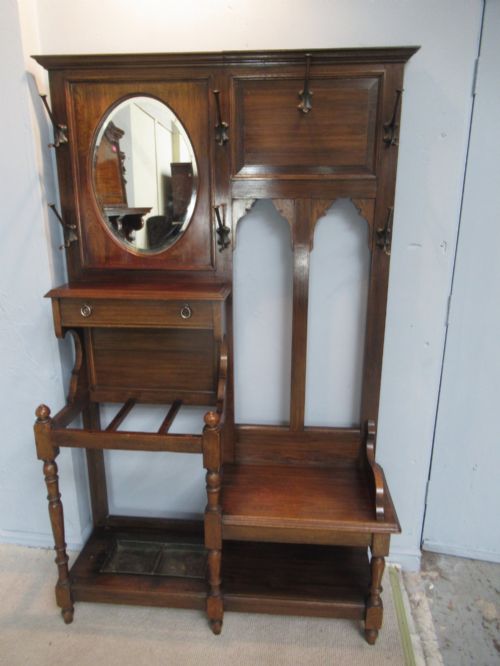
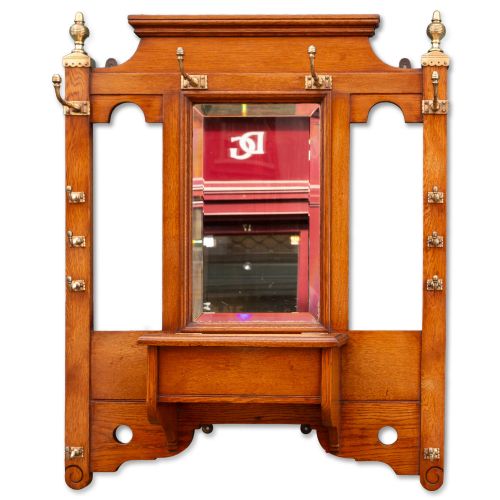
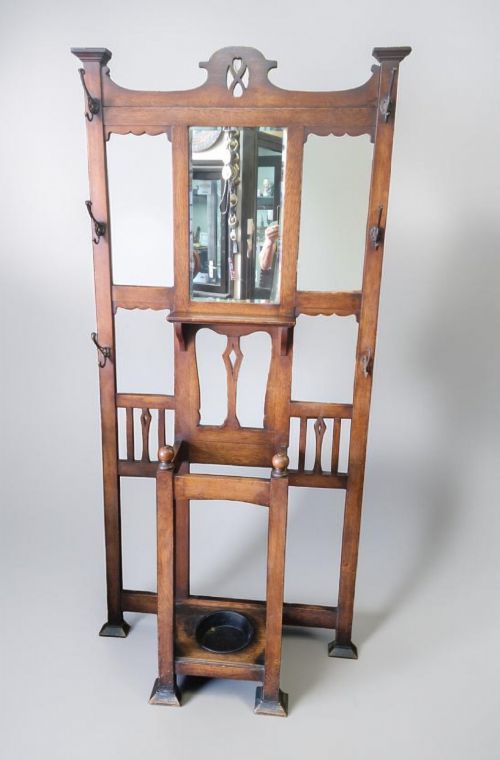
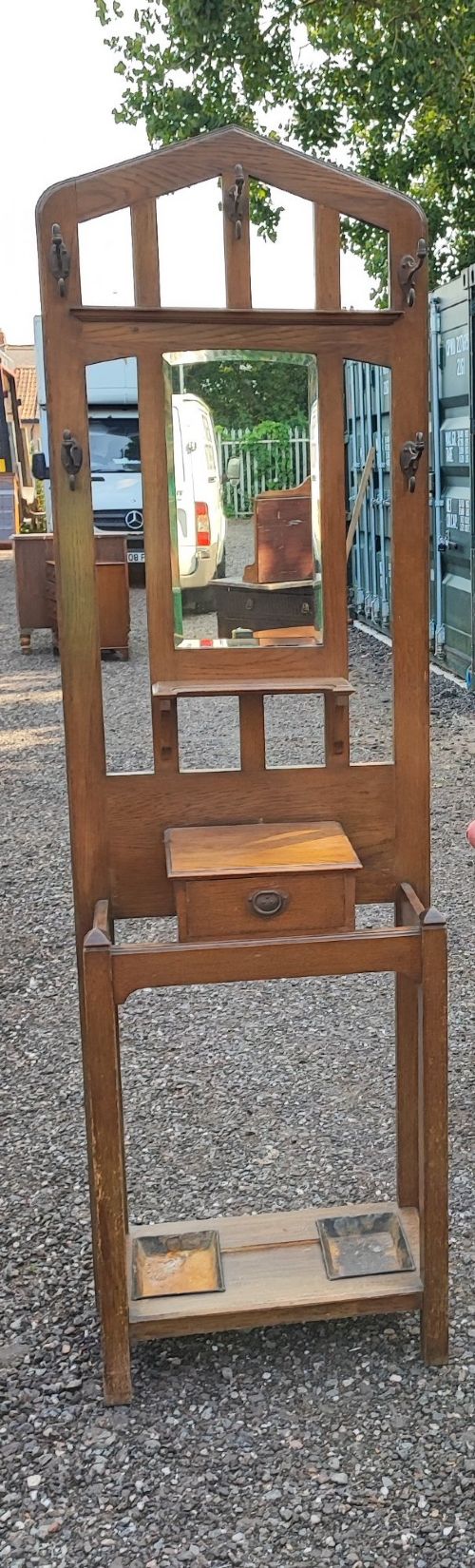
Beyond simple coat storage, these pieces frequently incorporate umbrella holders, drip trays, and central mirrors, transforming them into multi-functional hall stands. Buyers also encounter revolving tabletop hat stands and shop display milliner forms designed for small-scale interior placement.
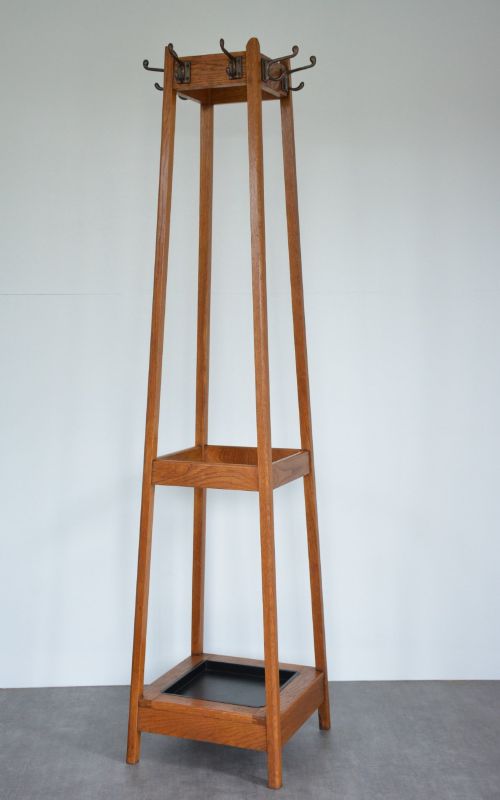
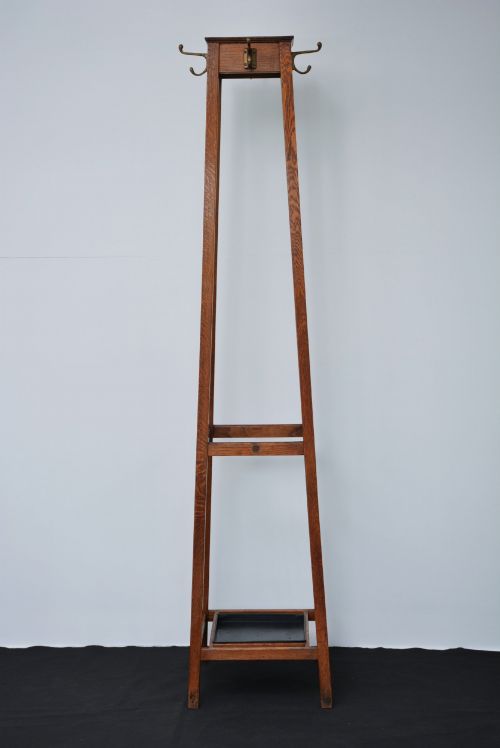
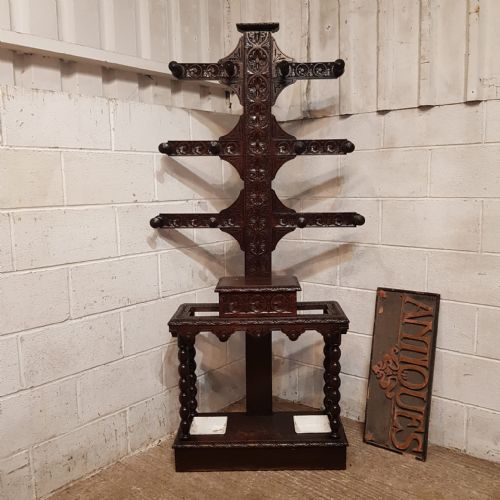
The architectural language spans plain domestic utility, heavy Gothic Revival carving, linear Arts and Crafts construction, and flowing Art Nouveau contours. This variety reflects changing domestic requirements in British hallways across the nineteenth and twentieth centuries.
How they were made
Makers built these pieces primarily using solid oak timber, frequently augmented with turned spindles, carved panels, and applied mouldings. Structural framework often relies on mortise and tenon joinery to support the weight of heavy winter garments.
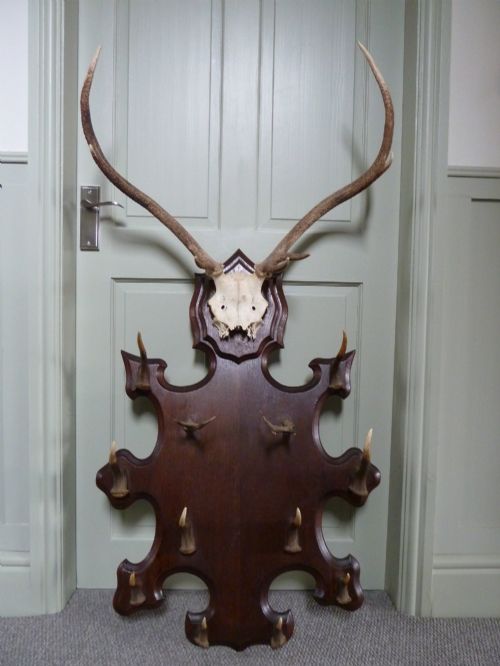
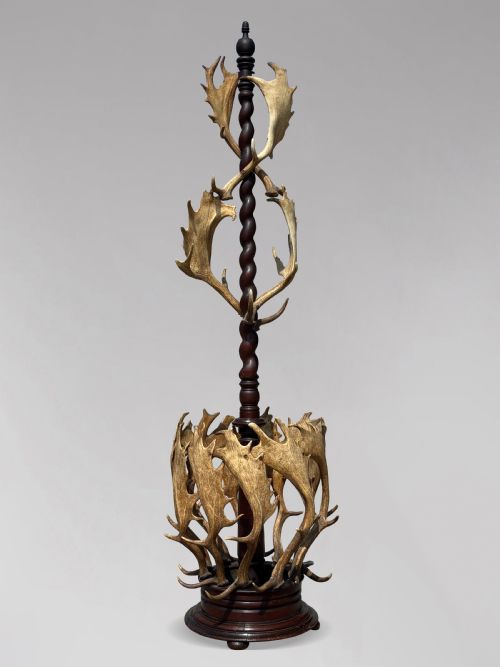
Metal components play a structural and decorative role, featuring brass hooks, cast iron drip trays, and iron umbrella rings fixed directly to the timber backboards. In specialised pieces, materials such as stag horn, cow horn, and carved wood emulate natural forms or incorporate animal ornamentation like the Greenman motif.
Stags, foxes, and eagles occasionally keep watch over your coats from carved Black Forest frames.
What varies in quality
Quality reveals itself in the depth and execution of the carving, ranging from crisp hand-cut Greenman masks and foliate panels to simple machine milling. Heavier construction timbers and well-balanced proportions separate substantial country house hall stands from lighter domestic versions.
The integration of secondary materials defines the tier of craftsmanship, such as heavy brass hardware, bevelled mirror glass, and cast metal drip trays that remain fully intact. Pieces bearing maker stamps or workshop labels demonstrate documented provenance that elevates their standing.
J Parker of Woodstock·Astrola·Fischel·GW Evans
The Oak Hat Stand Glossary
- Hallstand
- A combined furniture piece incorporating hat hooks, coat pegs, a central mirror, and lower umbrella wells with drip trays. These items dominate the larger hallway furniture category.
- Revolving stand
- A rotating framework allowing users to access multiple tiers of hat and coat hooks from a single stationary base. This mechanism appears frequently in Edwardian examples.
- Drip tray
- A removable metal basin positioned at the base of a stand to catch water from wet umbrellas. These trays are usually constructed from iron or brass.
- Milliner form
- A wooden display block shaped to hold hats or wigs in a shop setting. These smaller items differ fundamentally from full-height hall furniture.
- Greenman
- A carved decorative motif depicting a human face emerging from or entwined with foliage. This motif appears frequently on Victorian carved oak panels.
Oak Hat Stand: Frequently Asked Questions
What is an oak hat stand?
An oak hat stand is a piece of entrance hall furniture designed to store hats, coats, and umbrellas. These items combine timber uprights with metal hooks and built-in trays.
They range from large hall pieces with mirrors to small revolving tabletop versions used in domestic interiors.
How do I date an oak hall stand?
Dating relies upon stylistic markers, construction methods, and material choices evident in the framework. Victorian examples often feature heavy carvings and mirror frames, while Edwardian pieces lean towards lighter Arts and Crafts or Art Nouveau lines.
Makers' marks or labels found on the timber provide precise chronological reference points.
Where were these pieces used?
These items stood primarily in the entrance halls of British homes to receive outdoor garments upon entry. Their layout allowed visitors and residents to deposit hats, walking sticks, and wet umbrellas immediately.
Some smaller variations served commercial functions inside hat shops and millinery displays.
How do I care for antique oak?
Antique oak benefits from stable indoor humidity and protection from direct sunlight or strong heat sources. Regular dusting preserves the surface finish without requiring heavy chemical polishes.
Metal hooks and brass drip trays require occasional light cleaning to prevent tarnish accumulation on the hardware.