



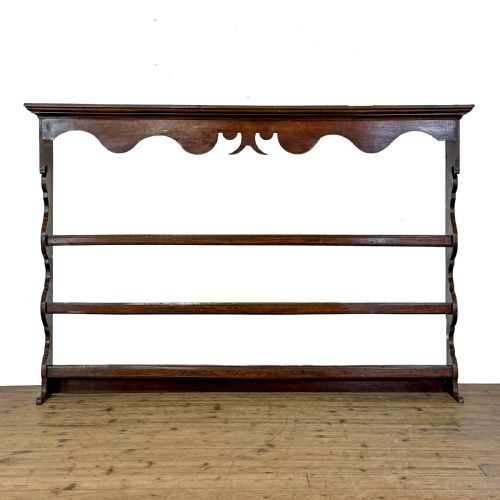


Oak Hanging Plate Shelves
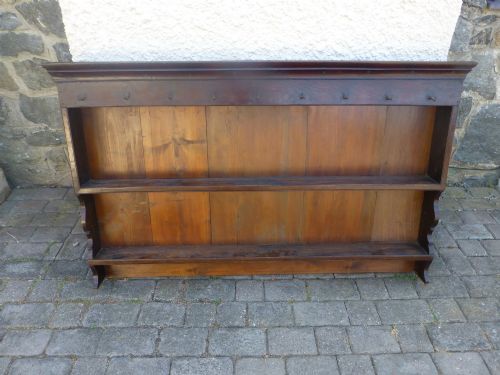
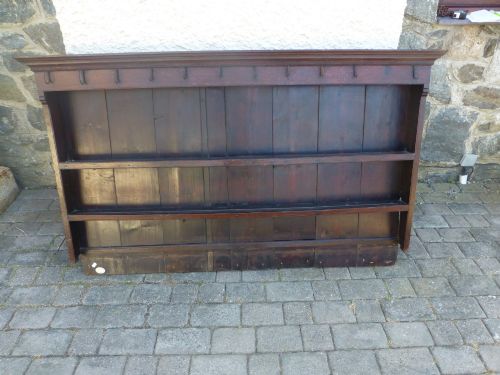
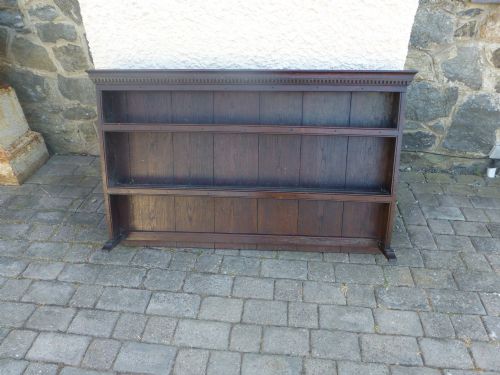
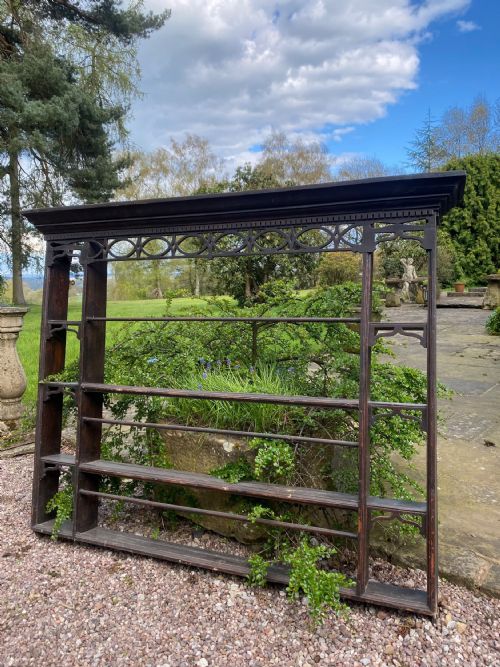
These oak hanging plate shelves are sturdy wall-mounted storage pieces designed to display ceramics securely while saving floor space.
Oak Hanging Plate Shelves
When searching for oak hanging plate shelves, buyers encounter practical wooden racks designed to mount directly onto walls for the display and storage of ceramics. These items primarily date from the seventeenth, eighteenth, and nineteenth centuries, reflecting long-standing domestic traditions.
The versions most commonly met on this page are eighteenth-century Georgian examples and delft racks, often constructed as components once associated with larger dressers. Wall shelves and plate racks from the nineteenth century also appear regularly, offering simpler profiles or revival styles.
Originating largely from English country houses and vernacular workshops, these pieces combine functional timber framing with open shelving suited for plates, platters, and decorative dishes. Their straightforward construction makes them enduringly practical for modern interiors seeking traditional storage.
Materials and construction
Makers relied primarily on solid oak, sometimes stained or left in its natural state, supplemented occasionally by mahogany for distinct colour variation. Iron and brass fixings or hardware appear structurally to secure the hanging elements and support the framework against walls.
Construction techniques centre on traditional joinery suitable for weight-bearing wall furniture, utilising plank construction and pegging. Surfaces show the marks of hand-tooling and historical carving, particularly on seventeenth-century and Gothic Revival or Arts and Crafts variants.
Oak Hanging Plate Shelves Retail Price Guide 2026
Typical asking prices for oak hanging plate shelves among the pieces listed under this phrase on Sellingantiques today, from the lower quarter to the upper quarter. They describe what is for sale here now, not the wider market.
Many an eighteenth-century plate rack carries the faint ghost-groove of a thousand Sunday dinners scrubbed into the oak by generations of scouring.
Assessing quality and character
Quality in these wall fixtures rests on the integrity of the timber, the depth of patination, and the proportion of the shelving tiers. Finer pieces display crisp architectural mouldings or hand-carved detailing that elevates utilitarian storage into decorative woodwork.
The condition of the original hanging points and the retention of uncompromised backboards distinguish superior examples from heavily altered or later assembled rack components. Timber selection and surface preservation further define the distinction between standard vernacular items and exceptional period survivals.
The Oak Hanging Plate Shelves Glossary
- Delft rack
- A wall-mounted wooden shelving unit specifically designed to hold earthenware plates and platters upright in grooves or behind retaining rails. These racks often formed the upper section of a larger kitchen dresser.
- Georgian
- A design period spanning the eighteenth century, characterised by classical proportions, understated elegance, and functional domestic forms. Pieces from this era often balance decorative refinement with robust construction.
- Gothic Revival
- A nineteenth-century architectural and decorative style that revived medieval forms, pointed arches, and heavy carved ornamentation. In wall shelves, this manifests as cusped details and solemn timber work.
- Arts and Crafts
- A late nineteenth-century movement emphasising hand craftsmanship, simple vernacular forms, and the natural qualities of materials. Items from this tradition reject mass production in favour of visible structural honesty.
- Patina
- The surface sheen and colour acquired by wood and metal over decades or centuries of use, handling, and exposure to light. A rich patina indicates age and gentle maintenance rather than harsh stripping.
Oak Hanging Plate Shelves: Frequently Asked Questions
How were oak hanging plate shelves used historically?
These racks served primarily in kitchens and dining parlours to store ceramic plates upright where they could dry after washing and remain visible for everyday use.
By displaying earthenware and delftware against the wall, households kept fragile tableware safe from crowded table surfaces while decorating the room.
Can these antique shelves support heavy modern plates?
Most period racks are built from solid oak and fastened with traditional joinery, making them structurally robust for standard ceramic tableware.
Buyers should ensure the wall fixings match the weight of the timber and the heavy density of historical hardwood construction.
How do I distinguish an eighteenth century rack from later copies?
Examination of the timber reveals hand-tool marks, peg construction, and natural oxidation that modern machinery cannot easily replicate.
Period pieces display consistent wear patterns around the plate grooves and hanging points that reflect centuries of domestic service.
Where should I mount a hanging plate shelf?
These shelves suit dining rooms, kitchens, or hallways where wall space allows them to function as both storage and visual display.
Secure mounting into wall studs is essential due to the combined weight of solid oak timber and heavy ceramic plates.