
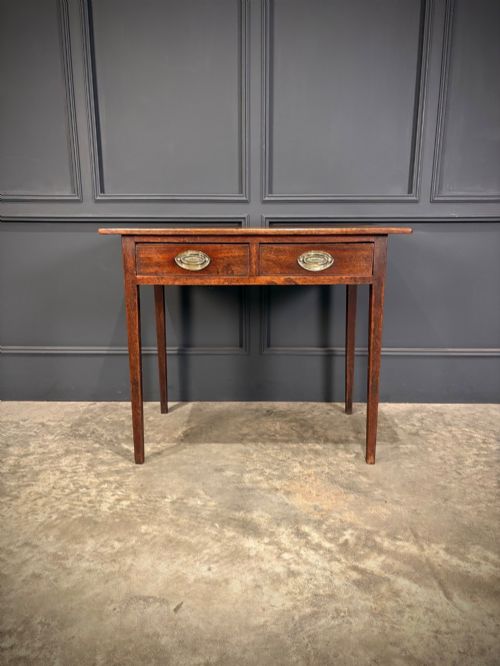
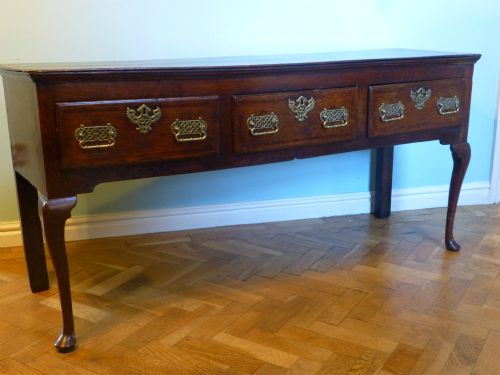


Oak Hallway Table Drawer
An oak hallway table drawer provides dependable storage and utility, bringing practical surface space and timber character to an entrance.
Oak Hallway Table Drawer
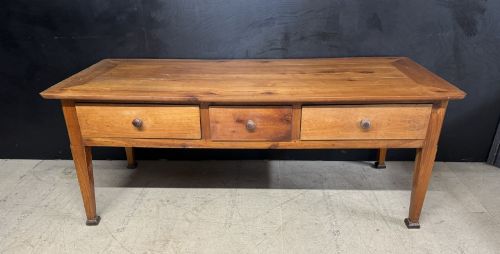
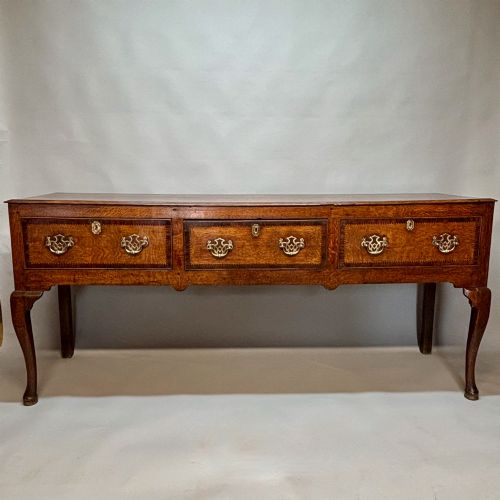
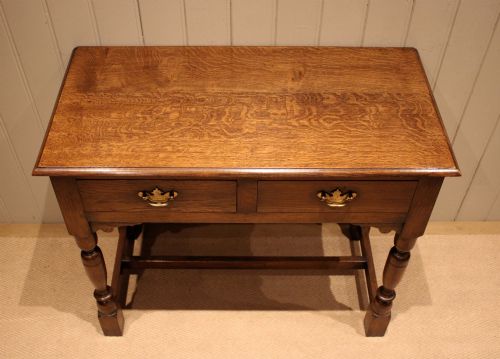
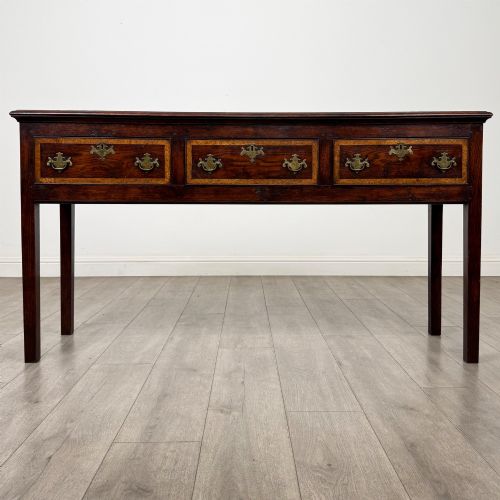
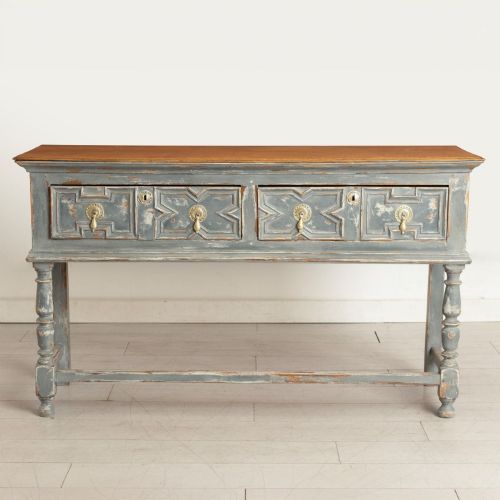
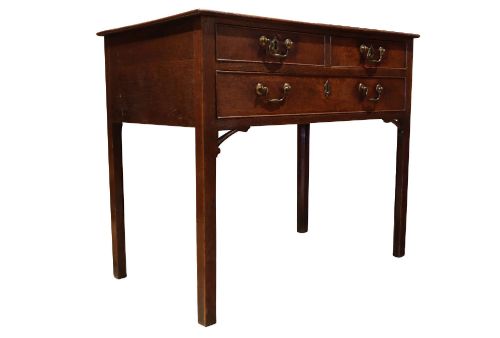
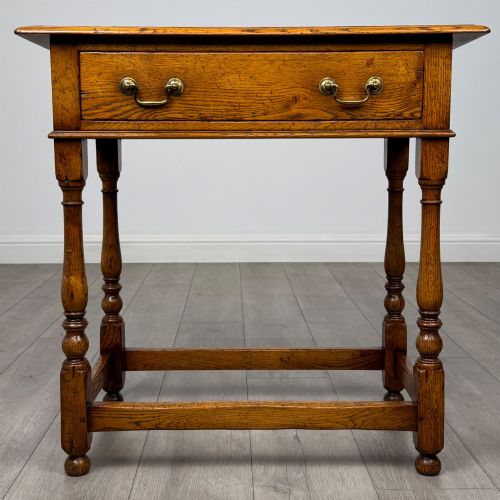
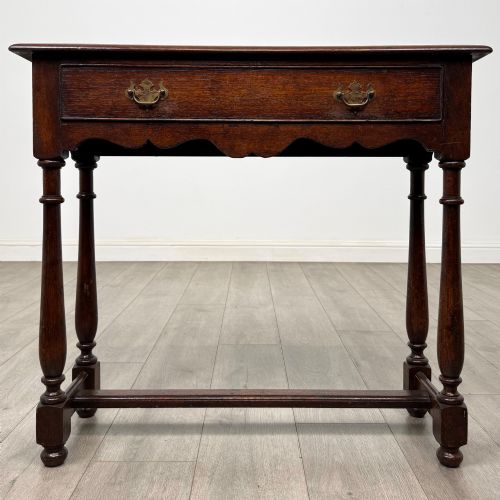
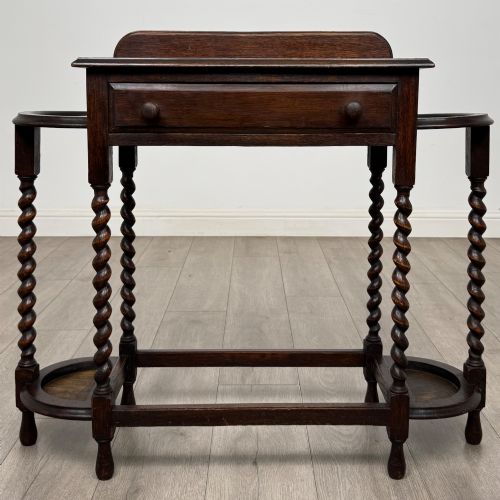
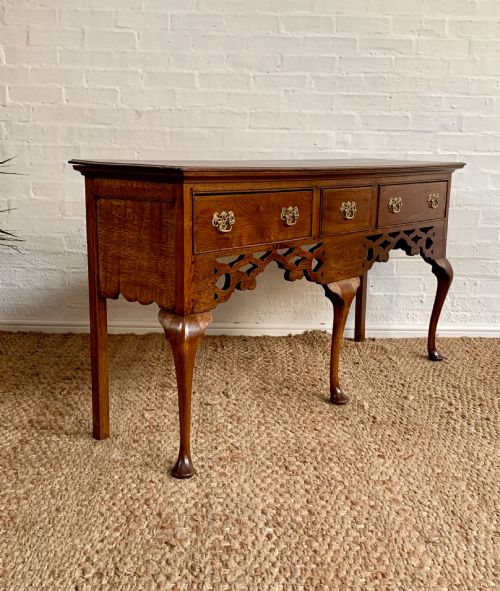
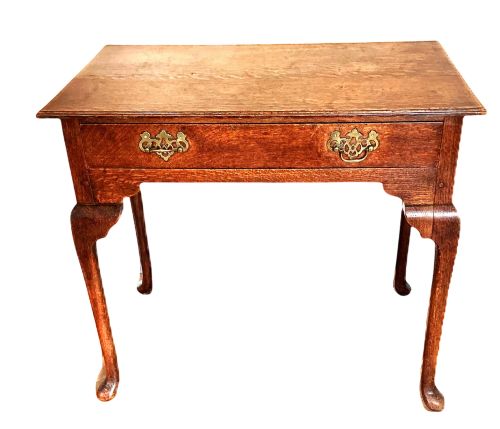
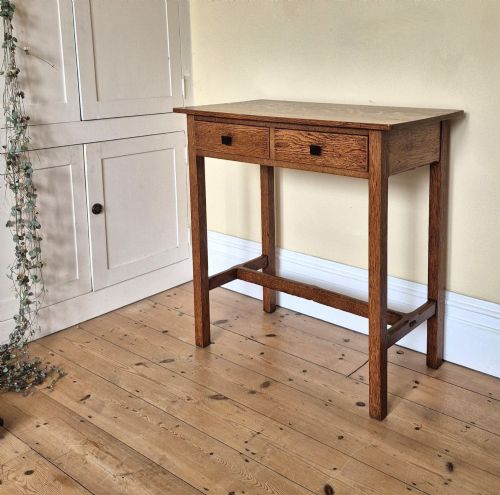
An oak hallway table drawer appears across multiple periods, ranging from seventeenth century examples to Edwardian and later twentieth century interpretations. These tables serve as lowboys, narrow side tables, dresser bases, and serving tables fitted with functional storage compartments.
The pieces listed on this page encompass styles such as Georgian, George III, Jacobean Revival, Arts and Crafts, and Gothic Revival. Vernacular regional pieces, including Welsh dresser bases, also feature among the selection.
Evaluating quality and execution
Quality rests in the integrity of the timber selection and the precision of the joinery within the drawer construction. Finer examples display balanced proportions, clean movement in the drawers, and crisp execution of carved ornament.
The presence of period brassware and the condition of the oak surfaces distinguish standard utility pieces from exceptional vernacular works. Patina accumulated across centuries adds visual depth without compromising structural stability.
Several tables stare back at visitors through carved Greenman foliage masks embedded in the oak.
Hubert Simpson of Kendal·Holland and Sons
The Oak Hallway Table Drawer Glossary
- Lowboy
- A small table with one or more drawers, standing on relatively tall legs. This form originated in the late seventeenth century and serves well as a side table or dressing surface.
- Dresser base
- A low sideboard fitted with drawers, often used for serving or storage. These pieces form a central category within vernacular British furniture.
- Bobbin turning
- A type of furniture leg or stretcher shaped like a string of bobbins or spools. This decorative turning technique appears on seventeenth century and later revival pieces.
- Greenman
- A sculptural architectural ornament depicting a human face disgorging foliage. This motif surfaces on nineteenth century Gothic Revival and carved oak furniture.
- Vernacular furniture
- Domestic objects built by regional craftsmen using local materials rather than following metropolitan London fashions. Welsh dresser bases exemplify this tradition.
Oak Hallway Table Drawer: Frequently Asked Questions
How do I choose the right size?
Measure your hallway floor space carefully, allowing clearance for doors to open past the furniture edge. Narrow side tables fit compact corridors, while wider dresser bases suit spacious entrance halls.
Consider the depth of the drawer space when planning your hallway layout. Ensure enough room remains for comfortable passage alongside the table.
What is a lowboy?
A lowboy is a small occasional table equipped with drawers and relatively tall legs. Historically used for personal grooming, it functions well as a hallway surface for keys and post.
These compact tables provide concealed storage without dominating a narrow room. Their proportions bridge the gap between a side table and a chest of drawers.
How do I date an oak table?
Examine the construction methods, drawer linings, and timber characteristics to estimate the period. Tool marks, joint types, and hardware styles offer reliable clues to the decade of manufacture.
Stylistic markers such as cabriole legs, bobbin turning, or Gothic Revival carving point to specific eras. Comparing the timber patina helps confirm age.
Can these tables handle daily use?
Solid oak construction provides durability for everyday domestic tasks. These tables are built to support lamps, decorative objects, and the constant deposition of daily items.
Routine maintenance involves dusting and occasional waxing to protect the timber surface. The robust nature of oak ensures generations of continued utility.