


Oak Hallway Mirror
An oak hallway mirror meets the practical demands of an entrance with timber frames and glass designed for daily use.
Oak Hallway Mirror
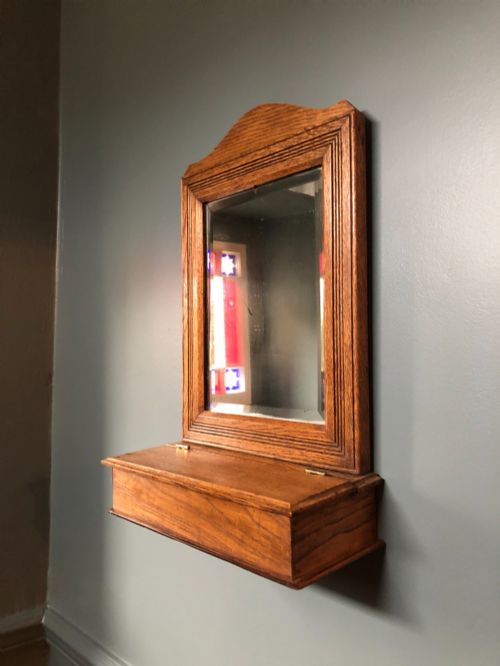
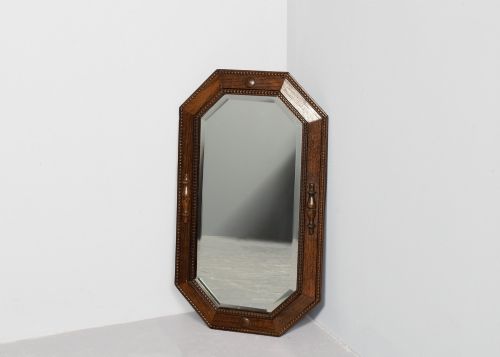
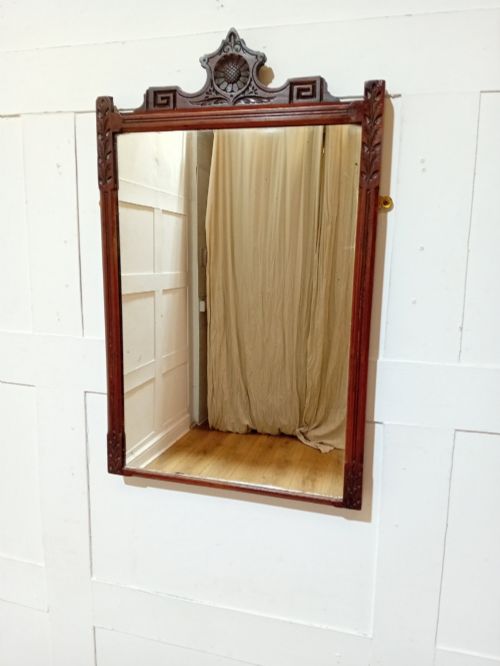
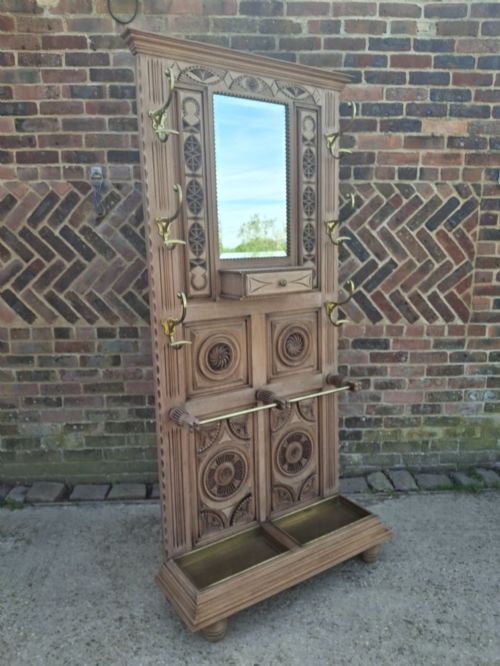
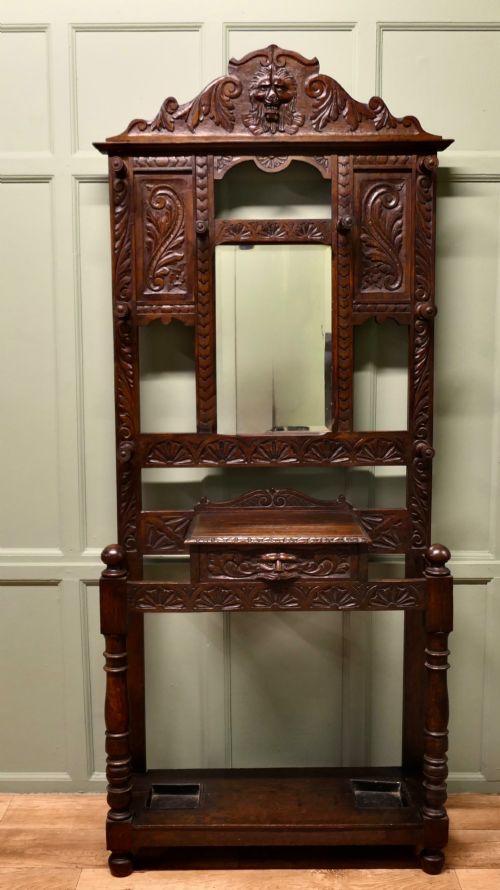
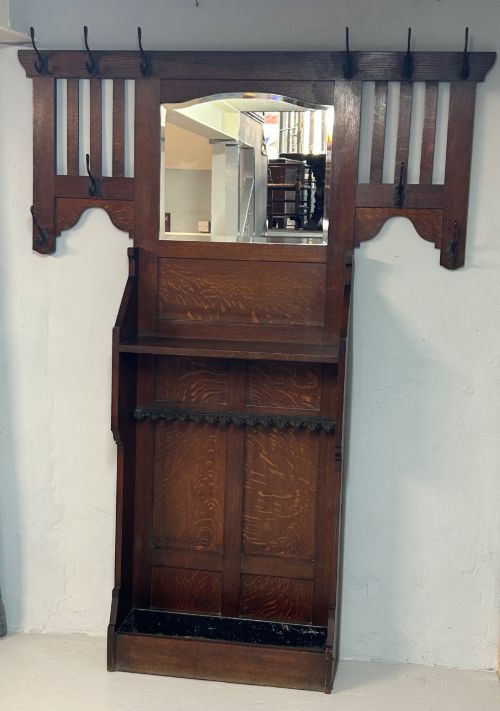
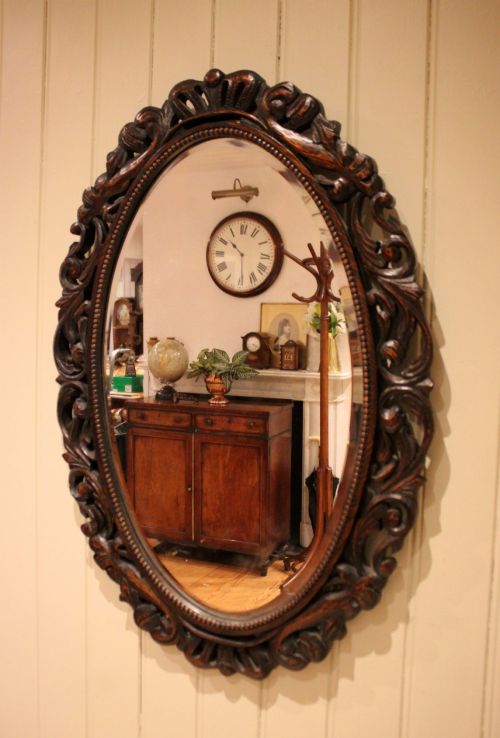
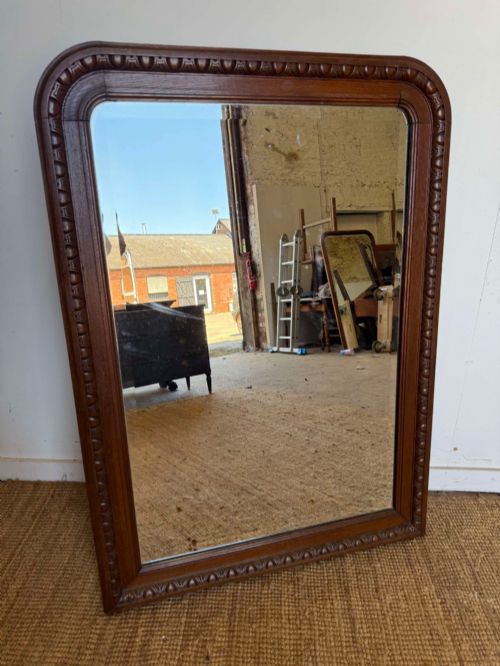
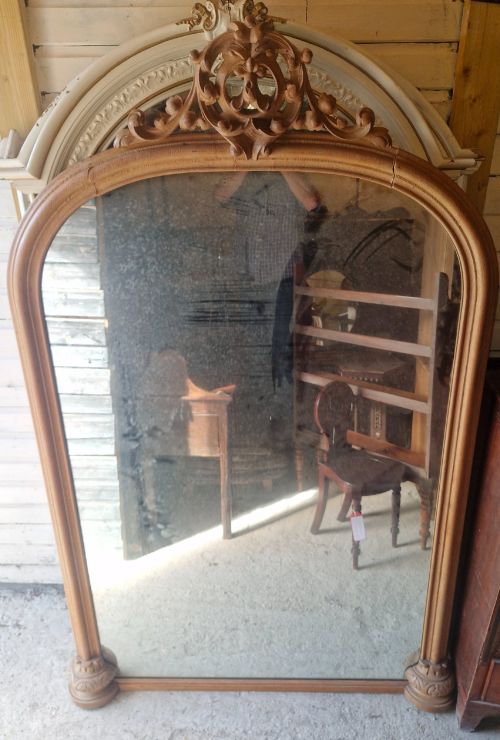
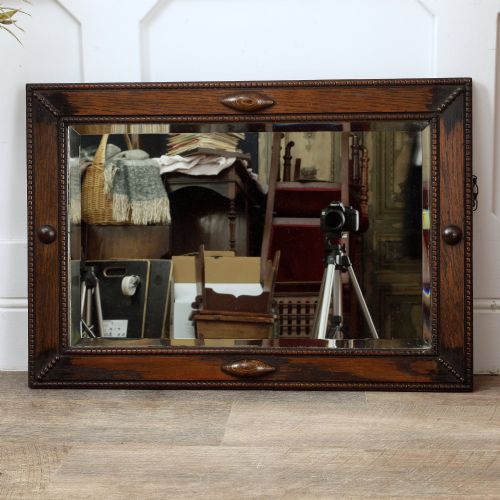
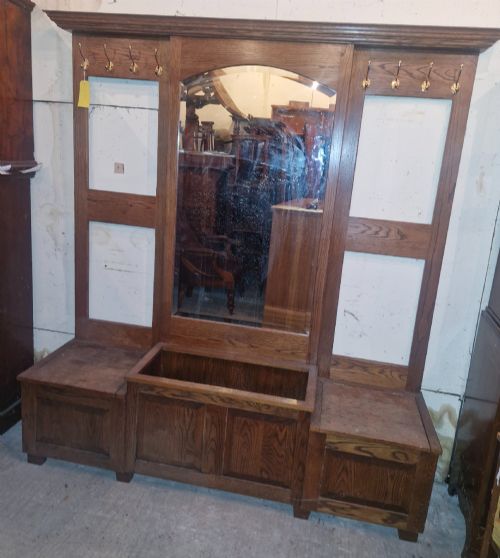
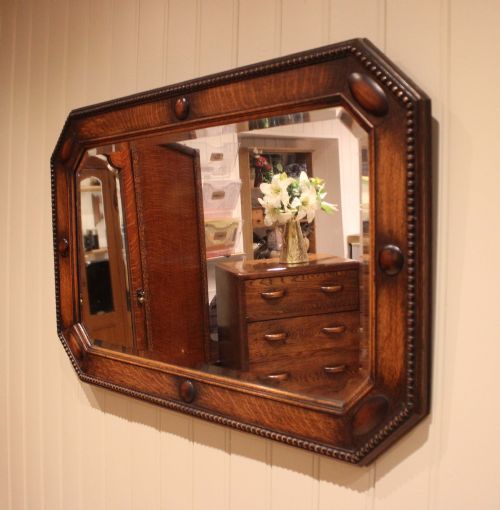
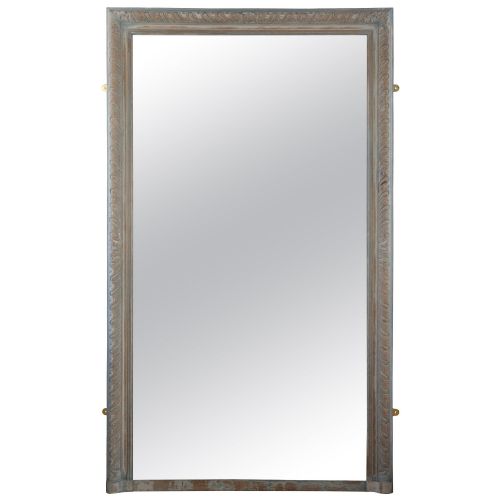
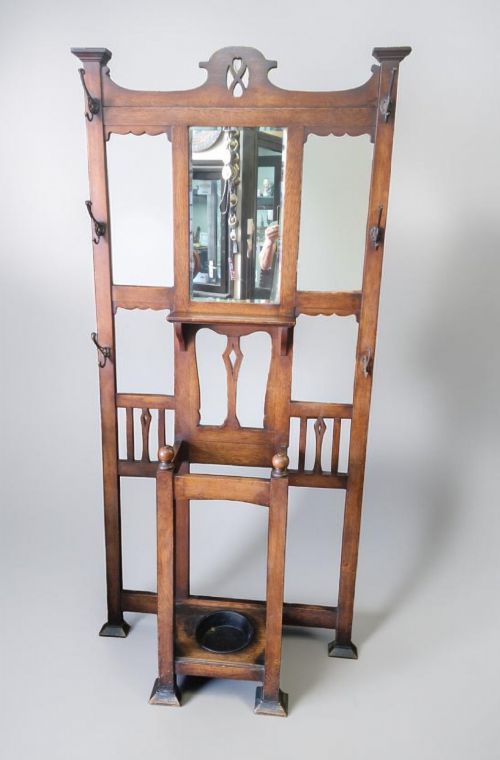
An oak hallway mirror appears in several distinct forms across this selection, ranging from simple wall-hanging frames to large multifunctional hall stands that incorporate seats, umbrella wells and coat hooks. You will frequently encounter wall mirrors featuring integrated shelves, carved panels or cushion frames alongside taller stands designed to anchor an entryway.
The periods represented span from the nineteenth century through the Edwardian era and into the early twentieth century, capturing Victorian and Arts and Crafts movements alongside Art Deco and revival styles. Victorian examples often display deep carving and egg and dart moulding, while Edwardian pieces lean towards functional utility with hat racks and key cabinets.
Most items rely on solid oak or oak frames paired with original glass plates, brass coat hooks and occasionally marble or cast iron details. Whether you select a narrow wall mirror for a compact vestibule or a substantial console combination, these pieces serve as practical focal points that reflect the character of their respective decades.
Design and execution
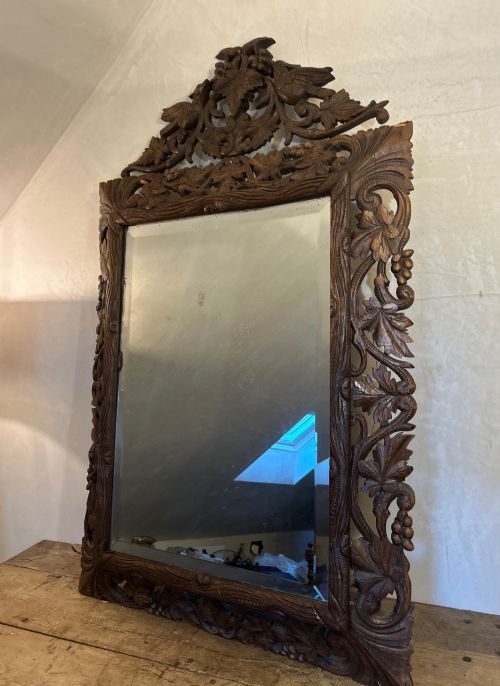
The standard of craftsmanship is evident in the depth and clarity of the timber carving, where crisp lines on a cushion frame or floral motifs on an Art Nouveau panel distinguish finer work from simpler production. Superior examples maintain structural integrity in their joints and support substantial weight on integrated coat hooks without warping the oak frame.
Originality of components dictates much of the standing within this range, particularly the retention of matching brass hooks, untouched mirror glass and matching drip trays on hall stands. Pieces that preserve their complete hardware and uncompromised timber finishes represent the stronger end of the selection.
Oak Hallway Mirror Retail Price Guide 2026
Typical asking prices for oak hallway mirror among the pieces listed under this phrase on Sellingantiques today, from the lower quarter to the upper quarter. They describe what is for sale here now, not the wider market.
The listings span from the mid-nineteenth century through the Edwardian era, featuring oak, brass, marble and cast iron across wall mirrors and hall stands.
The Oak Hallway Mirror Glossary
- Cushion frame
- A convex or rounded wooden moulding surrounding a mirror plate, popular in various nineteenth-century designs. This profile adds tactile depth and catches light across the timber grain.
- Hall stand
- A composite hallway furniture piece combining a mirror, coat hooks, umbrella stands and sometimes a small bench or storage compartment. These multi-functional items organise an entryway.
- Egg and dart
- An ornamental moulding pattern alternating oval egg shapes with pointed dart motifs, frequently seen on Victorian and revival frames. This classical detail provides formal definition to the edge of a mirror.
- Arts and Crafts
- A design movement prioritising traditional craftsmanship, visible grain and simple structural honesty over industrial mass production. Pieces from this tradition often feature golden oak and minimal ornamentation.
- Bevelled glass
- A mirror plate with an angled, polished edge that creates a prismatic border. This technique adds a refined finish to the reflection.
Oak Hallway Mirror: Frequently Asked Questions
How do I hang a heavy oak wall mirror safely?
Heavy oak frames require secure fixings screwed directly into wall studs or heavy-duty masonry plugs to support the substantial weight of the timber and glass.
Using a sturdy picture wire or a split batten system ensures the piece remains stable against the wall in a busy hallway.
Were all these mirrors originally made for hallways?
Many pieces served dual purposes in period homes, functioning as cloakroom mirrors, bathroom shaving cabinets or overmantel glass alongside their hallway duties.
Added shelves, key boxes and coat hooks indicate spaces where visitors removed outerwear and hats upon entry.
How do I care for antique oak frames?
Maintain the timber by dusting regularly with a dry cloth and occasionally applying a quality beeswax to nourish the dry oak surface.
Avoid commercial liquid polishes that build up residue and keep the mirror away from direct heat sources that might cause the wood to split.
How do I tell Victorian from Edwardian pieces?
Victorian examples tend to feature darker finishes, heavier carved mouldings, and formal revival styles like Jacobean or Rococo.
Edwardian designs often appear lighter in tone, incorporating simpler lines influenced by Arts and Crafts principles or practical utility.