
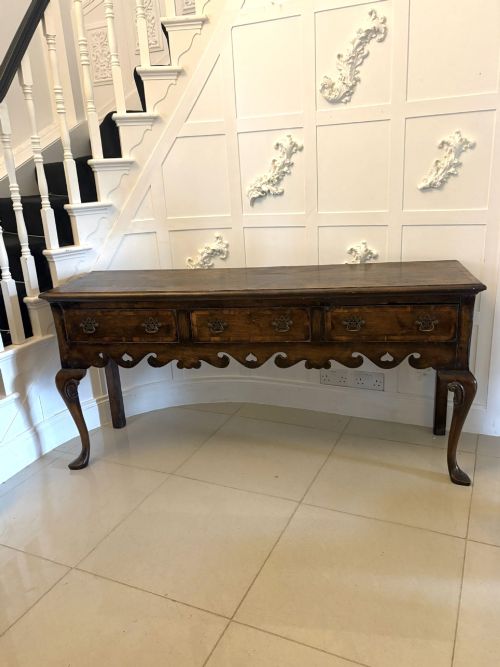
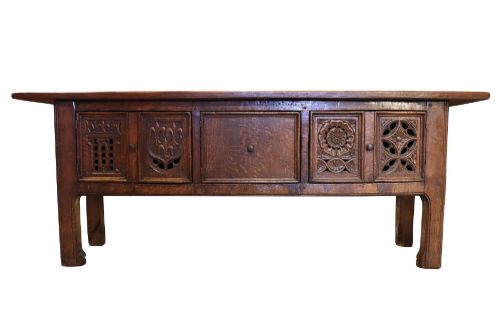
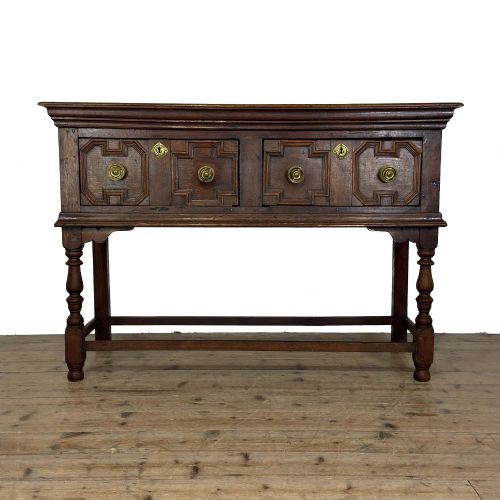
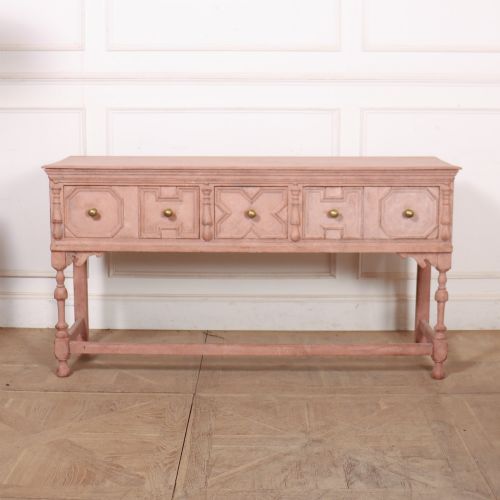
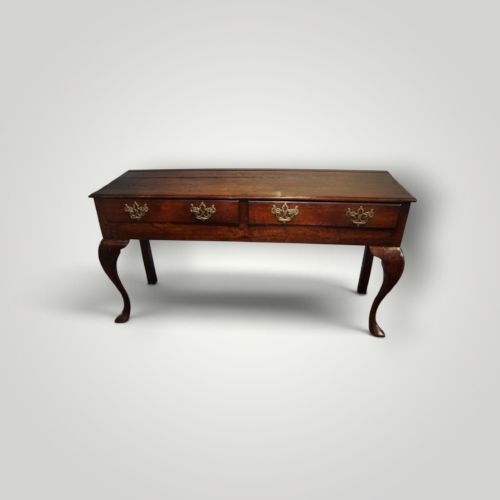
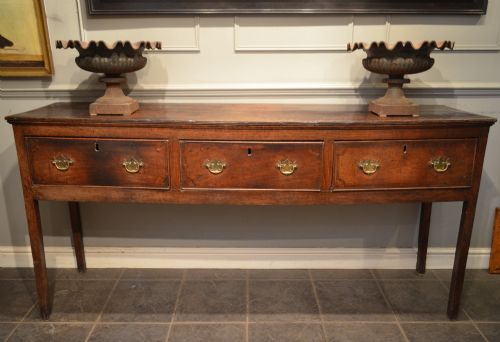
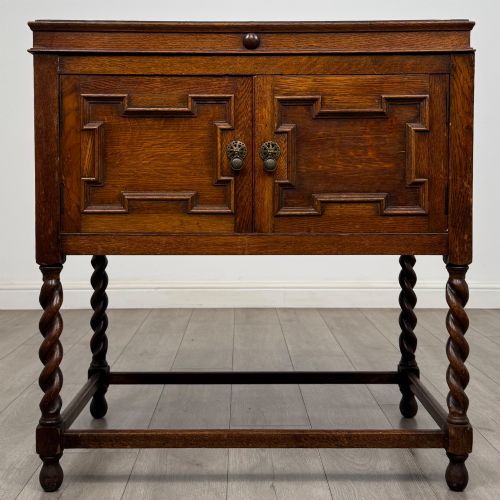
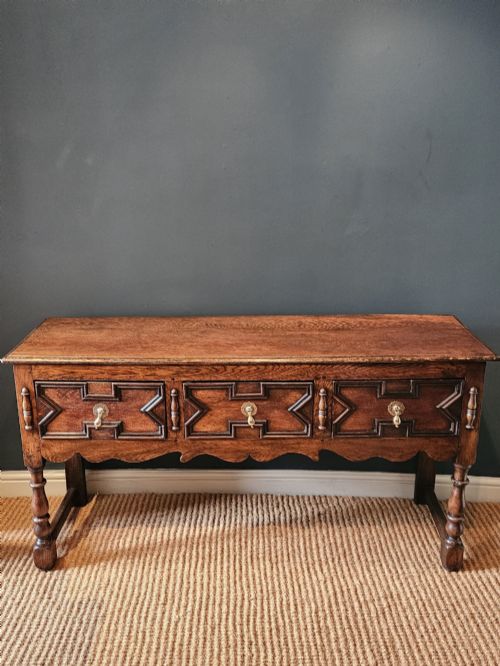
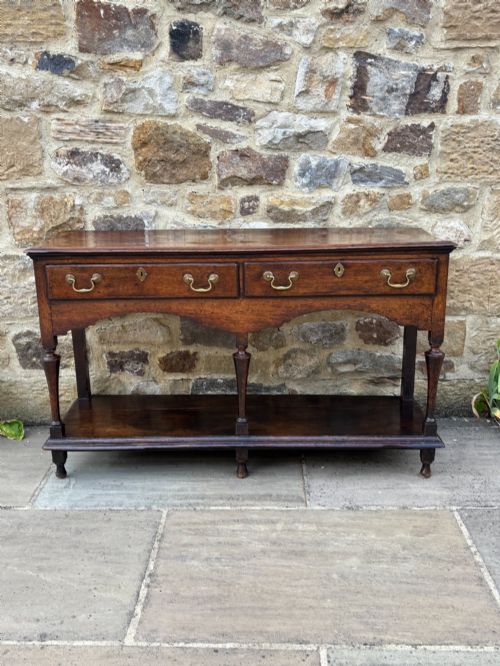
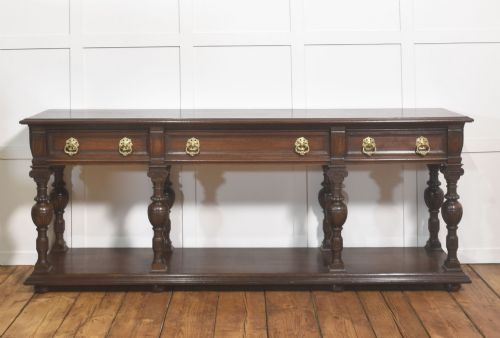
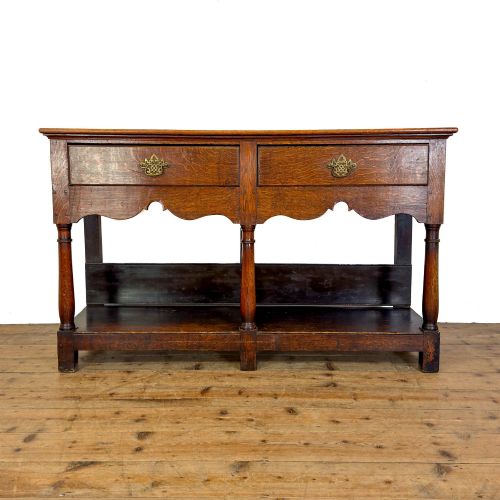

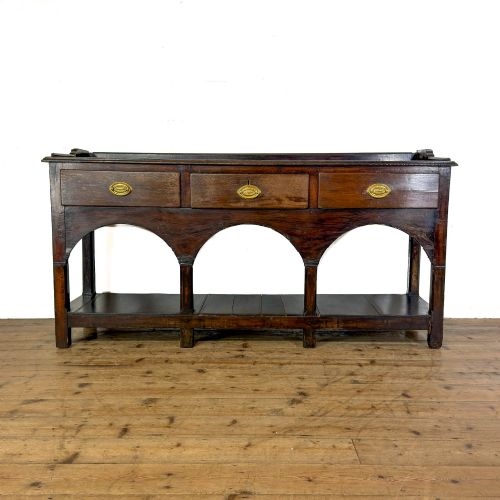
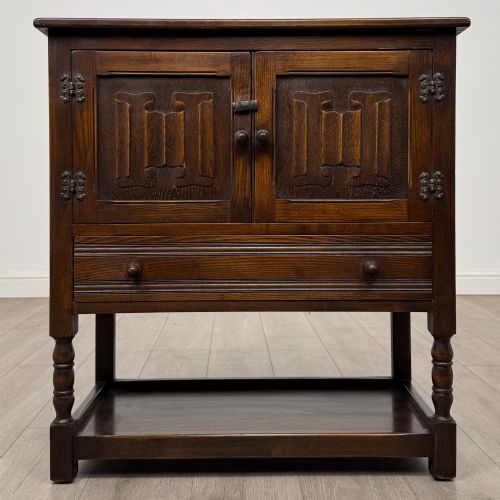
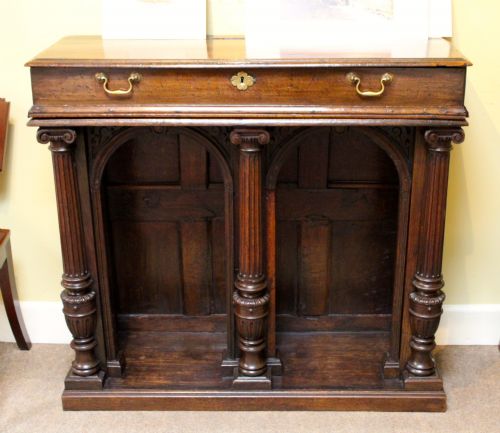

Oak Hall Table Sideboard
These robust oak hall table sideboard designs anchor a hallway or dining space with deep utility and honest timber.
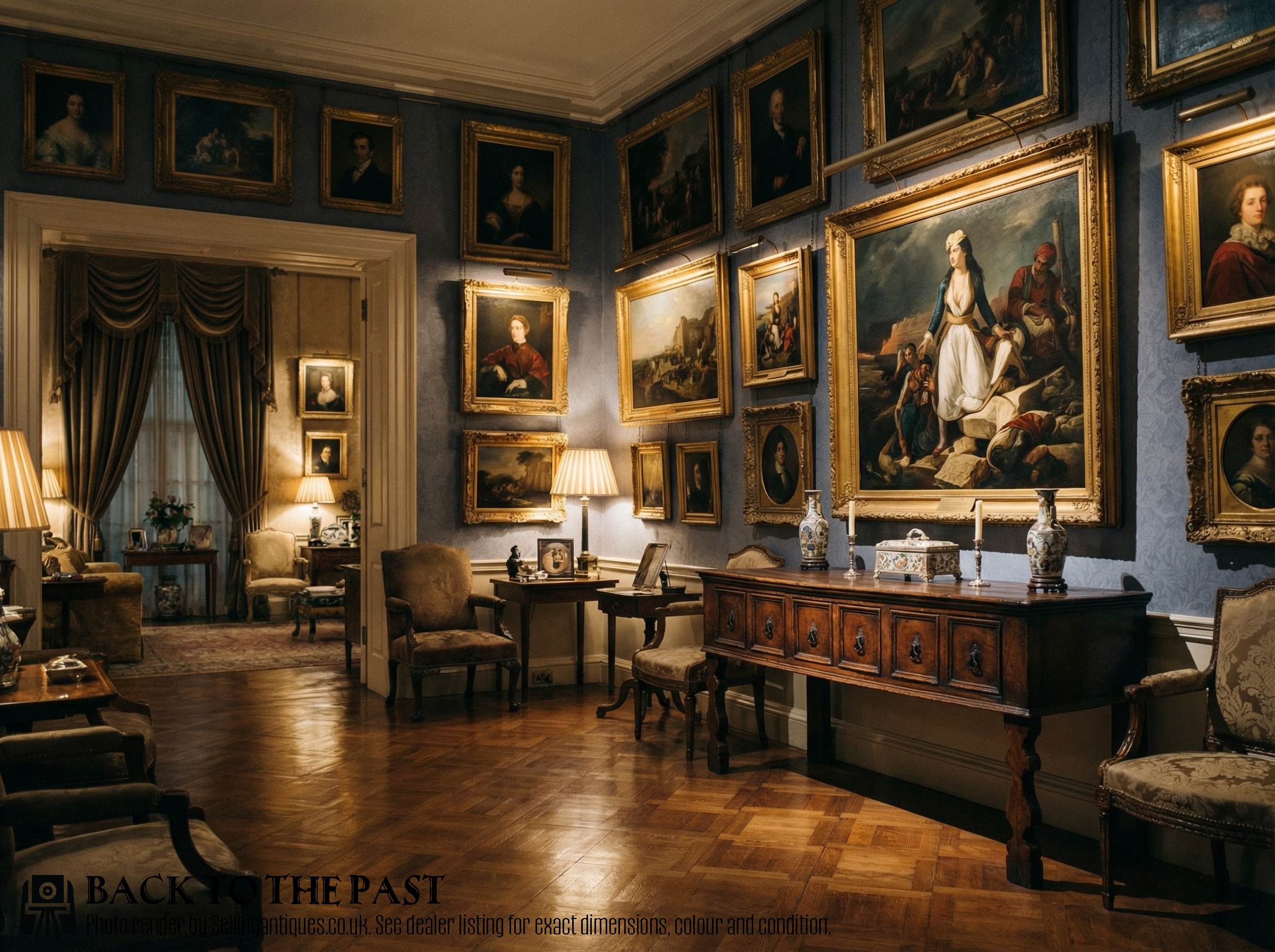
Oak Hall Table Sideboard
When you search for an oak hall table sideboard, you encounter a range of sturdy serving pieces and low storage units designed for domestic utility. The selection spans centuries of regional craftsmanship, featuring forms that served as working surfaces in kitchens, halls, and dining rooms alike.
You are most likely to meet dresser bases, servers, and low tables constructed from solid timber, often retaining open potboards beneath for storage. These pieces bridge the gap between a display surface and a practical storage cabinet.
The origins stretch from English country workshops to Welsh vernacular makers, alongside occasional continental examples. Each piece reflects the functional demands of its period, whether built with heavy geometric mouldings or slender cabriole legs.
Materials and construction
The primary material across the selection is solid oak, complemented by secondary timbers like pine and accented with brass or iron hardware. Carpenters utilised traditional joinery methods, including pegged mortise and tenon frames, to ensure the heavy timber withstood daily use.
Surface treatments vary from natural waxed finishes to painted wood and bleached oak, depending on the regional tradition and the era of production. Drawer fronts frequently display hand-cut dovetails and geometric mouldings built directly into the solid structure.
Listings feature oak hall table sideboard forms spanning from the seventeenth century through to the 1920s, including regional Welsh vernacular and Gothic revival styles.
Assessing the execution
Quality in these pieces rests upon the integrity of the timber selection and the restraint shown in any later adaptation or restoration. Better examples retain their original boards, unblemished drawer linings, and hardware appropriate to their period.
The crispness of hand-carved details and the balance of proportions distinguish finer workshop output from simpler utilitarian items. Heavy proportions and honest joinery elevate pieces that successfully bridge centuries of domestic wear.
The Oak Hall Table Sideboard Glossary
- Dresser base
- A low cabinet or sideboard featuring drawers and sometimes a lower shelf, originally used in kitchens or halls for food preparation and storage. They often stand on short legs or feet.
- Potboard
- An open lower shelf fitted between the legs of a dresser base, historically used for storing pots and heavy kitchen utensils. It provides structural stability to the base of the furniture.
- Geometric moulding
- Raised wooden mouldings applied to drawer fronts in symmetrical patterns, characteristic of seventeenth-century joinery. This technique added depth and decorative relief to flat surfaces.
- Cabriole leg
- A furniture leg that curves out gracefully and then tapers inward, inspired by the shape of an animal's leg. This style became popular during the Georgian period.
- Linenfold
- A style of wood carving that resembles folded parchment or linen cloth, commonly seen on panels during the Tudor and revival periods. It creates a rich, textured surface on cabinet doors.
Oak Hall Table Sideboard: Frequently Asked Questions
What is an oak hall table sideboard used for today?
These versatile pieces serve well in entrance halls, living rooms, and dining spaces as surface tables and storage units. Their drawers and lower shelves provide practical organisation for everyday items while anchoring a room with historic character.
They function equally as serving surfaces during gatherings or as display areas for lamps, ceramics, and books. The sturdy construction ensures they easily handle the demands of modern daily life.
How do I distinguish between an 18th-century piece and a later revival?
Examining the timber movement, tool marks, and construction joints helps reveal the true age of a piece. Earlier items display hand-sawn timber and peg construction that differ from later machine-cut methods.
Revival pieces from the nineteenth and early twentieth centuries often borrow stylistic cues like Jacobean mouldings or Gothic carving. Closer inspection of the drawer linings and interior boards usually clarifies the manufacturing era.
Are these sideboards suitable for narrow hallways?
Many examples are specifically described as having narrow proportions or small footprints to fit compact spaces. Servers and console tables with shallow depths offer surface space without obstructing walkways.
Checking the specific measurements listed for each piece ensures a comfortable fit for tight corridors. These items deliver storage and presence without overwhelming limited floor plans.
How should I care for antique oak furniture?
Maintaining these wooden surfaces requires simple dusting with a dry or slightly damp cloth and occasional application of quality beeswax. Avoiding direct sunlight and extreme temperature fluctuations preserves the natural moisture of the timber.
Harsh chemical cleaners should be avoided to protect the historic patina accumulated over generations. Regular, gentle maintenance keeps the wood nourished and stable.