
Oak Hall Bench Storage
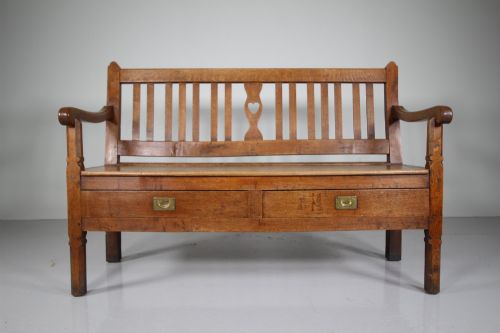
An oak hall bench storage piece offers practical entryway seating combined with a concealed compartment, anchoring a hallway with sturdy timber.
Oak Hall Bench Storage
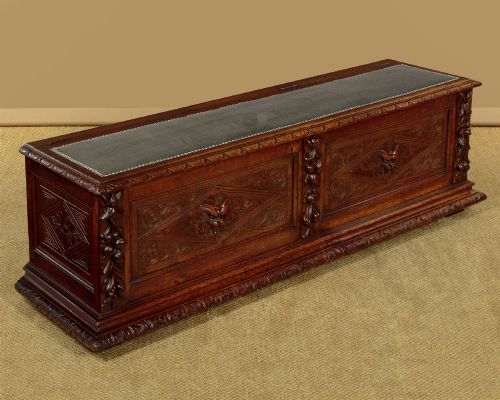
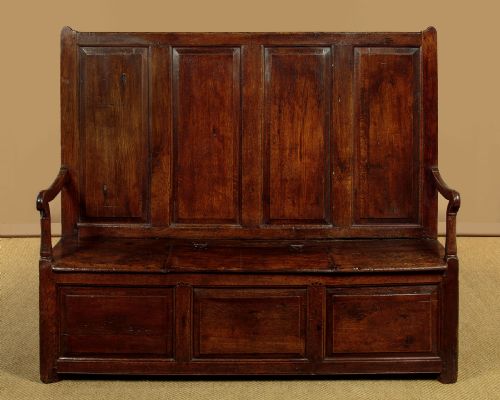
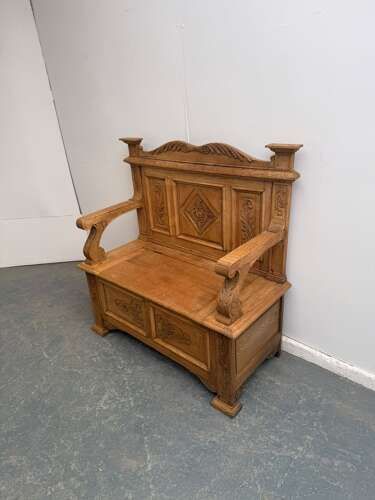
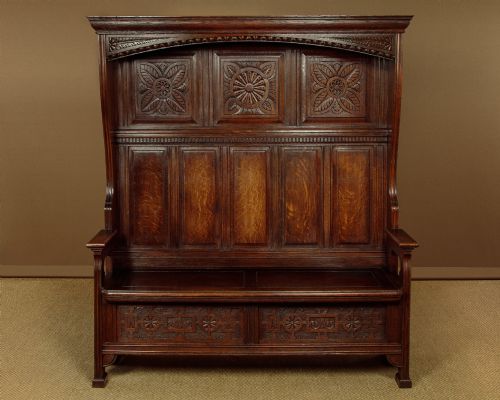
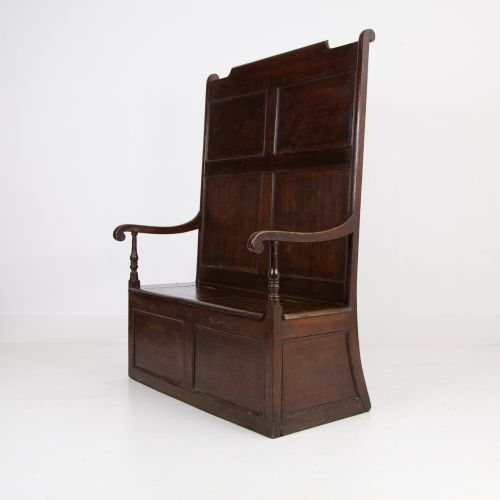
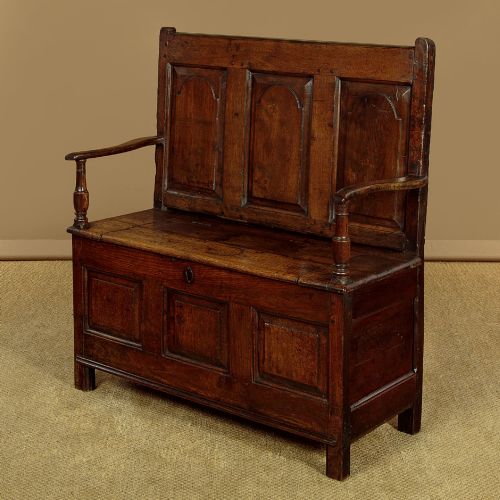
An oak hall bench storage piece serves as a traditional entryway seat incorporating a lift-up lid, a hinged top, or a box base for everyday items. These versatile forms appear as settles, monk's benches, and hall seats spanning from the seventeenth century through the Victorian era and into the early twentieth century.
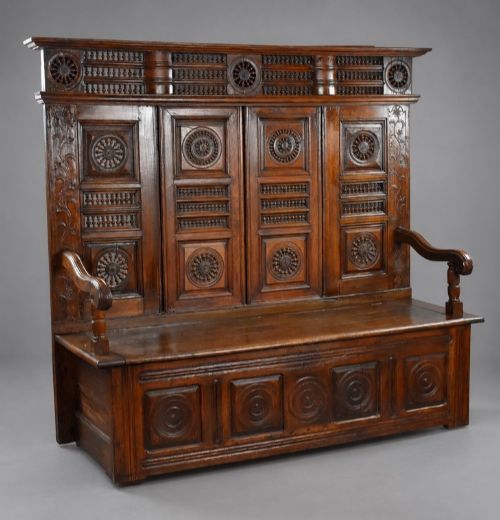
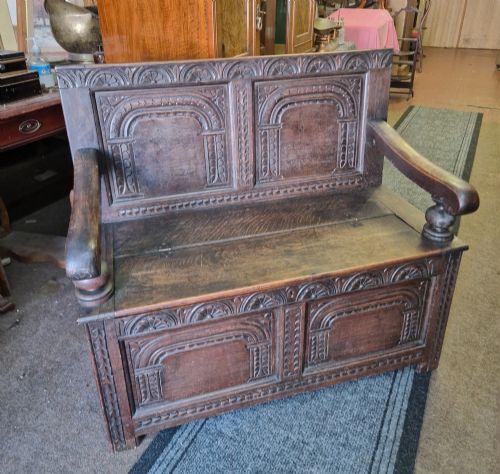
The most common examples on this page date from the nineteenth and early twentieth centuries, drawing on Jacobean revival, Gothic revival, and English country styles. Many feature carved panelled backs, armrests, and compartment seating designed for hallways, receptions, and boot rooms.
Assessing quality and craftsmanship
Quality rests in the integrity of the timber, the weight of the solid oak, and the crispness of the hand-carved ornamentation. Early eighteenth-century and seventeenth-century examples display robust pegged joinery and deeply figured grain that distinguish them from later revival pieces.
Proportion and utility also separate standard examples from finer works, particularly where box seats, fold-over tops, and canopy structures integrate smoothly without compromising the balance of the bench.
Listings feature oak hall bench storage pieces spanning from the seventeenth century through the Victorian era to the 1960s, incorporating iron, brass, and solid oak.
The Oak Hall Bench Storage Glossary
- Settle
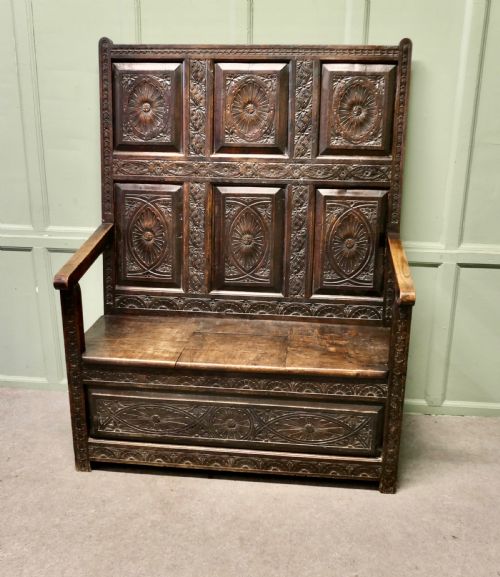
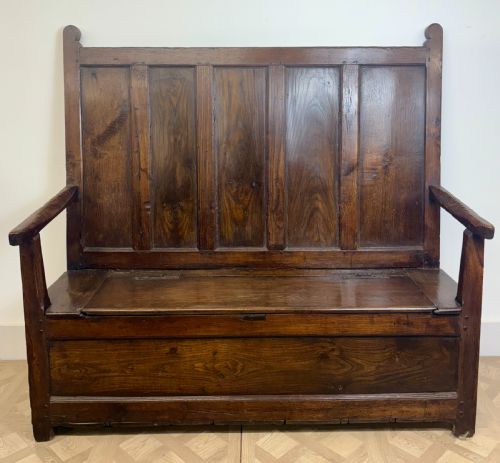
- A wooden bench with high back, solid arms, and a closed base used to block draughts in hallways and parlours. It often includes a hinged seat revealing a storage box underneath.
- Monk's bench
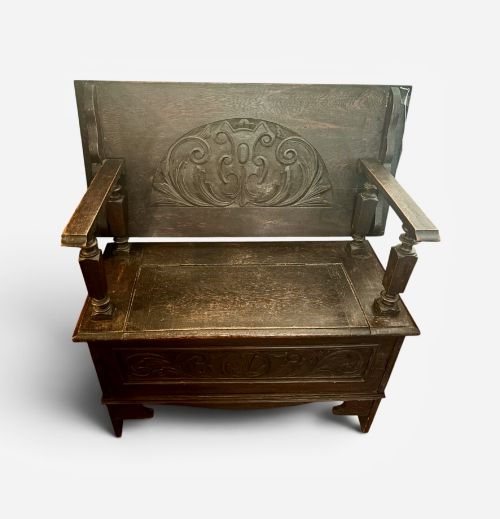
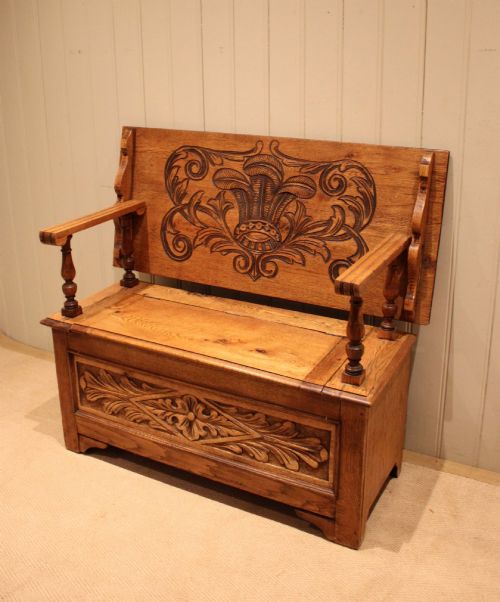
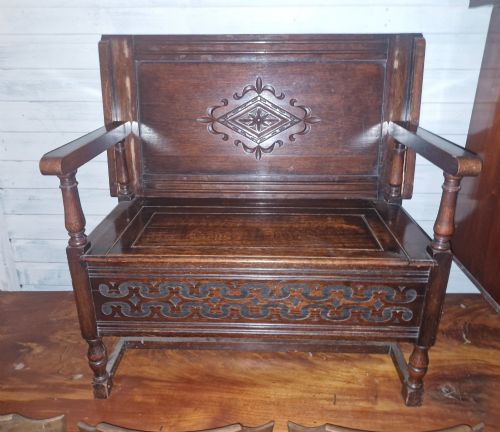
- A multi-functional form featuring a folding back that converts from a table top into a chair or bench back. The seat conceals a storage compartment within the base.
- Jacobean Revival
- A nineteenth-century style imitating seventeenth-century English design. It uses dark oak, geometric mouldings, and strapwork carving.
- Box settle
- A traditional seat incorporating a deep chest or box beneath the bench. This provides concealed storage for boots, textiles, and household goods.
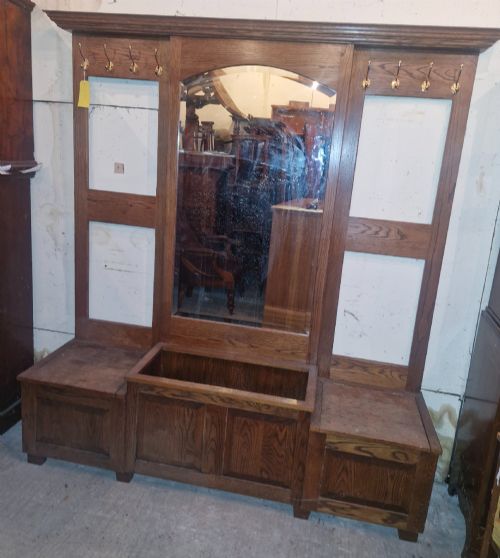
- Hall stand
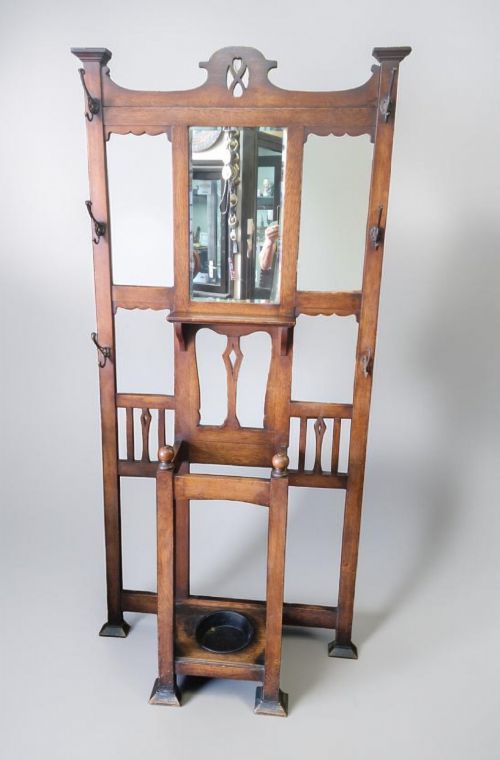
- An entryway furnishing combining a bench or seat with hooks for coats and occasionally a mirror or umbrella stand.
Oak Hall Bench Storage: Frequently Asked Questions
What is an oak hall bench storage?
An oak hall bench storage piece is a wooden entryway seat featuring a built-in compartment beneath the lid for boots, blankets, or coats. These items combine practical organisation with traditional seating.
They range from eighteenth-century box settles to early twentieth-century monk's benches and hall seats designed for domestic hallways.
How do I use an oak hall bench storage?
Place the bench in an entryway, boot room, or reception hallway to provide a sturdy seat for putting on shoes. The interior compartment holds clutter out of sight.
Fold-over top versions, such as monk's benches, can also function as small tables when the back rests flat.
How do I tell an 18th century oak settle apart from a Victorian one?
Eighteenth-century pieces typically display hand-planed surfaces, pegged joinery, and simpler country vernacular or high-back box constructions. The timber shows natural wear and patination accumulated over centuries.
Victorian examples often employ heavier, machine-assisted construction with deep relief carving, drawing on Gothic or Jacobean revival styles.
What is the difference between a settle and a monk's bench?
A settle is a fixed bench with a high back and solid arms, often featuring a lift-up seat over a storage box. It remains configured purely as a seat.
A monk's bench incorporates a hinged back that swivels or folds forward over the arms to transform the piece into a table top.
How do I care for antique oak furniture?
Keep oak furniture away from direct heat sources and sudden temperature changes to prevent the timber from splitting. Regular dusting with a soft cloth maintains the surface.
Apply a traditional beeswax polish periodically to nourish the wood and preserve the natural finish.