



Oak Glove Box Stand
An oak glove box stand brings functional hallway storage to the home, combining a fitted glove compartment with hanging space for hats, coats, and umbrellas.
Oak Glove Box Stand
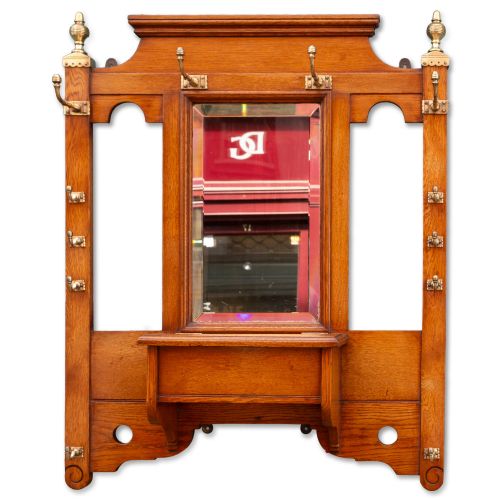
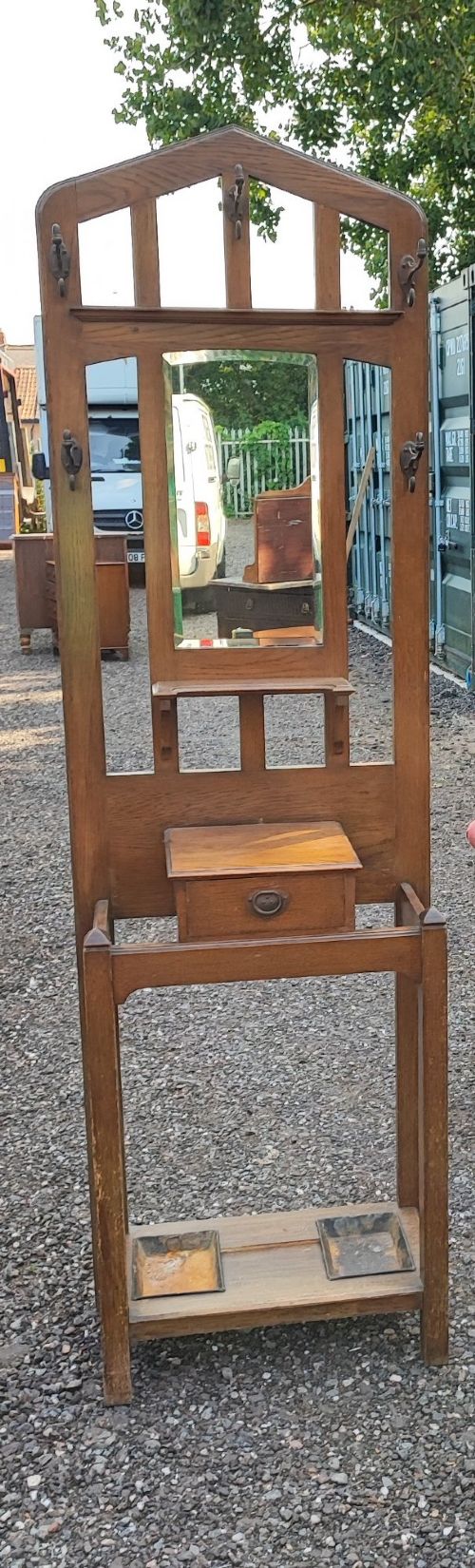
When you search for an oak glove box stand, you are looking at substantial hallway furniture designed to organise outdoor wear. The pieces found here typically combine umbrella stands, coat hooks, and a small enclosed glove box.
Most examples you will meet on this page date from the Victorian and Edwardian periods, including the late nineteenth and early twentieth centuries. These hall stands serve as practical focal points for an entrance hall while displaying period craftsmanship.
Materials and construction methods
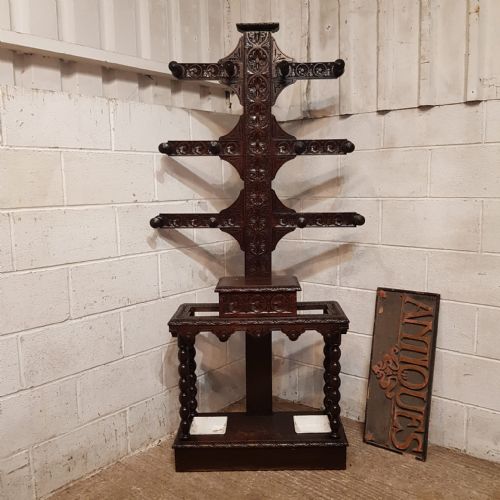
These pieces are constructed primarily from solid oak, often featuring carved detailing, fretted woodwork, and applied brass or iron hardware. Golden and light oak timbers dominate the selection, shaped in Victorian and Arts and Crafts styles.
Makers integrated various functional elements into a single piece of furniture, combining timber framing with metal coat hooks, drip pans, and glass or mirror panels where appropriate.
Oak Glove Box Stand Retail Price Guide 2026
Typical asking prices for oak glove box stand among the pieces listed under this phrase on Sellingantiques today, from the lower quarter to the upper quarter. They describe what is for sale here now, not the wider market.
Listings span from the Victorian era through the Edwardian period, utilising oak alongside brass, iron, and glass.
Distinguishing quality in the range
The distinction between standard and superior pieces rests on the depth and execution of the carved detailing alongside the integrity of the oak timber. Elaborate fretwork and substantial proportions elevate certain examples above simpler utility pieces.
Original hardware, such as brass coat hooks and functional glove box lids with working hinges, contributes significantly to the integrity of a hall stand. Cohesive stylistic execution, whether in a Gothic Revival or Arts and Crafts idiom, separates the better items.
The Oak Glove Box Stand Glossary
- Oak
- A hard, durable timber with a distinct grain pattern, widely used for structural hallway furniture across the nineteenth and twentieth centuries.
- Hallstand
- A piece of hallway furniture incorporating hooks for coats and hats, and often facilities for umbrellas and walking sticks.
- Arts and Crafts
- A design movement emphasising handcraftsmanship, simple forms, and natural materials, visible in several lighter oak pieces here.
- Gothic Revival
- An architectural and decorative style drawing inspiration from medieval forms, frequently seen in the carved ornamentation of Victorian pieces.
- Glove box
- A small, lidded compartment integrated into hall furniture, originally intended for storing gloves before heading outdoors.
Oak Glove Box Stand: Frequently Asked Questions
What is an oak glove box stand used for?
These pieces provide a central drop-off point in an entrance hall for outdoor garments and accessories. They keep hats, coats, and walking sticks organised while storing smaller items securely in the glove box.
Historically, they greeted visitors in the hallway and kept everyday outdoor wear ready for use. Today, they serve the same practical function in period and contemporary homes alike.
How do I date an oak hall stand?
Dating relies on observing the stylistic markers, construction methods, and timber finishes characteristic of different eras. Victorian pieces often feature heavier carved detailing and Gothic Revival influences.
Edwardian and early twentieth-century examples tend towards lighter oak and Arts and Crafts simplicity. Comparing the hardware and joinery helps narrow down the decade of manufacture.
Are these stands suitable for small hallways?
Most pieces designed for coats, hats, and umbrellas have a vertical footprint that makes efficient use of floor space. However, their physical volume varies, so checking the dimensions ensures a comfortable fit in narrower entryways.
Wall-mounted alternatives also appear, which eliminate the floor footprint entirely while retaining the essential coat-hanging and storage capacity.
What styles are common in these listings?
The selection is dominated by Victorian and Edwardian designs, reflecting the popularity of fitted hallway furniture during those eras. You will encounter straightforward utility pieces alongside ornate Gothic Revival and Arts and Crafts interpretations.
Carved wooden detailing and fretted woodwork recur across these various stylistic approaches, highlighting the versatility of oak as a medium.