

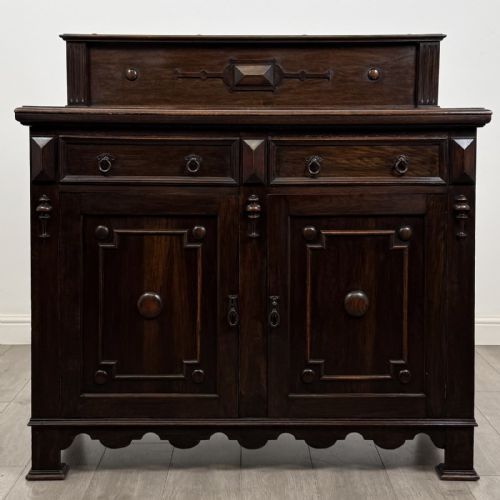
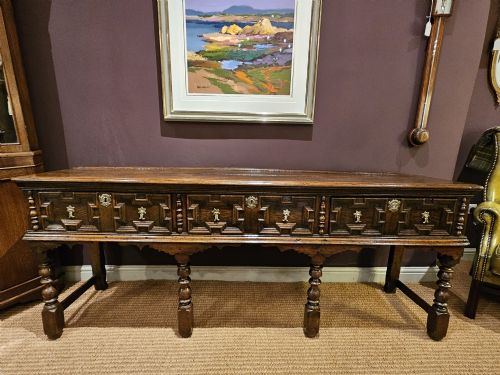
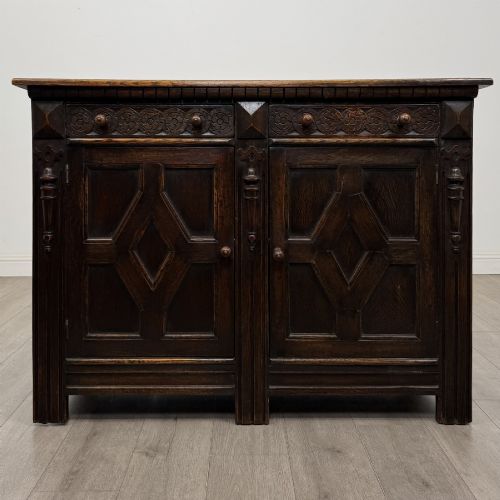
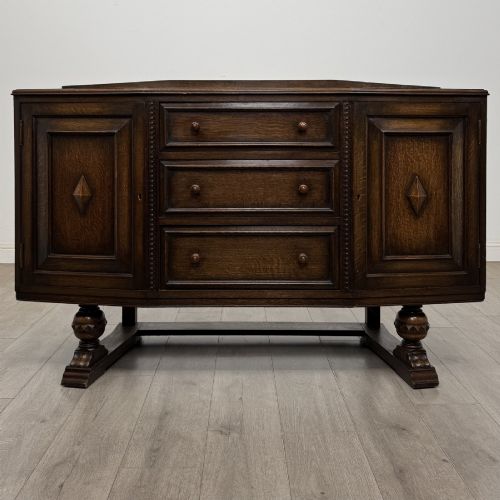
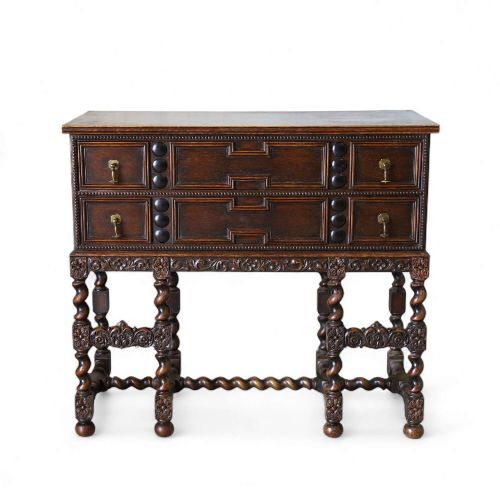


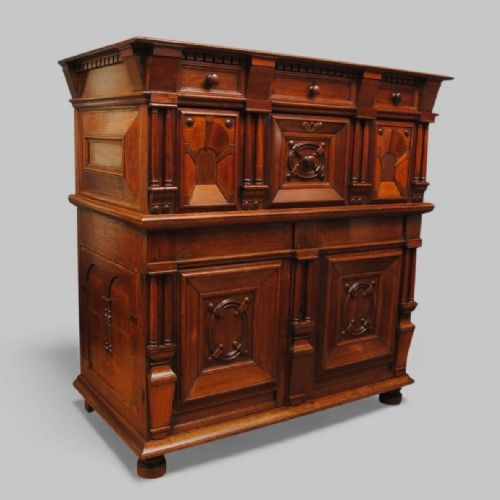
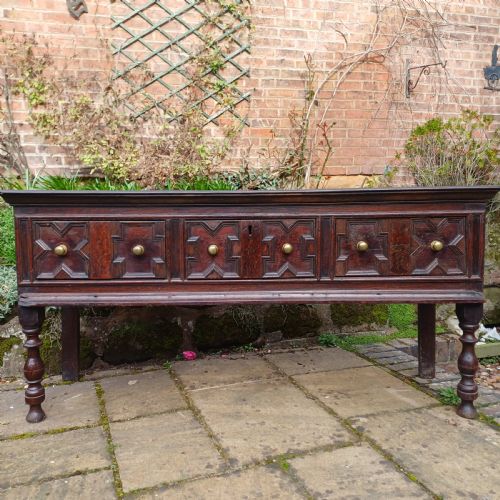


Oak Geometric Panel Sideboard
An oak geometric panel sideboard brings heavy timber, tactile mouldings and seventeenth-century proportion straight into a modern dining room.
Oak Geometric Panel Sideboard
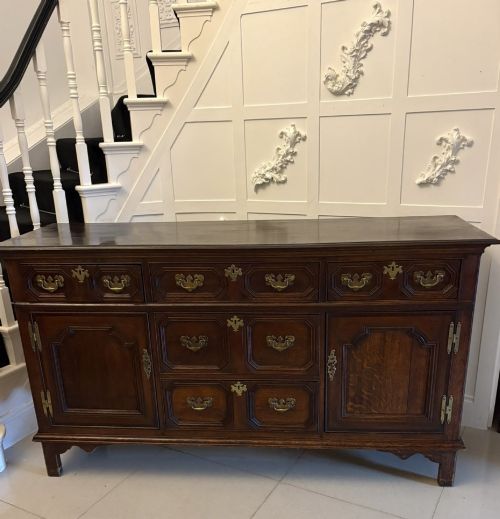
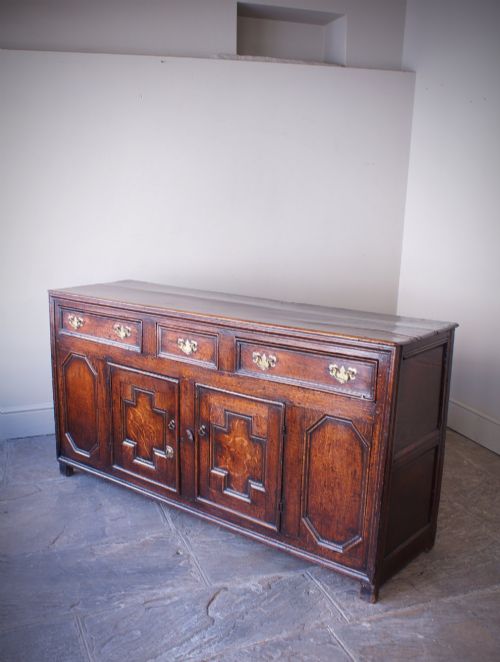
When you search for an oak geometric panel sideboard, you encounter substantial timber furniture originating primarily from the seventeenth century alongside later revival periods such as the Edwardian era and the 1920s. These pieces take the form of sideboards, dresser bases, low dressers and servers, designed originally for storage and serving in domestic spaces.
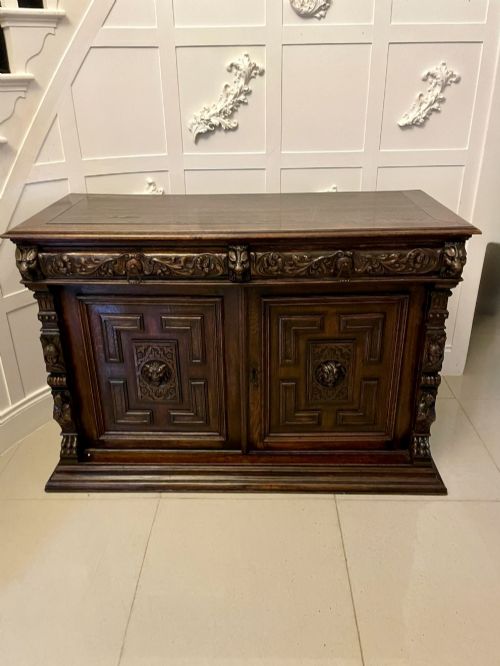
The category encompasses both genuine seventeenth-century survivals with hand-cut geometric mouldings and later nineteenth- and twentieth-century interpretations built in the Jacobean and Carolean revival styles. You will frequently meet pieces combining oak with fruitwood or walnut accents, reflecting the diverse cabinet-making traditions recorded across English and Welsh workshops.
What varies in quality
The depth and crispness of the geometric mouldings dictate much of the visual merit, separating sharply carved seventeenth-century examples from softer revival-period interpretations. The choice of secondary timbers also plays a role, with contrasting fruitwood or snakewood inlays indicating greater ambition in the workshop.
Structural integrity depends on the retention of original timber boards, uncompromised bases, and minimal replacement hardware. Pieces retaining their early surface patination and unbleached oak colour command higher regard among purists than heavily stripped or over-restored alternatives.
Oak Geometric Panel Sideboard Retail Price Guide 2026
Typical asking prices for oak geometric panel sideboard among the pieces listed under this phrase on Sellingantiques today, from the lower quarter to the upper quarter. They describe what is for sale here now, not the wider market.
Listings span periods from the seventeenth century through to the nineteen-thirties, featuring oak, walnut, fruitwood, brass and leaded glass.
The Oak Geometric Panel Sideboard Glossary
- Geometric moulding
- Raised wooden strips applied in repeating angular patterns to flat surfaces. This technique defined seventeenth-century decorative cabinetry.
- Dresser base
- A low wooden storage unit featuring drawers and sometimes cupboards beneath a flat top. They served as early kitchen and dining room servers.
- Jacobean style
- An architectural and furniture aesthetic spanning the early seventeenth century, characterised by solid proportions and strapwork. Revival versions appeared frequently during the Victorian and Edwardian periods.
- Carolean revival
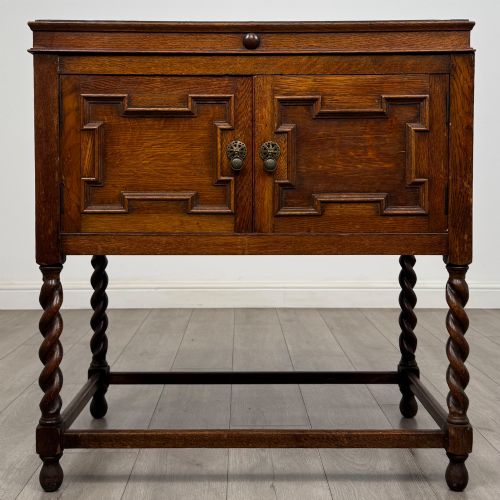
- A late nineteenth- and early twentieth-century design movement mimicking the ornate carved furniture of the mid-to-late seventeenth century. Barley-twist supports and deep relief carving are typical hallmarks.
Oak Geometric Panel Sideboard: Frequently Asked Questions
How do I date an oak sideboard?
Examine the tool marks, timber shrinkage and construction methods visible on the interior and back boards. Hand-sawn boards and pegged joints usually indicate seventeenth-century origin, whereas machine-cut elements point towards nineteenth- or twentieth-century revival periods.
Hardware placement and lock mechanisms also provide clues, though handles and hinges were frequently replaced over centuries of domestic use. Comparing the moulding profiles with dated examples helps narrow down the decade of manufacture.
Where should I place a sideboard?
These substantial timber pieces suit dining rooms, hallways or spacious living areas where their depth and dark grain can anchor the interior scheme. Ensure the floor is level, as heavy oak furniture requires stable placement to prevent door frames from dropping.
Keep them away from direct heat sources and strong sunlight to protect the historic wax finish and prevent the solid oak panels from splitting. Allow sufficient clearance around doors and drawers for smooth daily operation.
How do I care for antique oak?
Feed the timber periodically with a quality beeswax to maintain the moisture and rich lustre of the grain. Avoid silicone-based polishes or harsh chemical cleaners that can strip the historic surface patination.
Dust regularly with a soft, dry cloth to prevent grit from settling into the deep recesses of the geometric mouldings. Gentle maintenance preserves both the appearance and the structural stability of the wood.