



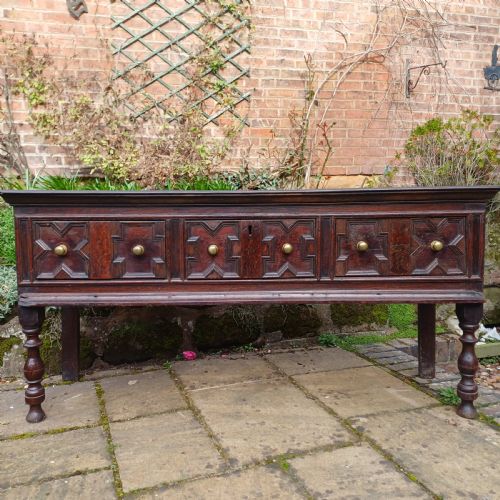


Oak Geometric Panel Server
An oak geometric panel server is a heavy timber serving piece built for storage and display, prized for its robust construction and striking relief work.
Oak Geometric Panel Server
When you search for an oak geometric panel server, you are looking at substantial timber furniture designed for holding dining provisions and tableware. These pieces provide deep drawers and enclosed cupboard space beneath a sturdy top surface, serving as both utility storage and a focal point in a dining room or hall.
The seventeenth-century origins bring authentic age and hand-planed timber surfaces, while the later Edwardian and 1930s revivals offer sturdier proportions with similar decorative motifs. Each variant retains the dark timber tones and functional storage capacity that defined early English dining furniture.
How they were made
Makers built these pieces primarily using solid oak, often quarter-sawn to reveal dense medullary rays and ensure structural stability over centuries of use. Panels were set into grooved frames to allow for natural wood movement without splitting the primary structure.
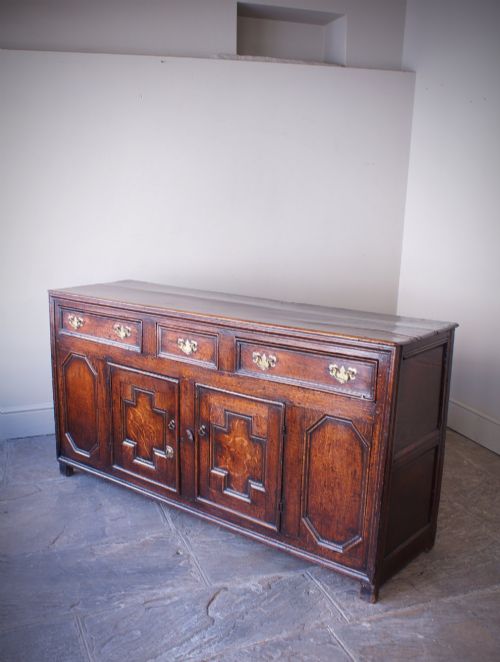
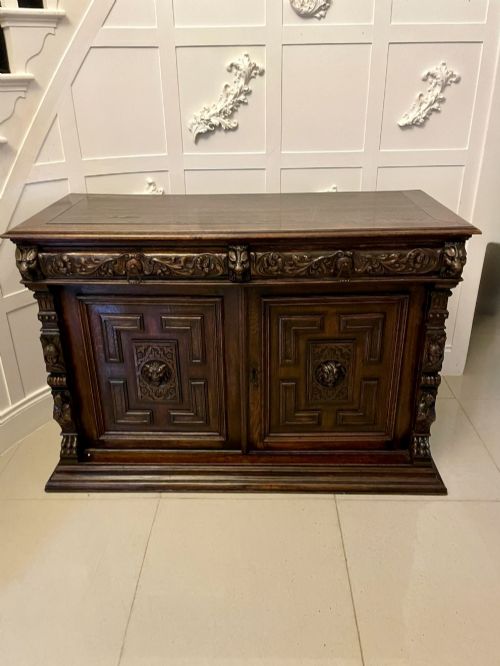
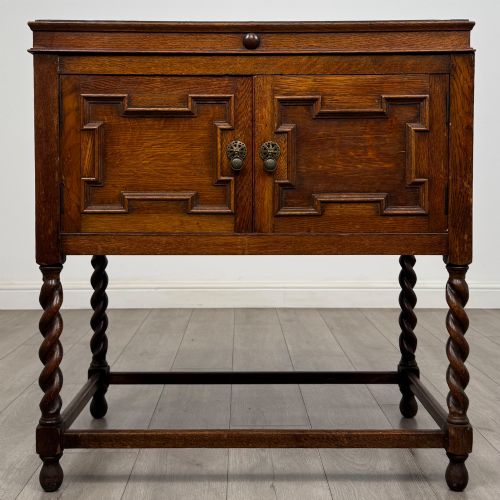
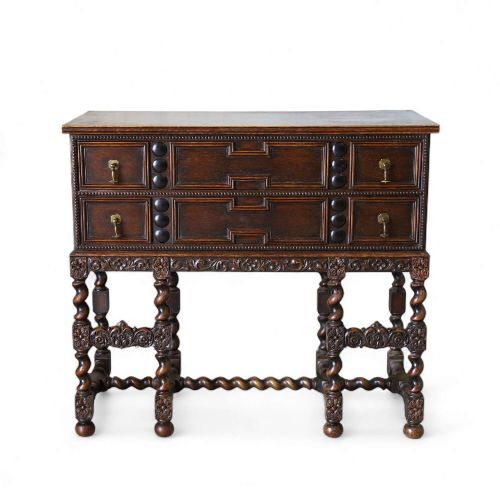
Surface decoration relies heavily on applied mouldings cut into geometric patterns such as rectangles, lozenges, and octagons, adhered and pegged to drawer fronts and door panels. Turnings such as barley-twist supports and applied split spindles appear on revival pieces alongside hand-carved foliate details.
Brass hardware including drop handles and escutcheons punctuate the dark timber surfaces, though many early drawer fronts rely entirely on the sculptural quality of the woodwork itself. Painted finishes occasionally appear on period dresser bases, altering the visual weight of the grain.
Oak Geometric Panel Server Retail Price Guide 2026
Typical asking prices for oak geometric panel server among the pieces listed under this phrase on Sellingantiques today, from the lower quarter to the upper quarter. They describe what is for sale here now, not the wider market.
Design elements recorded across these servers include brass hardware, painted oak surfaces, and barley-twist supports.
What varies in quality
The crispness and depth of the geometric mouldings separate the finest work from simpler production, as sharper mitres and thicker applied bosses require greater joinery skill. The complexity of the carved details and the inclusion of elements like barley-twist supports indicate a more ambitious commission.
Timber selection dictates visual richness, with quartersawn oak displaying striking figuring that elevates the overall appearance compared to plain-sawn boards. The retention of original timber boards to the back and drawer linings preserves the integrity of the piece.
The Oak Geometric Panel Server Glossary
- Geometric moulding
- Raised wooden mouldings applied in rectilinear patterns to drawer fronts and doors. This technique defines seventeenth-century case furniture.
- Dresser base
- A low table-height cabinet featuring drawers and sometimes cupboards beneath a flat top. It served as a functional surface for food preparation and serving.
- Barley-twist
- A turned wooden column resembling a spiralling rope. This support style is particularly common on revival furniture from the early twentieth century.
- Jacobean style
- The heavy, dark furniture aesthetic of the early seventeenth century characterised by straight lines and strapwork. Revivals of this style emerged strongly in the Edwardian era.
- Quartersawn
- Timber cut radially from the growth rings to produce a durable board with decorative figuring. This method minimises warping in heavy hardwoods.
Oak Geometric Panel Server: Frequently Asked Questions
What is an oak geometric panel server?
An oak geometric panel server is a low timber storage piece featuring decorative raised mouldings arranged in patterns across its drawers and doors. These pieces combine flat serving surfaces with concealed storage beneath.
Originally designed for dining rooms and halls, they hold tableware and provisions while adding architectural weight to an interior. The geometric panels create shadow and depth on the dark wood facade.
How do I tell seventeenth-century pieces from later revivals?
Period pieces from the seventeenth century show hand-tool marks, pegged joints, and timber shrinkage consistent with centuries of age. The oak develops a dry, deep patina.
Revival pieces from the Edwardian period or the 1930s often feature machine-cut elements and more uniform timber surfaces. Examining the interior construction and drawer linings reveals the manufacturing methods of the era.
How were these servers used historically?
These cabinets functioned as auxiliary surfaces during large meals, holding dishes before service and storing linens in the drawers below. They stood against dining room walls or in large hallways.
The enclosed cupboards protected valuable silverware and ceramics from dust and handling, acting as secure storage before dedicated dining room sideboards became common.
How do I care for antique oak furniture?
Antique oak benefits from maintaining stable humidity levels away from direct heat sources to prevent the timber from splitting. Regular dusting with a dry, soft cloth preserves the finish.
Applying a traditional beeswax occasionally nourishes the dry wood and enhances the natural grain without building up heavy chemical layers. Avoid modern liquid polishes that contain silicone.