

Oak Frame Wall Mirror
When you search for an oak frame wall mirror, you are looking at timber-mounted glass built to last generations.
Oak Frame Wall Mirror
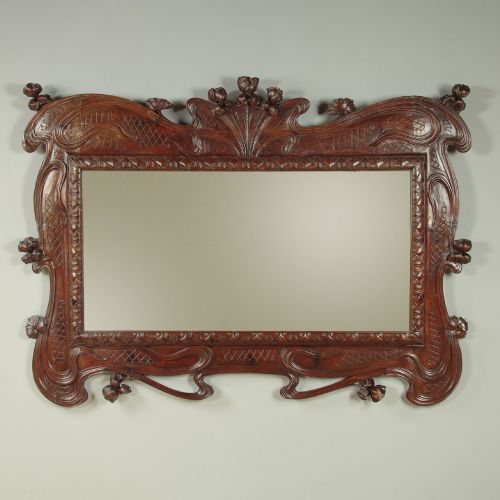
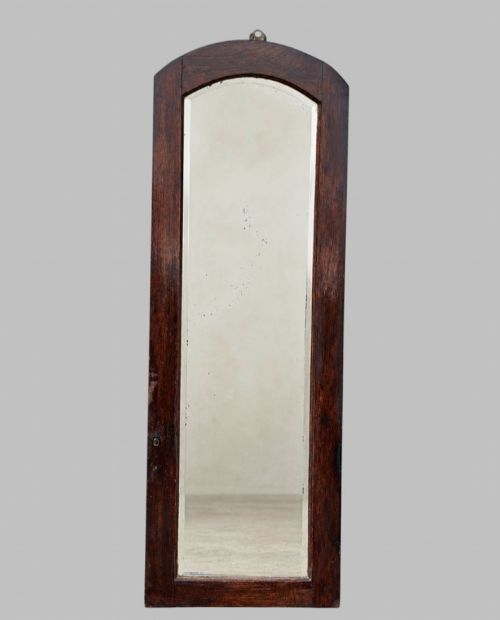
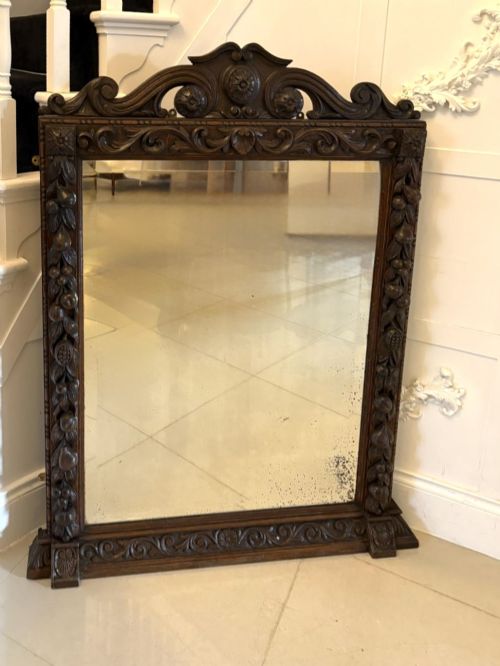
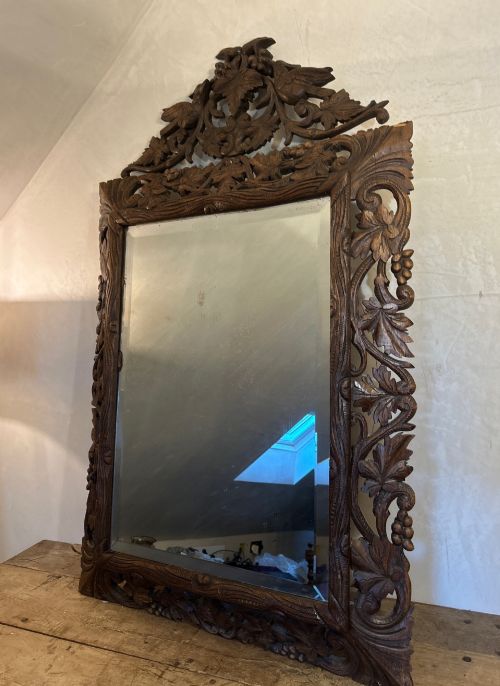
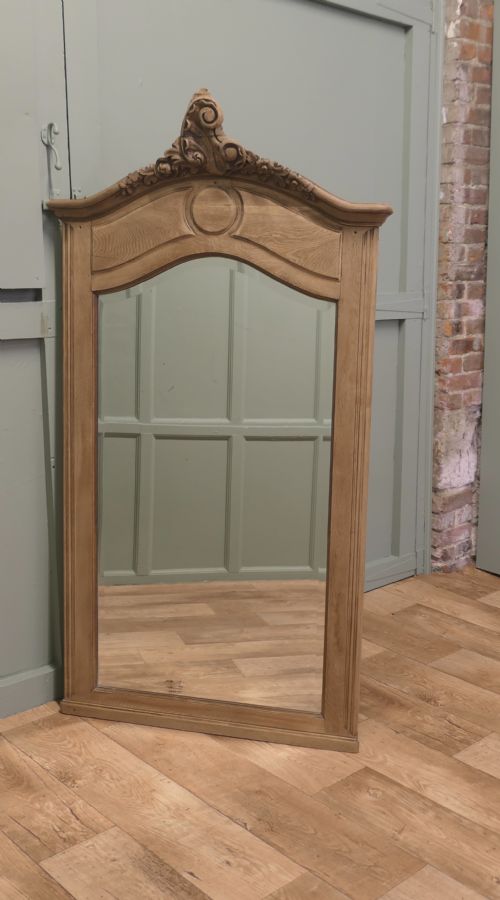
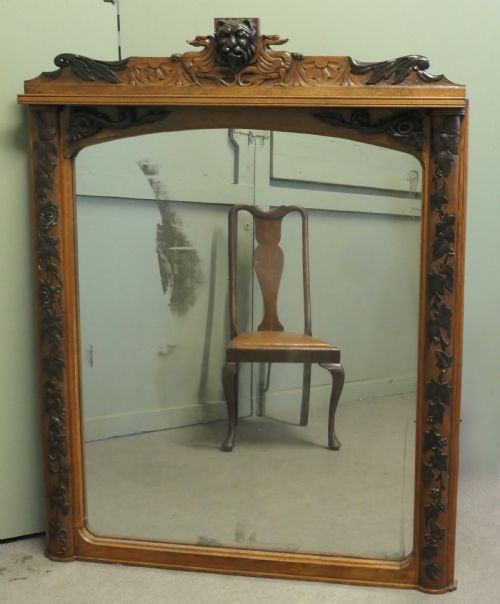
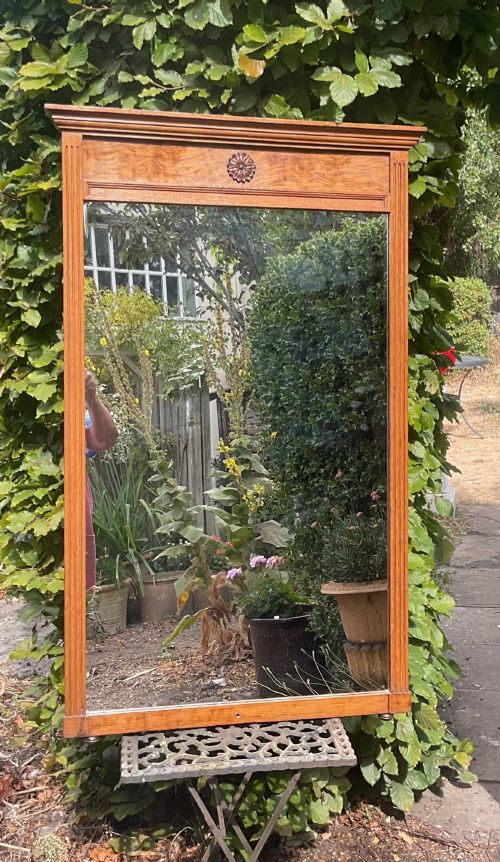
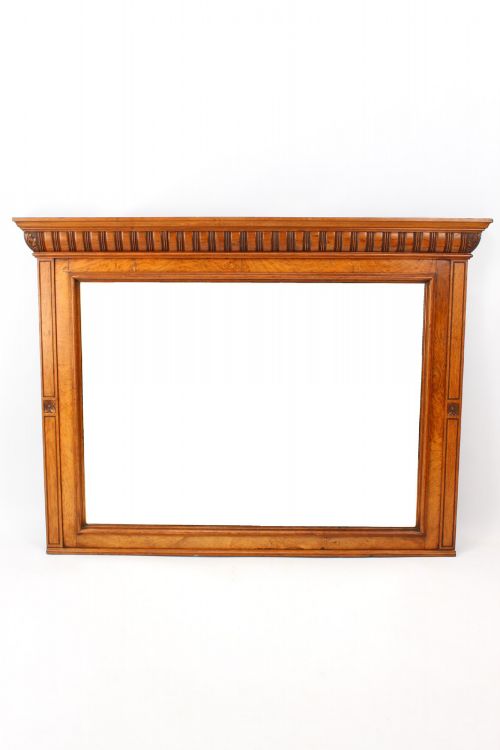
An oak frame wall mirror brings sturdy timber grain and reflective glass together, taking forms from simple rectangular shapes to elaborate carved overmantels. You will frequently encounter nineteenth-century and early twentieth-century examples shaped by Victorian, Edwardian, and Arts and Crafts aesthetics.
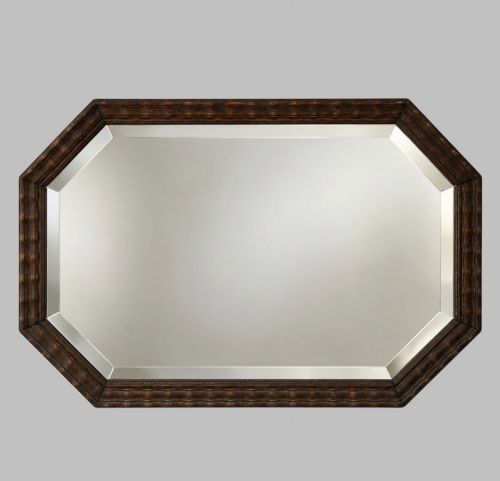
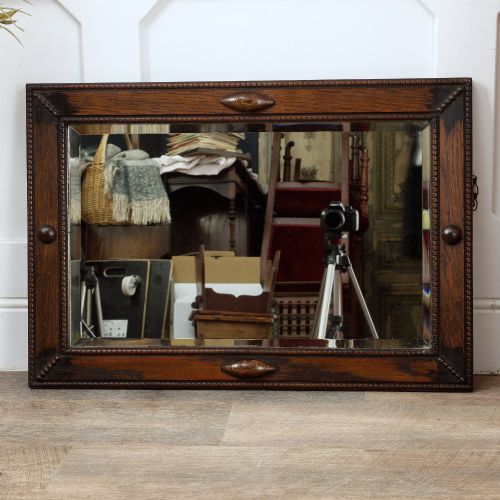
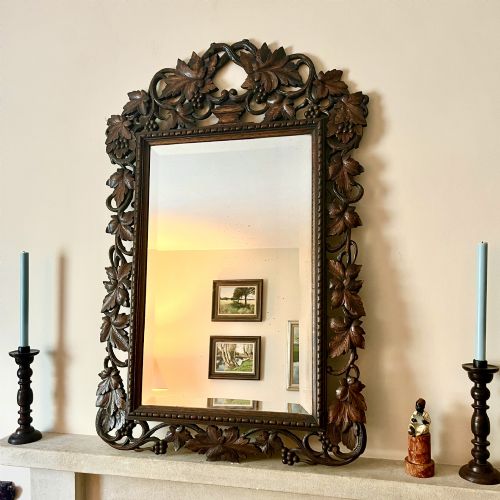
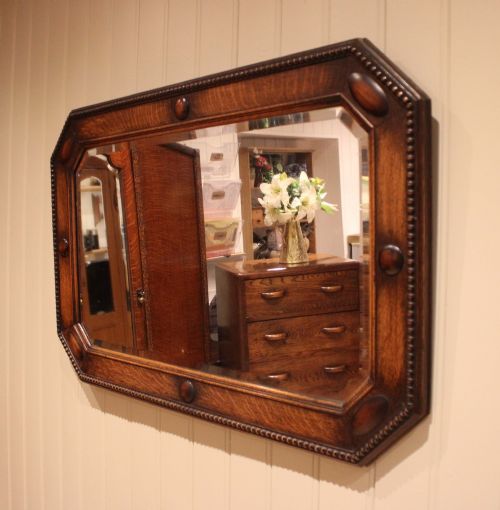
The timber varies from blonde and scrubbed oak to deep dark patinated boards, often housing bevelled mirror glass within deep cushion frames or fret cut surrounds. These pieces serve practical functions in hallways and living rooms while anchoring decorative schemes with substantial weight.
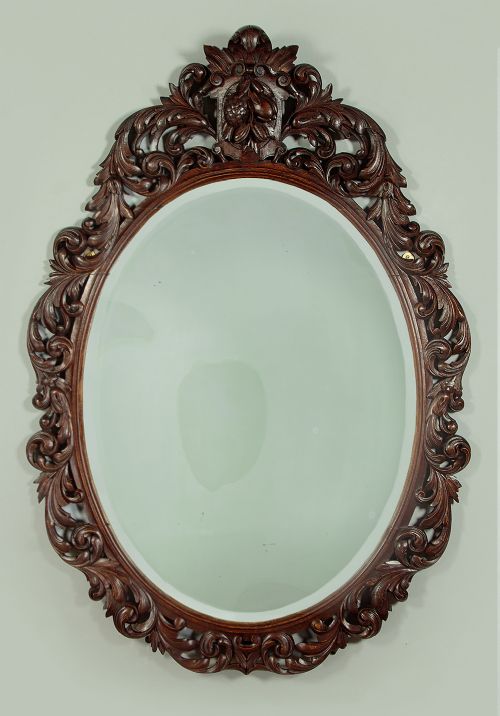
Makers utilised regional British designs alongside French provincial and Gothic revival influences, producing hall mirrors, oval wall hangings, and grand architectural overmantels. The prevalence of solid oak ensures enduring structural integrity across both plain utilitarian items and heavily ornamented showpieces.
Materials and Construction
Joiners and cabinet makers constructed these frames from solid oak, frequently employing carved wood, brass, copper, or applied gesso and gold leaf for decorative enrichment. Timber was selected for its pronounced grain, then planed, moulded, or hand-carved with motifs such as foliage, scrolls, or geometric patterns.
Mirror glass was set securely into the rebated timber backs, often featuring hand-bevelled edges that catch the light at oblique angles. Structural joints utilised traditional corner framing techniques, occasionally supported by side columns, crests, or integrated shelf brackets.
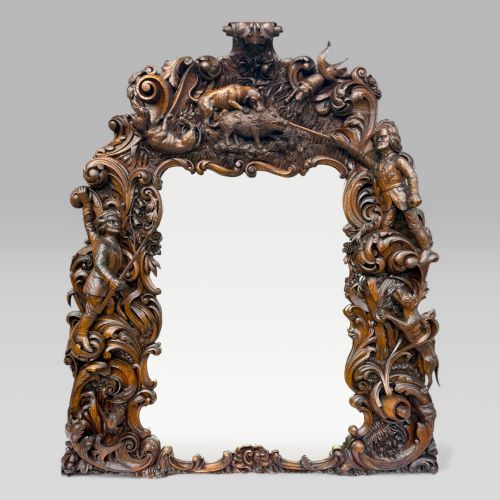
One hunting lodge mirror comes complete with the stamp of the King of Bavaria.
Assessing Quality and Execution
Quality rests upon the depth and crispness of the timber carving, where hand-tooled details outshine repetitive machine profiling. Superior examples exhibit tightly fitted corner joints, thick oak sections that resist warping, and heavy bevelled glass free of extensive silver degradation.
The ambition of the design dictates distinction, separating simple utilitarian wall hangings from elaborate architectural overmantels featuring deep cushion mouldings, heraldic elements, or specialised metalwork decorations.
Waring and Gillow·Rowley Gallery·Bass and Co
The Oak Frame Wall Mirror Glossary
- Bevelled glass
- Glass whose perimeter is ground and polished to an angled edge, creating a prismatic refraction that catches the eye.
- Overmantel mirror
- A large horizontal mirror designed specifically to be hung on the wall directly above a fireplace mantelpiece.
- Cushion frame
- A convex or bowed frame profile that swells outward from the wall towards the glass, prominent in seventeenth-century revival designs.
- Fret cut
- Woodwork pierced and shaped with a fretsaw to create intricate openwork patterns and decorative silhouettes along the frame.
Oak Frame Wall Mirror: Frequently Asked Questions
What is the difference between a wall mirror and an overmantel mirror?
Wall mirrors are generally proportioned to hang on any blank room surface, whereas overmantel mirrors are wider horizontal pieces engineered to sit above fireplaces.
Overmantel variations often incorporate heavier frames and architectural detailing designed to balance the physical mass of a chimney breast.
How do I clean an antique oak frame?
Dust the timber gently with a dry, soft cloth and feed the wood occasionally with a quality natural wax to preserve the finish.
Avoid chemical polishes or excessive moisture, which can penetrate porous historic oak and damage both the timber grain and the surrounding mirror silvering.
How can I date an oak frame mirror?
Dating relies on combining the stylistic clues of the carving, such as Gothic revival motifs or Arts and Crafts copper details, with the construction methods of the timber.
Examining the backboards, screw types, and the bevel of the glass helps narrow the period of manufacture between the Victorian era and the early twentieth century.