


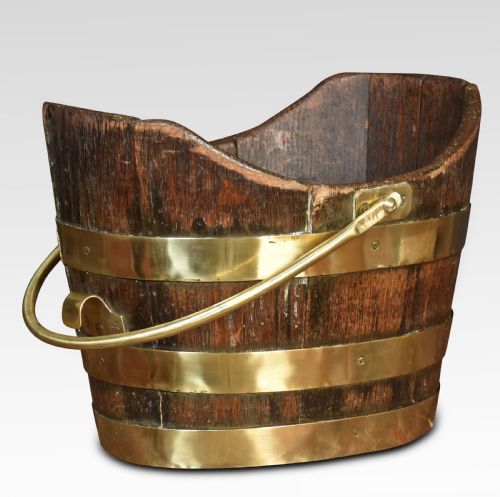


Oak Fireside Bucket
These oak fireside buckets are sturdy hearthside vessels built from timber and metal, bought to hold logs and coal cleanly by the fireplace.
Oak Fireside Bucket
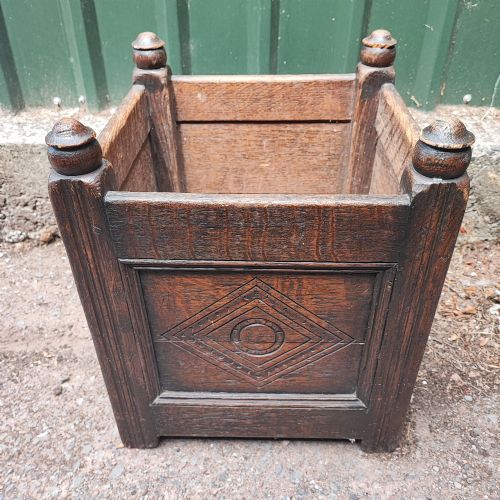
An oak fireside bucket serves as a practical hearthside container for solid fuel, appearing in forms ranging from coopered bins to carved boxes and purdoniums. When you search for an oak fireside bucket, you encounter pieces designed for coal, logs or peat, originating from the Georgian, Victorian and Edwardian eras.
The most common examples on this page date from the Victorian period, often featuring brass bands, swing handles and metal inliners. Alongside these are earlier Georgian vessels and rustic country pieces built from oak, elm and fruitwood.
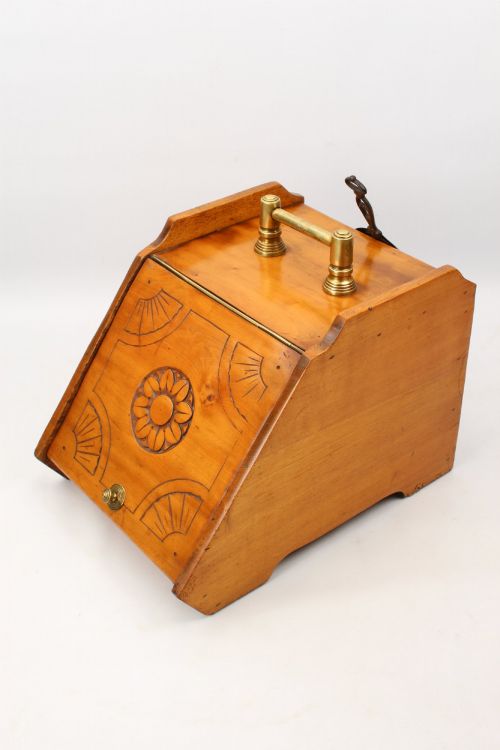
Forms vary from traditional cylindrical log bins to drop-front coal boxes and purdoniums equipped with shovels. Many double as well buckets or planters, reflecting their versatile utility across different rooms and centuries.
Materials and construction
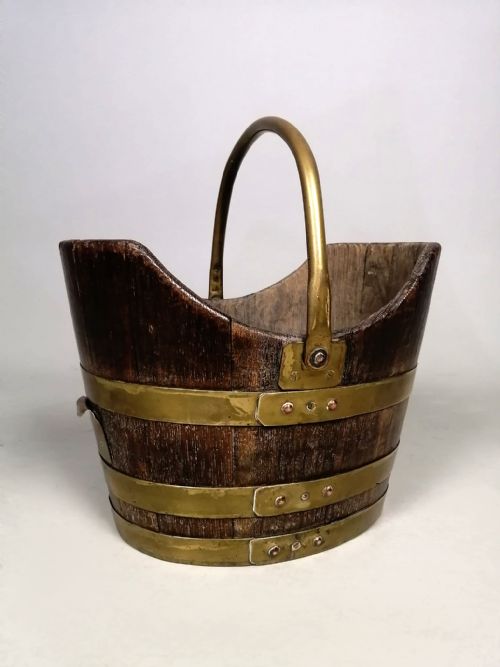
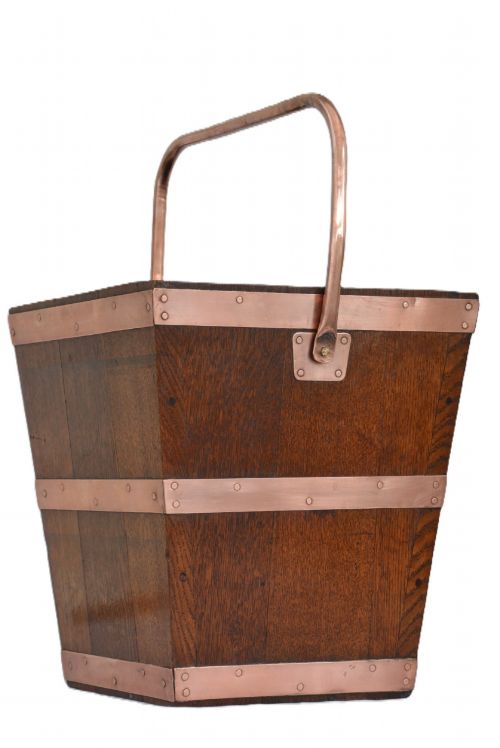
Constructed primarily from solid oak, these vessels frequently employ coopered techniques where staves of timber are bound together with heavy brass or iron bands. This method derives from traditional barrel-making, ensuring the wood remains stable despite the dry heat near a hearth.
Metal components such as copper, brass and iron provide structural reinforcement and decorative contrast, appearing as carrying handles, lions-mask ring handles and strapwork. Many incorporate internal metal or zinc inliners designed to contain soot, moisture and ash.
Carved decoration often appears on Victorian iterations, showing detailed foliate motifs or fielded panels on drop-front mechanisms. Secondary woods such as elm and fruitwood occasionally supplement the primary oak framework.
Several fierce brass lions stare out from the side handles, silently guarding the kindling.
Judging quality in hearthside vessels
Quality rests upon the integrity of the timber and the weight of the metal mountings. Superior examples display dense, well-figured oak staves coupled with thick, hand-beaten or cast brass bands that fit flush against the wood.
The sophistication of the joinery and hardware distinguishes standard utility items from finer pieces. Original fittings, such as sturdy swing handles and intact metal liners, elevate the integrity of a bucket significantly compared to later replacements.
The Oak Fireside Bucket Glossary
- Coopered
- Made by assembling curved wooden staves held together by metal hoops, much like a barrel. This traditional technique provides immense strength to cylindrical vessels.
- Purdonium
- A specialised coal box featuring a sloping drop front designed for easy access to fuel. These often include an internal metal scoop and a dedicated housing for a shovel.
- Liner
- The removable metal or zinc insert placed inside a wooden bucket to protect the timber from moisture and dirt. Original liners are valued for their authenticity.
- Hearthside
- Pertaining to the area immediately surrounding a fireplace. Pieces described this way were built specifically for daily domestic use by the fire.
Oak Fireside Bucket: Frequently Asked Questions
What is an oak fireside bucket?
An oak fireside bucket is a traditional wooden container reinforced with metal bands, designed to store coal, logs or peat beside a fireplace.
They combine robust construction with decorative domestic utility, serving as both functional storage and period furnishings.
How do I clean a coopered oak bucket?
Dust the exterior timber gently and nourish the oak with a traditional beeswax polish to maintain the grain. Avoid soaking the wood or harsh chemical cleaners that might loosen the metal bands.
Polish the brass or copper mounts separately with a suitable metal cleaner, taking care not to stain the surrounding wood.
Are these buckets waterproof?
Most historic wooden buckets rely on metal liners to contain damp fuel or water without leaking. Without an intact liner, raw wood may split or stain if exposed to prolonged moisture.
Check whether an individual piece retains its original metal insert if you intend to use it as a planter or for wet items.
How can I tell a Georgian bucket from a Victorian one?
Georgian pieces often display simpler, cleaner coopered lines with heavy brass banding and minimal carving. Victorian examples frequently incorporate more ornate details such as carved front panels, drop-front mechanisms and cast handles.
Examination of the fixings, timber patina and internal construction helps clarify the period of manufacture.