

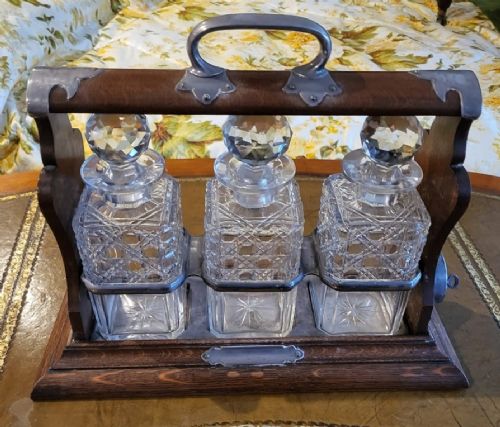


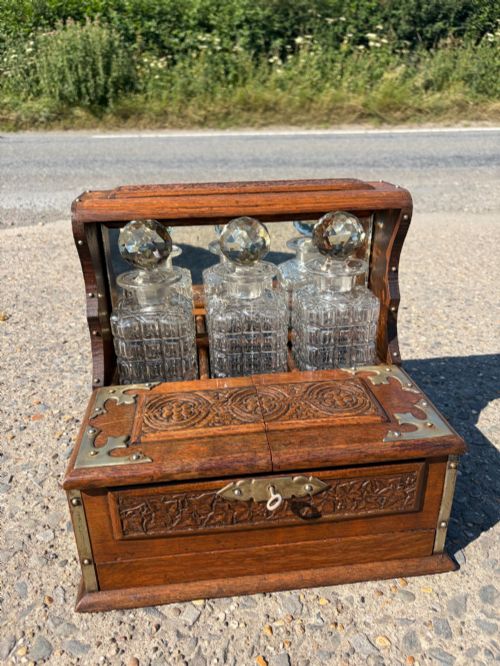


Oak Drinks Tantalus
An oak drinks tantalus is a secure locking decanter frame designed to keep household spirits safe from thirsty servants.
Oak Drinks Tantalus
An oak drinks tantalus is a locking mechanism and wooden frame designed to hold crystal decanters securely while frustrating unauthorised access to the spirits within. These pieces date principally from the late Victorian and Edwardian periods, stretching from eighteen eighty up to nineteen hundred.
The standard form encountered here is the three bottle tantalus, often paired with games compendiums, dry bars, and humidor compartments. Single and two bottle variants also appear, alongside partner's models and spirit cask sets with brass mounts.
Constructed primarily from figured oak, blonde oak, and pollard oak, these pieces function as robust barware cabinets for the home. They combine joinery with functional metal locking bars that drop over decanter stoppers.
Materials and construction
Makers utilised solid oak, figured oak, and pollard oak to build the carcasses, sometimes incorporating mirror panels inside the backboards. Brass handles, hinges, and lock plates provide the mechanical framework for the drop-down bars.
Silver plated mountings frame the cut glass decanters, which sit within fitted wooden bases often lined for games or cigars. Marquetry stringing and brass banding frequently embellish the exterior surfaces of the better boxes.
Oak Drinks Tantalus Retail Price Guide 2026
Typical asking prices for oak drinks tantalus among the pieces listed under this phrase on Sellingantiques today, from the lower quarter to the upper quarter. They describe what is for sale here now, not the wider market.
Named after the Greek mythological king, the tantalus ensures your whiskey stays firmly out of reach until you turn the key.
Judging the pieces
Quality rests in the complexity of the internal fittings, separating a simple bottle holder from a fully integrated games compendium with a dry bar. The presence of marquetry stringing, pollard oak veneers, and original matching cut glass decanters elevates a piece considerably.
The engineering of the locking mechanism and the weight of the silver plated mounts dictate the grade of manufacture. Pieces dated precisely, such as those from eighteen eighty-five, or bearing partner's proportions, show superior workshop output.
The Oak Drinks Tantalus Glossary
- Tantalus
- A locking wooden frame that holds decanters by their stoppers so they remain visible yet impossible to pour without a key. The name derives from the mythological figure punished with eternal thirst.
- Compendium
- A multi-purpose box containing equipment for games alongside the drinks cabinet. These fitted interiors usually hold cards, counters, and cribbage boards.
- Pollard oak
- Timber taken from trees pollarded at height, producing dense, highly figured grain patterns with distinctive knot clusters. Cabinet makers selected these veneers for decorative exterior panels.
- Silver plate
- A thin layer of silver fused to a base metal mount, used extensively for handles, locking bars, and corner brackets on late nineteenth-century barware.
Oak Drinks Tantalus: Frequently Asked Questions
What is an oak drinks tantalus?
An oak drinks tantalus is a Victorian or Edwardian locking frame designed to keep decanters of spirits secure. The wooden base holds cut glass bottles beneath a metal bar that prevents the stoppers from being removed.
Many examples combine this locking mechanism with games compendiums, dry bars, or cigar humidors, forming comprehensive pieces of entertaining furniture.
How do you open a tantalus?
Operating a tantalus requires turning a working key in the lock, which releases the vertical locking arm or allows the side bars to slide clear of the decanter necks. Once unlocked, the wooden retaining bar tips forward or lifts upward.
Without the key, the decanters remain locked firmly in place, which gave the device its name by tantalising anyone seeking an unauthorised drink.
When were these cabinets made?
The pieces available date primarily from the late nineteenth century through to the Edwardian era, spanning the decades between eighteen eighty and nineteen hundred. Victorian and Edwardian workshops produced these in considerable variety.
Dates can sometimes be established precisely through engraved brass plaques or dated locking mechanisms from the period.
How should I care for pollard oak?
Maintaining pollard oak involves keeping the wood away from direct heat sources and sudden humidity changes to prevent timber movement. Occasional application of a suitable wax polish preserves the sheen on the figured grain.
Silver plated mounts benefit from gentle cleaning with a soft cloth to avoid abrading the plate against the surrounding wood.