

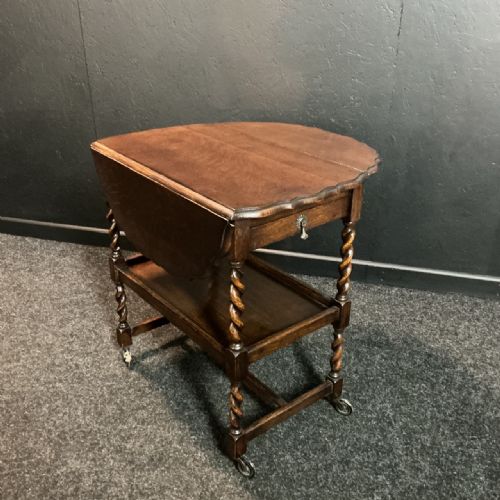


Oak Drinks Table
An oak drinks table brings portable hospitality to a room, offering a sturdy surface for decanters, glasses and afternoon tea.
Oak Drinks Table
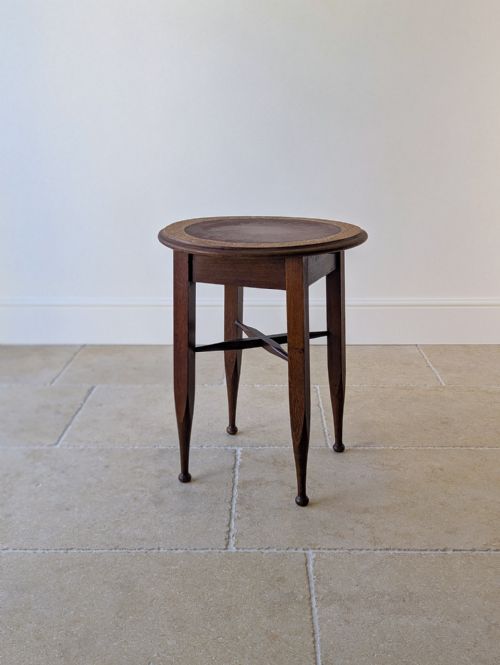
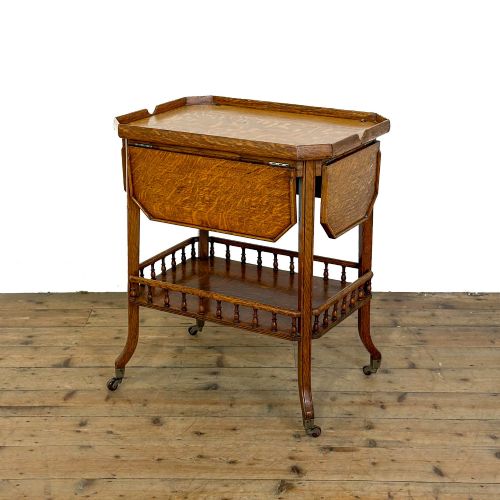
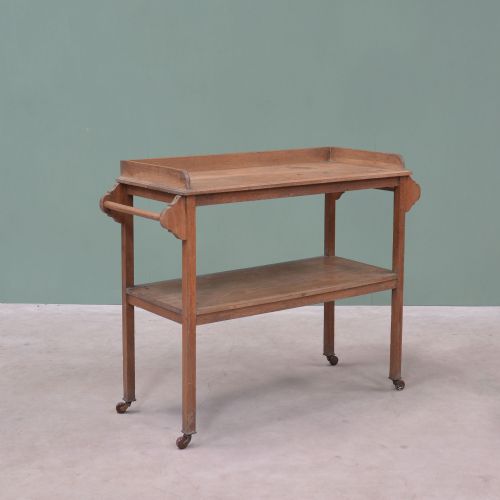
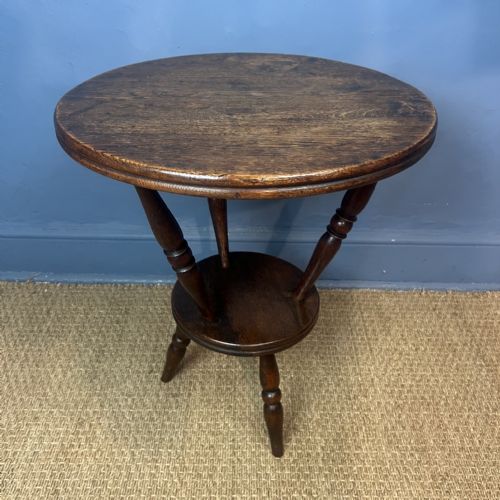
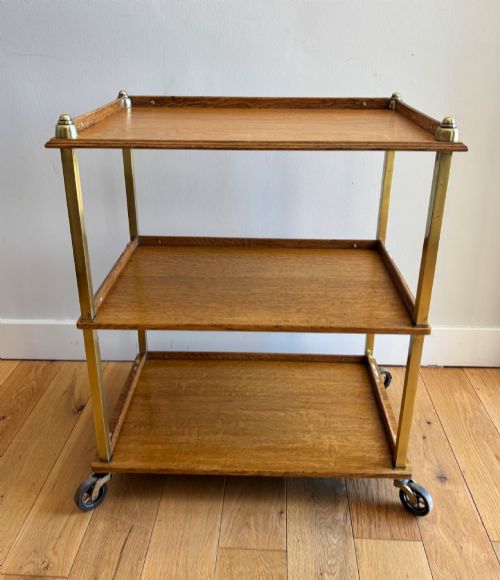
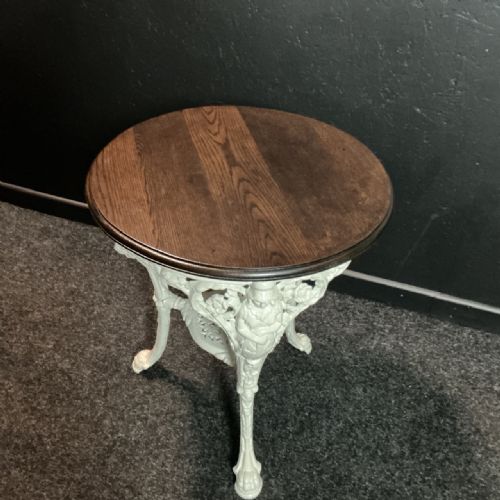
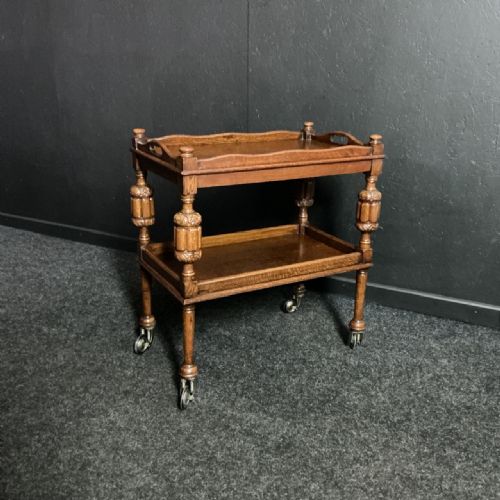
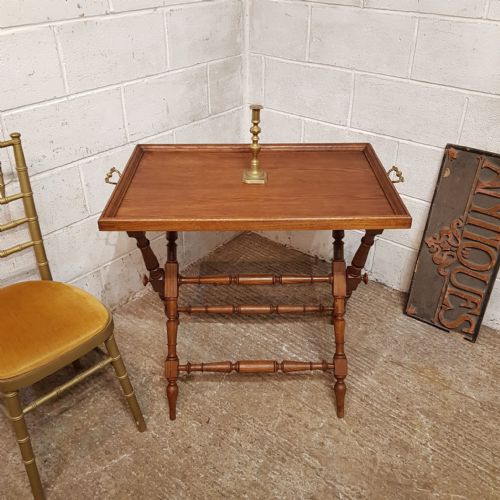
An oak drinks table spans several centuries of domestic service, ranging from early cricket tables to folding tray stands and tiered afternoon tea trolleys. When looking for an oak drinks table, buyers frequently encounter Victorian butlers trays on folding stands, Edwardian two-tier trolleys, and robust occasional tables.
The material palette draws heavily on British vernacular traditions, featuring solid oak alongside brass fittings, cast iron frames, and occasional glass inserts. Pieces appear in various regional styles including Jacobean Revival, Arts and Crafts, and Gothic Revival, reflecting the changing social habits of country houses and urban parlours alike.
Materials and Technique
Cabinetmakers utilised durable hardwoods, primarily solid oak and occasionally pollard oak or hardwood veneers, shaped with turned supports, barley twist legs, and carved mouldings. Frames rely on traditional joinery techniques such as mortise and tenon joints to withstand the heavy weight of glass decanters and ceramic tea services.
Metal components such as brass gallery rails, hinges, castors, and cast iron bases provide both structural support and functional mobility. Lift-off trays often feature raised edges or side handles, allowing servants or hosts to transport glassware securely between rooms.
One recorded piece arrived straight from Bäckaskog Castle, carrying centuries of aristocratic hospitality right onto the modern showroom floor.
Judging Construction and Provenance
Quality rests in the selection of timber and the crispness of hand-carved details, distinguishing standard utility furniture from pieces commissioned for substantial country houses. Heavier gauge oak, substantial brass mounts, and well-executed joinery indicate superior workshop standards.
Proportion and stability matter greatly in serving furniture, separating items designed for daily domestic service from lesser alternatives. Pieces retaining original wheels, matching stands, and untouched patination command greater interest among collectors.
Heals
The Oak Drinks Table Glossary
- Butler's Tray
- A removable wooden tray with raised edges, designed to sit upon a folding X-frame stand for serving drinks or food. They often feature shaped handholds cut directly into the sides.
- Cricket Table
- A small, three-legged circular table with vernacular origins, providing exceptional stability on uneven cottage floors. These serve well as compact drinks surfaces.
- Dumb Waiter
- A tiered serving table or trolley used to hold dishes, bottles, and glasses without requiring a servant present throughout a meal. Examples frequently incorporate revolving or multi-level trays.
- Gallery Tray
- A tray encircled by a low raised rim or pierced brass railing to prevent bottles and glassware from sliding off during movement. This feature is common on Edwardian tea trolleys.
- Barley Twist
- A decorative turning technique resembling a spiralling rope, popular on the legs of Jacobean Revival and Edwardian tables. It adds vertical texture to support structures.
Oak Drinks Table: Frequently Asked Questions
What is an oak drinks table?
An oak drinks table is a functional piece of antique furniture designed for serving and holding beverages, spanning forms from butler's trays on stands to tiered tea trolleys.
These pieces reflect the social hospitality of past centuries, combining sturdy timber frames with brass hardware, castors, and removable trays.
How were butler's trays used?
Butler's trays served as portable surfaces for carrying decanters, glasses, and tea sets from the kitchen to the parlour or dining room.
The removable tray lifted easily from its folding wooden stand, allowing servants to clear or set up drinks efficiently across different rooms in the house.
How do I date an oak table?
Dating relies on examining the construction methods, fastener types, timber selection, and stylistic details such as carved motifs or turned leg designs.
Victorian and Edwardian examples often display machine-sawn elements and brass castors, while earlier 18th-century pieces show hand-finished joinery and simpler vernacular framing.
Are these tables suitable for daily use?
Solid oak construction and robust joinery make these tables remarkably durable for contemporary entertaining and daily living.
Using coasters and treating surfaces with care helps preserve the antique finish while letting the table function as a practical drinks station.