




Oak Drinks Box
An oak drinks box offers a secure and handsome vessel for your spirits, bringing period hospitality straight into a modern room.
Oak Drinks Box
When you search for an oak drinks box, you encounter items designed to secure and present wine, whisky and liqueurs. These pieces originate predominantly from the Victorian and Edwardian periods, stretching from eighteen eighty to nineteen hundred.
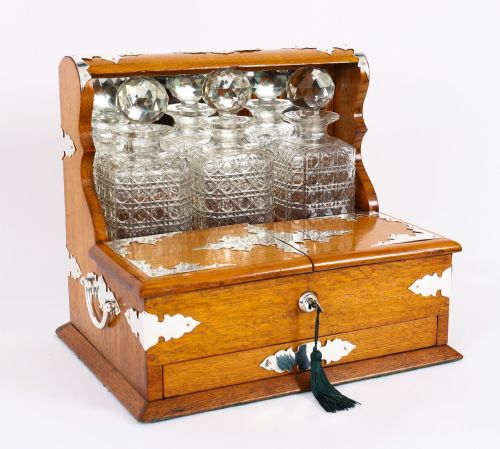
The most common formats on this page include tantalus cabinets, decanter boxes and combined games compendiums. Many incorporate brass mounts, lift-up lids and compartments for three crystal decanters.
Makers utilised figural, blonde and pollard oak to construct these robust containers. They range from simple single-bottle cases to large dry bars fitted with humidors and cards.
Materials and construction
Cabinetmakers built these boxes using solid oak timbers, often selecting figured or pollard grain variations for decorative impact. Marquetry stringing frequently highlights the exterior surfaces of finer examples.
Functional hardware defines the construction, with brass mounts protecting corners and locks securing the contents. Cut glass and cut crystal decanters fit precisely inside internal wooden frames.
Locking mechanisms operate in tandem with lifting lids or dropping fronts to secure the bottles. Some iterations integrate mirror glass panels internally to reflect the crystal decanters.
Oak Drinks Box Retail Price Guide 2026
Typical asking prices for oak drinks box among the pieces listed under this phrase on Sellingantiques today, from the lower quarter to the upper quarter. They describe what is for sale here now, not the wider market.
Listings feature oak, cut glass, and brass spanning the Victorian and Edwardian periods.
Judging quality and craftsmanship
Quality rests in the selection of the oak timber and the precision of the joinery. Figured and pollard oak surfaces exhibit superior visual depth compared to plain boards.
The sophistication of the internal fittings separates standard boxes from elaborate compendiums. Pieces that combine a tantalus, games storage and a dry bar demonstrate higher ambition in design.
The presence of heavy brass mounts and intact cut crystal decanters elevates a piece. Original locking mechanisms that function smoothly indicate careful preservation and superior original manufacture.
The Oak Drinks Box Glossary
- Tantalus
- A locking drink cabinet that holds decanters securely in place while allowing their contents to be seen. The locking mechanism prevents unauthorised pouring.
- Games Compendium
- A fitted box containing equipment for various parlour games such as cards and dice. These often share cabinet space with the decanters in a dry bar.
- Pollard Oak
- Timber taken from trees that have been pollarded, producing a clustered, highly figured grain pattern. Cabinetmakers prized this wood for luxury surfaces.
- Marquetry
- Decorative woodwork in which pieces of veneer are inserted into a background to form designs. Stringing refers to thin lines of inlay used to edge panels.
Oak Drinks Box: Frequently Asked Questions
How do I date an oak drinks box?
Dating relies on stylistic clues, hardware and timber choices spanning the Victorian and Edwardian eras. Pieces from eighteen eighty often feature elaborate brass mounts and rich figured grain.
Later Edwardian examples tend toward cleaner lines while maintaining functional compartments. Examining construction methods and locks helps confirm the manufacturing period.
What fits inside a games compendium?
A games compendium houses accessories for traditional pastimes such as playing cards, cribbage and board games. These compartments sit alongside or beneath the decanter storage.
Such multi-functional boxes served as complete social hubs for drawing rooms. They allowed hosts to serve drinks and entertain guests from a single piece of furniture.
Where should I place a drinks box?
These boxes suit sideboards, serving tables or dedicated drinks trolleys in a reception room. Their sturdy oak construction allows them to sit comfortably on most firm surfaces.
Keep them away from direct heat sources and strong sunlight to protect the wood and polish. Ensure you have clearance above or beside the box for the lid to open fully.