





Oak Dresser with Potboard
An oak dresser with potboard brings a grounded centuries-old utility to a room through its open lower shelf and sturdy timber construction.
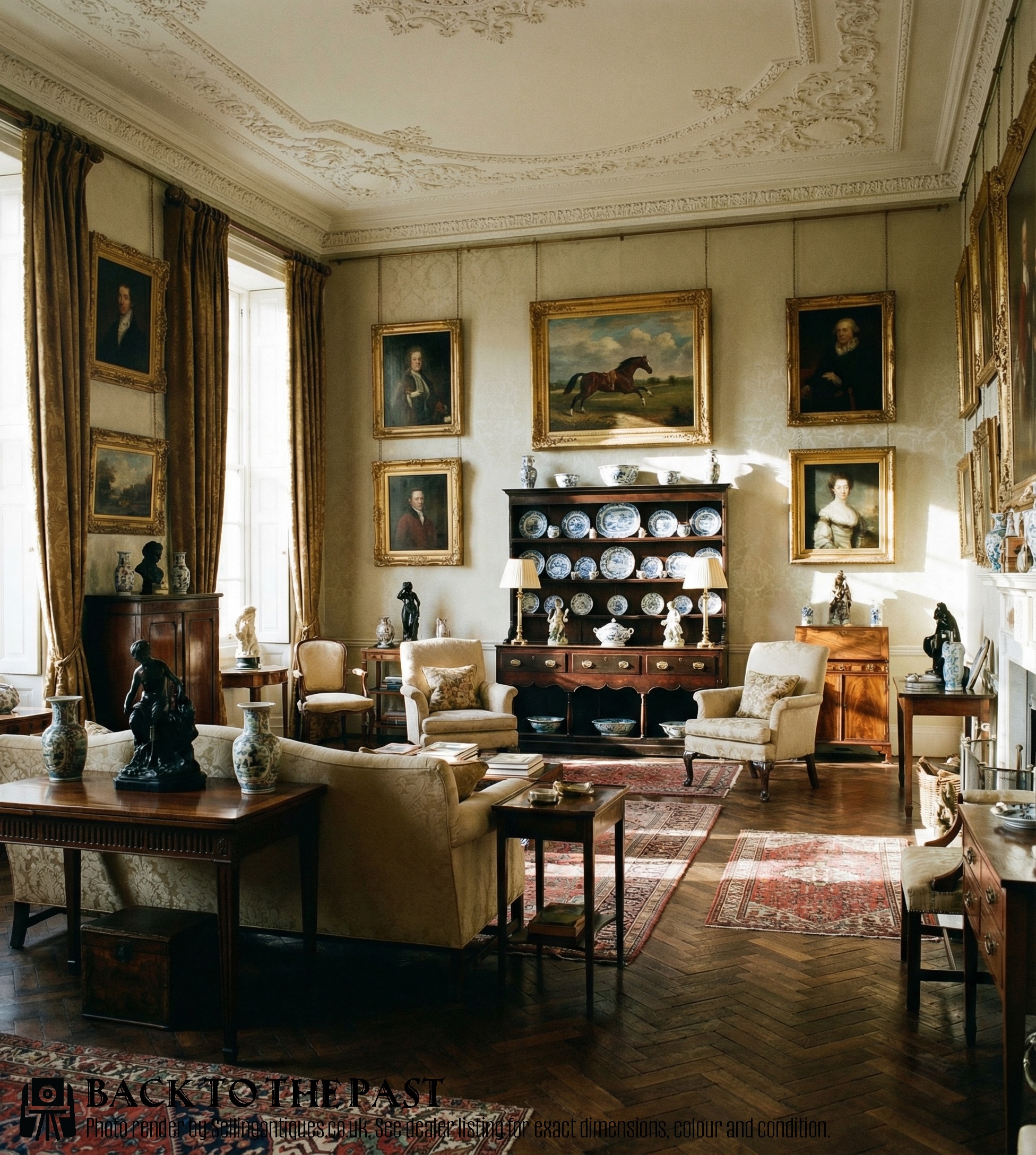
Oak Dresser with Potboard
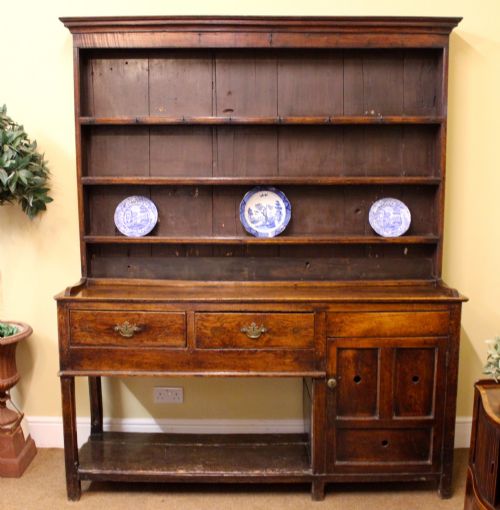
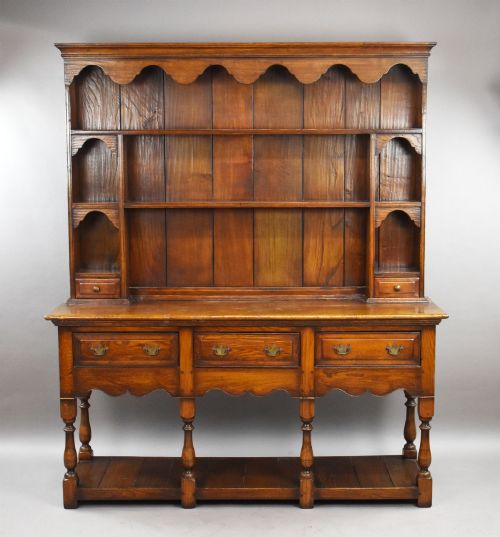
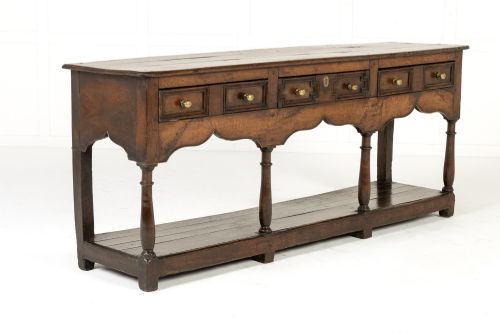
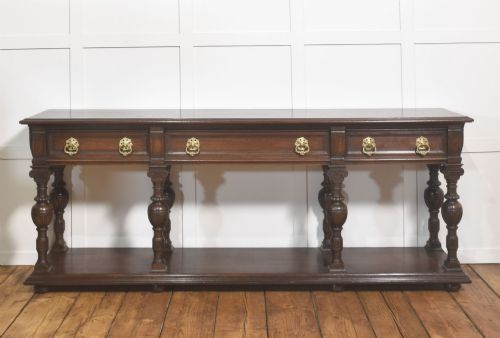
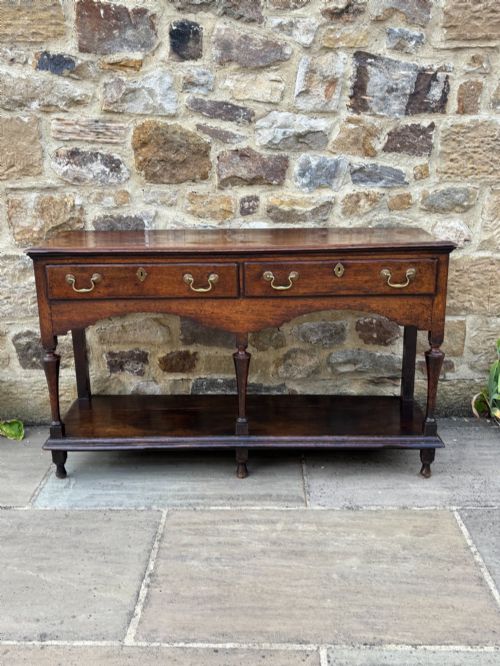
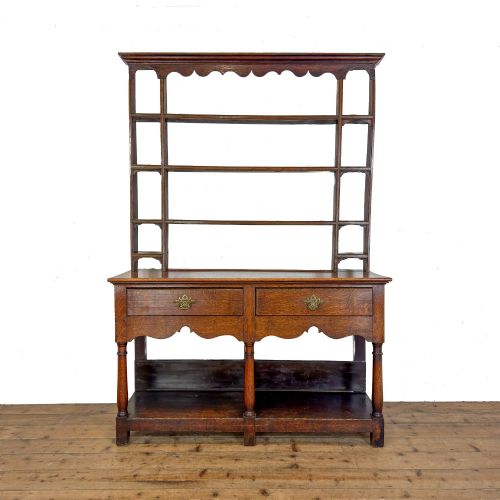
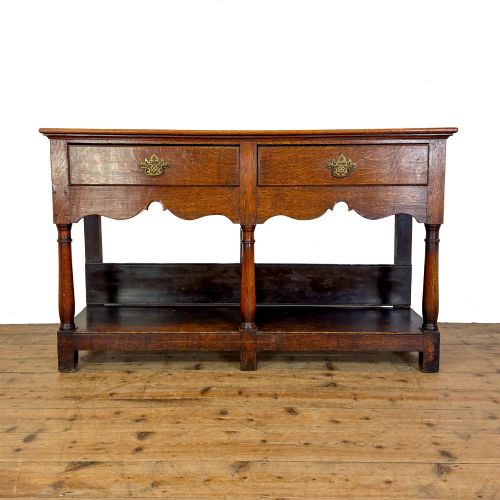
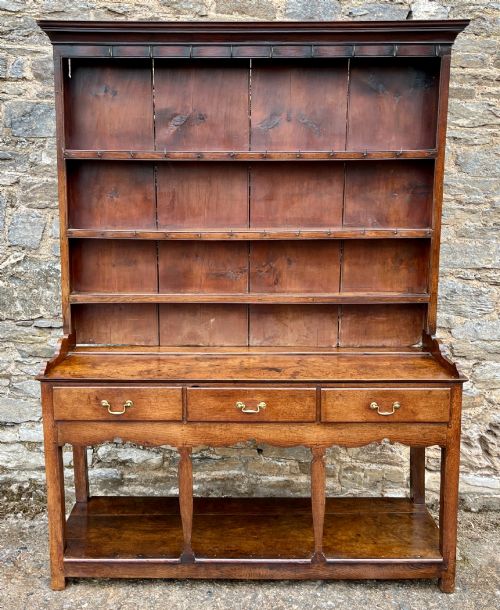
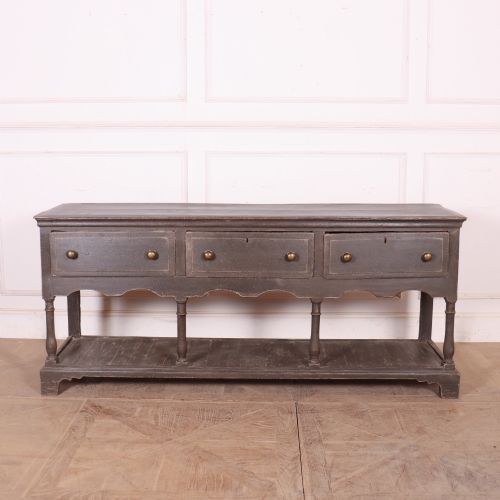
An oak dresser with potboard is a substantial domestic storage piece defined by its open low shelf beneath the main body, built to hold heavy kitchen crockery and utensils. Buyers looking for an oak dresser with potboard encounter forms spanning the eighteenth and nineteenth centuries, often categorised through regional English and Welsh country vernacular traditions.
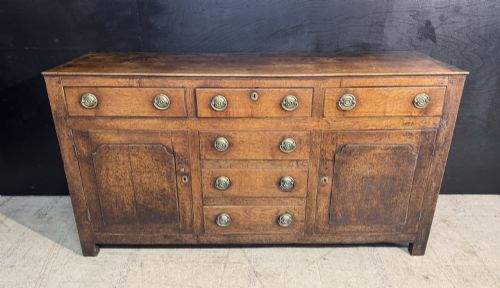
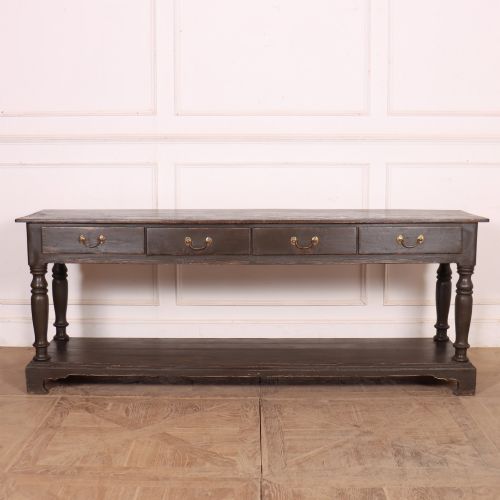
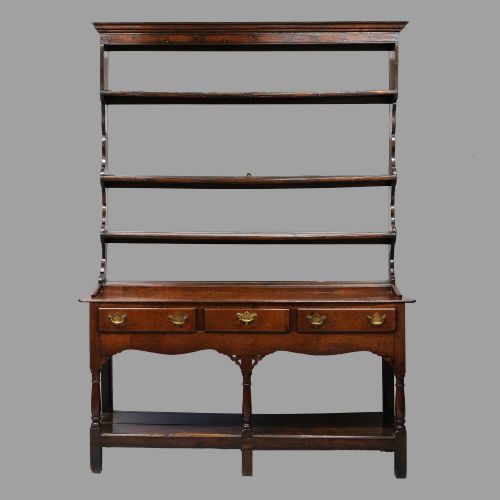
The pieces on this page appear predominantly as low dresser bases without racks, alongside examples complete with their original plate racks or upper shelving sections. Proportions range from small cottage formats to longer Georgian and George III designs incorporating multiple drawers and shaped aprons.
Regional variations connect these items to Welsh and English country workshops where native hardwoods were shaped for daily farmhouse life. Alongside standard base units, variants include low sideboards, court cupboards and occasional combinations featuring burr walnut or elm alongside the primary timber.
Materials and construction methods
Joiners built these pieces using native oak for the structural frames, boards and drawer linings, frequently incorporating secondary timbers such as pine, ash or elm for internal elements and secondary surfaces. Timber selection relied on locally available hardwoods, resulting in varied grain patterns and rich natural patination developed over centuries of daily use.
Construction relied on traditional pegged joinery, dovetail joints for the drawer boxes and robust frame-and-panel techniques to handle the weight of domestic goods. Hardware typically consists of brass or iron drawer pulls and hinges, which secure the working elements of the base units.
Oak Dresser with Potboard Retail Price Guide 2026
Typical asking prices for oak dresser with potboard among the pieces listed under this phrase on Sellingantiques today, from the lower quarter to the upper quarter. They describe what is for sale here now, not the wider market.
Several pieces preserve centuries-old kitchen scars, where generations of pastry rolling and heavy pot storage left physical marks on the oak tops.
Factors of quality and proportion
The distinction between standard examples and superior pieces rests on proportion, architectural detailing and the retention of original surfaces. Better examples display balanced drawer configurations, harmonious integration of the lower potboard shelf and crisp geometric or carved ornamentation where appropriate.
The integrity of the timber surface and the degree of original hardware also define the character of the piece. Untouched patination and unaltered structural elements elevate an example above those altered or heavily restored during later centuries.
The Oak Dresser with Potboard Glossary
- Potboard
- The lower open shelf positioned near the floor of a dresser, historically used for storing pots, pans and heavy earthenware. This defining feature elevates the main body of the furniture off the ground.
- Welsh Dresser
- A traditional regional term for a dresser featuring a plate rack above the main base unit. These pieces often display distinct local joinery traits and native timber usage.
- Frieze
- The horizontal band situated directly beneath the top surface and above the drawers of a dresser base. On country pieces, this section frequently carries shaped aprons or decorative carving.
- Dovetail
- A traditional joint used to secure drawer corners through interlocking wedge-shaped fingers. This method provides high tensile strength without relying on modern adhesives.
- Patina
- The deep surface sheen and colour developed by wood over long periods of handling, exposure to light and natural waxing. It serves as a visual indicator of age and genuine use.
Oak Dresser with Potboard: Frequently Asked Questions
What is a potboard dresser?
A potboard dresser is a traditional storage item featuring an open lower shelf beneath the main body or drawers. This lower platform distinguished kitchen furniture by keeping heavy cookware accessible.
Most surviving examples date from the eighteenth and nineteenth centuries, originating from English and Welsh country workshops where sturdy utilitarian furniture was standard.
How do I use an oak dresser in a modern home?
These dressers function effectively in dining rooms, kitchens or hallways for displaying ceramic collections, tableware or everyday items. The open potboard provides lower storage for larger baskets, books or decorative objects.
Placing the furniture against a plain wall allows the timber grain and historical proportions to anchor the room's design scheme without visual clutter.
How can I tell a Welsh dresser from an English one?
Regional attribution relies on timber choice, construction quirks and overall proportions recorded in country vernacular traditions. Welsh pieces frequently utilise native oak and specific moulding profiles distinct from English regional workshops.
Many listings explicitly note Welsh origins based on historical provenance, regional design traits and characteristic proportions found in eighteenth-century cabinetmaking.
Did all potboard dressers come with plate racks?
Surviving examples appear both as complete units with upper plate racks and as dresser bases designed without upper shelving. Many bases functioned independently as sideboards or low serving tables in farmhouse kitchens.
Buyers will find both configurations represented across Georgian, Victorian and earlier vernacular periods on this page.