





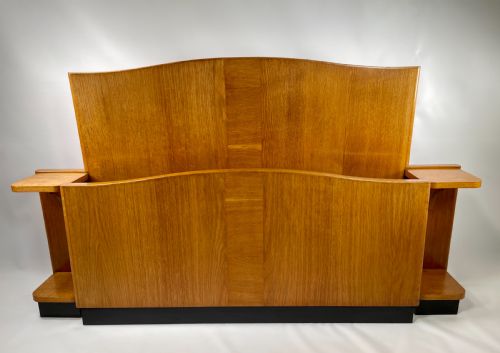

Oak Double Bed
An oak double bed anchors a bedroom with substance, offering a sleeping frame shaped by centuries of cabinet-making.
Oak Double Bed
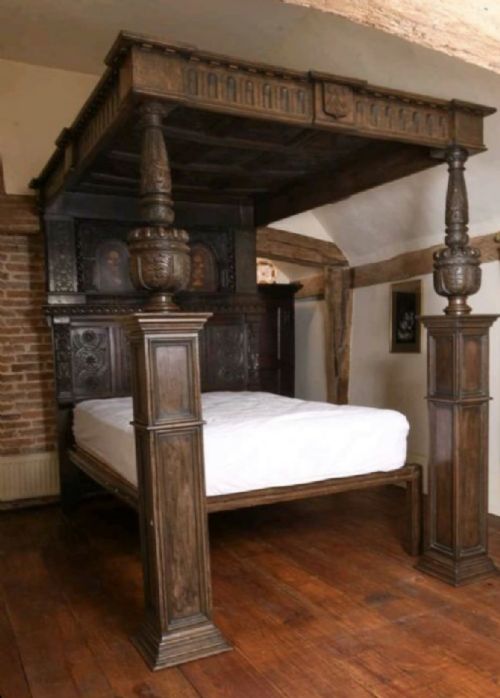
An oak double bed represents a sturdy sleeping frame built to accommodate two sleepers while anchoring a bedroom with substantial timber. The pieces gathered here span domestic Edwardian commissions, early twentieth-century workshops, and seventeenth-century joinery.
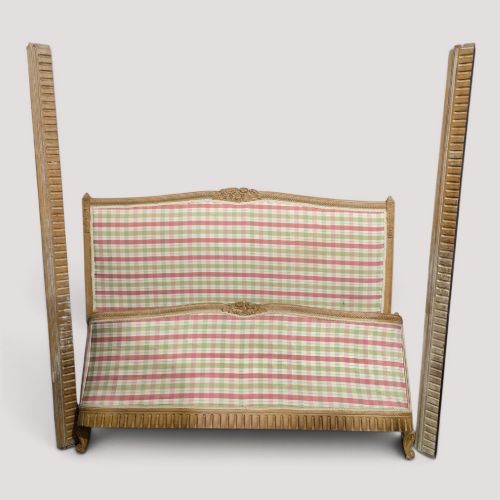
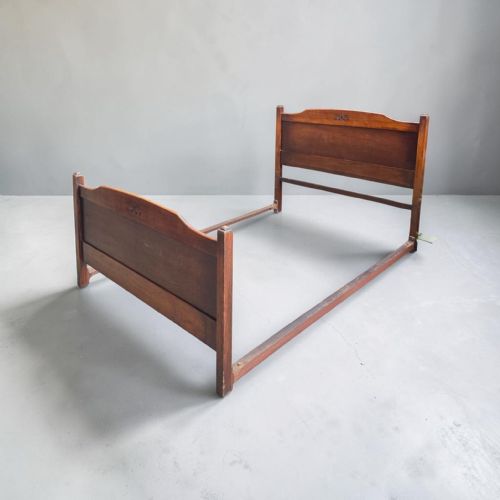
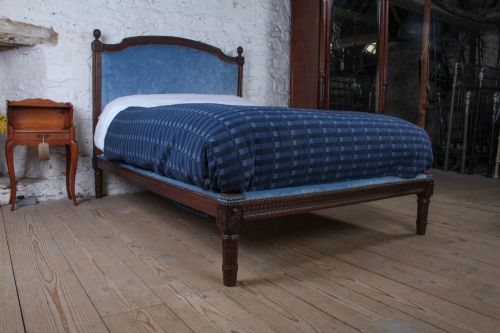
The selection ranges from panelled headboards and low-end frames to monumental four-poster tester beds and French Provincial designs. Buyers encounter solid oak alongside limed wood finishes, carved walnut, and frames integrated with textile elements like velvet and linen.
Early periods bring seventeenth-century Elizabethan and seventeenth-century styles with tester frames, while later decades introduce Arts and Crafts simplicity, Art Nouveau curves, and French Louis XVI influences.
What varies in quality
The distinction between standard production and superior craftsmanship lies in the depth and execution of the carved wood details, from crisp linen fold panels to fluid Art Nouveau motifs. Original structural integrity, including matching side irons and authentic period timber rather than later replacements, commands greater regard.
Maker attribution and documented origin elevate certain pieces, particularly labelled items from notable London workshops, whereas standard regional vernacular frames display simpler construction. The presence of original textiles or sympathetic modern re-upholstery also shapes the overall standard of preservation.
Listings span from the 17th century through the Edwardian era to the 1930s, uniting oak, walnut, and textile materials.
Heals of London·Heals St Ives·Gordon Russell
The Oak Double Bed Glossary
- Tester bed
- A bed featuring a wooden canopy or tester supported by four vertical posts above the frame. This sixteenth and seventeenth-century form creates a defined overhead enclosure.
- Linen fold
- A carved wooden panel motif imitating folded vertical rolls of linen cloth. It appears frequently on Tudor and revival oak panels.
- Side irons
- The longitudinal metal or wooden rails connecting the headboard and footboard of a bedstead. They support the internal mattress base.
- Limed wood
- Timber treated with a white pigment or lime composition to highlight the open grain. This finish lightens the appearance of dark oak.
- Low-end bed
- A bedstead featuring a low footboard that sits beneath the mattress height. This style opens up the visual space of a bedroom.
Oak Double Bed: Frequently Asked Questions
Will an antique oak double bed fit a modern mattress?
Many older frames were constructed to dimensions slightly different from standard contemporary mattress sizes. Buyers often need to check exact internal rail measurements before ordering a new mattress.
Some pieces accommodate standard widths, while others require custom-made mattresses to fit the original wooden side irons properly.
How do I assemble a antique four poster bed?
These frames rely on traditional pegged mortise and tenon joints or heavy bolts connecting the headboard, footboard, and tester roof. Two people are typically required to steady the vertical posts while engaging the rails.
Careful alignment prevents stress on the antique timber during the tightening of any metal fixings.
How do I care for polished oak furniture?
Maintenance involves dusting with a soft, dry cloth and applying natural beeswax periodically to nourish the dry timber. Avoiding direct sunlight and sustained moisture prevents the wood from warping or cracking.
Harsh chemical sprays should be avoided entirely to preserve the original patina of the finish.
How can I tell a seventeenth-century bed from a revival piece?
Original seventeenth-century pieces display hand-tool marks, pegged joints, and timber shrinkage consistent with centuries of age. Revival pieces from the nineteenth or twentieth centuries often show more uniform machine sawing and cleaner internal edges.
Examining the underside of components and the wear patterns on the foot posts reveals the true age of the joinery.