
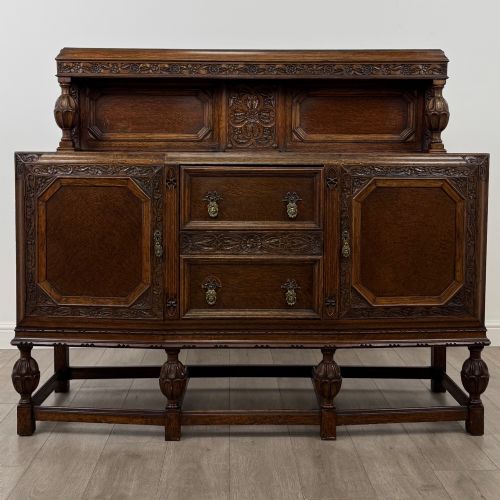
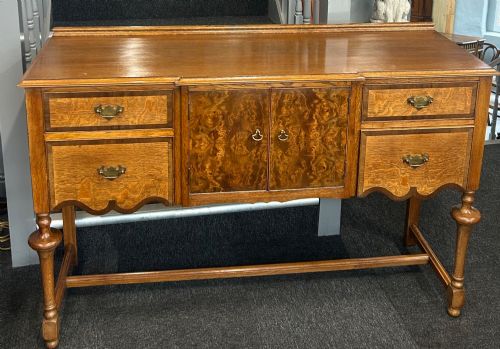
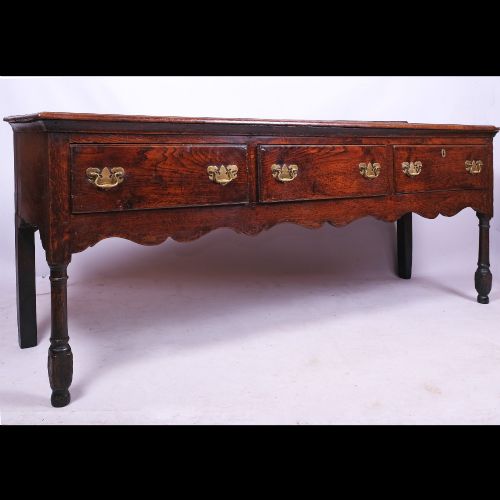


Oak Dining Room Credenza
An oak dining room credenza provides sturdy timber storage for formal dining spaces, combining practical surface area with traditional craftsmanship.
Oak Dining Room Credenza
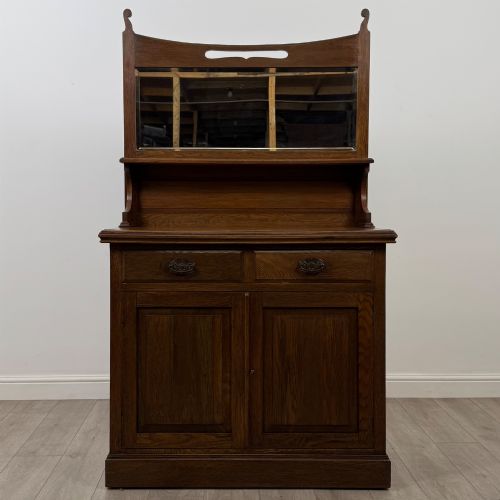
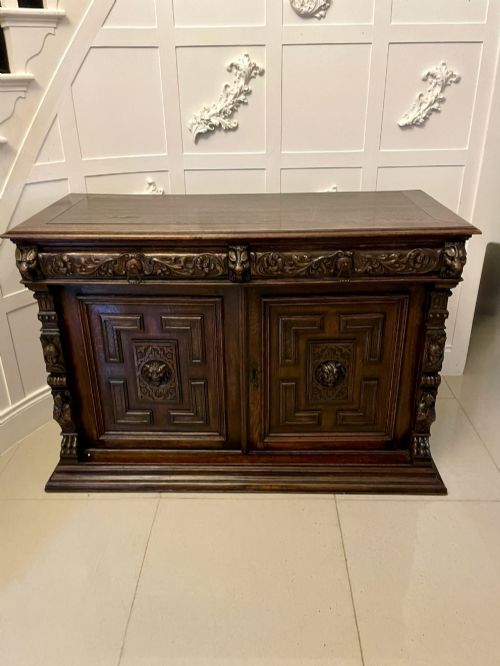
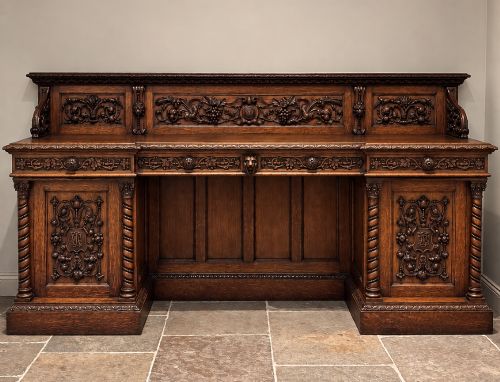
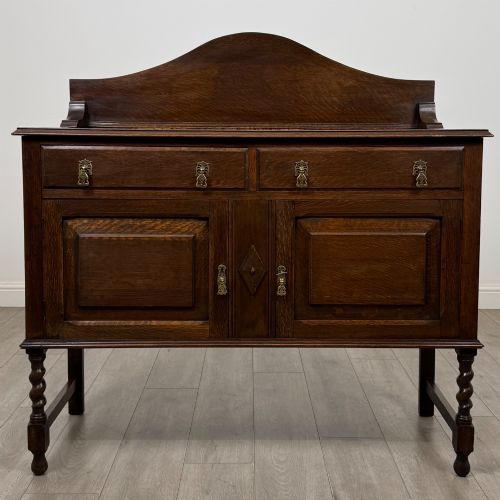
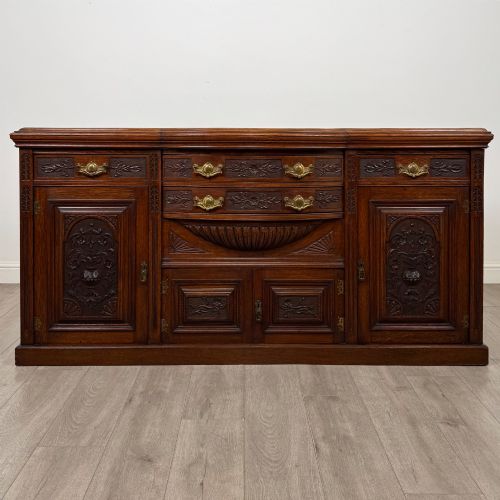
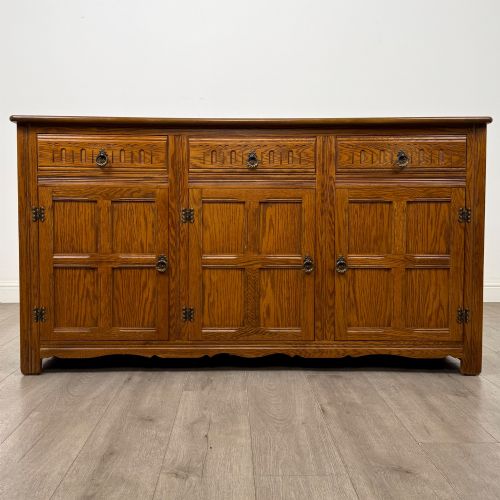
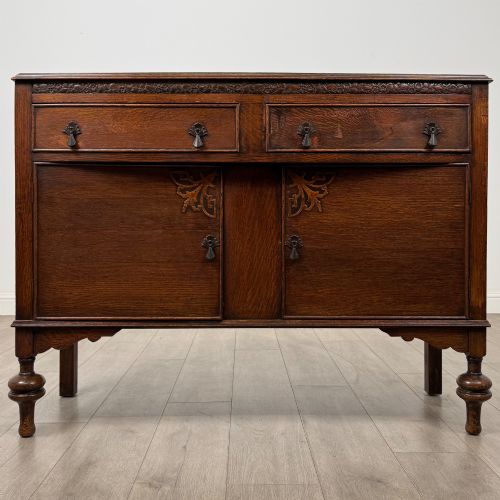
When you search for an oak dining room credenza, you encounter heavy timber serving furniture originating from periods such as the eighteenth century, the Victorian era, and the Edwardian decade. These pieces take the form of sideboards, buffets, server cabinets, and dresser bases designed for domestic dining rooms.
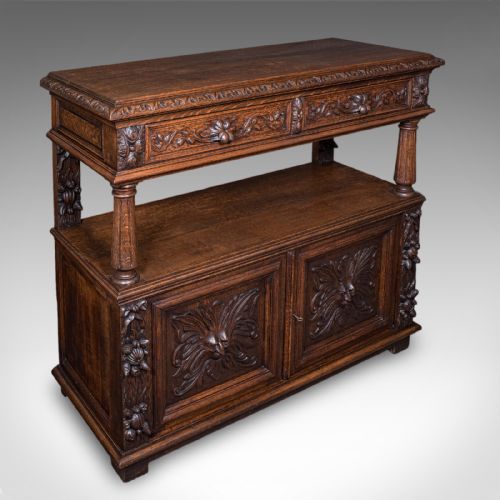
The most common examples on this page date from the nineteenth and early twentieth centuries, displaying styles ranging from plain golden timber formats to elaborate carved Jacobean Revival and Arts and Crafts designs. They serve to store dining linen and tableware while anchoring the room with substantial wood presence.
Origins span British workshops alongside French provincial pieces and continental movements, reflecting diverse regional tastes in domestic storage. Buyers choose them to integrate historical utility and traditional joinery into modern dining spaces.
Materials and construction methods
Makers utilised solid oak alongside decorative veneers like pollard oak and burr walnut to create varied grain patterns across door panels and drawer fronts. Secondary materials such as brass for hardware, iron for internal brackets, and glass for cabinet doors appear frequently in the construction.
Joinery methods rely on traditional framing and panel assembly, often enhanced by hand-carved geometric motifs, linenfold panels, or barley twist supports. Parquetry surfaces demonstrate geometric wood arrangement, whilst mirror backs integrate bevelled glass plates into towering superstructure frames.
The documented styles span Victorian, Edwardian, Jacobean Revival, Arts and Crafts, Gothic Revival, and Louis XV formats.
Distinctions in construction and design
The upper tier of pieces exhibits deeply carved decorative relief, balanced proportions, and superior timber selection featuring highly figured pollard oak or rich golden grain. Lesser examples rely on repetitive factory milling with sparse ornamentation and plain timber stock.
Superior execution shows in tight joint construction, substantial brass hardware, and integrated mirror frames that align seamlessly with the lower buffet cabinet. Handling reveals the deliberate weight of dense hardwoods and the careful smoothing of internal drawer linings.
Maple and Co·T Simpson and Son
The Oak Dining Room Credenza Glossary
- Credenza
- A sideboard or buffet cabinet used for serving food and storing dining accessories.
- Pollard oak
- Timber taken from trees that have been pruned close to the trunk, producing a dense, knotty grain pattern.
- Barley twist
- A type of turning shaped like a spiral rope, popular in furniture supports during various revival periods.
- Dresser base
- A low wooden storage unit featuring drawers and cupboards, traditionally forming the lower half of a kitchen or dining dresser.
- Parquetry
- Geometric patterns of wood inlaid in a floor or furniture surface, seen on tabletops and cabinet fronts.
Oak Dining Room Credenza: Frequently Asked Questions
How do I clean oak furniture?
Wipe surfaces gently using a soft, dry cloth to remove dust without harming the polished finish. Avoid harsh chemical cleaners that strip historical waxes and oils from the timber.
Apply a traditional beeswax polish periodically to nourish the oak grain and maintain a natural protective sheen. Buff the surface lightly after application to prevent wax buildup.
What periods do these pieces span?
The inventory encompasses items dating from the eighteenth century through the Victorian and Edwardian eras up to the nineteen-thirties. Earlier examples often display vernacular provincial construction, whilst later pieces reflect revivalist and modernist design movements.
Stylistic shifts reveal changing domestic fashions, moving from heavy dark carvings towards lighter golden oak tones and geometric Arts and Crafts simplicity. Each era brings distinct hardware choices and structural proportions to the dining room.
How were these cabinets used?
Households utilised these heavy pieces in dining rooms to store heavy silverware, porcelain, table linen, and serving dishes. The flat top surface functioned as a staging area for food and drink presentation during formal meals.
Some variants incorporated wine racks or specialised drawers to keep dining accessories organised. Mirror-backed formats allowed light to reflect across the room while displaying decorative ceramics.
Where should I place a credenza?
Position the piece against a principal dining room wall where its length and weight can anchor the room. Ensure adequate clearance around doors and drawers for unhindered daily access.
Keep timber furniture away from direct heat sources and strong sunlight to prevent wood splitting or fading. Allow sufficient space for chairs and foot traffic if placing the unit behind a dining table.