

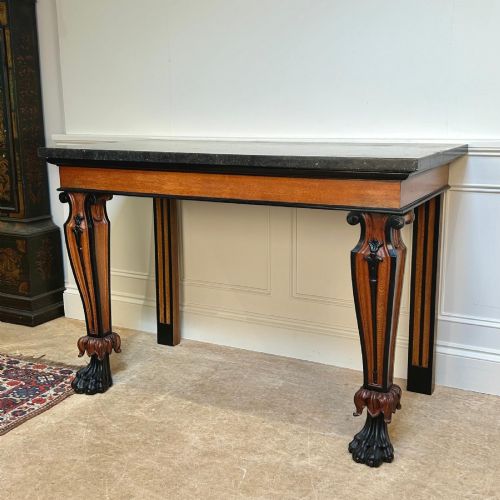
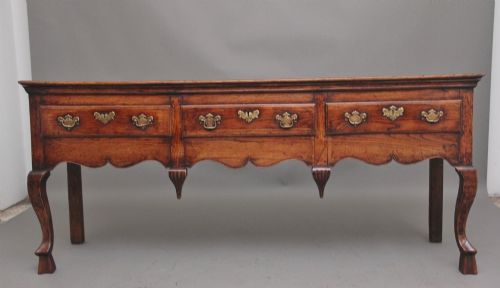
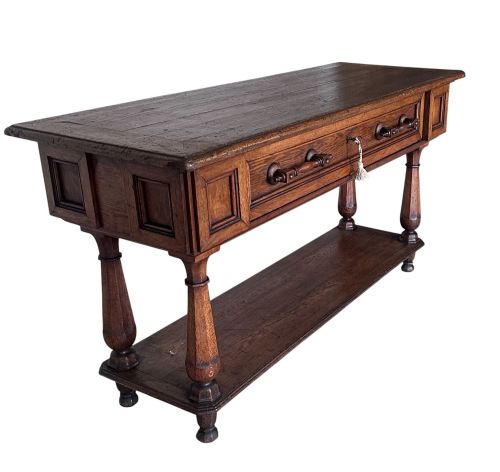
Oak Country Server Table
An oak country server table brings warmth and utility to a room, offering sturdy surfaces shaped by centuries of domestic use.
Oak Country Server Table
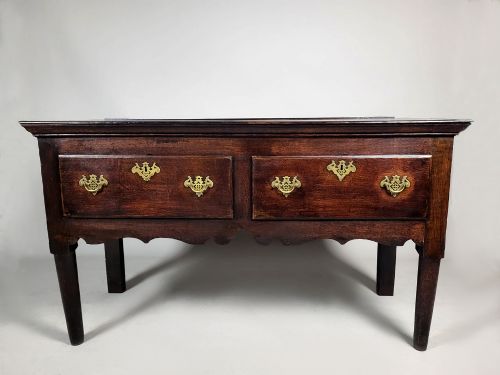
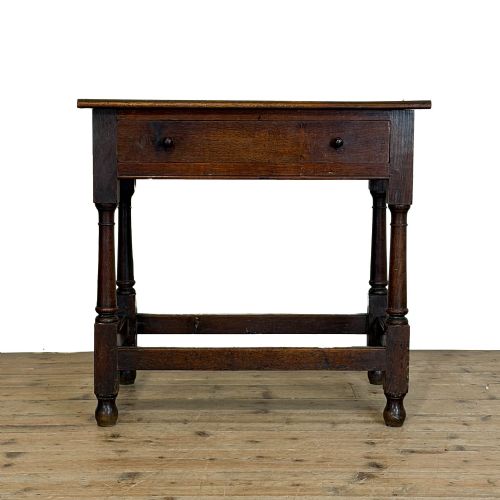
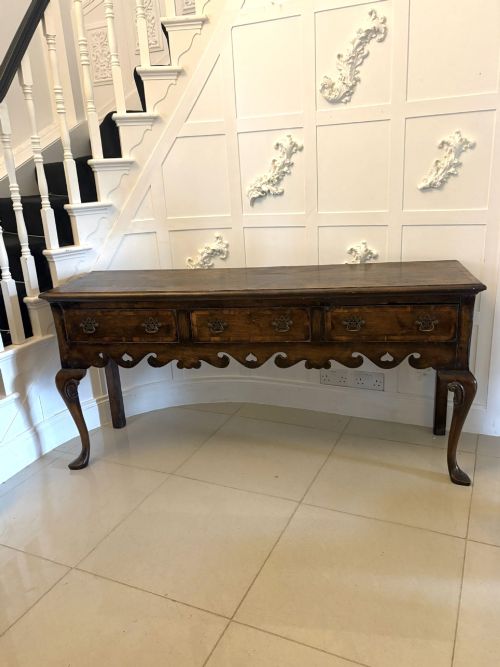
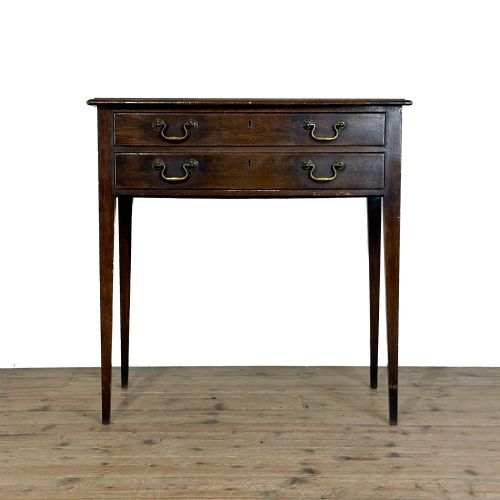
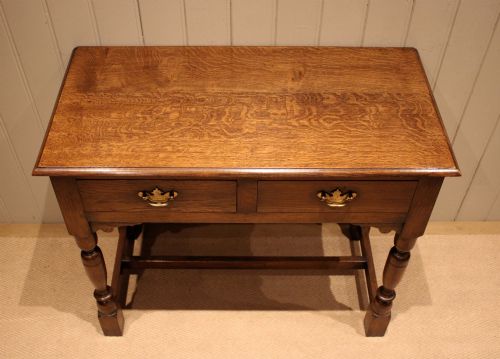
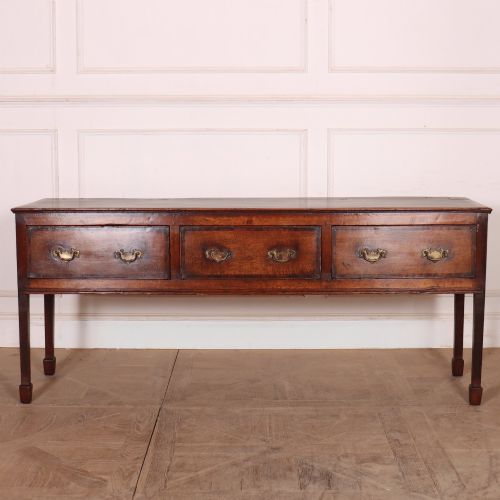
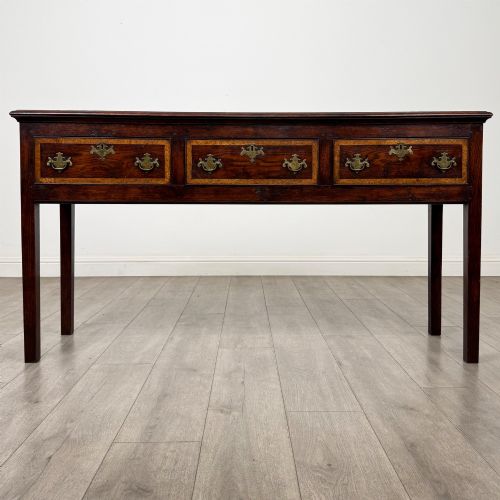
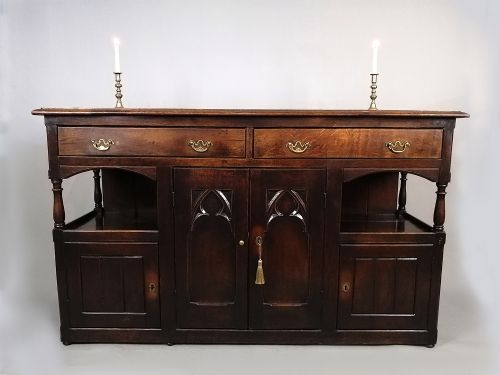
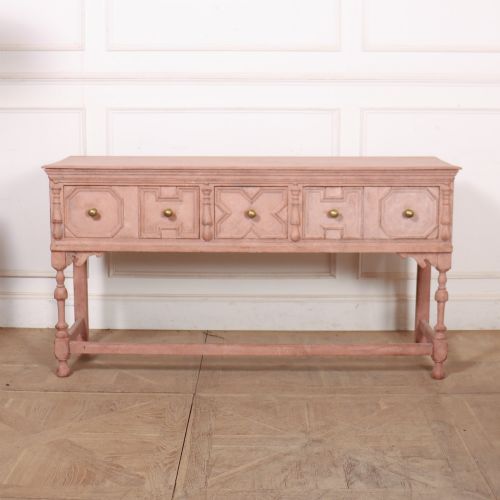
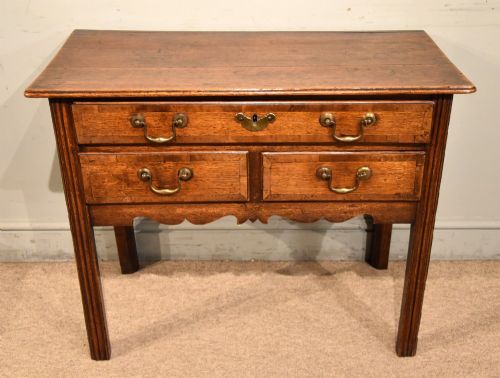
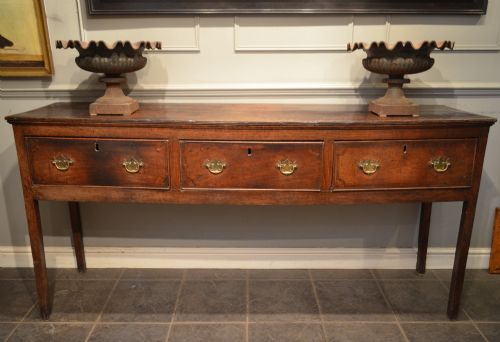
When searching for an oak country server table, buyers encounter sturdy lowboards, dresser bases, and sideboards originating from domestic kitchens and dining spaces. These forms provide long, low surfaces suited for serving food or displaying household objects.
The pieces span several periods, with 18th-century and Georgian examples appearing alongside later interpretations from the 19th and early 20th centuries. Welsh vernacular, English country, and French country styles heavily influence the design of these items.
Most examples rely on solid construction, featuring practical drawers and occasionally lower potboard shelves for storage. Their proportions range from compact lowboys to expansive serving tables designed for large halls.
How they were made
Makers utilised solid oak as the primary timber, sometimes supplemented with pine, elm, or ebonised wood for structural or decorative contrast. Brass hardware, including original drop handles and escutcheons, secures the drawers on period pieces.
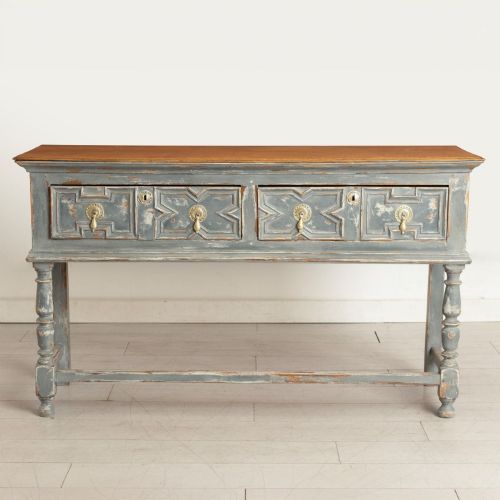
Surfaces occasionally show applied paint finishes or bleached treatments, reflecting regional preferences from French to English workshops. Joinery relies on traditional pegged mortise and tenon frames designed to bear heavy everyday loads.
The inventory combines English country and French provincial styles with Jacobean and Queen Anne revival pieces.
What varies in quality
The distinction between standard utility items and finer examples often rests on the crispness of carved details and the retention of original brasses. George III period pieces frequently display more refined cabriole legs or Gothic ornamentation.
Timber selection dictates the overall presence of the table, with dense grain patterns and uniform colour elevating the piece. The survival of an uncompromised potboard base or untouched surface patina separates regional vernacular works from later revivals.
The Oak Country Server Table Glossary
- Dresser base
- A low wooden sideboard fitted with drawers, historically used in kitchens for food preparation and storage. It forms the foundation upon which plate racks were sometimes placed.
- Potboard
- An open lower shelf positioned near the floor of a dresser base or serving table. It originally held pots, pans, and heavy earthenware.
- Lowboy
- A small side table featuring one or more rows of drawers, typically raised on relatively tall legs. These tables served various domestic functions including dressing or serving.
- Cabriole leg
- A furniture leg that curves out in a convex arc and tapers inward in a concave arc, ending in a pad or foot. This stylistic feature appears frequently on Georgian examples.
- Vernacular
- Localised furniture building traditions that prioritise practical utility over high-style academic design. Welsh and English country pieces demonstrate these regional traits.
Oak Country Server Table: Frequently Asked Questions
How do I use an oak server table today?
These tables function well as sideboards in dining rooms or as console surfaces in hallways. Their sturdy tops accommodate lamps, books, and serving platters with ease.
The lower drawers and potboards offer concealed storage for table linen or tableware. Placing one in a kitchen provides a practical workspace reminiscent of its original domestic environment.
How can I tell an 18th-century piece from a 20th-century revival?
Examine the timber shrinkage, joinery marks, and the wear patterns around the drawer pulls. Earlier pieces exhibit hand-cut joints and timber movement consistent with age.
Revival pieces from the 1920s or Edwardian eras often show more uniform machine milling and standardised fittings. The presence of period-correct hardware styles also helps anchor the date of manufacture.
What is the difference between a dresser base and a side table?
A dresser base incorporates a row of working drawers beneath the main surface, specifically designed for kitchen or dining room utility. They usually possess greater length and heavier proportions.
A side table or lowboy tends to be more compact with lighter framing. Side tables focus on display and surface area rather than heavy storage capacity.
Are these tables suitable for small rooms?
Narrow side tables and lowboys fit easily into hallways and tighter living spaces without blocking walkways. Their open lower potboards prevent the furniture from feeling visually heavy in a compact area.
Larger serving tables and extended dresser bases require more clearance, particularly when drawer access is needed. Selecting a narrow or low-profile version ensures proper fit.