


Oak Column Display Stand
These oak column display stand pieces elevate sculpture and plants, bringing robust timber architecture and height to a room.
Oak Column Display Stand
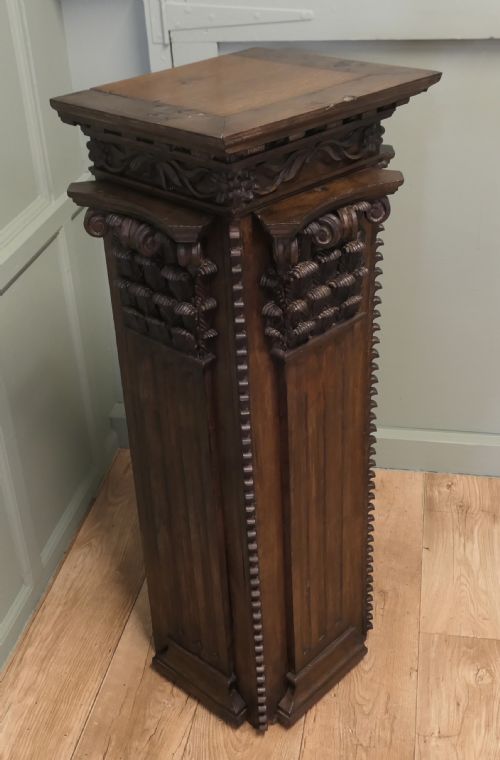
An oak column display stand takes the form of a pedestal, plant stand, or torcheres intended to elevate items within a room. Buyers searching this phrase encounter sturdy timber supports originating from the eighteenth century through to the nineteen-twenties.
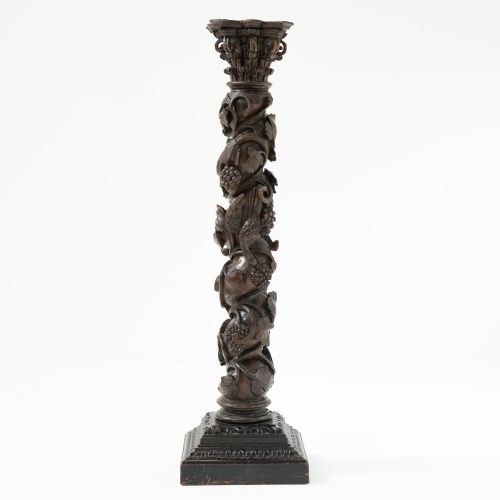
The selection includes straightforward spiral pillars alongside carved caryatid supports, French display pedestals, and matched pairs of octagonal whatnots. These tall furnishings function practically as plant stands or plinths for decorative objects, drawing the eye upward.
Makers shaped these stands across distinct historic revivals, ranging from Baroque and Renaissance patterns to Victorian rustic interpretations and barley twist designs. Each piece utilises solid timber framing to bear weight reliably while introducing architectural presence.
Construction and materials
Makers constructed these stands primarily from oak and carved hardwood, occasionally integrating brass fittings for structural reinforcement or decorative accent. The timber was selected for its dense grain and capacity to hold deep hand-carved ornamentation.
Joinery techniques include turned spiral pillars, faceted octagonal geometry, and intricate relief carving depicting Solomonic twists or figural caryatid supports. Surfaces received traditional finishes that accentuated the natural figuring of the wood across varying periods.
Listings feature oak column display stand pieces spanning the eighteenth century through to the nineteen-twenties, incorporating brass elements and carved hardwood.
Assessing craftsmanship and condition
Quality rests in the crispness of the hand-carved detail and the structural integrity of the central column under vertical load. Finer examples display harmonious proportions, substantial timber weight, and sophisticated revival styling without clumsy timber repairs.
The distinction between standard utility stands and superior examples lies in the ambition of the design, such as figural caryatids or complex barley twist turning executed with precision. Patina and timber selection further differentiate standard production items from master-carved statement pieces.
The Oak Column Display Stand Glossary
- Pedestal
- A structural support or base used to elevate a bust, vase, or sculpture above floor level. It provides vertical emphasis in interior arrangement.
- Torchn
- A tall ornamental stand historically designed to hold a candle or light, now frequently utilised for plants and decorative vessels.
- Solomonic
- A helical or twisted column design resembling a corkscrew, popular in Baroque and revival furniture making. This form catches light dynamically along its curving ridges.
- Caryatid
- A sculpted female figure serving as an architectural support taking the place of a column or pilaster. These figures lend classical drama to support timber surfaces.
- Etagere
- A piece of furniture consisting of a set of open shelves for displaying small objects. These tiered structures combine display utility with compact footprints.
Oak Column Display Stand: Frequently Asked Questions
What is an oak column display stand used for?
These tall stands function primarily to elevate plants, jardiniere bowls, sculptures, and decorative objects above floor level. They draw the eye upward and introduce architectural verticality into domestic spaces.
Historically, variations like torcheres and plant stands were positioned in corners or beside seating to showcase prized household ornaments. Today, they serve the exact same decorative purpose in modern interiors.
How do I tell different periods apart?
Dating relies heavily on stylistic revival cues, turning techniques, and timber finishing methods recorded across the eighteenth, nineteenth, and early twentieth centuries. For instance, robust spiral pillars and heavy carving often align with Victorian or mid-nineteenth-century production.
Earlier eighteenth-century examples exhibit distinct hand-carved detailing and patination inherent to their age. Comparing the joinery methods and turning styles helps narrow down the probable era of manufacture.
Can these stands support heavy items?
Most stands are built from solid oak and carved hardwood designed specifically to bear substantial weight vertically. The stout timber columns and broad bases provide inherent stability for heavy ceramic planters or stone sculptures.
However, load capacity depends on the individual piece's condition and base width rather than height alone. Slimmer barley twist designs require sensible placement to prevent tipping when holding heavy objects.
Are matched pairs common?
Matched pairs appear periodically across various nineteenth-century and revival styles, offering symmetrical display options for doorways or fireplace hearths. These pairings ensure uniform height and decorative vocabulary when balancing a room.
Single stands are equally prevalent for standalone corner placement. Finding a true matched pair from the same workshop remains a distinct bonus for symmetrical interior layouts.