



Oak Coat Rack Mirror
An oak coat rack mirror is a practical hallway furnishing combining timber, glass, and hanging hooks for daily use.
Oak Coat Rack Mirror
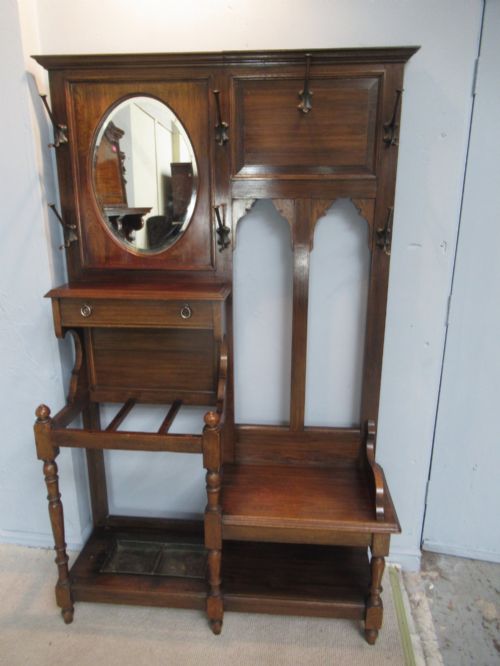
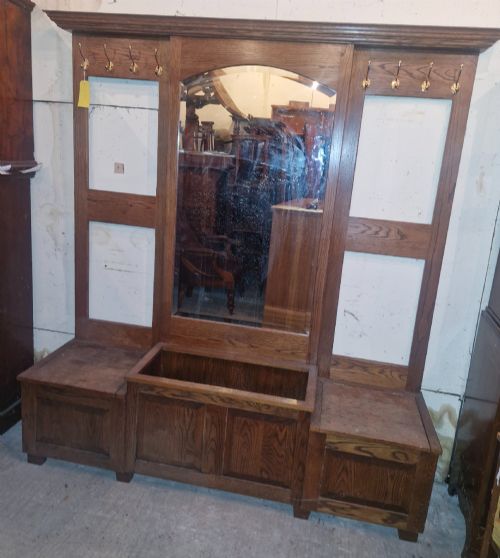
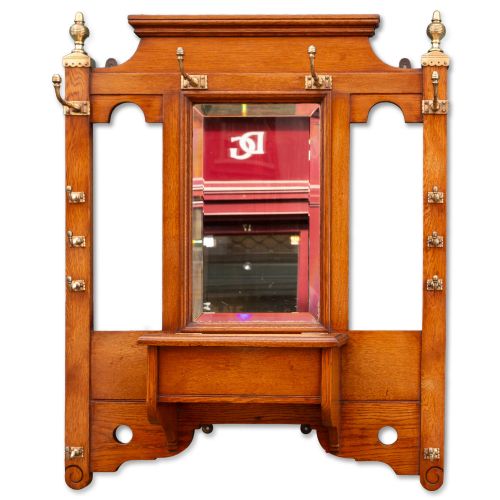
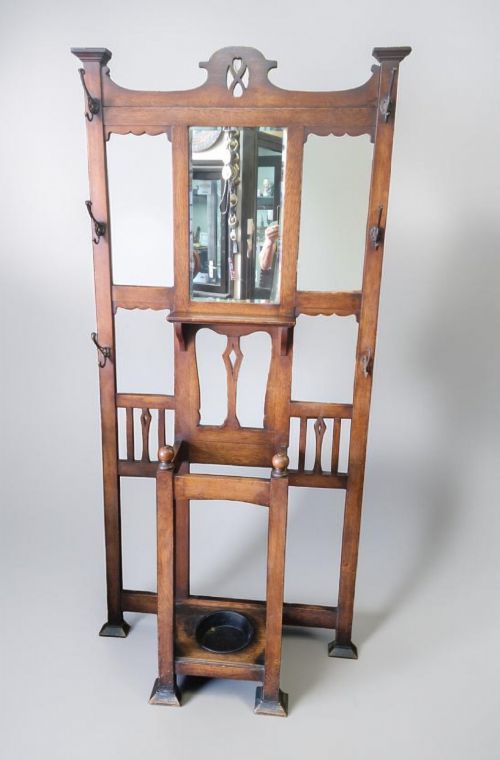
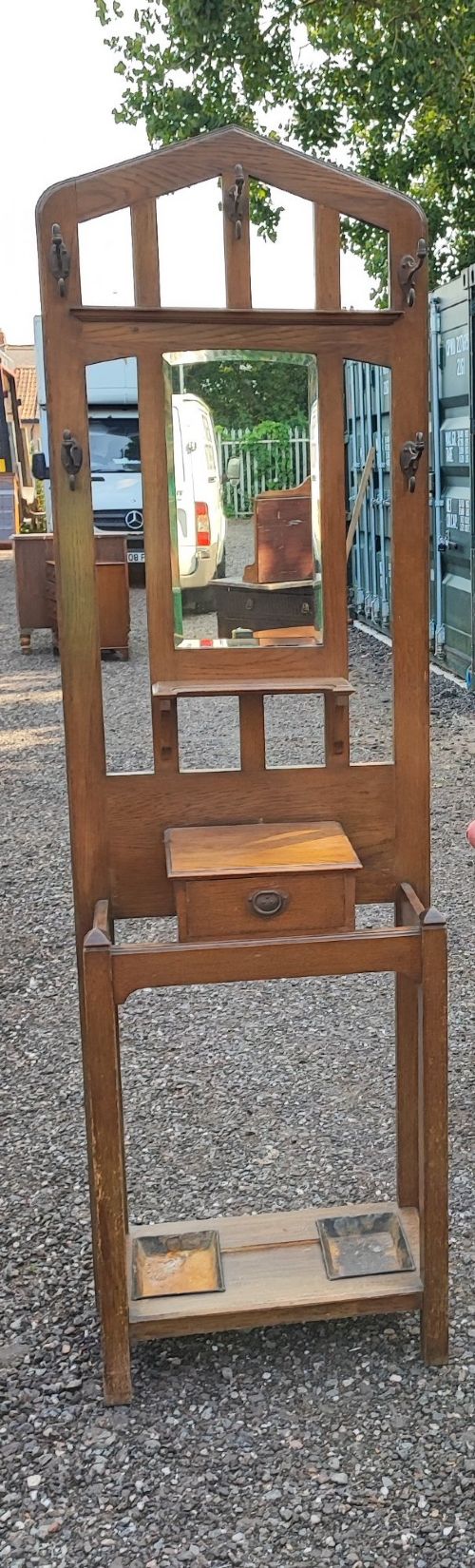
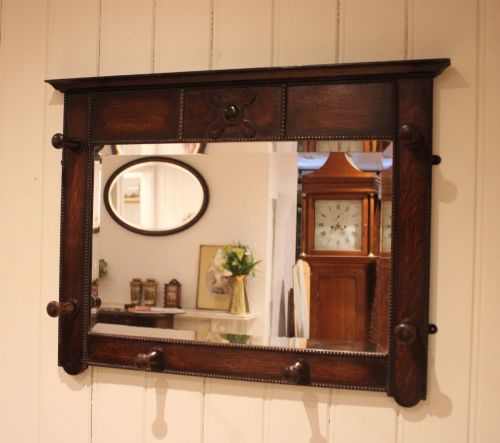
An oak coat rack mirror serves as a combined entryway furnishing, bringing together timber framing, a central mirror, and metal hanging hooks. You will encounter both wall-mounted panels and substantial freestanding hall stands designed for hats, coats, and umbrellas.
The pieces span the Victorian and Edwardian eras, incorporating stylistic influences such as Arts and Crafts, Art Nouveau, and Gothic Revival. Wall-mounted racks suit smaller entrance spaces, while large hall stands dominate substantial hallways with built-in seating and umbrella wells.
Materials and construction
Makers utilised solid oak, often described as golden or light oak, alongside contrasting brass or iron hooks for structural hanging strength. Bevelled or plain glass mirrors form the central visual anchor of each piece.
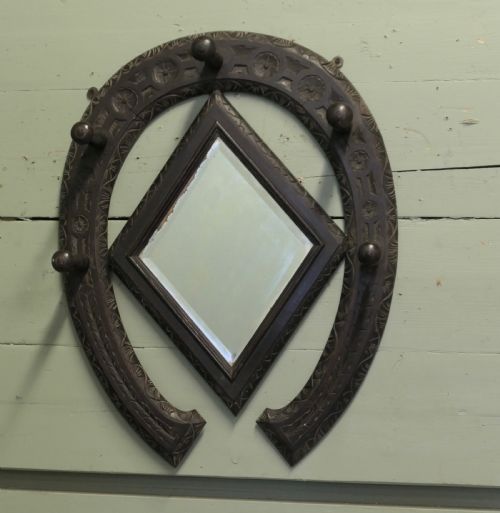
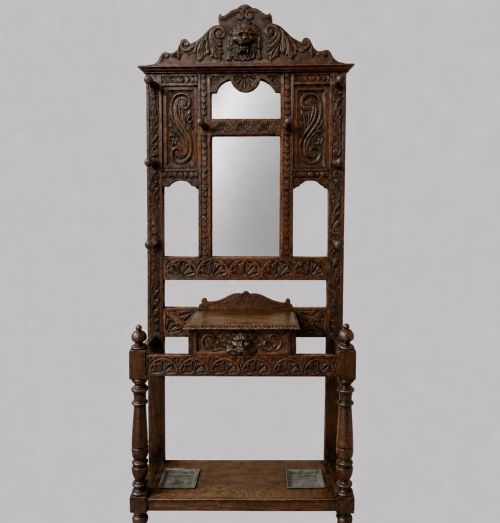
Detailing includes hand-carved motifs, such as Green Man masks or horseshoe designs, reflecting Victorian and Edwardian workshop traditions. Additional elements like ceramic tiles, marble inserts, and cast iron umbrella drip pans appear in larger hall stands.
Several pieces incorporate cast iron horseshoes, offering an antique decorative touch designed to bring good fortune right to the front door.
Judging quality and craftsmanship
Quality rests in the depth and execution of the carved woodwork, the thickness of the oak frame, and the integrity of the original mirror plate. Hand-carved elements display sharper detail and more confident execution than simpler machine-milled panels.
Original hardware, including heavy brass or iron coat hooks and matching drip trays, elevates a piece above those fitted with later replacements. The scale and architectural ambition of the frame, from narrow wall mirrors to monumental hall stands, dictate the presence of finer joinery.
The Oak Coat Rack Mirror Glossary
- Hallstand
- A freestanding entryway furniture piece combining a mirror, coat hooks, umbrella storage, and frequently a bench seat. These items form the largest examples of the furniture type.
- Green Man
- A sculptural architectural ornament depicting a human face entwined with leaves, vines, or foliage. This motif appears frequently in carved Victorian oak hall stands.
- Arts and Crafts
- A design movement prioritising traditional craftsmanship, visible construction, and simple forms over ornate industrial decoration. Pieces from this style often feature light or golden oak.
- Valet mirror
- A mirror fitted with integrated pegs, hooks, or small ledges for temporary clothing and accessory placement. These are commonly found on wall-mounted racks.
Oak Coat Rack Mirror: Frequently Asked Questions
How do I hang a wall-mounted oak coat rack mirror?
Wall-mounted versions require sturdy fixings screwed directly into wall studs or masonry to support the combined weight of the timber frame and heavy coats. Professional installation is recommended given the substantial weight of solid oak and glass.
Ensure the mounting brackets on the rear align securely with heavy-duty wall anchors to prevent the rack from pulling away under a load of winter garments.
How do I care for the oak and mirror glass?
Maintain the oak frame by applying a traditional beeswax polish occasionally to nourish the timber and preserve its finish. Avoid liquid cleaners on the wood and use a damp cloth for general dusting.
Clean the mirror plate with a standard glass cleaner, taking care to spray the cloth rather than the glass to prevent moisture seeping behind the mirror foil or into the wooden frame.
How can I tell a Victorian hall stand from an Edwardian one?
Victorian examples frequently display heavier, darker oak, elaborate carvings like Green Man motifs, and Gothic or Flemish Renaissance revival influences. They tend to be imposing and densely ornamented.
Edwardian pieces often utilise lighter golden oak, cleaner lines inspired by the Arts and Crafts movement, and restrained geometric carving with less visual clutter.