
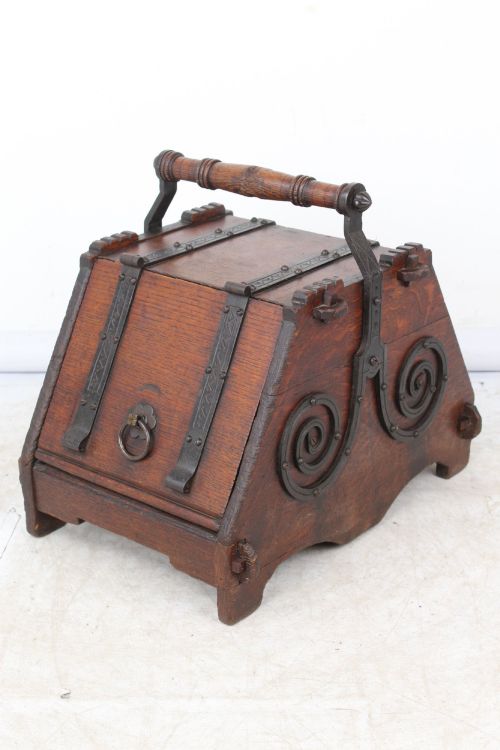
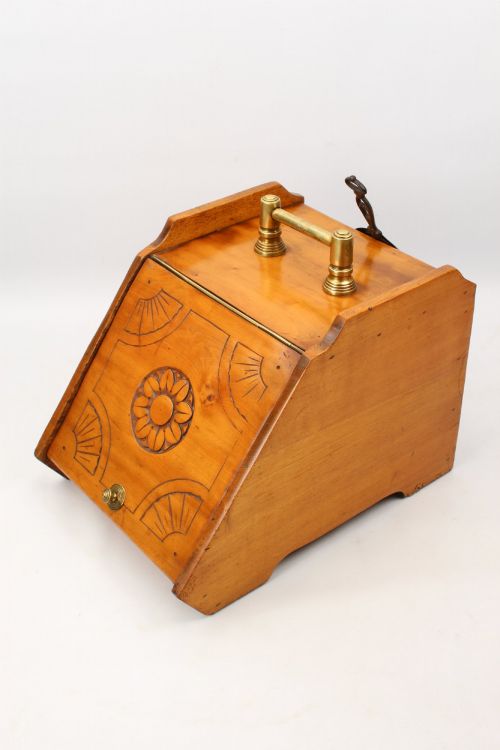


Oak Coal Scuttle Box
These oak coal scuttle box examples bring sturdy practicality and rich wood grain right to the hearth.
Oak Coal Scuttle Box
An oak coal scuttle box serves as a functional fireside accessory designed to store solid fuel near an open fireplace. Buyers searching for an oak coal scuttle box will encounter forms spanning the eighteenth, nineteenth, and early twentieth centuries, including purdoniums and traditional bins.
Makers utilised various descriptive terms in period titles, alternating between coal boxes, scuttles, and purdoniums. These domestic items range from plain utilitarian storage to elaborately carved showpieces intended for formal reception rooms.
Materials and construction methods
Makers built these fireside containers primarily from solid oak and pollard oak, complemented by contrasting metals such as brass, iron, and silver plate. Carpenters employed sturdy dovetail joints and applied decorative carving to the front panels.
Internal components typically include original metal or ceramic liners designed to contain coal dust and protect the wood from moisture. Brass mounts, hinges, and drop handles provide both structural reinforcement and decorative contrast against the dark timber.
Listings demonstrate a strong preference for oak, supported by brass mounts, iron hardware, and occasional silver plate.
Assessing craftsmanship and condition
Superior examples distinguish themselves through choice timbers like figured pollard oak and crisp, hand-carved ornamentation. Finer pieces retain original metal linings, matching shovels, and robust brass hardware that has aged gracefully.
Simpler utilitarian versions rely on plain timber construction with minimal decoration and replacement fittings. The presence of maker touches, integrated interior coal chutes, and sound structural joinery separates everyday items from exceptional cabinetwork.
Christopher Dresser
The Oak Coal Scuttle Box Glossary
- Purdonium
- A specialised coal box featuring a sloping front door that drops forward to reveal a metal interior container. This Victorian invention kept coal neatly concealed while offering easy access for the hearth.
- Scuttle
- A traditional vessel designed for carrying and holding coal, often fitted with a swinging overhead handle and a flat base for tipping fuel. Metal shovels frequently accompanied these pieces.
- Pollard Oak
- Timber harvested from trees that were pollarded, resulting in a distinctive, highly figured grain pattern prized by cabinetmakers. This decorative wood frequently appears on finer Victorian fireside boxes.
- Gothic Revival
- A nineteenth-century design style drawing inspiration from medieval architecture, characterised by pointed arches, heavy linenfold carving, and robust structural forms. Pieces in this style make a strong visual statement beside the fireplace.
- Art Nouveau
- An international decorative style popular around nineteen hundred, known for flowing, organic plant motifs and stylized natural forms. This aesthetic occasionally adorns the carved wooden panels of Edwardian coal boxes.
Oak Coal Scuttle Box: Frequently Asked Questions
What is a purdonium?
A purdonium is a specialised Victorian coal box featuring a hinged, downward-opening front door that holds an internal metal liner. This design allowed domestic staff to store and dispense fuel cleanly beside the hearth.
Unlike traditional open buckets, these enclosed wooden cabinets kept coal dust contained and presented a tidy piece of furniture in the drawing room.
How do I clean an oak coal box?
Maintain the timber by applying a traditional beeswax polish to nourish the grain and protect the antique finish. Avoid using wet cloths or harsh modern chemical cleaners on the wood.
Remove the internal metal liner for separate cleaning of coal dust and debris. This keeps the wooden exterior safe from moisture damage.
Are these boxes only for coal?
While originally built to hold solid fuel for open fires, these containers adapt easily to modern living spaces. Many owners utilise them today to store logs, kindling, or children's toys.
The sturdy construction and decorative appearance make them practical storage bins that conceal clutter beside a fireplace or in a hallway.
How do I date an oak coal box?
Dating relies on observing the prevailing styles, hardware types, and construction methods used in the piece. Georgian and early nineteenth-century examples often display simpler, heavier joinery, while Victorian and Edwardian versions introduce drop-front purdonium mechanisms and decorative brass mounts.
Design motifs such as Gothic Revival arches or Art Nouveau floral carvings also provide clear chronological markers for attribution.