





Oak Cane Stand Drip Tray
An oak cane stand drip tray holds hallway clutter with practical utility, keeping floors dry while bringing timber character to an entrance.
Oak Cane Stand Drip Tray
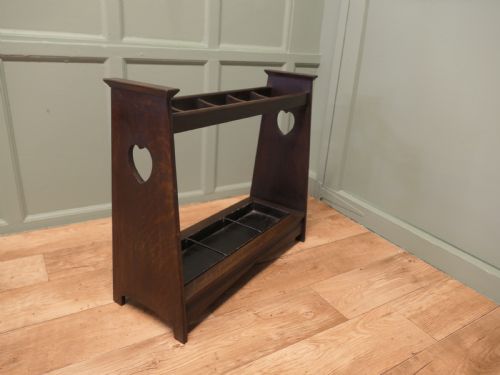
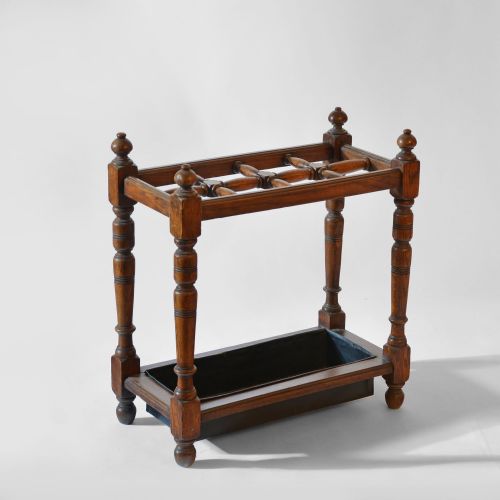
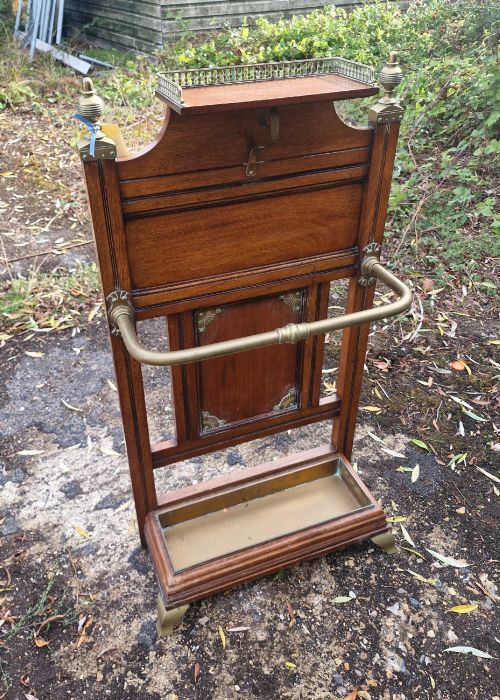
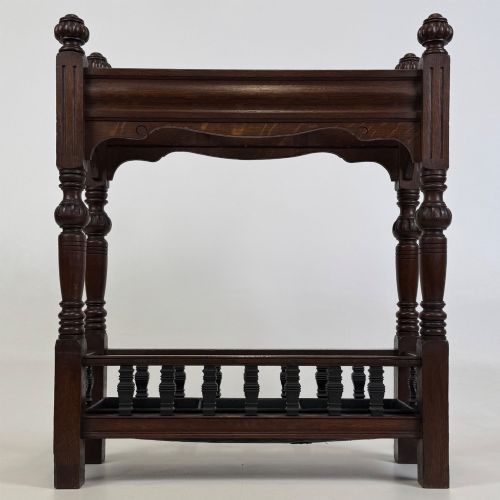
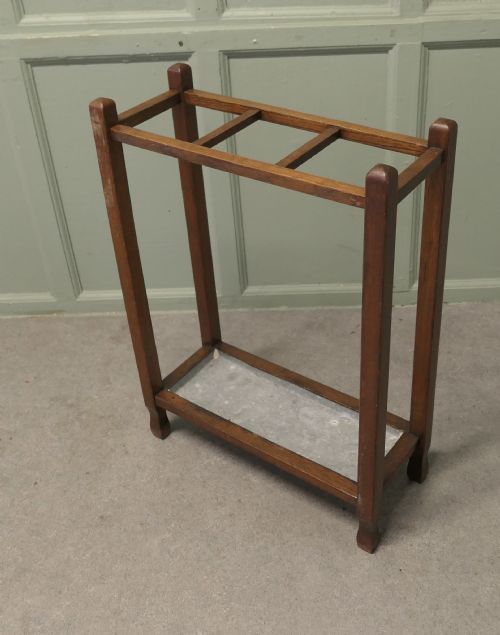
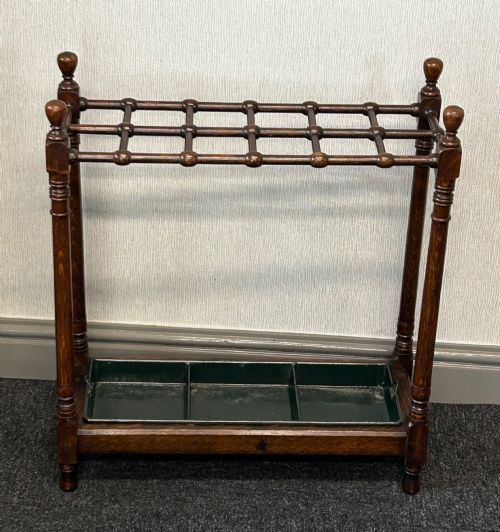
An oak cane stand drip tray is an entryway furnishing designed to hold umbrellas and walking sticks while catching rainwater in a fitted basin. These items appear primarily in Victorian and Edwardian forms, spanning the late nineteenth and early twentieth centuries.
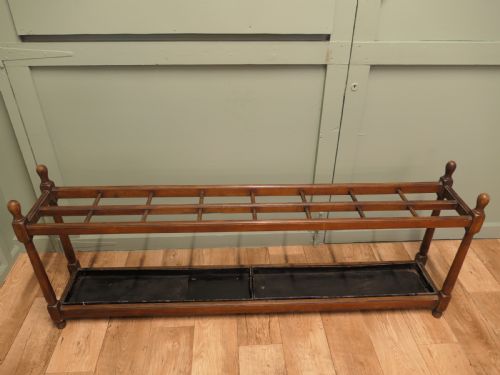
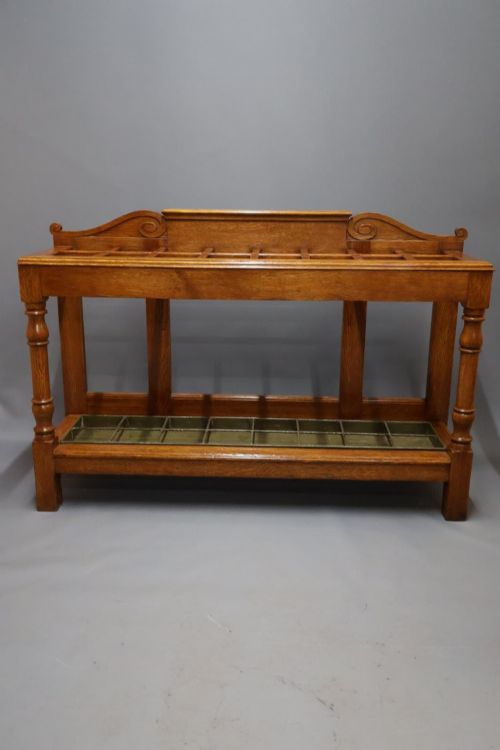
The selections here range from compact four-section designs to larger twenty-four division country house hall racks and demi-lune hall stands. Stylistic influences include Arts and Crafts, Aesthetic Movement, and Gothic Revival movements.
Most examples utilise solid oak frames paired with metal components, presenting functional hallway storage rooted in period domestic life.
Materials and construction
Construction relies heavily on solid oak, shaped into rectangular or demi-lune frames with canted corners and divided sections for individual sticks. Joinery methods of the period ensure stability in heavy-use hallway environments.
Internal water management depends on removable metal receptacles, including brass, zinc, and cast iron drip trays designed to protect wooden bases from moisture damage. These metal elements integrate directly into the floor of each stand.
Oak Cane Stand Drip Tray Retail Price Guide 2026
Typical asking prices for oak cane stand drip tray among the pieces listed under this phrase on Sellingantiques today, from the lower quarter to the upper quarter. They describe what is for sale here now, not the wider market.
Design influences across the selection include Arts and Crafts, Aesthetic Movement, and Gothic Revival traditions.
Judging construction and preservation
Quality rests in the integrity of the oak timber, the retention of original metal trays, and the strength of the structural divisions. Examples displaying crisp carving or distinct design associations show greater ambition in their workshop origin.
Proportion and scale also dictate distinction, moving from modest domestic umbrella holders to substantial multi-division hall racks suited to large country houses.
Heals of London·Liberty Design
The Oak Cane Stand Drip Tray Glossary
- Drip tray
- A removable metal basin fitted at the base of a stand to catch water from wet umbrellas. These liners protect the surrounding timber from moisture accumulation.
- Demi-lune
- A half-moon shape used for furniture designed to sit flat against a hallway wall. This configuration saves floor space in narrow entryways.
- Arts and Crafts
- A design movement prioritising simple forms, visible construction, and honest materials. Pieces from this tradition often feature plain oak surfaces and functional joinery.
- Aesthetic Movement
- A late nineteenth-century style focusing on visual refinement and artistic design rather than heavy ornamentation. Such objects often exhibit clean lines and thoughtful proportions.
- Gothic Revival
- An architectural and decorative style drawing on medieval forms, featuring pointed arches and structural verticality. Stands in this taste introduce architectural presence to hallways.
Oak Cane Stand Drip Tray: Frequently Asked Questions
What is an oak cane stand drip tray?
It is a hallway furnishing built to organise umbrellas and walking sticks while incorporating a metal basin to catch dripping water.
These pieces combine timber frames with functional metal components designed for daily domestic use.
How do I maintain the oak and metal?
Keep the timber clean with standard polishing methods and ensure the metal drip tray remains dry to prevent corrosion.
Regularly emptying and drying the internal basin protects the surrounding wood from prolonged moisture exposure.
Where were these stands typically placed?
They stood in entrance halls, boot rooms, and vestibules to receive wet outdoor gear upon entering a home.
Their placement near the front door offered immediate convenience for visitors and family members alike.
How can I date an oak stand?
Dating relies on stylistic markers such as Arts and Crafts simplicity, Aesthetic Movement lines, or Victorian and Edwardian proportions.
Construction details and hardware styles also help assign pieces to the nineteenth or early twentieth century.