
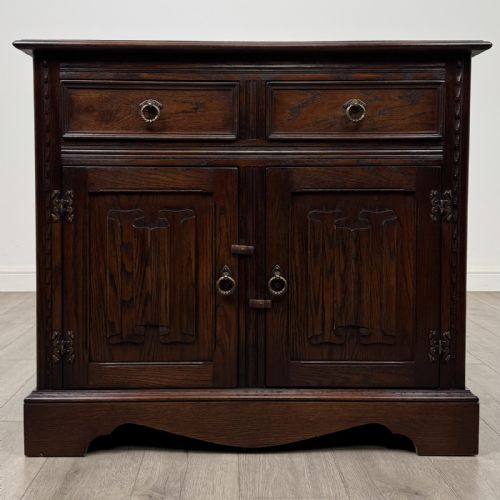
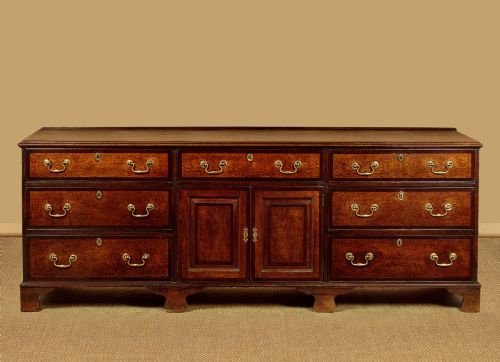
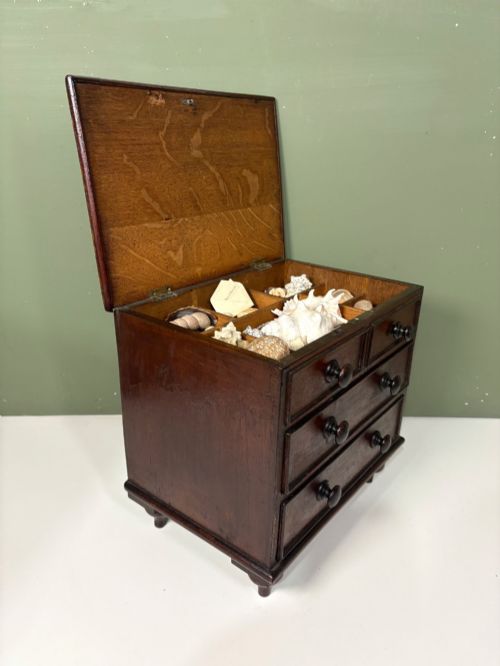
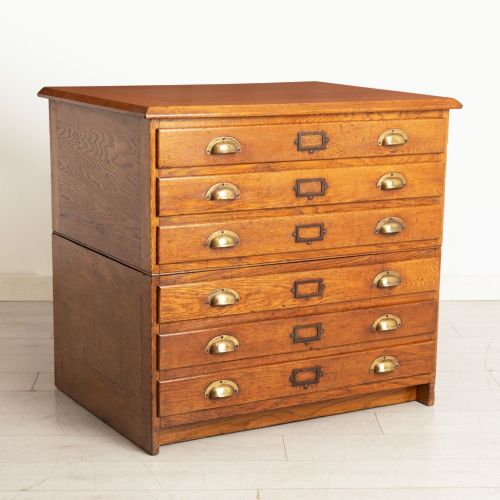
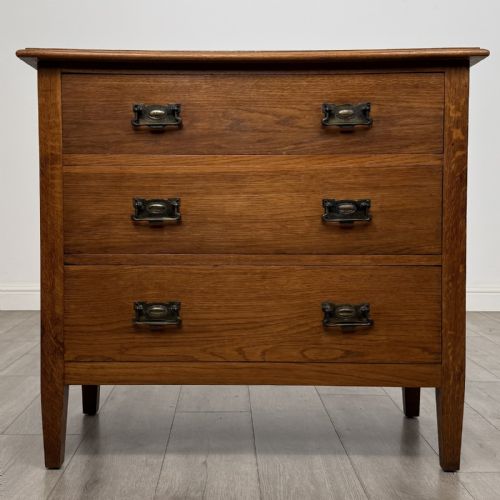
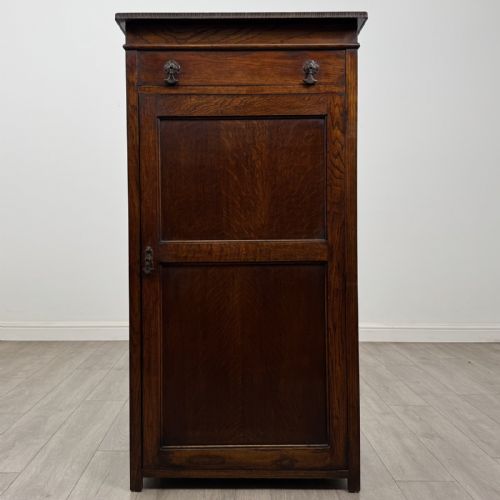
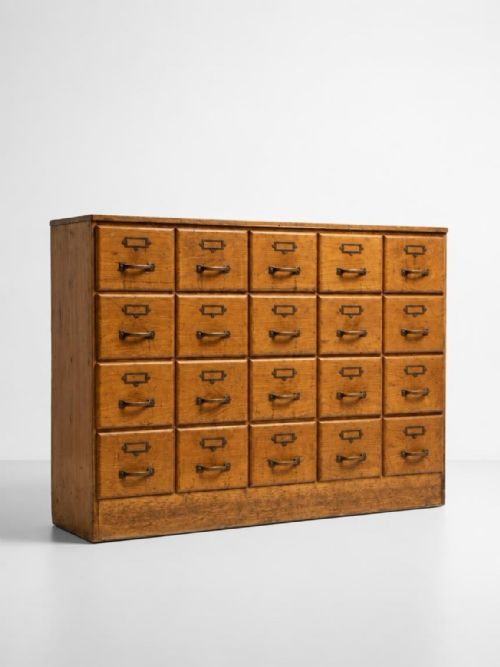
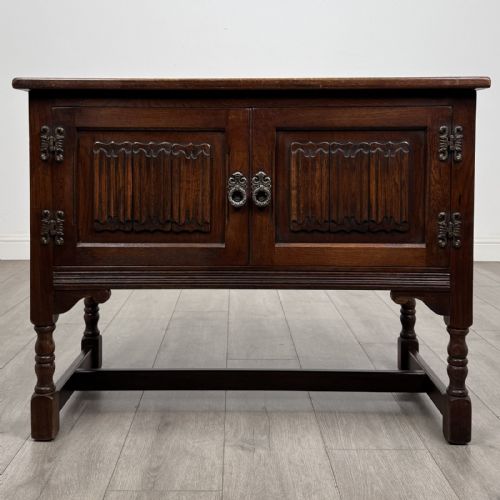
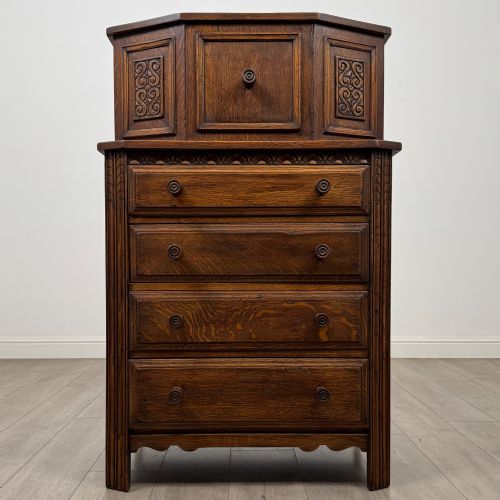
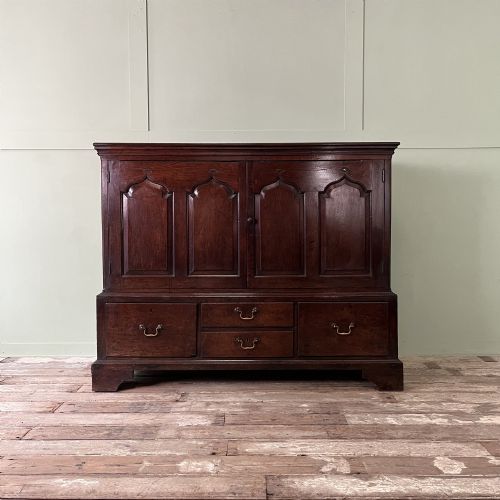
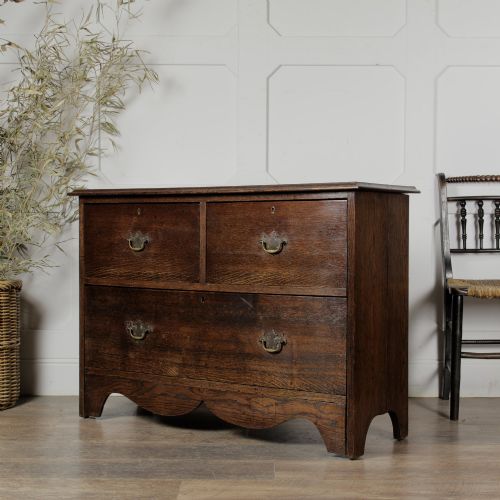
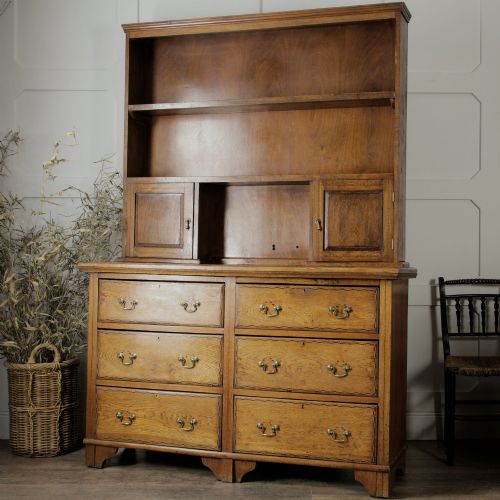
Oak Cabinet on Chest
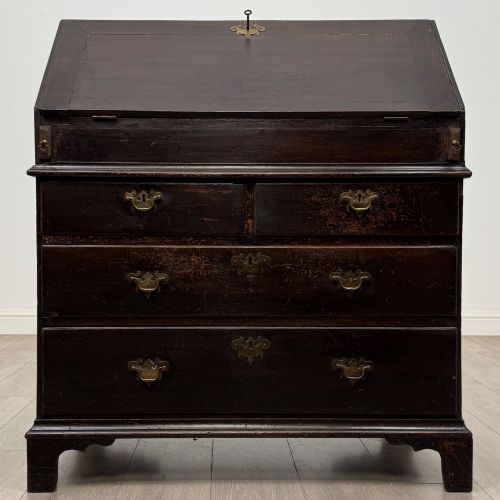
An oak cabinet on chest combines fitted upper cupboards with lower drawers to provide substantial storage in rich timber.
Oak Cabinet on Chest
An oak cabinet on chest combines a tall upper storage compartment or display space mounted securely onto a lower chest of drawers. Buyers seeking an oak cabinet on chest encounter substantial timber furniture designed to command a room while offering disciplined storage.
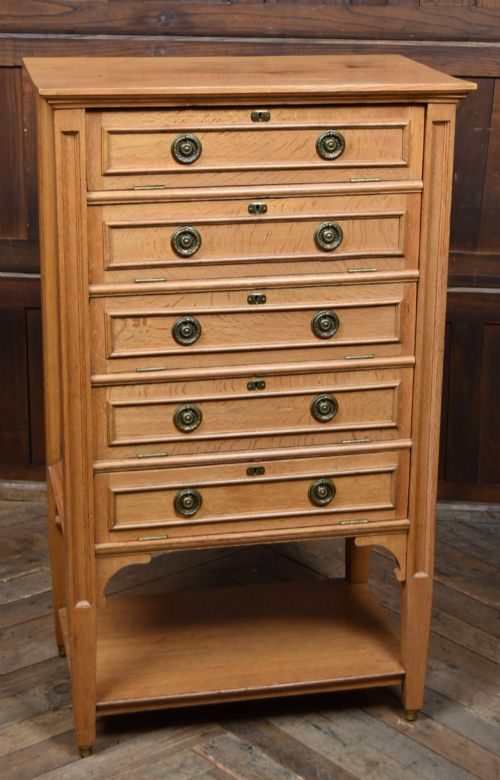
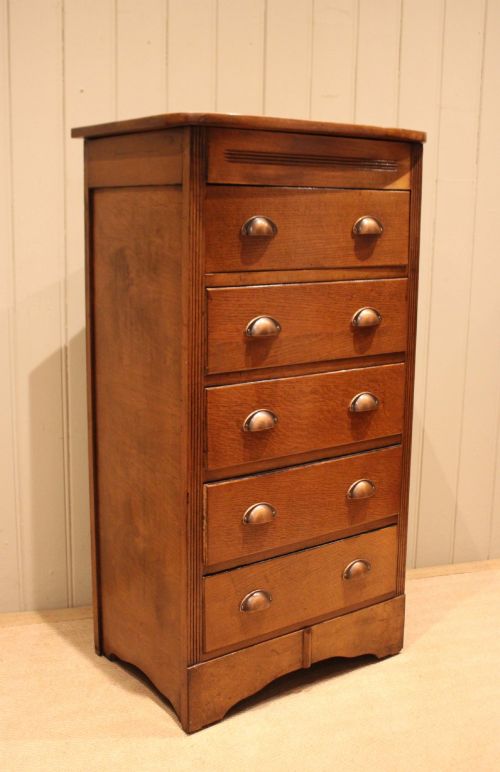
The pieces on this page span several centuries, with examples appearing from the seventeenth century through the Georgian and Victorian eras into Edwardian and 1930s modernist designs. Forms range from utilitarian filing cabinets and stationery chests to ornate Dutch carved display pieces and country linen presses.
Earlier iterations often present as chests on stands or low cupboards, while later periods introduce tambour fronts, glass panels, and specialised compartments. The most frequent encounters on this page include sturdy Edwardian office furniture and robust Georgian or eighteenth-century storage combinations.
Materials and construction
Makers relied primarily on solid oak, selected for its durability and prominent grain, sometimes paired with secondary timbers like pine or enriched with walnut veneers. Construction methods prioritized stability, utilising panel-and-frame techniques to accommodate the natural movement of timber over decades of use.
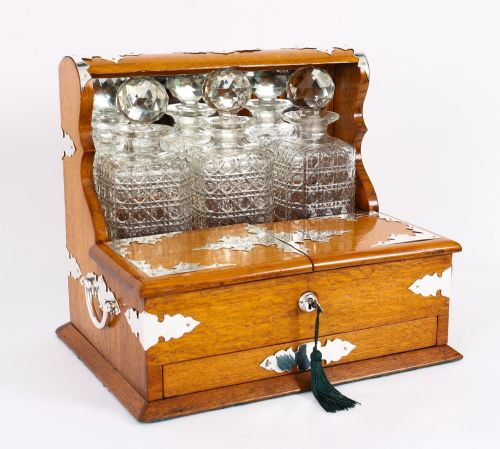
Brass and iron hardware, including drop handles, escutcheons, and hinges, provide functional contrast to the warm brown tones of the wood. Specialised pieces incorporate cut glass in display doors or silver plate details in associated tantalus fittings, demonstrating varied craftsmanship across utilitarian and decorative workshops.
Listings span periods from the 17th century through the Georgian and Victorian eras to the Edwardian period and 1930s.
Assessing quality
Quality rests in the selection of the timber and the integrity of the joinery rather than surface ornamentation alone. Superior examples display carefully matched grain patterns across drawer fronts and cabinet doors, alongside hand-cut dovetails that remain tight and true.
The sophistication of the internal mechanism dictates the grade of many functional pieces, such as smoothly operating tambour shutters or tightly fitted drawers in filing and stationery cabinets. Proportions also matter, with finer pieces maintaining a balanced relationship between the upper cabinet and the supporting base.
Gomme
The Oak Cabinet on Chest Glossary
- Chest on stand
- An upper cabinet or chest elevated on a separate frame with legs. This form precedes the fully integrated tallboy and often dates to the seventeenth or eighteenth century.
- Tambour
- A series of narrow wooden slats glued to a canvas backing to form a flexible shutter. This technique allows doors to slide smoothly around curves, commonly found on Edwardian filing cabinets.
- Linen press
- A tall cupboard originally designed for storing folded textiles on sliding trays or shelves. Lower sections typically incorporate multiple drawers for smaller garments.
- Wellington chest
- A tall, slender chest of drawers secured by a hinged locking side pilaster. The design originated in the nineteenth century for organising documents or specimens.
- Tantalus
- A locking beverage case holding decanters visible through a wooden frame. These units frequently appear in oak alongside games compendiums from the Victorian and Edwardian periods.
Oak Cabinet on Chest: Frequently Asked Questions
What is an oak cabinet on chest?
An oak cabinet on chest is a dual-component storage item featuring a shelved or compartmented upper cabinet resting directly upon a lower chest of drawers. This form maximises vertical storage while presenting a unified timber facade.
Craftsmen built these pieces to house everything from household linens to important documents and collectors' specimens, resulting in varied internal configurations.
How do I date an oak cabinet?
Dating relies on examining construction methods, hardware, and stylistic details. Hand-cut dovetails, pegged joints, and heavy paneling typically point to eighteenth-century or earlier origins.
Later Victorian and Edwardian pieces often incorporate machine-cut elements, brass drop handles of specific nineteenth-century patterns, or specialised mechanisms like tambour fronts.
Where should I place a cabinet on chest?
These tall pieces require a sturdy wall and adequate floor space to anchor a room visually. They suit studies, hallways, or living areas where substantial storage is needed without sacrificing floor area.
Because many examples feature finished backs or refined upper display sections, they can also serve as focal points away from immediate corners.
How do I care for antique oak?
Antique oak benefits from stable indoor humidity and protection from direct sunlight, which can bleach or dry the timber. Regular dusting with a dry, soft cloth maintains the surface.
Occasional applications of traditional beeswax nourish the grain and preserve the patina built up over centuries of handling.