
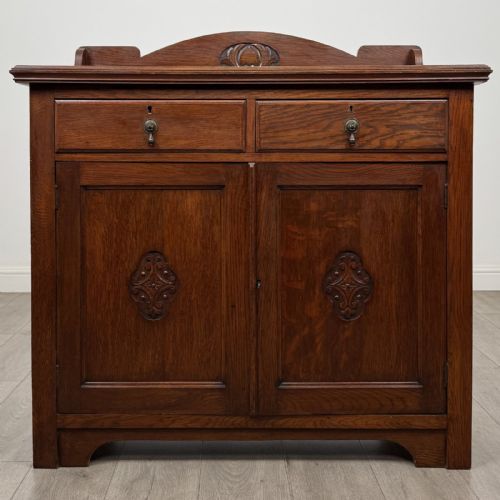
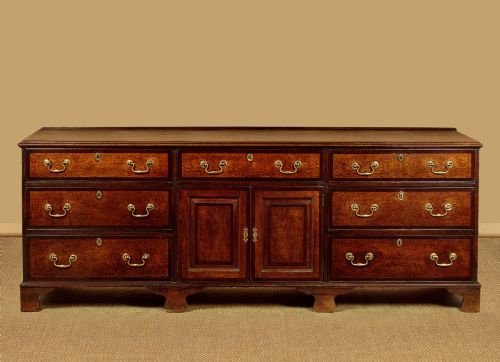
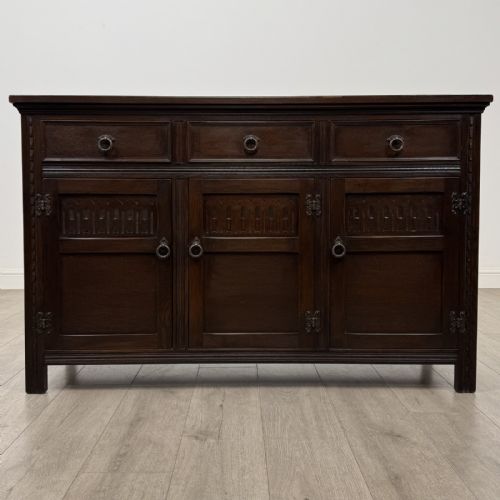
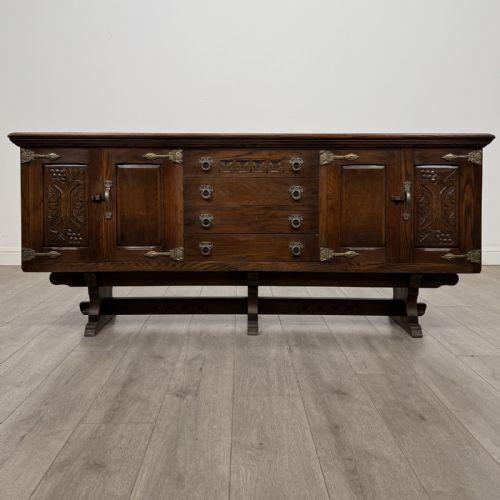
Oak Buffet Dresser
An oak buffet dresser brings solid domestic storage and centuries of craft together in one heavy, timber-rich storage piece.
Oak Buffet Dresser
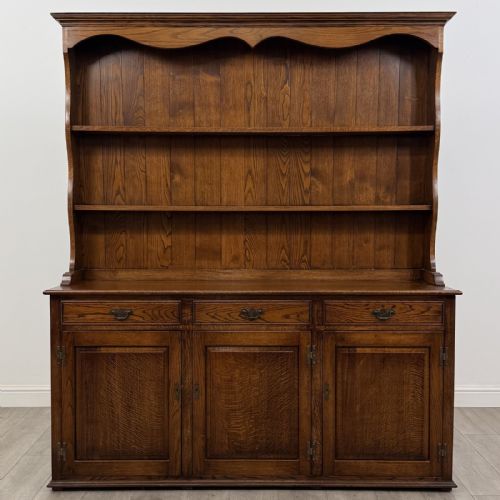
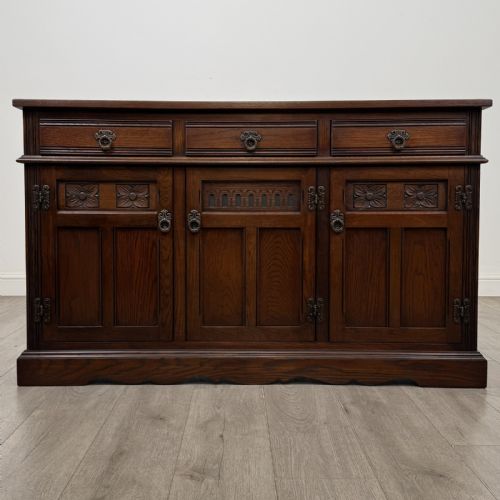
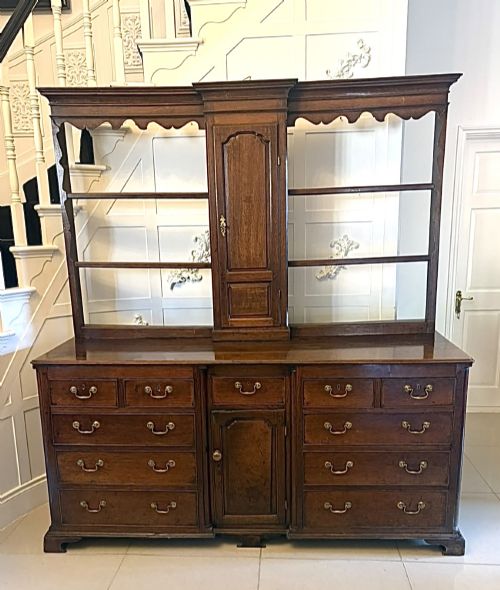
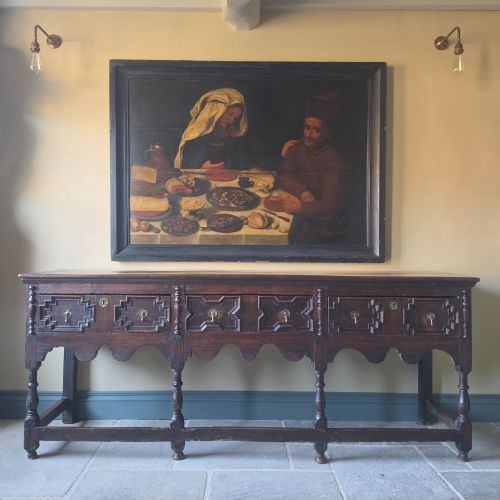
An oak buffet dresser sits firmly at the intersection of heavy kitchen storage and formal dining room display, taking the form of low sideboard bases, potboard tables, and tall Welsh dressers. When you search for an oak buffet dresser, you encounter pieces that function as serving tables, cupboards, and enclosed cabinets designed for heavy domestic use.
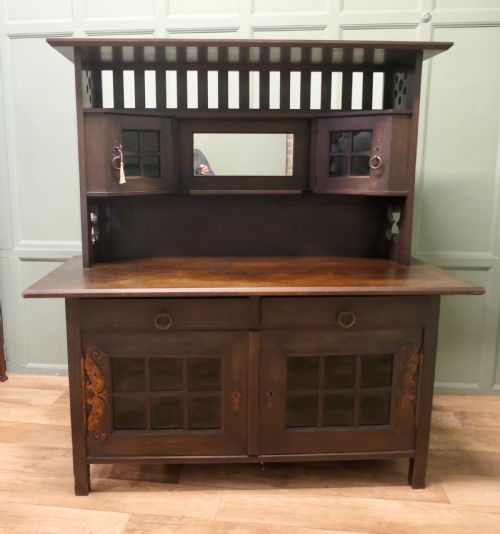
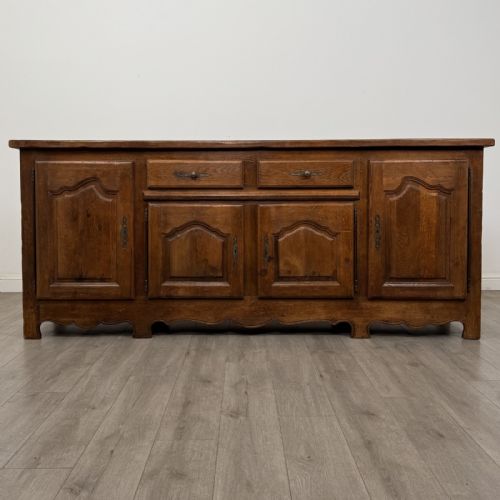
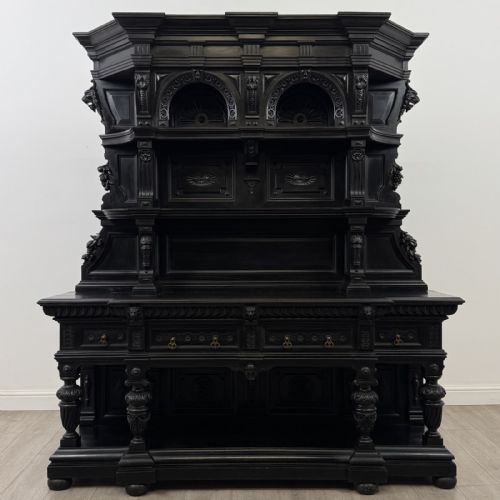
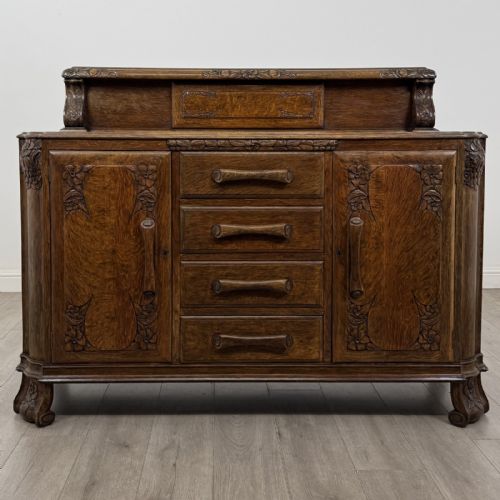
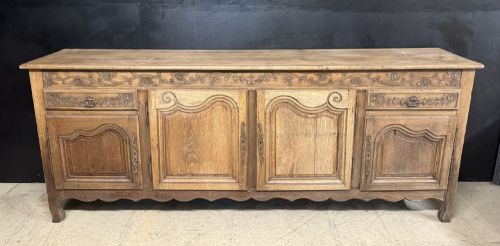
The selections available range from eighteenth-century George III potboard bases and regional Welsh formats to Victorian carved cupboards and Edwardian golden oak iterations. French provincial buffets, enfilades, and Gothic revival sideboards also appear frequently within these formats.
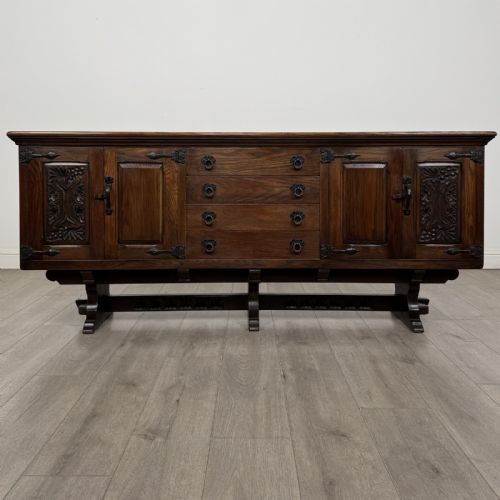
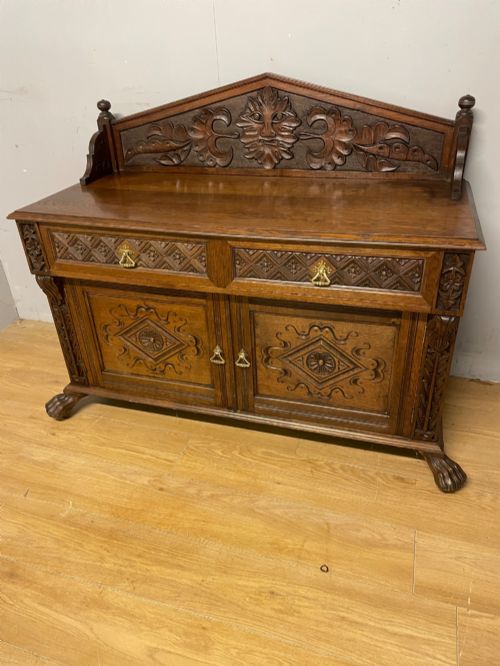
Makers and regional carpenters built these items to anchor large rooms, utilising sturdy joinery to support heavy crockery, silver, and food preparation. The forms vary from narrow Gothic proportions and barley twist Edwardian legs to deeply carved Victorian panels.
Materials and construction methods
Carpenters relied primarily on solid oak, frequently paired with secondary fruitwoods, walnut, and tiger oak variations, complemented by brass handles, iron hinges, and glass door panels. Timber was selected for durability and pronounced grain patterns, which responded well to hand-carving and polishing.
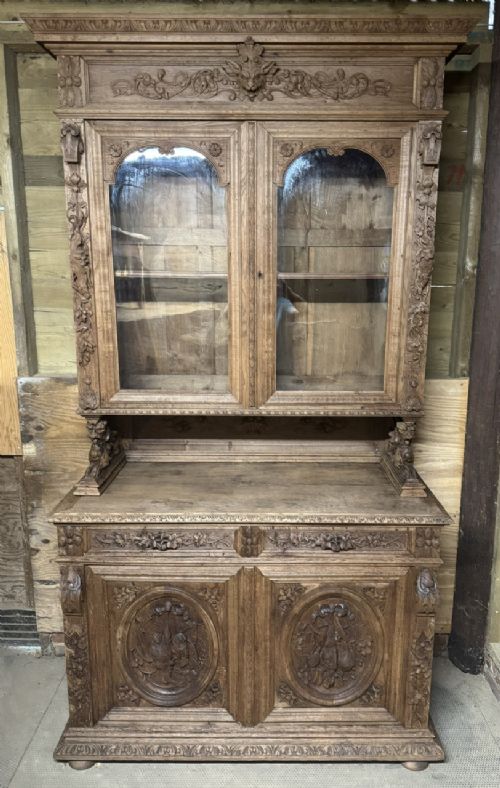
Construction techniques combined pegged mortise and tenon joints with hand-cut dovetails for drawers and panelled backs. Many surfaces feature deep relief carving, turned elements like barley twists, and applied mouldings characteristic of Jacobean revival and Gothic styles.
Some hunting cabinets feature intricately carved game birds and forest foliage, bringing the Victorian wilderness directly into the dining room.
Assessing quality and craftsmanship
Quality rests in the integrity of the timber selection and the crispness of the hand-carved relief work, distinguishing workshop-produced vernacular furniture from mass-produced later variants. Superior examples display consistent grain alignment, original brass hardware, and tightly fitted structural joints that survive centuries of weight.
Proportion and surface patination dictate desirability, where untreated or naturally waxed golden oak surfaces outshine heavily stripped or chemically altered finishes. The depth of the drawers, the thickness of the potboard planks, and the absence of clumsy modern repairs mark the boundary between standard utility items and finer cabinet work.
Ambrose Heal
The Oak Buffet Dresser Glossary
- Potboard dresser base
- An open lower table with a bottom shelf, known as a potboard, used originally for storing heavy pots and pans.
- Welsh dresser
- A large kitchen or dining storage unit featuring base cupboards surmounted by open display shelving for plates.
- Enfilade
- A long low sideboard or buffet featuring a series of adjoining cabinet doors, originating from French domestic architecture.
- Court cupboard
- A heavy enclosed wooden cupboard with upper and lower tiers, often richly carved in seventeenth-century styles.
- Barley twist
- A turned wooden furniture leg or support carved in a continuous spiral resembling a twisted rope.
Oak Buffet Dresser: Frequently Asked Questions
What is a buffet dresser used for?
These pieces served historically as central storage units for dining rooms and large kitchens, holding heavy ceramics, cutlery, and serving platters.
Today, they function as substantial sideboards in modern living spaces, offering deep drawers and enclosed cupboard space for tableware or media storage.
How do I date an oak buffet?
Dating relies on observing construction methods, handle types, timber selection, and stylistic details such as linenfold panels or barley twists.
Eighteenth-century examples often show hand-sawn timber marks and pegged joinery, whereas Edwardian pieces utilise lighter golden oak and machine-cut elements.
Are French and English buffets different?
French provincial buffets and enfilades tend to feature warmer fruitwood influences, lighter bleached oak finishes, and distinct regional carving motifs.
English counterparts, including Welsh dressers and George III potboards, typically present heavier dark oak timbers, tighter geometric lines, and integrated plate racks.
How do I care for antique oak?
Maintain the timber by keeping it away from direct heat sources and sudden humidity shifts that can cause solid oak panels to split.
Feed the wood periodically with a traditional beeswax polish to nourish the grain and preserve the natural patination built up over centuries.