



Novelty Silver Vesta
These novelty silver vesta cases transform everyday matchsafes into miniature sculptures, offering clever engineering and tactile wit for the pocket or desk.
Novelty Silver Vesta
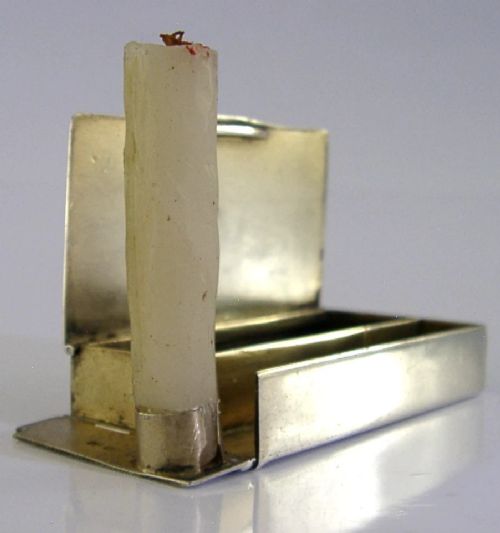
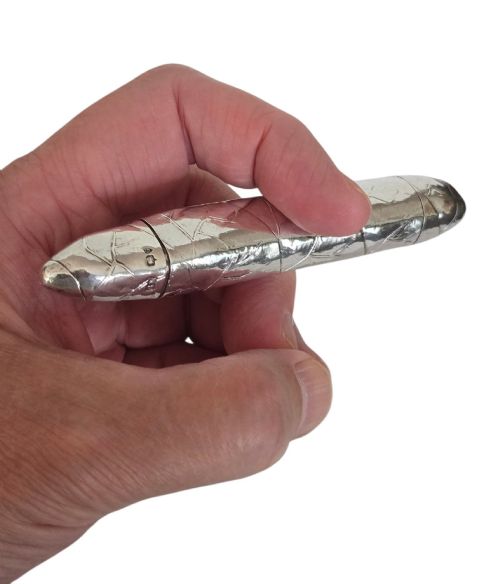
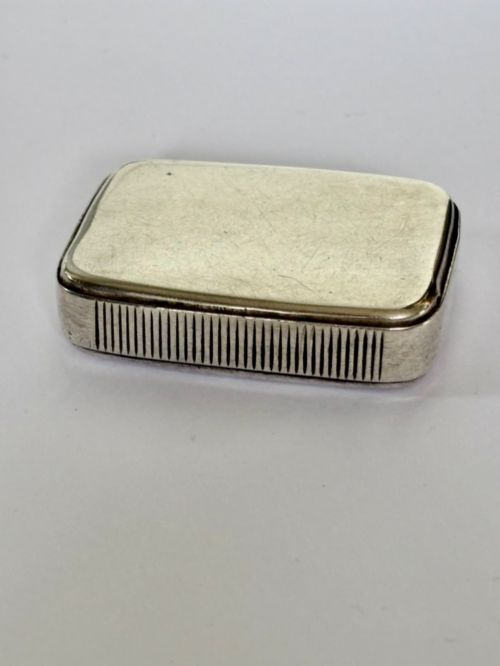
A novelty silver vesta case is a pocket-sized matchsafe fashioned into an imaginative shape, ranging from naturalistic objects to mechanical tricks. When you search for this phrase, you look for pocket containers that double as whistles, padlocks, or representations of animals, fruit, and military guardsmen.
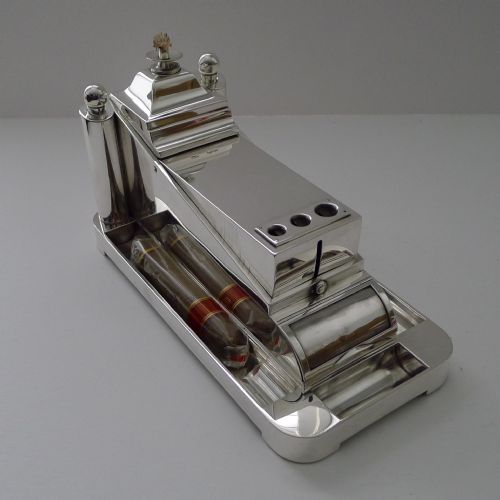
The pieces on this page span the Victorian and Edwardian eras, with examples taking the form of sarcophagi, books, barrels, and table-standing porters' barrows. Miniature functional items such as combination whistles, photo frames, and hunting hip flasks frequently appear among the standard pocket formats.
Makers utilised solid sterling silver, often with gilt interiors, and occasionally combined the metal with glass, enamel, or silver plating to achieve distinct visual textures. These functional pocket accessories served smokers requiring dry matches before the widespread availability of safety matches.
Making and Materials
Silversmiths constructed these matchsafes from sterling silver, employing techniques such as stamping, casting, and repoussé to shape rigid sheet metal into complex organic or architectural forms. Many items carry hallmarks indicating manufacture in Birmingham, London, or Chester.
Internal spring mechanisms, hinged lids, and striker grooves required precise metalwork to ensure the case remained secure in a waistcoat pocket while allowing smooth opening. Detail work included hand-engraving, enamel applications, and silver gilding to accent the miniature subjects.
Recorded pieces span the Victorian and Edwardian periods, utilising sterling silver alongside silver-plated brass, glass, and enamel.
Evaluating Quality
Quality rests in the precision of the mechanics and the clarity of the cast or hand-chased detail. A superior piece maintains tight lid closures and crisp definition on textured surfaces such as animal skin or woven basketry.
The complexity of the form dictates distinction, separating standard matchsafe boxes from intricate combination pieces that incorporate working whistles, secret compartments, or miniature photographs.
Jane Brownett·Brook & Sons·Sampson Mordan·Lawrence Emanuel·Charles Lyster & Son·Stokes & Ireland
The Novelty Silver Vesta Glossary
- Vesta case
- A small pocket container designed to hold wax matches, featuring a textured striking surface on the base. These cases became essential accessories during the nineteenth century.
- Hallmark
- A series of official marks stamped onto precious metals indicating the assay office, purity standard, and year of manufacture. British sterling silver typically bears the lion passant.
- Gilt
- A thin layer of gold applied to the interior surface of a silver object, protecting the metal from corrosion caused by sulfur matches. This finish appears frequently in Victorian examples.
- Repoussé
- A metalworking technique where the silversmith hammers the design from the reverse side to form a raised relief on the front. This method created the textured contours seen on figural pieces.
- Trick vesta
- A novelty matchsafe incorporating a concealed opening mechanism or unexpected mechanical movement. These pieces rely on hidden buttons or sliding panels to reveal the contents.
Frequently Asked Questions
What is a vesta case used for?
A vesta case held short wax matches known as vestas, keeping them dry and preventing accidental ignition in a pocket or bag.
Smokers carried them daily before the widespread distribution of safety matches made cardboard matchboxes practical.
How do you date a silver vesta?
Dating relies upon the stamped hallmarks, which include a date letter corresponding to the assay office records of London, Birmingham, or Chester.
Stylistic shifts, such as the heavy ornamentation of the Victorian period or the sleeker Edwardian designs, provide additional chronological clues.
Are these silver vestas still functional?
Most pieces retain their original spring hinges and lids, meaning they can still open and close securely for modern use.
Collectors generally preserve them as display objects rather than carrying them for daily match storage.
What makes a vesta a novelty piece?
A novelty vesta departs from the standard rectangular box shape to mimic an animal, fruit, tool, or mechanical object.
These designs often double as functional whistles, compasses, or photo frames while concealing the match compartment.