

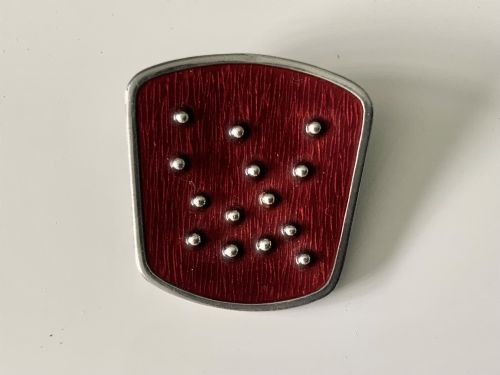


Norwegian Silver Guilloche
Norwegian silver guilloche pieces combine machine-turned metalwork with translucent enamel for vibrant colour and depth.
Norwegian Silver Guilloche
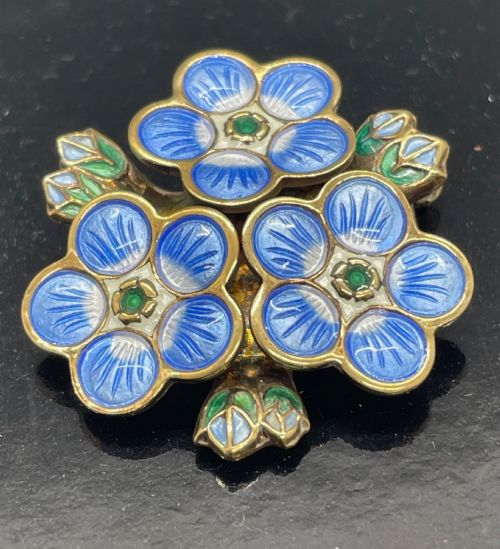
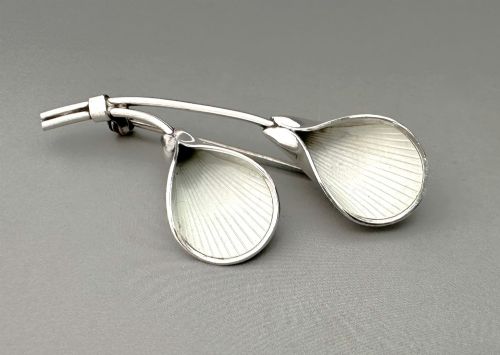
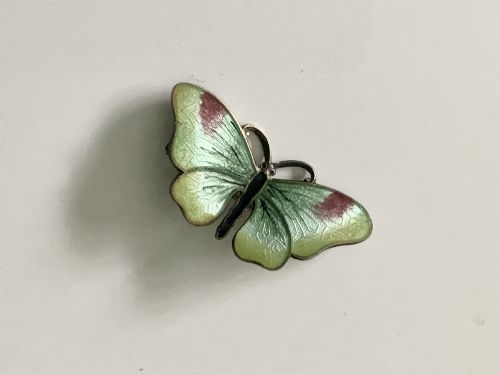
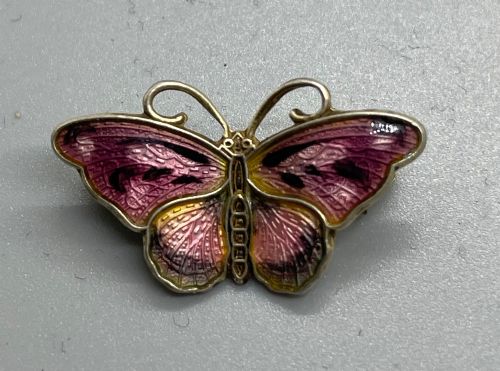
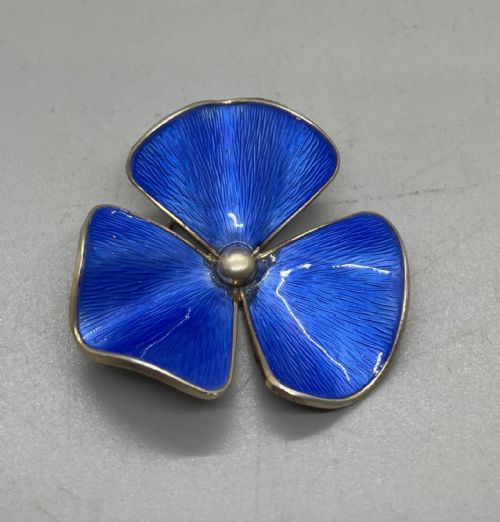
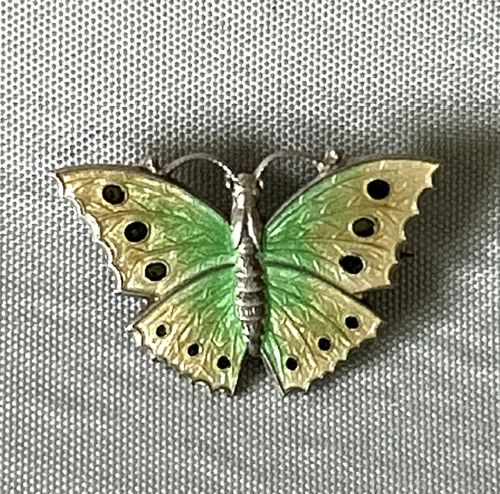
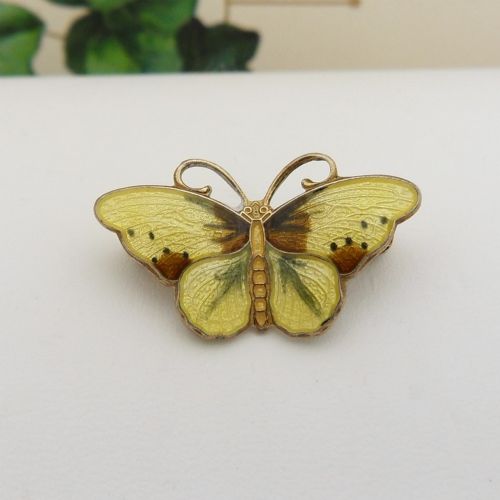
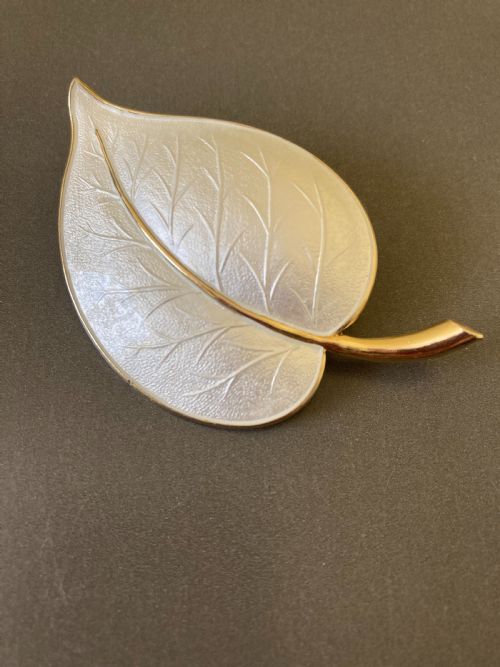
Norwegian silver guilloche items span brooches, pendants, bracelets, napkin rings, and sewing thimbles from the Victorian period through to the mid-twentieth century. Buyers seek these out for their intricate geometric metal engraving showing clearly beneath coloured vitreous enamel layers. The most common survivals on this page are butterfly brooches and floral dress pieces dating from the 1920s to the 1960s, reflecting strong Scandinavian modern and art deco design movements.
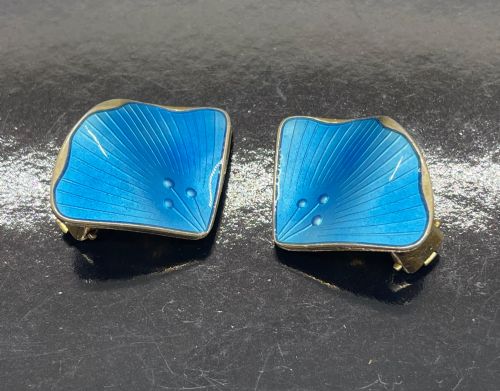
The objects originate from notable workshops and individual makers operating in Norway across multiple decades. Pieces range from small personal adornments like earrings and bar brooches to functional tableware including salt spoons, caddy spoons, dishes, and cocktail shakers. Mid-century Scandinavian modern aesthetics dominate the later pieces, while earlier examples display distinct art nouveau or art deco sensibilities.
Collectors encounter both solid sterling silver and silver gilt compositions enriched by gold vermeil washes. The forms include sculptural animal figures, particularly butterflies, alongside geometric compacts and pendant torques. Each item relies upon the interplay between the engraved guilloche pattern and the glass enamel to create visual texture.
Materials and technique
Craftsmen utilised sterling silver or silver gilt as the foundational metal substrate for these objects. Artisans applied a mechanical lathe to engrave precise geometric guilloche patterns directly into the silver surface before enamelling.
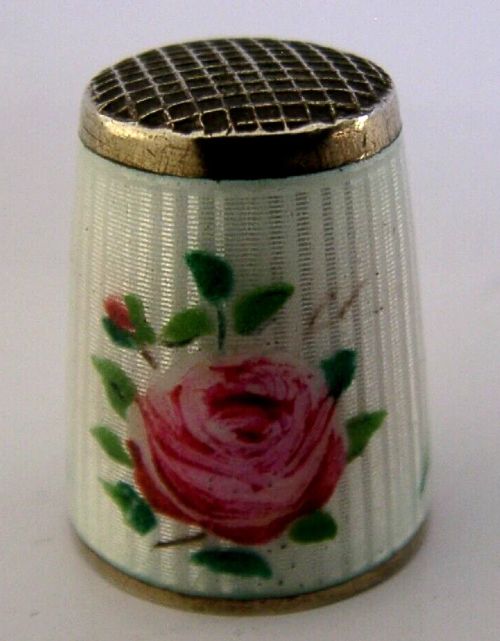
Vitreous enamel or translucent coloured enamel was sifted over the engraved metal and fired at high temperatures. The underlying machine-turned pattern shines through the glassy enamel layer to produce a shimmering moiré or sunburst effect.
Gold vermeil or gold gilt finishes were frequently applied over the silver base to enhance contrast with the brightly coloured enamel sections. Silversmiths then assembled these components into wearable brooches, functional napkin rings, or decorative tableware.
Listings feature sterling silver and silver gilt forms spanning the Victorian era through the 1960s, including hollowware and personal accessories.
Quality variations
The precision of the underlying guilloche engraving determines the foundational quality of the piece, with deeper and more intricate machine-turning catching the light more effectively. Finer items exhibit absolute symmetry and crisp geometric repetition across the entire metal surface.
Enamel application accounts for major distinctions in execution, particularly regarding uniform thickness and freedom from bubbles or discoloration. Superior examples maintain an even, glass-like finish that follows the contours of the silver substrate without pooling or thinning at the edges.
Marius Hammer·Aksel Holmsen·David Andersen·Hroar Prydz·Gustav Gaudernack·Jackob Tostrup
The Norwegian Silver Guilloche Glossary
- Guilloche
- A decorative technique where a mechanical lathe engraves a precise, intricate geometric pattern into a metal surface. This engraved texture forms the visual base for translucent enamel layers.
- Vitreous enamel
- A material made by fusing powdered glass to a metal substrate through firing at high temperatures. It produces a hard, glossy, and durable coloured coating.
- Silver gilt
- Sterling silver that has been coated with a thin layer of gold. This treatment adds warmth and protects the underlying silver from tarnishing.
- Gold vermeil
- Sterling silver plated with a heavy layer of gold. It offers a rich golden appearance while retaining a solid silver core.
- Filigree
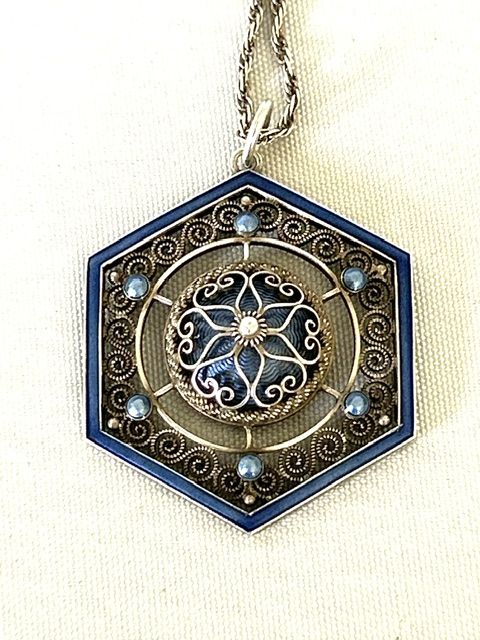
- Delicate metalwork formed of fine twisted threads soldered together. It often creates openwork patterns in Scandinavian jewellery.
Norwegian Silver Guilloche: Frequently Asked Questions
How do I clean silver guilloche?
Use a soft cloth to gently wipe the silver metal surfaces without applying harsh dips or abrasive polishes. Immersing enamel pieces in liquid cleaners can damage the glass coating.
Keep moisture away from the edges where the enamel meets the silver frame. Store items individually to prevent scratching the glass surface.
Are these pieces marked with maker stamps?
Many items bear maker marks, silver purity stamps such as 925, or Norwegian city hallmarks. These stamps usually appear on the reverse of brooches or the base of hollowware.
Familiarity with workshop symbols helps confirm the origin of mid-century Scandinavian designs. Unmarked pieces still rely on stylistic attribution.
What styles are most common?
Art Deco and mid-century Scandinavian styles dominate the surviving inventory. Geometric patterns and natural motifs like butterflies and flowers appear frequently.
Earlier Victorian and Art Nouveau items feature more organic, flowing lines. Later twentieth-century works lean toward minimalist modernist forms.
How were sewing thimbles used?
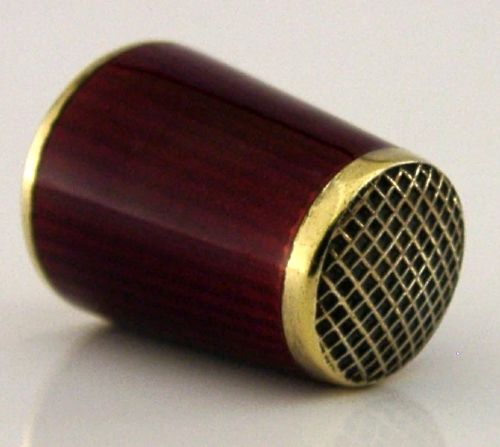
Enamelled thimbles served as both functional sewing tools and decorative cabinet pieces. Wealthy households often displayed them alongside caddy spoons and salt dips.
They combine practical silver forming with intricate guilloche enamel decoration. Collectors prize them for their miniature scale and vibrant colour.