




Norwegian Mid Century Jewellery
Norwegian mid century jewellery brings together sterling silver and vivid enamel in modernist brooches, bracelets, and pendants that collectors seek for their bold Scandinavian designs.
Norwegian Mid Century Jewellery
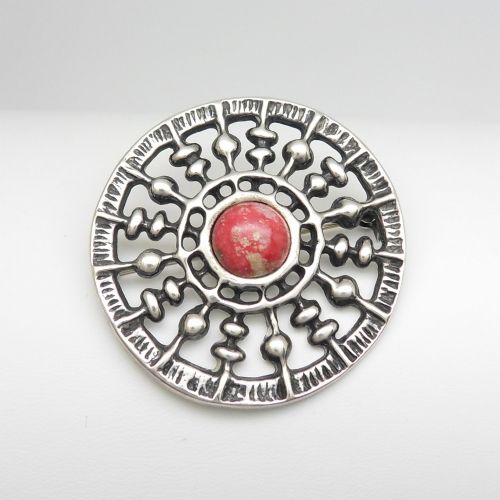
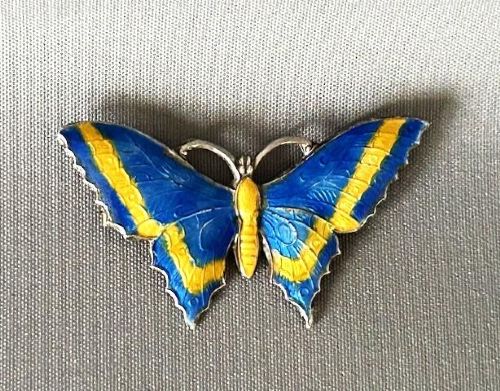
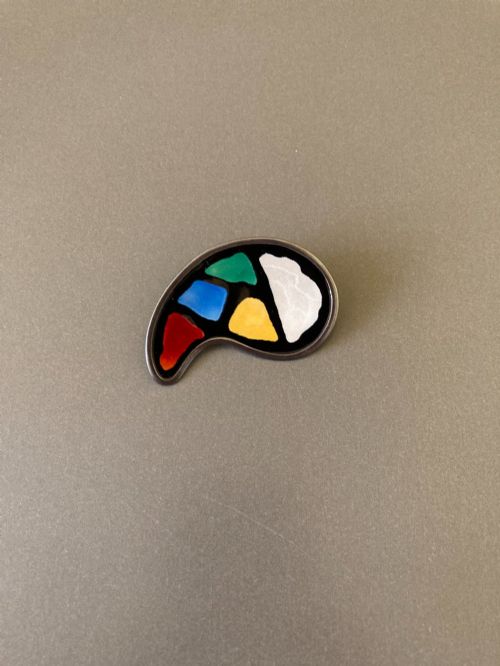
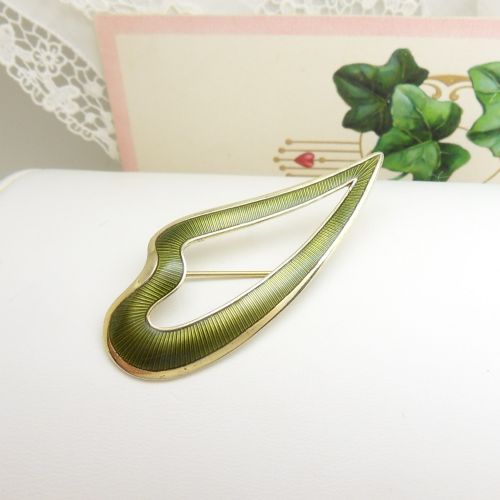
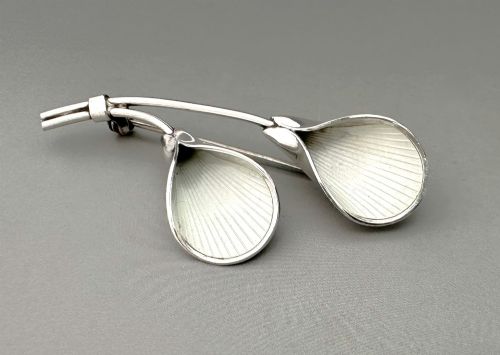
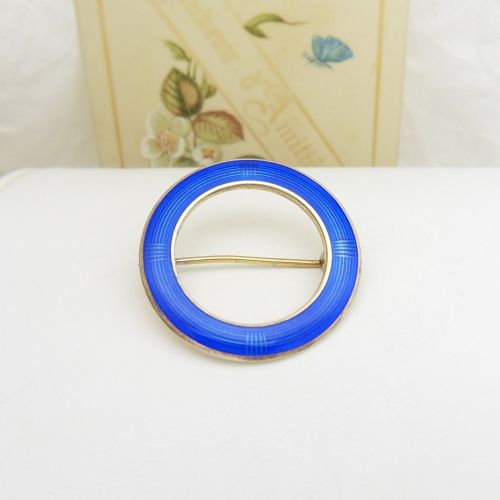
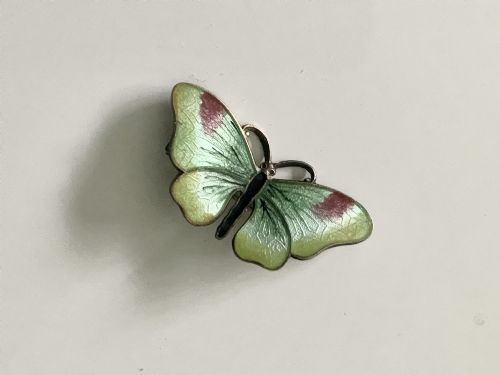
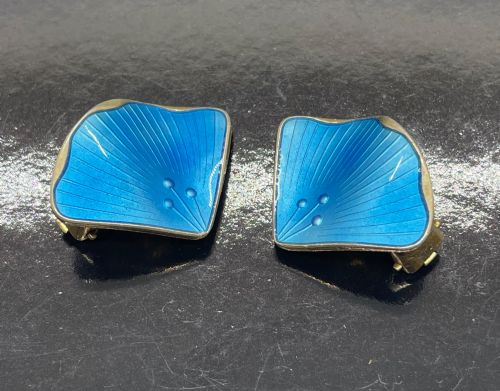
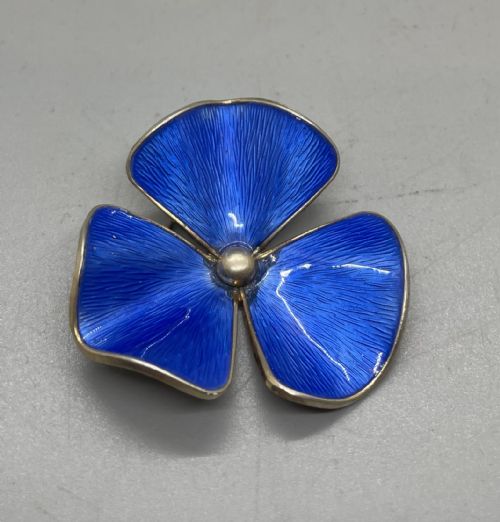
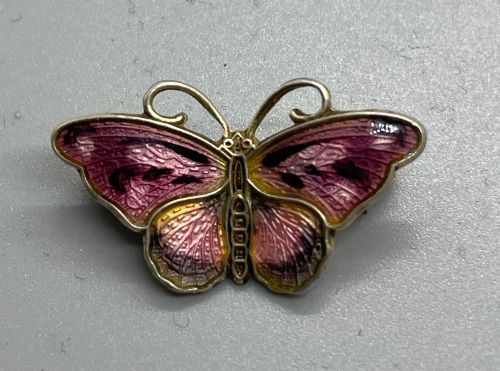
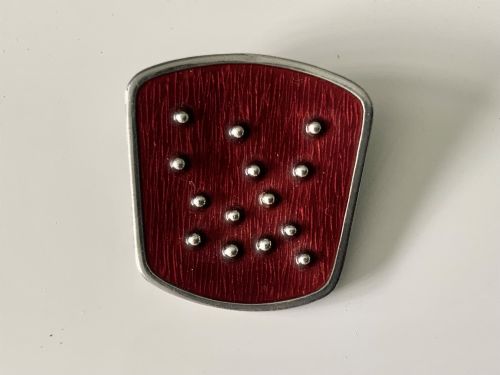
When you search for norwegian mid century jewellery, you enter a field defined largely by brooches, bracelets, and pendants produced across the mid-century decades. The pieces you meet most often on this page combine silver with coloured enamel, ranging from geometric circle brooches to floral and butterfly motifs.
The objects span periods from the 1920s through the 1960s, though mid-century modern and Scandinavian modernist styles dominate the selection. Alongside brooches and bracelets, you find earrings, necklaces, and convertible pendant-brooches reflecting the clean lines of the era.
How they were made
Maker workshops built these pieces primarily using sterling silver and silver gilt, often applying gold vermeil or gold gilt to the base metal. Enamel work forms the core of the technique, utilising vitreous enamel and guilloche enamel to create translucent coloured surfaces over patterned metal grounds.
Silver filigree work appears in bracelets and pendants, where fine silver wire is twisted and soldered into delicate openwork designs. Enamel is then fused to the metal through firing, yielding smooth glossy finishes in green, blue, red, and other hues.
Norwegian Mid Century Jewellery Retail Price Guide 2026
Typical asking prices for norwegian mid century jewellery among the pieces listed under this phrase on Sellingantiques today, from the lower quarter to the upper quarter. They describe what is for sale here now, not the wider market.
Listings feature sterling silver and silver gilt combined with vitreous and guilloche enamel across multiple decades.
What varies in quality
Quality in these items rests on the precision of the enamel work and the crispness of the underlying silver forms. Pieces with complex guilloche engraving beneath translucent enamel generally show greater technical ambition than plain enamel surfaces.
The reputation of the maker workshop also influences distinction, as does the complexity of the mount. Well-executed silver filigree and substantial silver gilt settings separate the finer productions from standard commercial output.
Unn Tangerud·K A Rasmussen·Aksel Holmsen·David-Andersen
The Norwegian Mid Century Jewellery Glossary
- Guilloche enamel
- Enamel applied over a metal surface that has been machine-engraved with a repetitive geometric pattern. This technique creates shimmering light effects beneath the translucent colour.
- Silver gilt
- Silver that has been coated with a thin layer of gold. It provides the rich appearance of solid gold while using a silver base.
- Vitreous enamel
- Glass powder fused to metal at high temperatures. It forms a durable, glossy coloured coating characteristic of Scandinavian designs.
- Silver filigree
- Ornamental work using fine twisted silver wire soldered together in open patterns. It creates a lacy, lightweight effect in bracelets and brooches.
- Pendant torque
- A rigid circular neck ring that holds a suspended pendant. It sits firmly around the neck in a modernist silhouette.
Norwegian Mid Century Jewellery: Frequently Asked Questions
What is norwegian mid century jewellery?
It encompasses silver and enamel brooches, bracelets, earrings, and pendants made in Norway during the mid-century decades. The designs draw on Scandinavian modern and modernist aesthetics.
Craftsmen utilised sterling silver, silver gilt, and vibrant vitreous enamel to produce distinctive wearable art objects.
How do I wear these pieces?
Brooches work well pinned to lapels, scarves, or hats, while bracelets and pendant torques make standalone statements. Many pieces function as both pendants and brooches for versatile styling.
Pairing them with simple clothing lets the bright enamel colours and silver work stand out.
How do I date an enamel brooch?
Dating relies on stylistic markers such as mid-century abstract shapes versus earlier figurative butterfly or floral motifs. Maker marks and silver stamps also help narrow down the decade of production.
Pieces from the 1920s and 1930s often show different mounting styles compared to items from the 1950s and 1960s.
Are these pieces made of solid silver?
Most items utilise sterling silver or silver gilt as the primary structural metal. Some pieces feature gold vermeil or gold gilt finishes over the silver base.
Filigree elements and settings rely on these silver alloys to support the fused enamel work.