

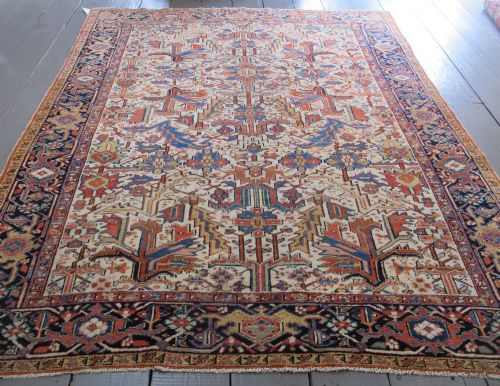
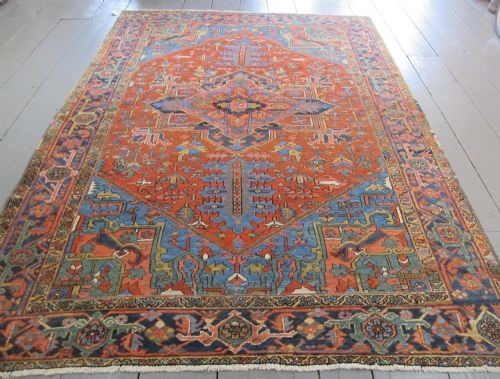
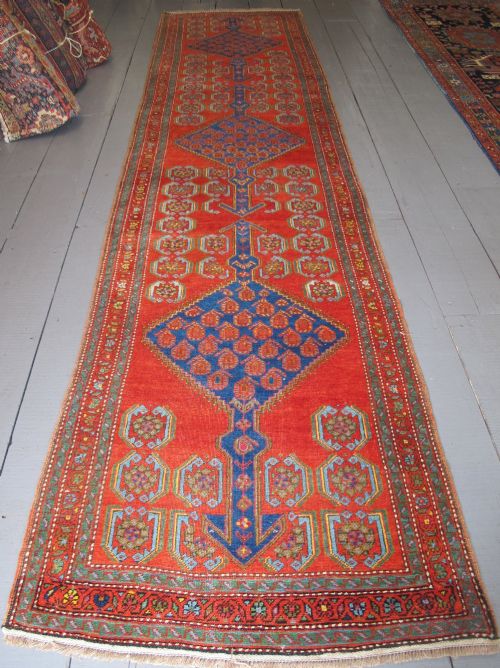


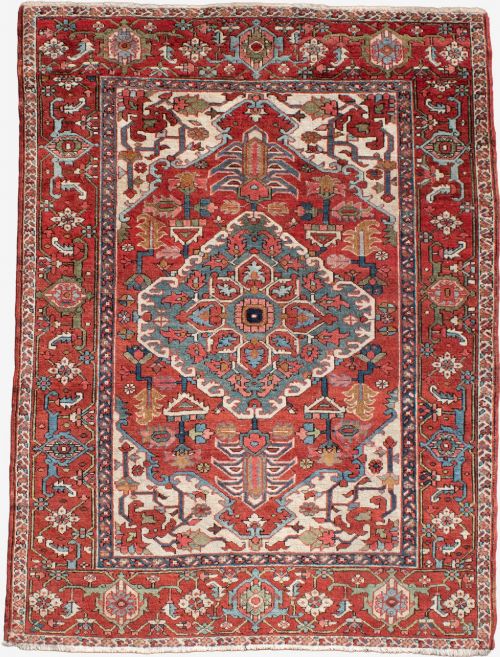

Northwest Persian Heriz Rug
A northwest persian heriz rug offers enduring floor art woven with distinctive geometric medallions and rich colours.
Northwest Persian Heriz Rug
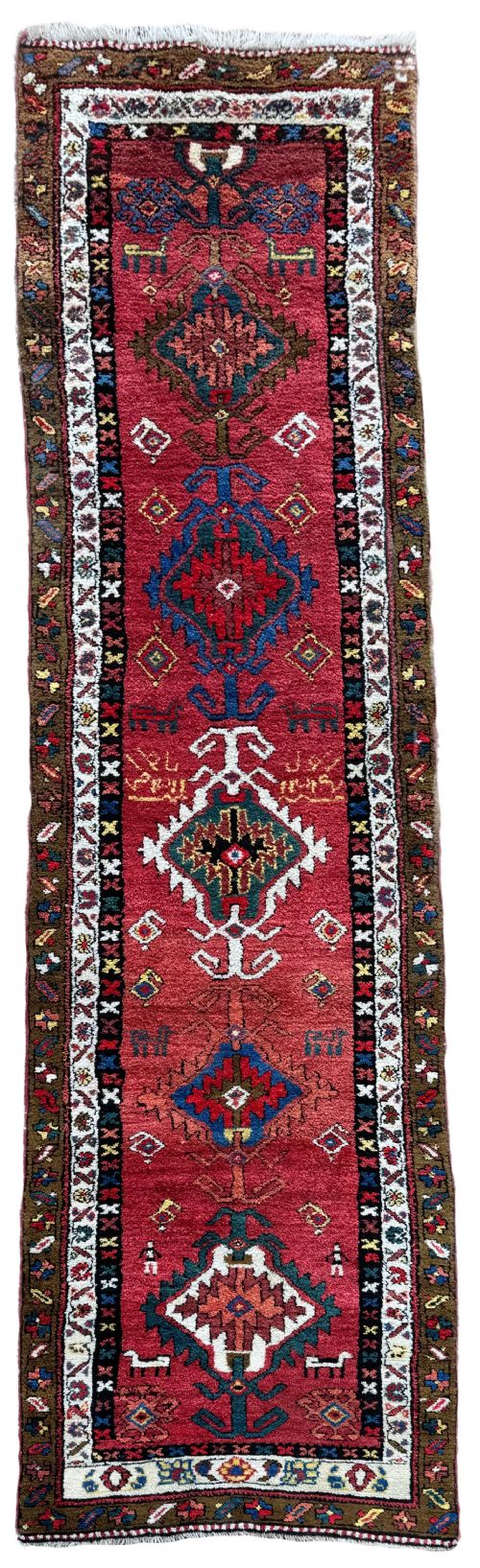
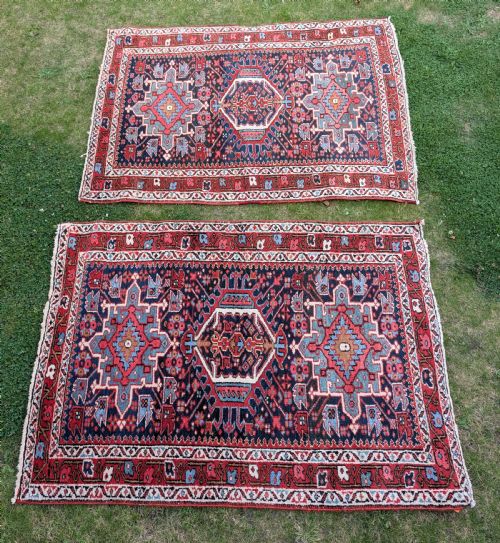
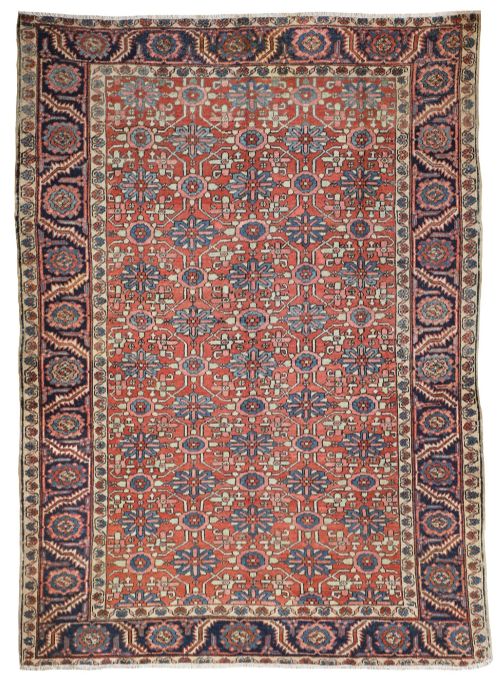
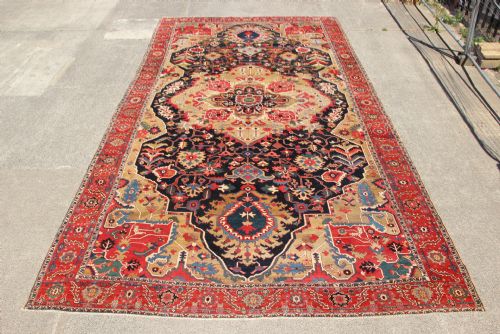
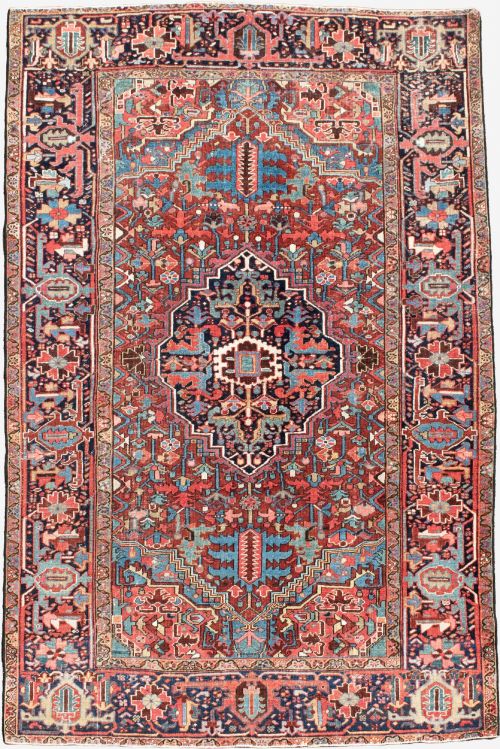
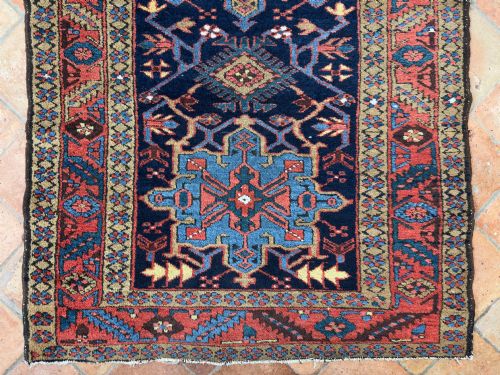
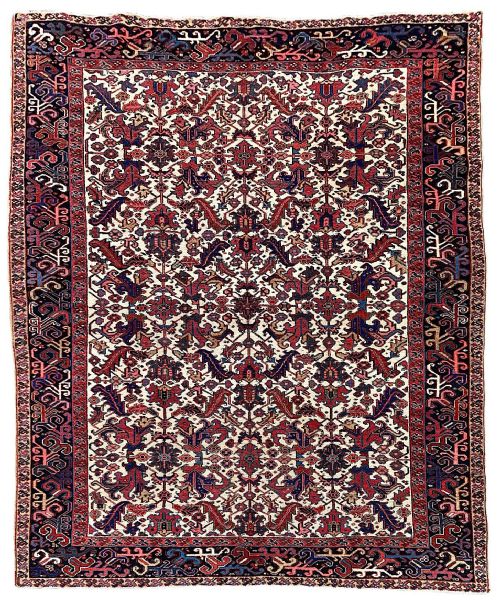
A northwest persian heriz rug represents a distinct weaving tradition from the northwest region of Persia, encompassing styles known as Heriz, Serapi, Karaja, and Bakshaish. Buyers searching this phrase encounter large carpets, small rugs, runners, and bag faces created in town and village workshops.
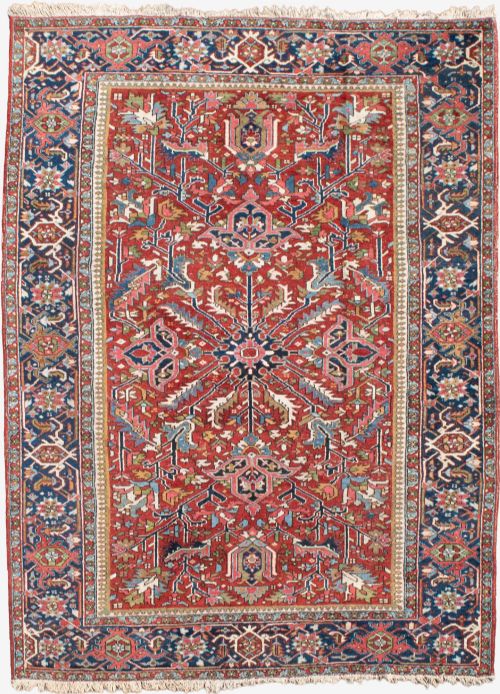
The version most frequently met on this page is the antique Heriz carpet, often measuring over three metres in length and featuring a bold central medallion. These textiles serve primarily as durable floor coverings for principal rooms, combining geometric layouts with regional motifs.
Dating across the listings spans from the mid-nineteenth century through the early twentieth century, specifically covering periods from eighteen-fifty to nineteen-thirty. Production includes square formats, narrow hallway runners, and room-sized carpets displaying ivory, colourful, or patterned grounds.
Materials and Construction Techniques
Weavers constructed these pieces using wool piles bound to cotton foundations, frequently utilising hand-spun wool and cotton warp threads to achieve structural stability. The combination of sturdy wool and tightly packed foundation threads provided the durability required for heavy household use.
Dyes applied to the wool yielded the varied palettes seen across the region, contributing to the colourful surfaces recorded in the evidence. Artisans knotted the wool by hand onto the cotton warps, forming dense pile surfaces capable of withstanding decades of foot traffic.
Listings span periods from eighteen-fifty to nineteen-thirty, demonstrating wool and cotton construction across formats from small bag faces to large carpets.
Factors Determining Quality
Quality differences stem from the fineness of the knotting and the complexity of the geometric drawing within the field and medallion. Pieces described as extremely fine or featuring Serapi characteristics often display superior handling of traditional motifs and harmonious colour distribution.
The proportion of the design elements and the crispness of the geometric outlines distinguish standard village production from master-woven examples. Additionally, the condition of the wool pile and the integrity of the cotton warp influence the overall integrity of each textile.
The Northwest Persian Heriz Rug Glossary
- Medallion
- The large central ornamental motif dominating the field of the rug. It forms the primary focal point of the geometric design.
- Runner
- A long, narrow carpet format designed specifically for hallways and corridors. Dimensions typically emphasise length over width.
- Serapi
- A sub-style associated with older Heriz carpets, known for bolder, more spacious geometric designs and softer palettes.
- Karaja
- A village weaving style originating from the same northwest Persian district, often featuring geometric medallion repeats.
- Bakshaish
- An antique regional type associated with earlier nineteenth-century production, displaying large-scale geometric patterns and earthy tones.
- Bag face
- The functional front portion of a tribal storage sack, woven as a smaller decorative textile.
Northwest Persian Heriz Rug: Frequently Asked Questions
How do I identify a Heriz rug?
A Heriz rug is identified by its prominent geometric central medallion, corner spandrels, and robust wool construction on a cotton foundation. The designs rely on rectilinear motifs rather than curving floral lines.
Listings from the region often include related styles such as Serapi, Karaja, and Bakshaish, which share similar northwest Persian origins and durable weaving techniques.
Where were these rugs made?
These textiles were woven in the northwest region of Persia, specifically in and around the town of Heriz and surrounding villages. The local workshops produced carpets for both domestic use and export.
Weavers utilised materials readily available in the area, combining wool and cotton to create heavy, hard-wearing floor coverings that survived generations.
How do I care for an antique rug?
Care for an antique rug involves regular gentle vacuuming without a rotating brush and professional cleaning when necessary. Keeping the textile away from prolonged direct sunlight preserves the natural dyes in the wool.
Placing an appropriate underlay beneath the carpet prevents slipping and reduces friction between the wool pile and the floor.
What is the difference between Heriz and Serapi?
Serapi carpets represent an earlier, typically finer style associated with the Heriz district, featuring more open and spacious geometric compositions. The colour palettes in Serapi pieces tend to be softer and more integrated.
Standard Heriz carpets generally display denser geometric patterns and sharper, more angular lines within the medallion and field.