





Nomadic Wool Bagface
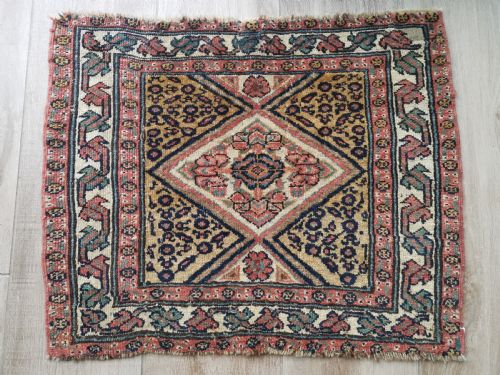
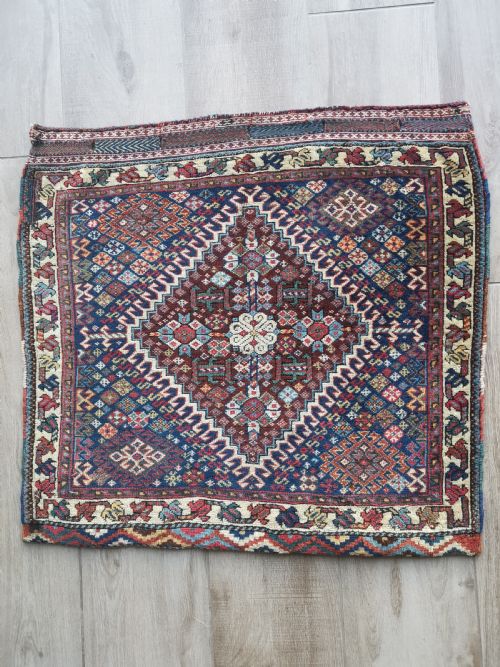
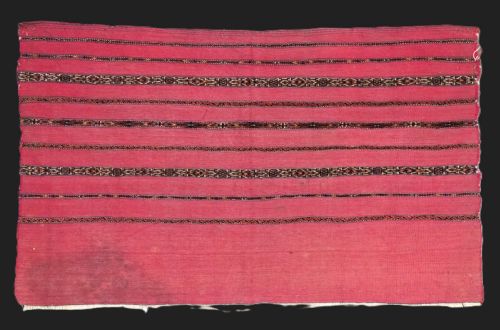
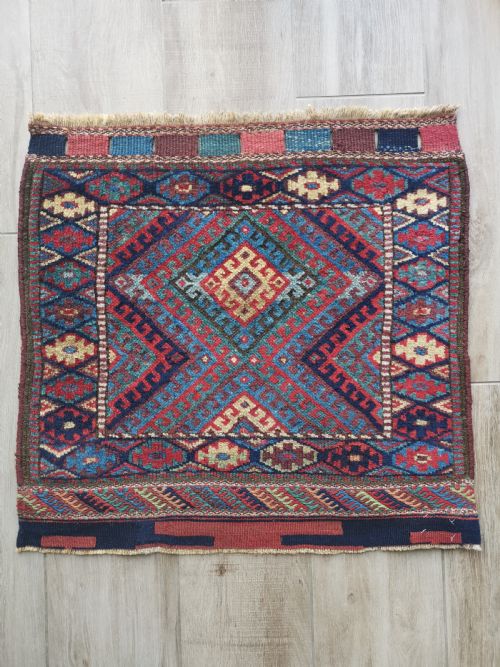
These nomadic wool bagface fragments and panels carry the dense tribal iconography of nineteenth and early twentieth century weavers across Central Asia and Persia.
Nomadic Wool Bagface
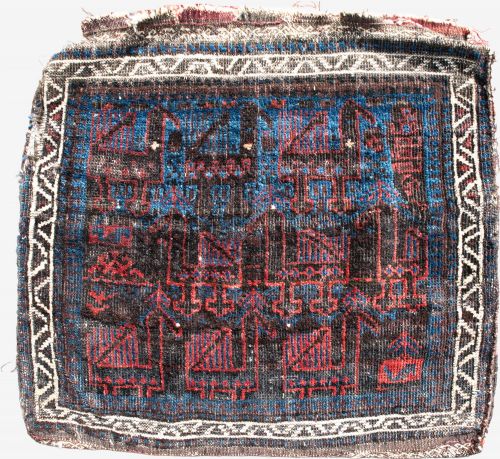
A nomadic wool bagface represents the decorative front of a utilitarian tribal container, salvaged and mounted as a textile object after years of functional use in camp or tent. These pieces originate from distinct tribal groups including the Turkmen, Baluch, Qashqai, Shahsevan, Jaf, and Khamseh, each applying characteristic regional weaving structures to their domestic storage items.
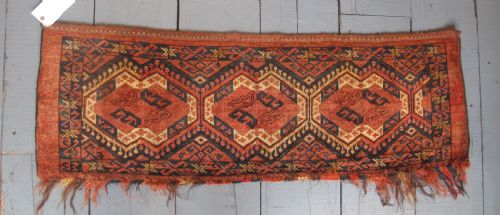
The surviving examples range from chuval and torba faces used for household storage to smaller saddlebag panels and spindle bags. Formats divide between square storage faces featuring primary tribal guls and elongated formats designed to hang across pack animals or serve as dowry pieces.
Dating across the available selections spans the nineteenth century through the early twentieth century, encompassing pieces woven with traditional vegetable palettes and hand-spun materials. The structure typically includes a flat-woven back or sturdy wool foundation supporting the detailed pile or soumac face.
Materials and construction
Weavers constructed these textiles primarily using hand-spun wool for the pile and foundation, frequently incorporating supplementary goat hair for structural durability along the outer edges and selvedges. Cotton occasionally appears in the foundational warps or supplementary details of later nineteenth-century weaving.
Natural dyes provide the deep reds, indigos, and earthy tones characteristic of these tribal pieces, interacting directly with the lanolin-rich wool. Techniques encompass symmetric and asymmetric knotting alongside flat-weave structures, producing dense surfaces built for physical endurance.
Nomadic Wool Bagface Retail Price Guide 2026
Typical asking prices for nomadic wool bagface among the pieces listed under this phrase on Sellingantiques today, from the lower quarter to the upper quarter. They describe what is for sale here now, not the wider market.
Several bags retain their original plain-weave wool backs, reminding us they were once packed full of nomadic bedding before finding a second life on our walls.
Evaluating weave and design
Quality rests upon knot density, handle flexibility, and the crispness of the tribal drawing across the field. Finer dowry pieces and smaller torba faces often exhibit tighter structural precision compared to larger utility storage sacks.
The integrity of the natural dye palette and the saturation of the wool dictate visual depth. Superior examples maintain intact borders and secure structural selvages that frame the primary tribal motifs without distortion.
Turkmen Tribes·Qashqai Nomads·Baluch Tribes·Shahsevan Nomads·Jaf Kurd Weavers
The Nomadic Wool Bagface Glossary
- Chuval
- A large Turkmen storage bag used for bedding and household goods, typically featuring multiple primary guls across the face. The surviving faces are prized for their balanced tribal proportions.
- Torba
- A smaller Turkmen storage bag traditionally hung within the tent interior. These pieces display concentrated geometric drawing in a manageable format.
- Gul
- A repeating medallion or octagonal motif central to Turkmen and tribal design traditions. Each tribal confederation utilises distinct forms to denote lineage and origin.
- Soumac
- A flat-weave technique where coloured weft threads wrap over and under warp threads in a continuous brocading motion. This method creates a sturdy, textured surface without a cut pile.
- Birdbag
- A specific Baluch or Belouch tribal bag type distinguished by stylised avian motifs arranged across the field. These vernacular designs reflect local animal symbolism.
Nomadic Wool Bagface: Frequently Asked Questions
What is a nomadic wool bagface?
A nomadic wool bagface is the decorative front panel of a utilitarian tribal storage container or saddlebag, removed from its original backing and preserved as an independent textile.
These panels showcase the traditional iconography, wool quality, and knotting techniques specific to the tribe that produced them.
How were these bags used?
Tribal families used these containers inside tents and portable dwellings to store bedding, clothing, and household provisions, or mounted them on pack animals for migration.
Larger chuvals served as primary storage chests, while smaller torbas and saddlebags held personal possessions and dowry items.
How do I hang a bagface?
Mounting a textile safely involves securing it to a padded wooden lath or using a conservation-grade sleeve attached to the reverse foundation.
Displaying the piece away from direct sunlight preserves the natural dyes and prevents the hand-spun wool fibres from drying out.
How do I tell tribal groups apart?
Distinguishing between groups relies on identifying specific structural traits, secondary colours, and primary medallion shapes like the Turkmen gul or the Baluch bird motif.
Foundation materials, such as the inclusion of goat hair or specific selvedge finishes, further clarify whether a piece originates from Persian or Central Asian weavers.