





Nomadic Tribal Kilim
When you search for nomadic tribal kilim, you find flat-woven textiles made by pastoral groups for daily utility and transport.
Nomadic Tribal Kilim
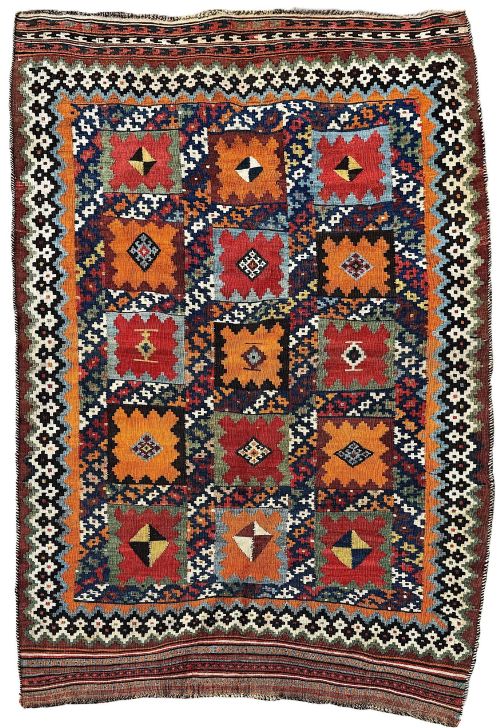
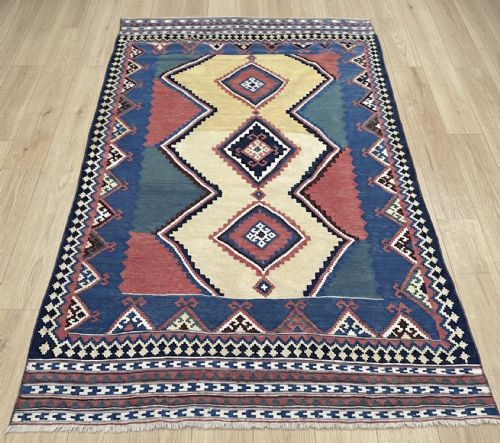
A nomadic tribal kilim encompasses utilitarian flatweaves created across Persia, Anatolia, and Central Asia by groups such as the Qashqai, Afshar, Yomut Turkmen, and Uzbeks.
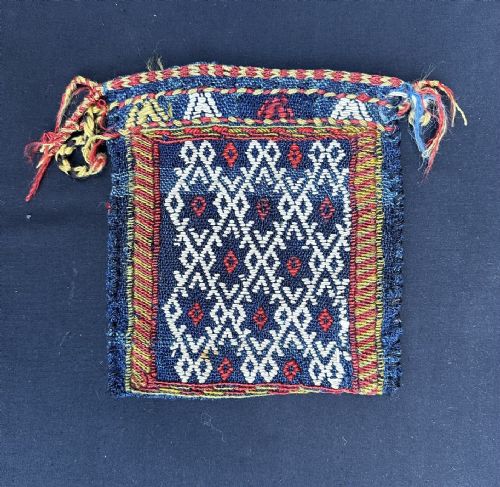
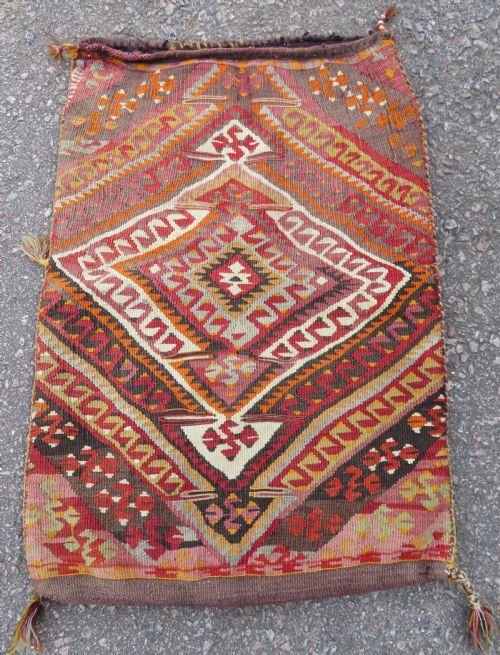
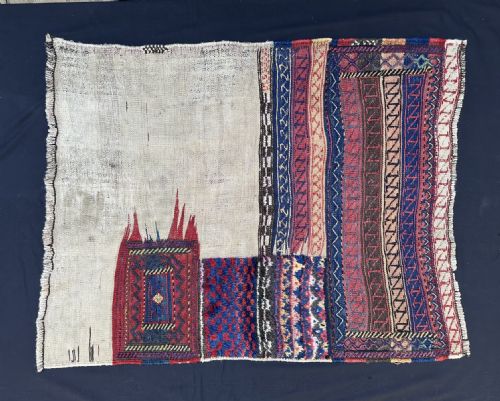
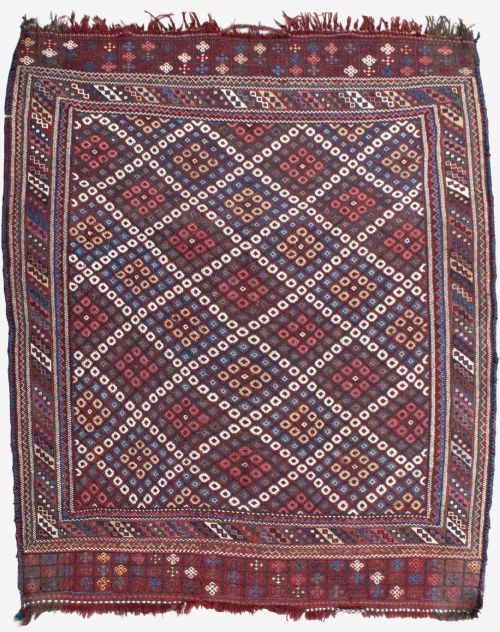
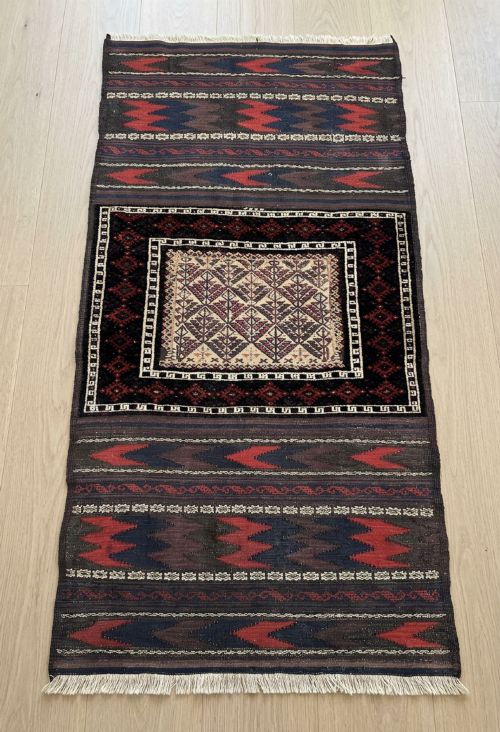
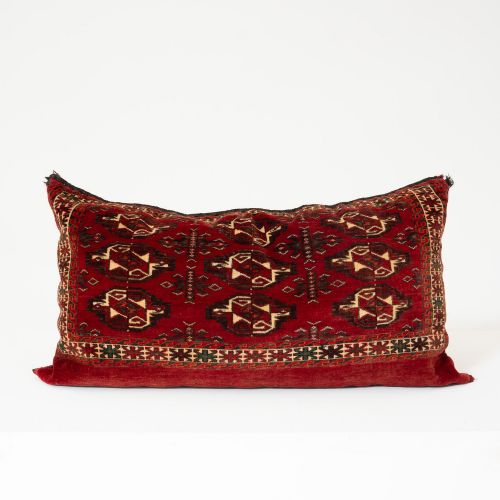
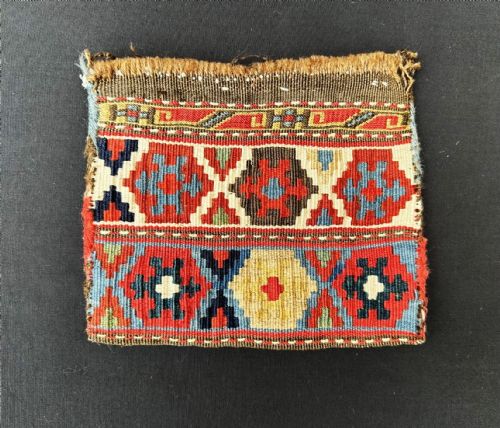
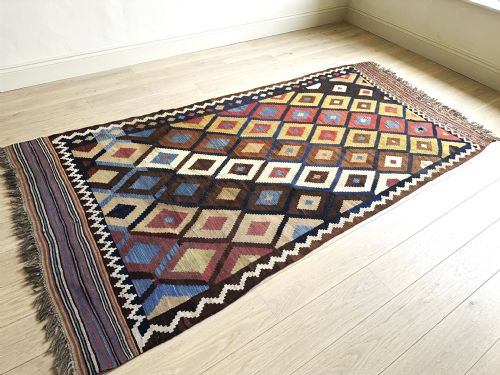
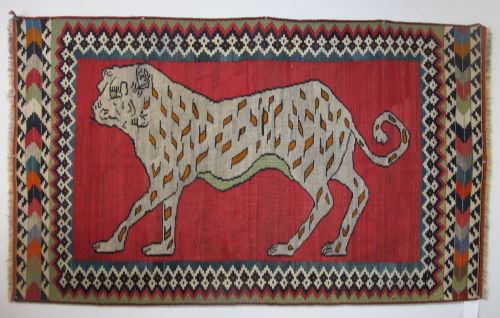
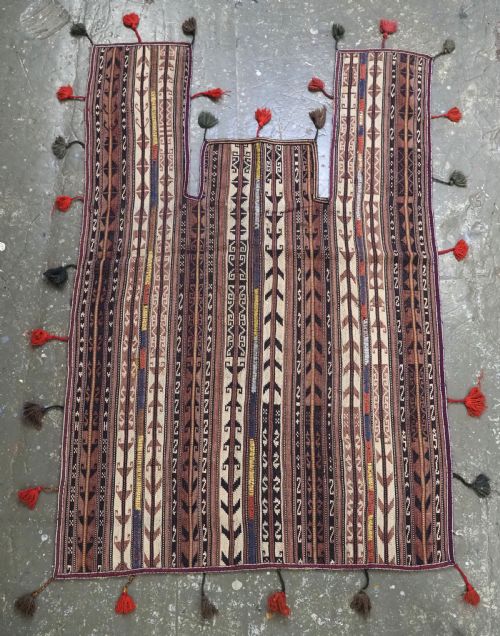
The objects on this page range from large rugs and runner carpets to grain sacks, storage bags, horse blankets, and dining sofreh cloths.
Most examples date from the late nineteenth century through to the early decades of the twentieth century, reflecting traditional pastoral production methods.
Materials and Construction
The weavers utilised hand-spun wool and cotton for the foundation and surface, occasionally incorporating goat hair for added structural durability along the edges.
Colours derive from natural dyes applied to the fibres before weaving, creating varied palettes across regional styles like Baluch, Shahsevan, and Luri-Bakhtiari.
Makers constructed pieces through slit-weave flat-weave techniques or banded weft work, sometimes joining multiple narrow panels together to form larger covers and rugs.
Nomadic Tribal Kilim Retail Price Guide 2026
Typical asking prices for nomadic tribal kilim among the pieces listed under this phrase on Sellingantiques today, from the lower quarter to the upper quarter. They describe what is for sale here now, not the wider market.
Certain storage bags still retain stray cowrie shells sewn in to ward off the evil eye during migration.
Evaluating the Pieces
Quality rests in the tightness of the weave, the clarity of the geometric or graphic design, and the integrity of the original wool materials.
Pieces that retain their complete structure, original plain-weave backs, and uncompromised edges demonstrate superior survival through decades of nomadic transport and use.
The Nomadic Tribal Kilim Glossary
- Sofreh
- A spread or cloth used for eating, kneading dough, or handling bread within pastoral households. These flatweaves often feature strong geometric borders and central fields.
- Mafrash
- A large rectangular storage bag or chest panel used by nomadic groups for bedding and household possessions. They are frequently encountered as flat-woven panels.
- Torba
- A smaller wall-hanging or storage bag produced by Turkmen and other Central Asian tribes. They usually display banded flatweave designs.
- Slit-weave
- A flat-weaving technique where the weft threads do not loop around the same warp string at colour boundaries, creating a small vertical slit. This method allows sharp geometric pattern definition.
- Natural dyes
- Colourants extracted from plants, insects, and minerals before the introduction of synthetic alternatives. They age with subtle tonal shifts across the wool surface.
Nomadic Tribal Kilim: Frequently Asked Questions
What is a tribal kilim?
A nomadic tribal kilim is a flat-woven textile produced by pastoral communities in regions such as Persia, Anatolia, and Central Asia. These items were woven without pile for practical household and transport functions.
Unlike floor carpets, many surviving examples served as grain sacks, horse blankets, dining cloths, or storage bags before entering collections as decorative textiles.
How were these textiles used?
Pastoral groups utilised flatweaves for everyday survival, packing them onto animals during seasonal migrations and deploying them inside tents. Sofreh cloths held dough and bread, while mafrash bags stored bedding.
They also served as ceremonial horse blankets, wall covers, and prayer mats. Their construction was entirely functional rather than decorative at the time of making.
How do I clean an antique kilim?
Cleaning antique flatweaves requires gentle handling to protect the hand-spun wool and natural dyes. Regular light vacuuming without a beater bar removes surface dust.
Professional specialist washing is recommended for deeper cleaning. Submerging older wool in domestic machines or using harsh detergents risks fading the historic colourants.
How do I identify the tribal origin?
Tribal attribution relies on specific structural traits, colour palettes, and geometric motifs characteristic of groups like the Qashqai, Afshar, or Yomut Turkmen. Regional weaving centres and confederacies left distinct signatures in their layouts.
Comparing border arrangements and wool preparation helps connect a piece to its historical producing group.