



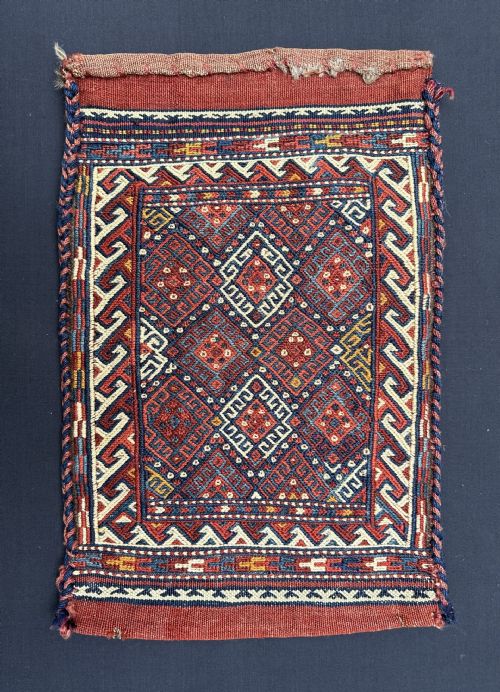
Nomadic Persian Bagface
A nomadic persian bagface is a woven tribal textile fragment carrying generations of pastoral history and practical craft into modern interiors.
Nomadic Persian Bagface
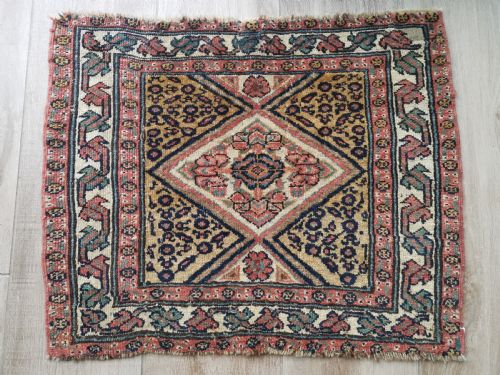
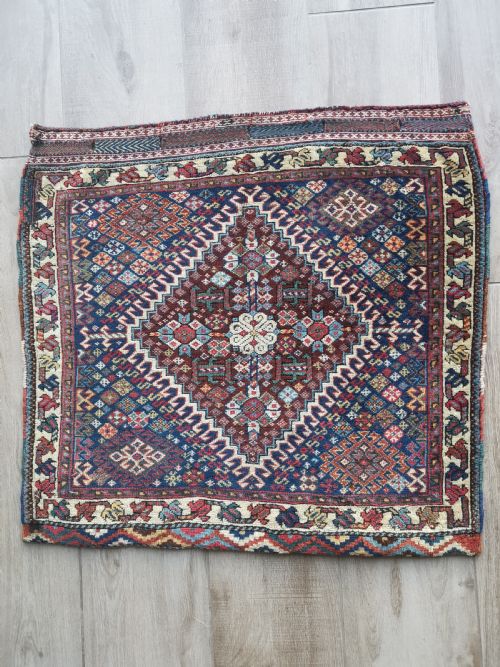
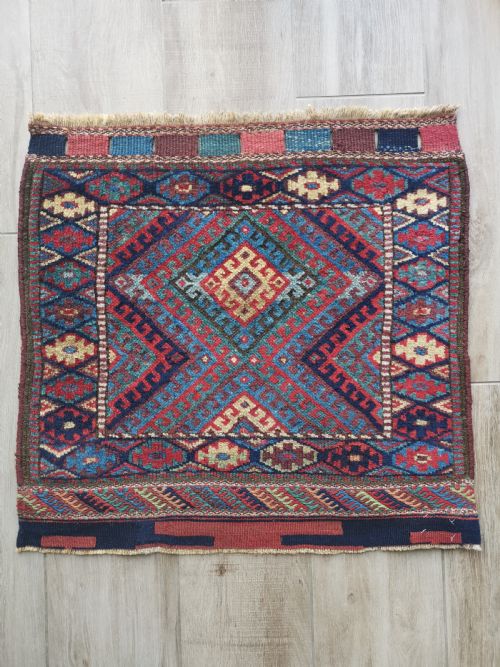
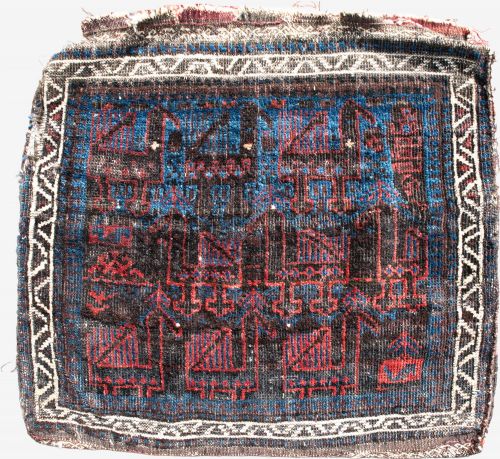
A nomadic persian bagface represents the front panel of a utilitarian transport pouch created by pastoral tribes across Persia, preserved as a decorative textile. These pieces arrive from tribal groups such as the Qashqai, Baluch, Jaf, Khamseh, and Kurdish weavers, dating from the nineteenth century into the early twentieth century.
Most examples found on this page take the form of square or rectangular fragments adapted from larger saddlebags or storage pouches. They showcase the distinct iconography and colour choices of specific tribal traditions, functioning today as small wall hangings or cushion faces.
Materials and construction
Weavers constructed these textiles primarily using hand-spun wool for the pile and foundation, often incorporating cotton and resilient goat hair for structural edges and corduroy finishes. The use of natural dyes provides the rich, saturated palette seen across the nineteenth-century examples.
The weaving technique relies on tribal knotting traditions passed down through generations, creating dense, durable surfaces designed to withstand the rigours of nomadic life. Finished edges frequently retain traces of flatweave plain-weave backs or side cords intended to secure the original pouch.
Nomadic Persian Bagface Retail Price Guide 2026
Typical asking prices for nomadic persian bagface among the pieces listed under this phrase on Sellingantiques today, from the lower quarter to the upper quarter. They describe what is for sale here now, not the wider market.
Listings span periods from the nineteenth century through to nineteen twenty, featuring wool, cotton, natural dyes, and goat hair.
Evaluating quality and character
Quality in a nomadic persian bagface rests on the fineness of the wool preparation, the clarity of the natural dye palette, and the precision of the tribal patterning. Pieces with tight knot density and well-resolved motifs stand apart from simpler or more heavily worn fragments.
The integrity of the remaining borders and the vitality of the wool pile also dictate the visual strength of the textile. Superior examples retain their original structural geometry and uncompromised chromatic depth from edge to edge.
The Nomadic Persian Bagface Glossary
- Bagface
- The decorative front panel of a nomadic storage bag, separated from the back and preserved as an independent textile.
- Baluch
- A tribal group known for producing dark, richly coloured wool weavings, frequently featuring distinctive bird or tree motifs.
- Qashqai
- A confederation of nomadic tribes in south-west Persia celebrated for finely knotted geometric designs and vibrant colours.
- Tubreh
- A traditional Persian term for a tribal bag or saddlebag, often utilised for personal possessions during migration.
- Natural dye
- Colourants derived from plants, roots, and insects rather than synthetic chemicals, yielding harmonious patination over time.
Nomadic Persian Bagface: Frequently Asked Questions
What is a nomadic persian bagface?
It is the decorative front panel of a utilitarian transport sack woven by pastoral tribes in Persia. These fragments showcase traditional tribal motifs and techniques.
They were originally part of larger saddlebags used for nomadic migration and storage. Today, collectors preserve them as independent textile art.
How were these bags used?
Nomadic groups utilised these pouches on pack animals to transport household goods across difficult terrain. The sturdy wool construction protected personal items during travel.
Once removed from their original backing, these panels function well as small decorative wall hangings or distinctive cushion faces in contemporary homes.
How do I identify different tribes?
Different tribal groups employed distinct colour palettes, wool qualities, and geometric or pictorial motifs. Qashqai work often differs visibly from Baluch or Kurdish weaving.
Studying the specific border arrangements and knotting structures helps clarify the regional origin of each individual piece.
Are these pieces antique?
The available selection includes pieces originating from the nineteenth century and the early decades of the twentieth century. These dates reflect traditional hand-weaving eras.
Hand-spun wool and traditional natural dye use serve as primary indicators of age and authentic tribal manufacture.