





Nomadic Hand Knotted Bag
A nomadic hand knotted bag brings the tactile geometry of tribal weaving into daily domestic spaces through utilitarian storage sacks crafted across Central Asia and Persia.
Nomadic Hand Knotted Bag
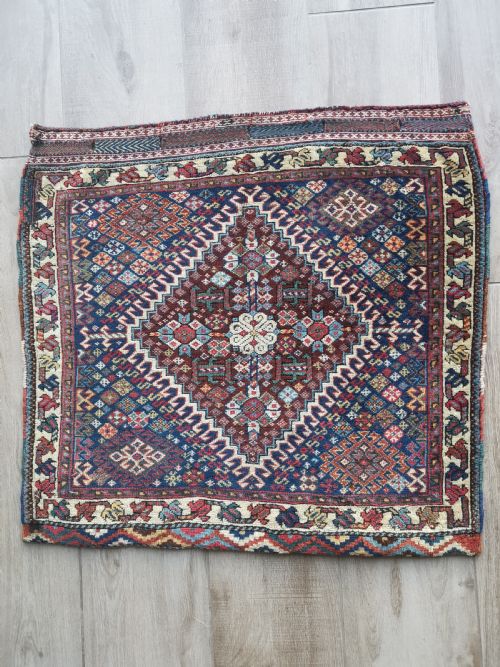
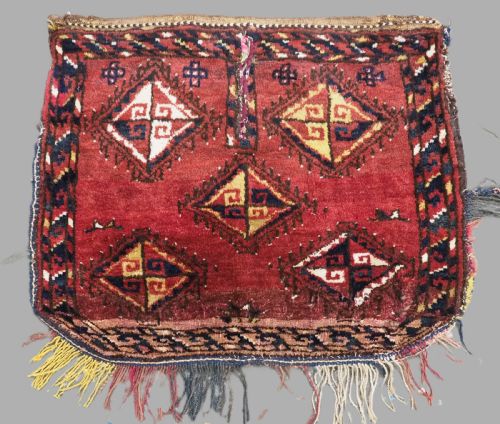
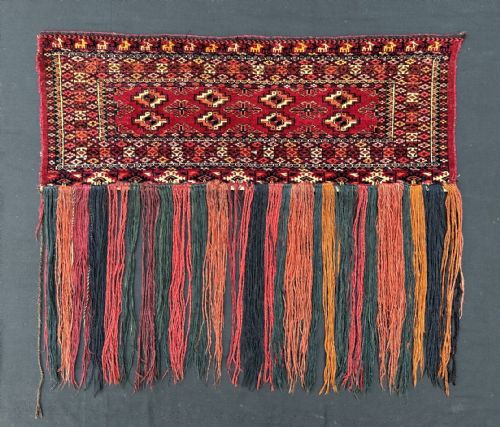
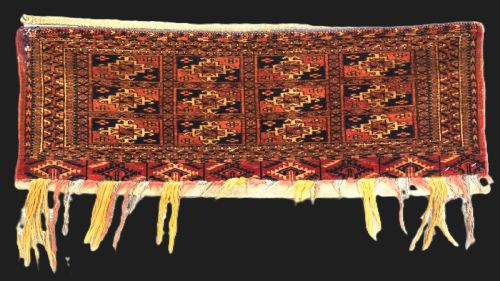
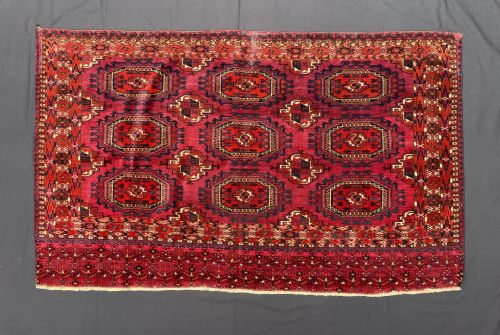
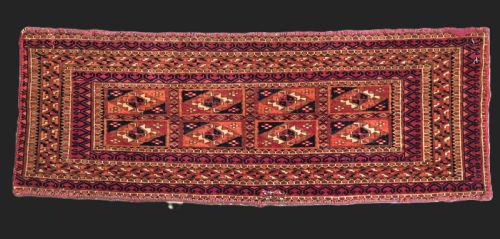
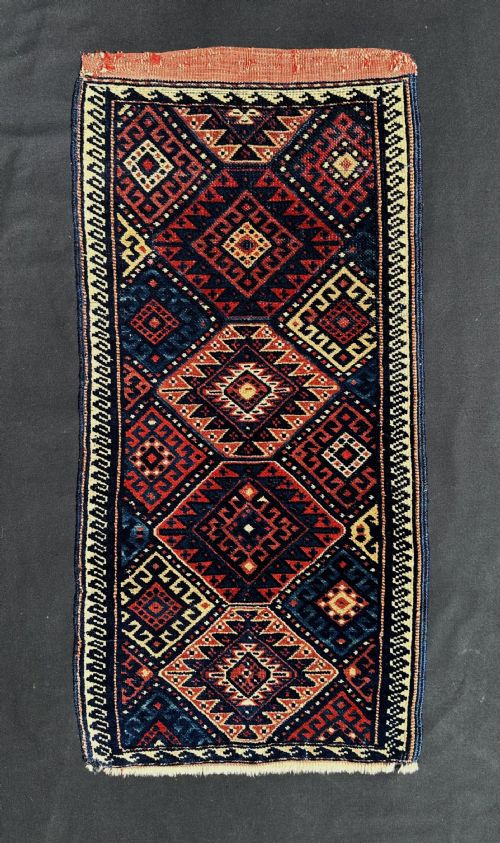
A nomadic hand knotted bag encompasses utilitarian items such as torbas, chuvals, mafrashes, and smaller saddlebag faces originally utilised for household storage or transport by pastoral groups. Buyers navigating this category encounter portable woven containers created across Turkmenistan, Persia, and Central Asia by tribes including the Yomut, Tekke, Ersari, Qashqai, and Luri.
The pieces appearing here span the nineteenth and early twentieth centuries, manifesting as complete storage sacks with original plain weave backs or as isolated bag faces intended for hanging. These textiles reflect the specific domestic requirements of nomadic life, translating portable utility into enduring decorative art.
Materials and construction methods
Makers constructed each nomadic hand knotted bag using hand-spun wool and cotton foundations, knotted tightly by hand to produce dense, resilient piles. Natural dyes provided the rich palette seen across these nineteenth-century examples, anchoring the wool yarns in deep tones.
Weavers integrated supplementary structures, combining knotted pile sections with flat-woven plain weave backs and sides. This dual construction method balanced heavy-duty storage capacity with the flexibility required for animal transport.
Nomadic Hand Knotted Bag Retail Price Guide 2026
Typical asking prices for nomadic hand knotted bag among the pieces listed under this phrase on Sellingantiques today, from the lower quarter to the upper quarter. They describe what is for sale here now, not the wider market.
Some bags began life as spindle holders, carrying the tools that spun the very wool forming their geometric patterns.
Distinguishing finer examples
Quality rests upon the precision of the knotting, the complexity of tribal motifs such as guls or secondary asmalyk designs, and the crispness of the natural dye palette. Finer pieces demonstrate exceptionally tight pile density and balanced proportions within traditional layouts.
Preservation of structural integrity, including complete backs or well-defined borders, separates utilitarian remnants from masterworks of tribal textile art. The clarity of the wool spinning and the retention of secondary design elements dictate the standing of individual specimens.
The Nomadic Hand Knotted Bag Glossary
- Torba
- A small Turkmen storage bag used for domestic goods or tent furnishings. These wide bags typically display primary tribal guls across the face.
- Chuval
- A large Turkmen tent-storage bag designed for bedding and heavy garments. They frequently feature multiple rows of major primary guls.
- Mafrash
- A rectangular storage bag or box-cover used in pairs for transit on pack animals. They are commonly associated with Persian and Anatolian nomadic groups.
- Gul
- A repeating medallion or principal motif used in Turkmen carpet and bag design. Each tribal group traditionally utilised distinct geometric gul variations.
- Chanteh
- A small personal carrying bag or pouch woven by nomadic women. These intimate pieces often duplicate the patterns of larger rugs in miniature scale.
- Asmalyk
- A pentagonal trapping hung on camel flanks during wedding processions. Their distinctive shape and elaborate design distinguish them from standard storage sacks.
Nomadic Hand Knotted Bag: Frequently Asked Questions
What were nomadic bags originally used for?
Nomadic groups utilised these woven containers for storing household goods, blankets, and personal possessions inside tents or during seasonal migrations. Their varied shapes accommodated specific items, from bedding to small personal belongings.
Mounted on pack animals or hung against interior lattice walls, these sacks protected contents from dampness and dirt while organising portable domestic life. The sturdy construction ensured they withstood the rigours of travel across steppes and mountain ranges.
How do I distinguish different tribal designs?
Tribal attribution relies heavily on the specific repeating guls, border arrangements, and structural palettes inherent to each weaving group. Yomut, Tekke, and Ersari weavers each employed distinct geometric vocabularies and colour emphases.
Examining the secondary ornaments and overall format also clarifies the origin, whether an elongated torba or a square chuval face. Regional dyeing traditions further differentiate Persian nomadic groups like the Qashqai and Luri from their Central Asian counterparts.
Are bag faces meant to be hung on walls?
Many surviving pieces enter collections as isolated bag faces because the original plain weave backs deteriorated or were separated over decades of use. Their self-contained medallion compositions render them ideally suited for display as textile art.
Mounting them flat against walls protects the delicate hand-knotted wool from structural strain while showcasing the intricate tribal geometry. Collectors often frame or suspend them securely to prevent distortion of the historic foundation yarns.
How do I care for antique wool textiles?
Preserving these historic wool and cotton pieces requires gentle treatment, avoiding direct, harsh sunlight that can fade natural dyes over time. Regular, light vacuuming with a low suction setting through a mesh screen prevents dust accumulation.
Professional textile conservators should handle any necessary washing or structural repairs to maintain the integrity of the hand-spun fibres. Maintaining stable indoor humidity prevents the dry rot that threatens nineteenth-century organic materials.