



Nomadic Flatweave Tapestry
These nomadic flatweave tapestry pieces are tribal textiles of wool and cotton, offering bold geometric design and historic utility for the modern floor or wall.
Nomadic Flatweave Tapestry
A nomadic flatweave tapestry brings together tribal textiles such as kilim rugs, animal trappings, and storage bags from Central Asian, Persian, and Anatolian traditions. When you search for nomadic flatweave tapestry, you encounter utilitarian objects made by nomadic groups including the Shahsavan, Yomut, Tekke Turkmen, and Qashqai tribes. These items span periods from the late nineteenth century into the early twentieth century.
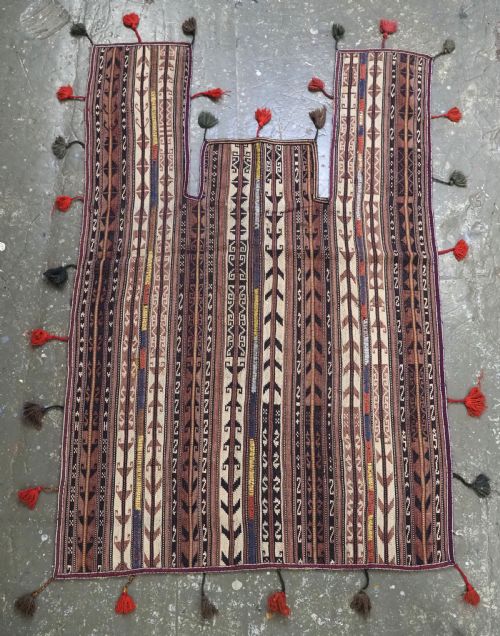
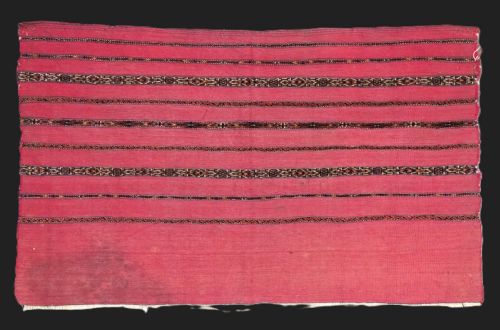
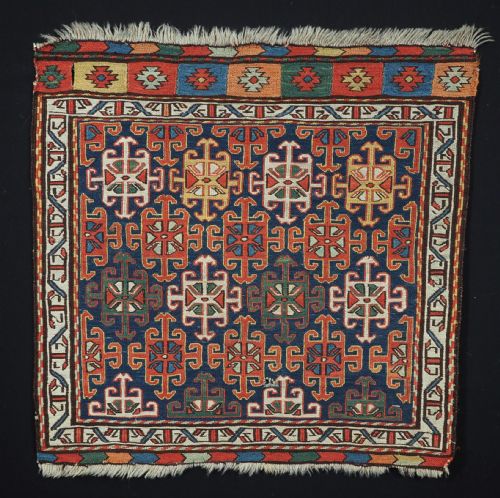
The forms on this page include horse blankets, chuval faces, mafrash panels, sofreh eating cloths, and tent bands woven in structural flatweave techniques. Most examples originate from regions like South-West Persia, the Fars and Kerman provinces, and Central Asia. They reflect the daily domestic and nomadic lives of the weavers who produced them for portable use.
Materials and construction methods
The makers relied primarily on wool and cotton foundations, often dyed using natural colour sources to achieve rich, lasting tones. Weavers constructed these textiles without pile, utilising flatweave, Soumac, cicim embroidery, and tapestry techniques to build crisp, graphic patterns.
Many larger pieces, such as Uzbek kilims or tent bands, required joining multiple woven strips together to form the complete textile. This meticulous construction method ensured both structural strength and visual continuity across utilitarian objects like saddlebags and storage sacks.
Materials documented across the pieces are limited to wool, cotton, and natural dyes.
Assessing quality in tribal flatweaves
Quality rests in the tightness of the weave, the clarity of the graphic design, and the integrity of the natural dyes. Fine weave examples demonstrate exceptional technical control by the weaver, resulting in crisp geometric transitions and durable structures.
Condition and completeness also dictate distinction, particularly with bag faces, tent bands, and sofreh fragments that survive from the nineteenth century. Pieces that retain their original borders, structural seams, and saturated natural colours command greater interest among collectors.
The Nomadic Flatweave Tapestry Glossary
- Kilim
- A flatweave textile produced without pile, featuring slit-weave construction that creates sharp geometric patterns. These versatile rugs and panels served varied domestic purposes across tribal regions.
- Soumac
- A brocading technique where coloured weft threads are wrapped around the warp yarns to create a textured, durable surface. This method appears frequently on nineteenth-century bag faces and panels.
- Chuval
- A large tribal storage bag face made by Turkmen groups to hold household goods within a yurt. They are celebrated for their fine weave and structured guls.
- Sofreh
- A utilitarian cloth used for processing dough, baking bread, or serving communal meals among nomadic communities. These textiles often exhibit striking minimal or geometric designs.
- Cicim
- An embroidered flatweave technique where supplementary pattern threads are sewn onto a completed ground weave. This method adds raised surface decoration to panels and wall hangings.
Nomadic Flatweave Tapestry: Frequently Asked Questions
What is a nomadic flatweave tapestry?
It is a pileless textile woven by nomadic tribes in regions like Persia, Central Asia, and Anatolia for functional household use. These include rugs, storage bag faces, horse covers, and tent bands.
They represent the traditional craft and cultural motifs of specific tribal groups, utilising wool, cotton, and natural dyes to achieve lasting geometric patterns.
How were these tribal textiles used?
Nomads utilised these flatweaves for practical domestic and transport needs within portable dwellings and tents. Items functioned as grain sacks, bedding storage, horse blankets, and eating cloths.
Over time, many of these utilitarian objects transitioned into decorative wall hangings and floor coverings due to their graphic visual appeal.
How do I care for an antique flatweave?
Protect antique flatweaves from direct sunlight to preserve the stability of natural dyes in wool and cotton. Use an appropriate underlay to prevent slipping and reduce friction on historic fibres.
Vacuum gently with a suction-only attachment, avoiding traditional rotating brush heads that can catch loose threads or damage old structural weaves.
How are different tribal styles identified?
Identification relies on structural characteristics, specific colour palettes, and distinct geometric motifs associated with particular regions and groups. Turkmen, Shahsavan, Qashqai, and Baluch weavers each employed characteristic patterns and weaving techniques.
Comparing structural details like the treatment of borders, end finishes, and wool quality helps place an object within its likely tribal origin.