




Striped Kilim Wall Hanging
A striped kilim wall hanging brings rich tribal geometry and tactile flatweave texture directly into a modern interior.
Striped Kilim Wall Hanging
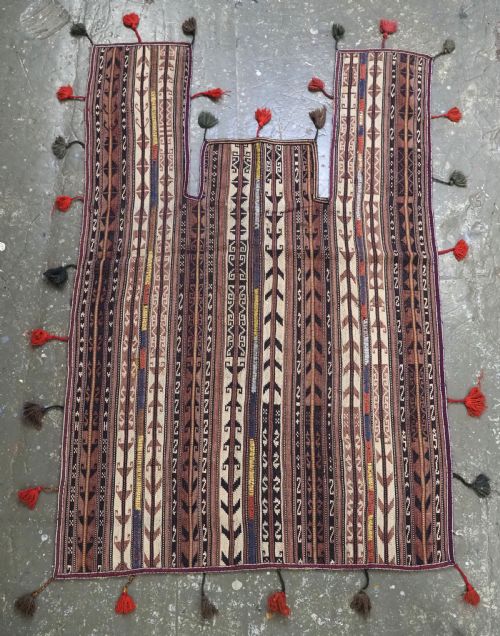
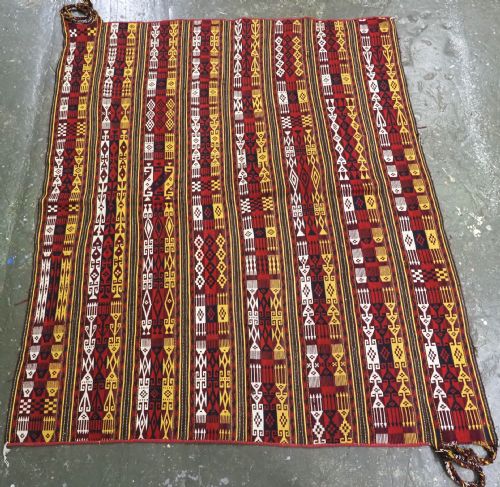
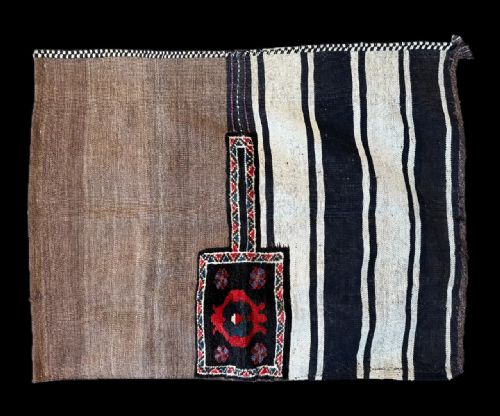
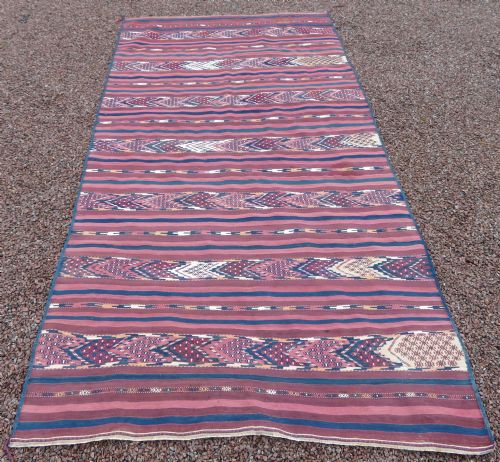
When you search for a striped kilim wall hanging, you are looking at flatwoven tribal textiles originating from Persian, Central Asian, and Turkmen regions. These pieces include horse blankets, bread sofrehs, wheat-sacks, and tent bands repurposed for display. The examples you are most likely to meet on this page date from the late nineteenth century to the early twentieth century.
Tribal makers wove these flatweaves for utilitarian domestic or nomadic use rather than export. The striped designs often derive from bands, gajeri panels, or utilitarian storage bags that feature bold linear patterns. Displaying them on a wall allows the graphic qualities of nomadic weaving to function as textile art.
What varies in quality
Quality in these flatweaves rests upon the crispness of the graphic design and the integrity of the weave. Tightly packed wool foundations and well-balanced proportions separate finer tribal weaving from simpler utilitarian work. The depth and clarity of natural dyes also dictate the visual strength of the piece.
Preservation of the original structure, particularly along the borders and banded sections, influences desirability. Pieces that retain their full tribal context, such as complete saddle bags or intact tent bands, demonstrate superior craftsmanship.
Listings span the nineteenth and early twentieth centuries, featuring wool, cotton, goat hair, and natural dyes across Persian and Central Asian tribal traditions.
The Striped Kilim Wall Hanging Glossary
- Kilim
- A flatwoven textile produced without a pile by tightly interweaving warp and weft strands. This technique creates a smooth, tapestry-like surface suitable for wall display.
- Sofreh
- A spreading cloth used for dining or kneading bread within Persian nomadic households. These textiles frequently feature strong geometric striping and banded compositions.
- Mafrash
- A large rectangular storage bag or travel container woven by nomadic tribes. Portions of these containers often survive as flatweave panels.
- Cicim
- An embroidery-like brocade technique where supplementary weft threads are laid over the foundation weave to create raised patterns. It adds distinct surface texture to flatweaves.
- Tacheh
- A traditional grain or wheat sack made by tribal weavers in western Persia. They often display striking horizontal stripes and bold graphic layouts.
Striped Kilim Wall Hanging: Frequently Asked Questions
How do I hang a heavy kilim?
Mounting a flatweave textile safely requires distributing the weight evenly along the top edge rather than piercing the fabric with nails. A common method involves stitching a cotton sleeve to the reverse and sliding a concealed wooden batten or metal rod through it.
Alternatively, a specialised velcro mounting system can grip the textile securely across its entire width. This prevents sagging and protects the historical wool fibres from undue stress.
Are these pieces authentic antiques?
The items listed on this page originate from nineteenth and early twentieth-century tribal traditions in Persia and Central Asia. They were produced by nomadic groups such as the Qashqa'i, Bakhtiari, Shahsavan, and Turkmen for everyday use.
Materials include hand-spun wool and natural dyes characteristic of the period before synthetic colourants became widespread. Each piece carries the distinct structural markers of genuine nomadic craftsmanship.
How do I clean an antique kilim?
Regular, gentle maintenance is the best approach for antique flatweaves. Careful vacuuming on a low suction setting with a mesh screen over the textile helps remove embedded dust without pulling the wool fibres.
Wet cleaning should be left to professional conservators who understand natural dyes and antique animal fibres. Household detergents can cause historical dyes to bleed or damage the fragile wool and cotton foundation.
What is a gajeri kilim?
A gajeri kilim is a specific flatweave type associated with Central Asian weavers, notably Uzbek communities. These panels often feature bold graphic designs and striking linear bands.
Many surviving examples were originally functional items such as tent bands or utility panels that have been repurposed. Their strong visual rhythm makes them particularly effective as wall hangings.