
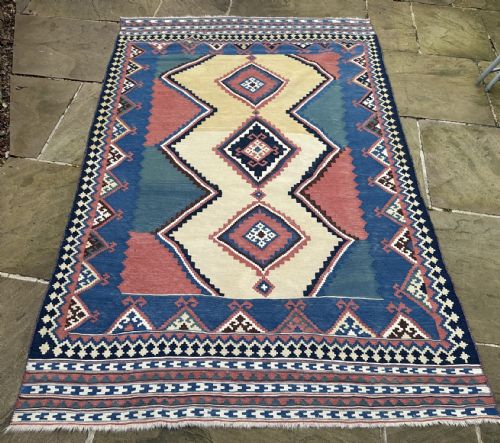


Nomadic Flatweave Runner
When choosing a nomadic flatweave runner, buyers acquire tribal textiles originating from Central Asian, Persian, Anatolian, and Caucasian regions.
Nomadic Flatweave Runner
A nomadic flatweave runner represents woven textiles produced by tribal groups across regions such as Persia, Central Asia, Anatolia, and the Caucasus. These pieces include utilitarian items like sofres, tent bands, grain bags, and long kilim panels woven for daily nomadic life.
The selection on this page centres on flatweaves and kilims spanning the nineteenth and early twentieth centuries, specifically periods from the 1850s to the 1920s. Buyers will frequently encounter specific regional groups such as the Uzbek, Baluch, Qashqai, Turkmen, and Shahsavan represented in these runner formats.
Many runners are assembled from multiple panels, strips, or sections joined together to create long, narrow formats suitable for corridors and walkways. These textiles display bold graphic designs, banded patterns, and geometric motifs characteristic of their tribal makers.
Materials and Construction
The construction relies heavily on hand-spun wool and natural dyes, occasionally incorporating cotton and camel hair to create durable, flat-surfaced textiles without a pile. Weavers utilised techniques such as slit-tapestry weaving, soumak wrapping, and supplementary weftwork to build up complex geometric patterns.
Many larger runners and long panels were constructed by weaving narrow strips or distinct parts separately and then stitching them together into a unified format. This modular construction was practical for nomadic looms and resulted in sturdy, flexible floor coverings and furnishings.
Some runners started life as fifty-foot tent bands keeping nomadic yurt walls securely tied down against the wind.
Evaluating the Weave
Quality in these runners is determined by the tightness of the weave, the clarity of the graphic design, and the depth of the natural dyes. Finer weaves and well-preserved structural integrity distinguish superior examples from standard utility pieces.
The complexity of the tribal design, whether through intricate banded patterns or well-executed multi-part construction, indicates the skill of the weaver. Preservation of the original length, kilim ends, and structural stitching also defines the standing of an individual runner.
The Nomadic Flatweave Runner Glossary
- Kilim
- A flat-woven carpet or rug produced without a pile by tightly interlacing warp and weft threads. This technique creates a smooth, reversible textile.
- Sofre
- A spread or cloth used for dining or preparing bread within tribal households. These utilitarian flatweaves often feature elongated proportions.
- Soumak
- A brocade-like weaving technique where decorative weft threads are wrapped around the warp threads. This method adds structural weight and texture to the face of the textile.
- Mafrash
- A large rectangular storage bag or chest panel woven by nomadic tribes. These panels are frequently repurposed into flatweaves and runners.
- Juval
- A large storage sack made by Turkmen and other tribal groups for household possessions. Fragments of these bags often survive as flatweave panels.
Nomadic Flatweave Runner: Frequently Asked Questions
What is a nomadic flatweave runner?
A nomadic flatweave runner is a long, pileless textile woven by tribal groups in regions such as Persia, Central Asia, and the Caucasus. These pieces were created for practical use in nomadic dwellings, serving as floor coverings, corridor runners, or functional furnishings.
The items available on this page span from the mid-nineteenth century to the early twentieth century, reflecting traditional weaving methods of groups like the Uzbek, Baluch, and Qashqai. Their narrow proportions and geometric designs make them well-suited for modern hallways and transitional spaces.
How were these runners used originally?
Originally, these flatweaves served various domestic and nomadic functions, ranging from dining spreads and tent bands to storage bags and floor coverings. Tribes utilised durable materials like hand-spun wool and natural dyes to withstand daily wear in harsh environments.
Many long runners were constructed by joining multiple narrower panels or strips together to fit specific spaces within tents or mud-brick dwellings. Today, their sturdy flat-woven structure allows them to function effectively as corridor carpets.
How do I care for an antique flatweave?
Caring for an antique flatweave involves using a high-quality underlay to prevent slipping and reduce friction against the floor. Regular, gentle vacuuming without a rotating brush roll helps remove grit that can damage the wool fibres over time.
Professional cleaning tailored for antique textiles is recommended when deep cleaning is necessary. Avoiding prolonged exposure to direct sunlight will help preserve the natural dyes used in these nineteenth and early twentieth-century pieces.
How can I tell different tribal styles apart?
Distinguishing tribal styles relies on observing specific colour palettes, structural techniques, and geometric motif arrangements unique to each region. For instance, pieces attributed to Baluch or Uzbek weavers often display distinct banded weftwork and graphic panel construction.
Examining the weave density, wool preparation, and edge finishes provides further clues to tribal origins. Turkmen and Qashqai weavers utilised characteristic colour combinations and structural traits that separate them from Anatolian or Caucasian examples.