


Nineteenth Century Writing Bureau
A nineteenth century writing bureau brings together polished timber, fitted interiors and dedicated compartments for correspondence.
Nineteenth Century Writing Bureau
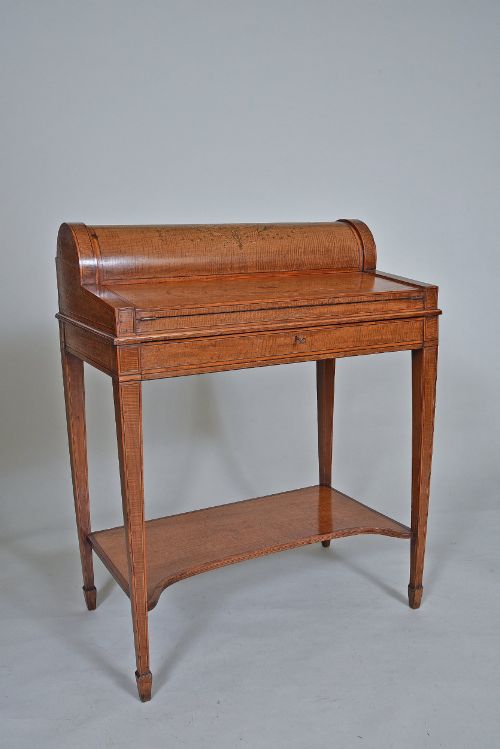
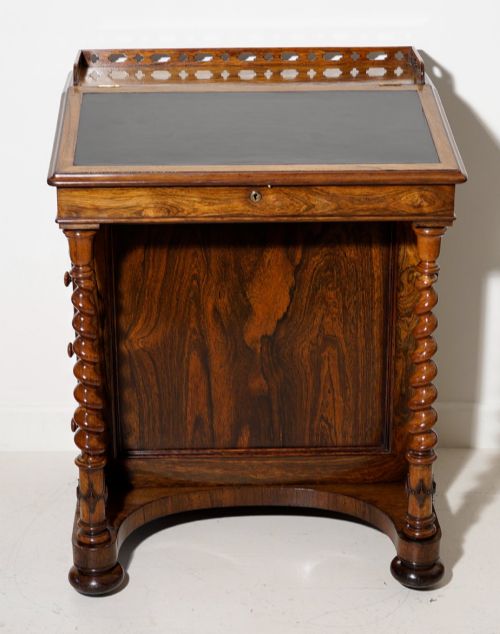
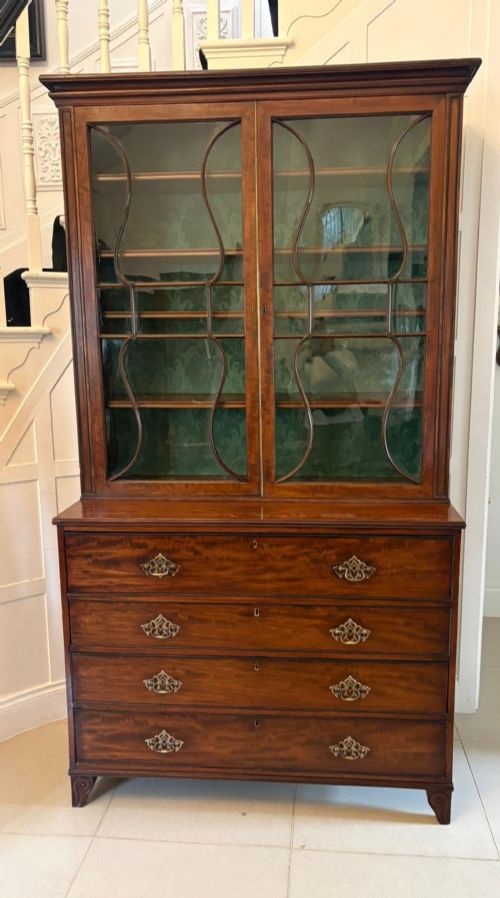
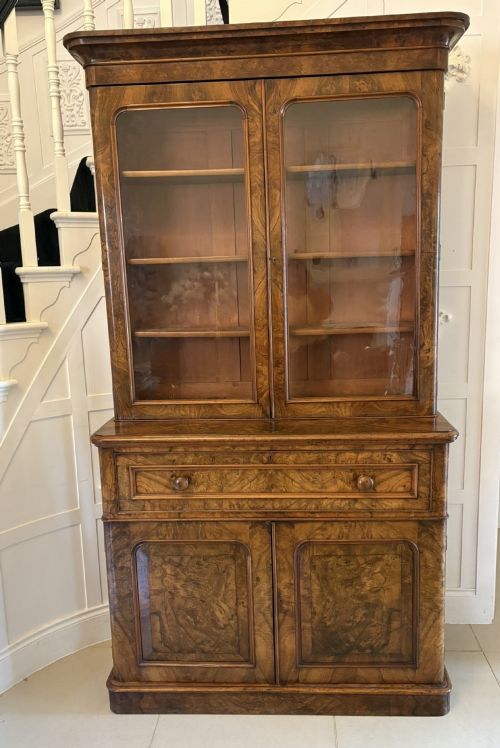
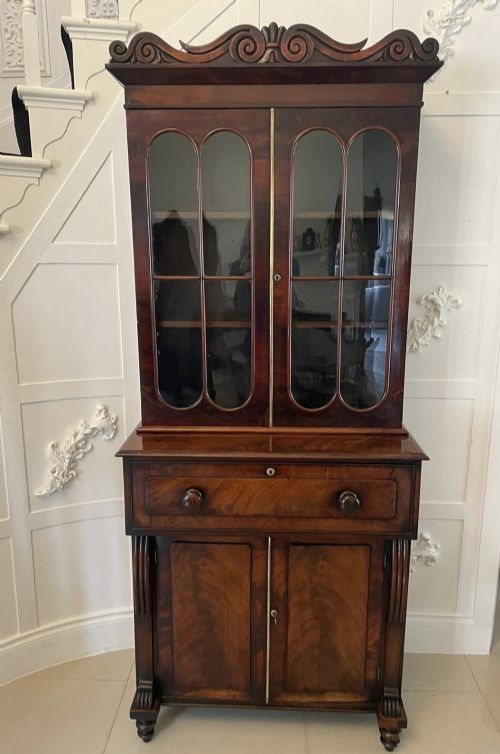
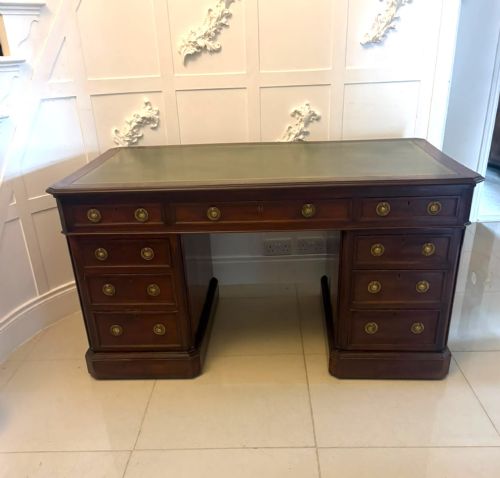
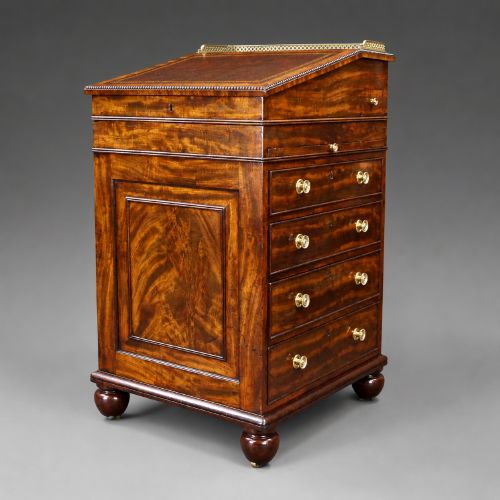
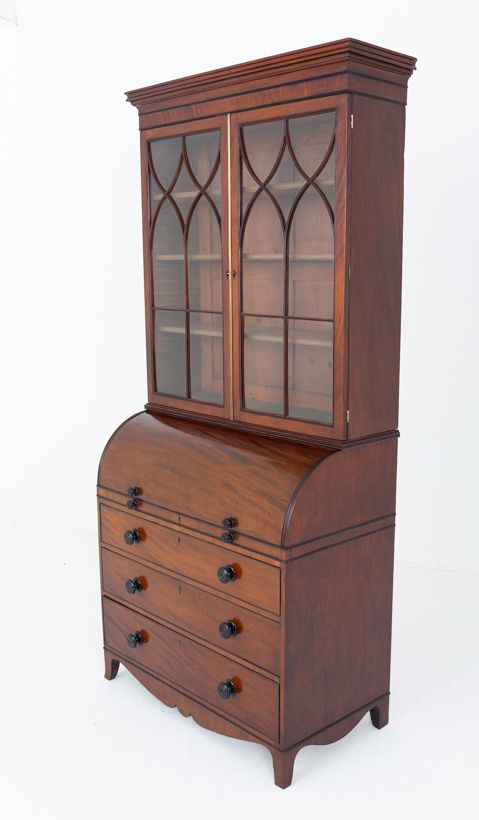
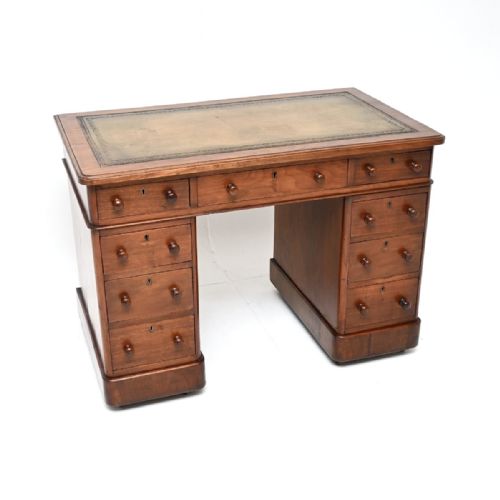
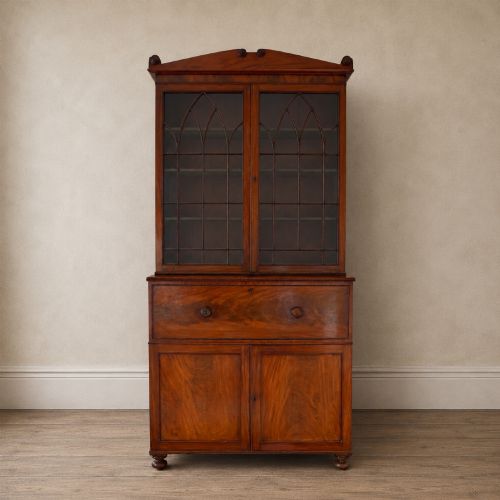
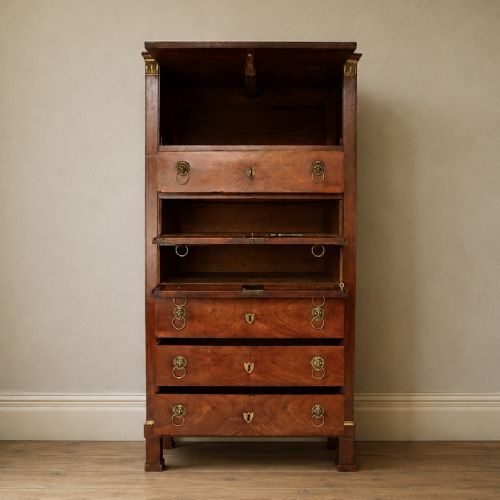
A nineteenth century writing bureau takes many forms across the evidence, appearing as compact Davenports, tall secretaire bookcases, twin pedestal desks and French bureau plats. These pieces serve domestic study and correspondence, combining a writing surface with concealed drawers, pigeonholes and stationery compartments.
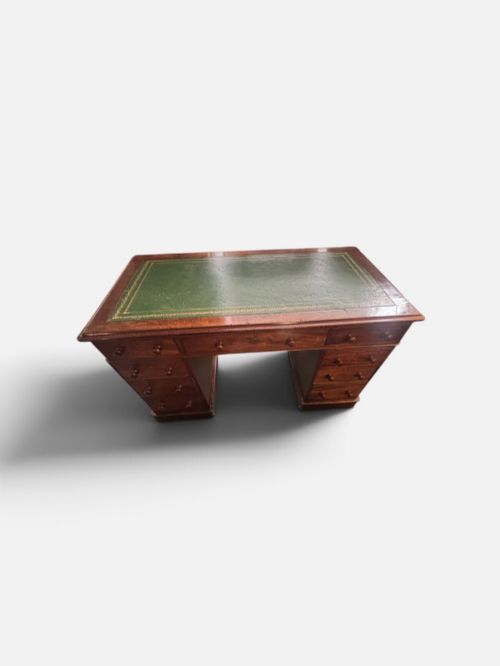
The Victorian period dominates the listings, alongside Regency, William IV and George IV examples, reflecting the heavy demand for domestic study furniture during those decades. Buyers most frequently encounter mahogany and walnut pedestal desks or Davenport tables fitted with leather writing surfaces.
French influences also appear regularly through bureau plats, bonheur du jour cabinets and secrétaires mounted with ormolu and inlaid with exotic woods like kingwood and rosewood. These continental pieces offer a lighter aesthetic compared to heavy English oak and mahogany secretaire bookcases.
How they were made
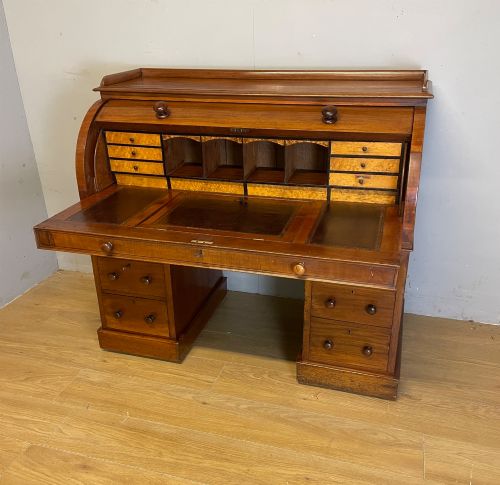
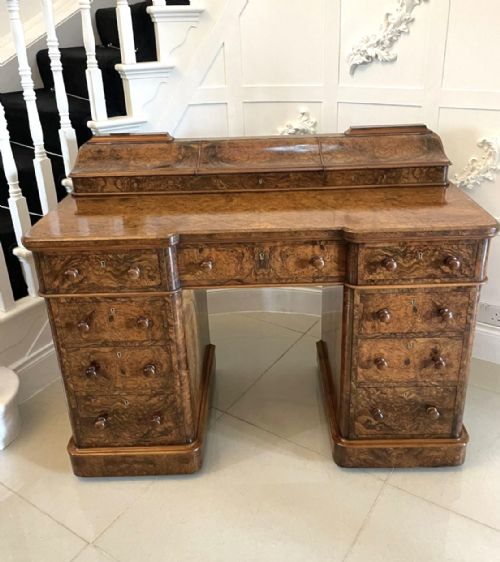
Cabinet makers utilised dense native timbers such as mahogany, oak and walnut alongside decorative veneers including flame mahogany, burr walnut, satinwood and amboyna. These woods provide both structural stability and rich grain patterns across large surfaces like cylinder fronts and pedestal sides.
Metal and leather components complete the construction, with brass handles, ormolu mounts and porcelain plaques adding ornamental detail to French and English pieces. Writing surfaces frequently feature inset tooled leather panels, while secretaire drawers and cabinets incorporate complex internal pigeonholes and small drawers.
Nineteenth Century Writing Bureau Retail Price Guide 2026
Typical asking prices for nineteenth century writing bureau among the pieces listed under this phrase on Sellingantiques today, from the lower quarter to the upper quarter. They describe what is for sale here now, not the wider market.
Periods represented include Regency, William IV, George IV and Victorian eras.
What varies in quality
The refinement of the timber selection and marquetry dictates the tier of a piece, separating standard utility furniture from pieces commissioned from notable cabinet makers. Figured veneers, intricate inlay and fire-gilt ormolu mounts indicate superior workshop standards.
The complexity of the internal mechanism also sets pieces apart, particularly in cylinder desks and Davenport desks where sliding tops and secret compartments require precise joinery. Superior examples maintain smooth operation in all drawers and writing flaps after decades of use.
Gillows·François Linke·Edwards and Roberts·Maple and Co
The Nineteenth Century Writing Bureau Glossary
- Davenport
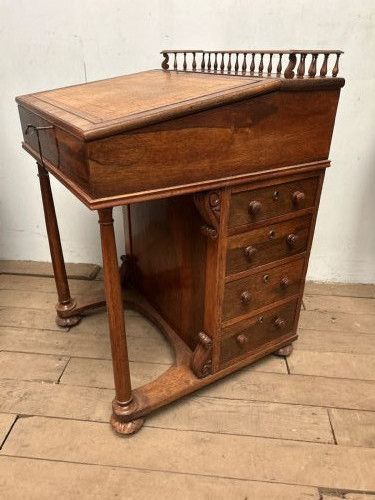
- A compact writing desk featuring a sloping top above a bank of side drawers. This form became popular during the Regency and Victorian eras for small studies.
- Secretaire bookcase
- A tall cabinet combining a shelved upper bookcase with a lower section containing a pull-out writing drawer that drops down to reveal internal compartments.
- Bureau plat
- A freestanding French writing table, typically featuring multiple frieze drawers and an inset leather top. These tables lack the sloping lid of traditional English bureau desks.
- Ormolu
- Gilt-bronze mounts applied to furniture for decorative effect. This technique appears frequently on French revival pieces from the nineteenth century.
- Bonheur du jour
- A light lady's writing desk with a small cabinet or superstructure on top. These dainty pieces often incorporate delicate marquetry and porcelain plaques.
Nineteenth Century Writing Bureau: Frequently Asked Questions
What is a nineteenth century writing bureau?
A nineteenth century writing bureau is a dedicated piece of furniture designed for correspondence and paperwork, incorporating a sloping lid or pull-out writing flap.
These pieces range from compact Davenport desks to large secretaire bookcases and French bureau plats, constructed in woods like mahogany, walnut and rosewood.
How do you use a Davenport desk?
A Davenport desk provides a sloped, leather-lined writing surface that lifts to access internal storage for paper and writing implements.
Drawers usually open to the side rather than the front, allowing the piece to sit comfortably away from a wall while keeping stationery organised.
Where were these desks placed?
Nineteenth century writing bureaus typically stood in private studies, libraries, drawing rooms or bedrooms depending on the scale of the residence.
Freestanding bureau plats and pedestal desks often occupied the centre of a room, while tall secretaire bookcases stood against walls.
How to tell Regency from Victorian styles?
Regency pieces often display cleaner classical lines, brass inlay and rosewood veneers inspired by neoclassical and French Empire designs.
Victorian pieces tend to feature heavier proportions, dark carved mahogany or burr walnut, and elaborate revival styles including French Rococo and Renaissance influences.