



Nineteenth Century Staffordshire Ceramics
Nineteenth century staffordshire ceramics bring domestic portraiture and animal studies into the room through earthenware shaped by generations of pottery traditions.
Nineteenth Century Staffordshire Ceramics
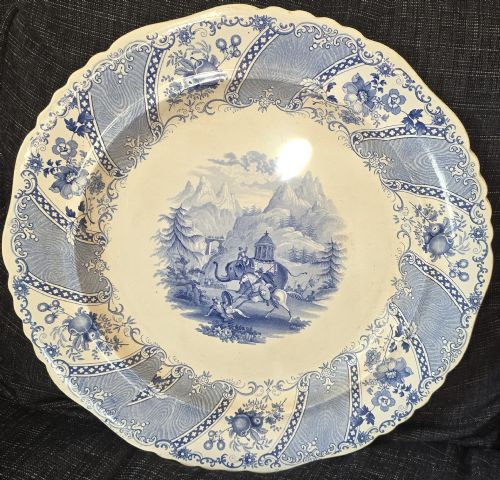
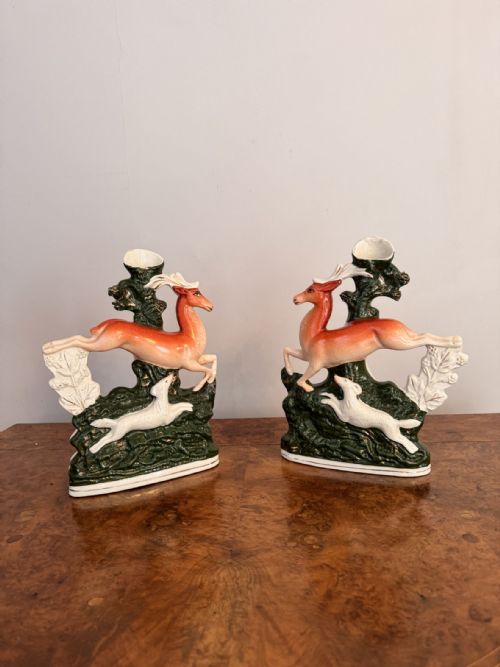
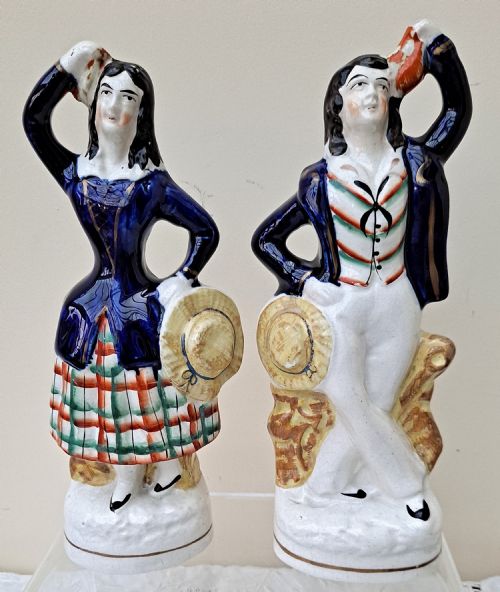
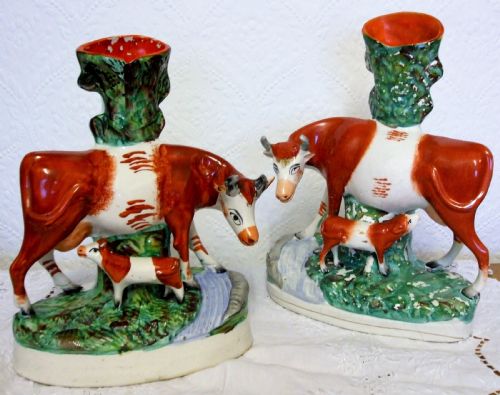
Nineteenth century staffordshire ceramics encompass earthenware figures, utilitarian vessels, and decorative plates produced across the Georgian and Victorian periods. Collectors encounter pairs of spill vases, theatrical figures, and animal models such as dogs, lions, and zebras.
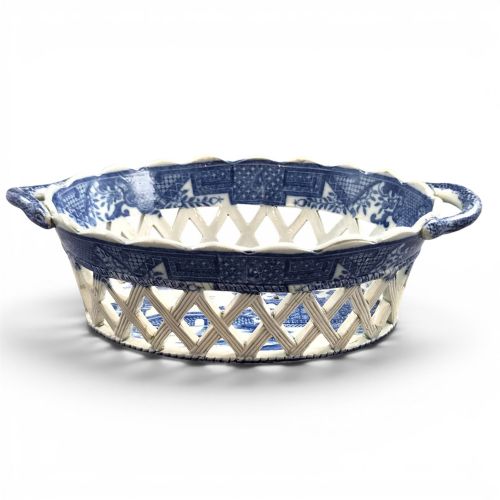
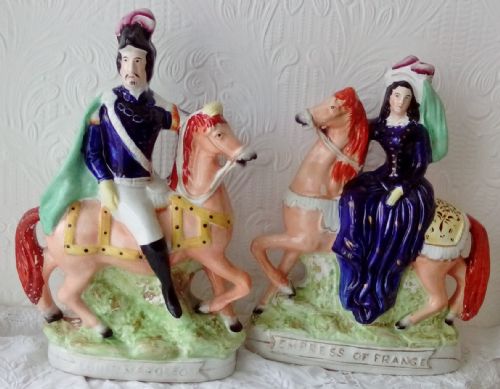
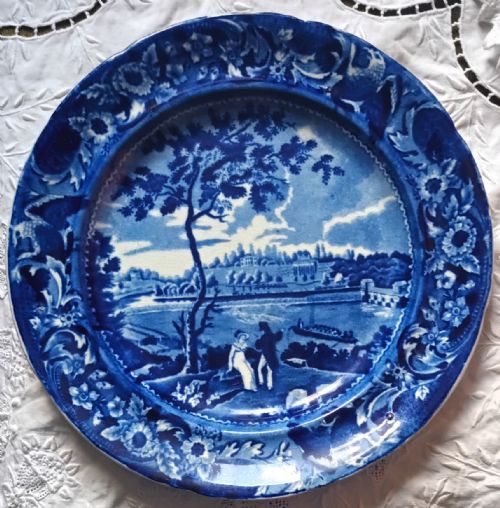
The objects span transfer-printed blue and white tableware alongside brightly enamelled portrait figures and money boxes. These pieces reflect both popular tastes and historical subjects of the nineteenth century.
How They Were Made
Potters shaped these objects from earthenware bodies, sometimes utilising pearlware or pearl glaze to achieve a paler surface. Pieces were then finished with lead glaze, enamel colours, and occasional gold leaf accents.
Many hollow figures and animals were cast in moulds, while plates and serving vessels utilised transfer-printing techniques for intricate blue and white patterns.
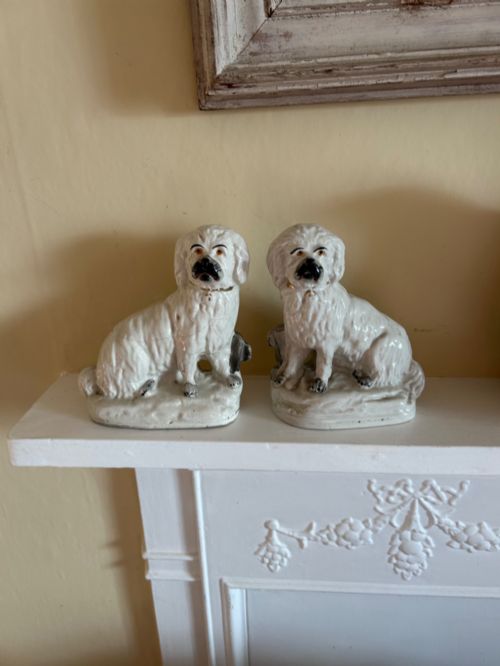
Maltese terriers and theatrical pairs gaze steadfastly from nineteenth-century mantelpieces, guarding rooms with unwavering ceramic loyalty.
What Varies in Quality
Quality rests upon the crispness of the moulding and the control evident in the hand-painting of enamel details. Superior figures retain sharp facial expressions and clean application of colour.
The depth of the transfer print and the smoothness of the glaze distinguish standard utilitarian ware from finer display items produced by established potteries.
Spode·Stubbs·William Adams·J. and R. Clews·John Rogers and Son·Minton
The Nineteenth Century Staffordshire Ceramics Glossary
- Pearlware
- A refined earthenware body developed in the late eighteenth century featuring a subtle blue-grey tint in the glaze. This material bridged the gap between salt-glazed stoneware and later white earthenwares.
- Spill vase
- A hollow cylindrical holder designed to keep wooden tapers for lighting candles or fires. These vessels frequently took the form of tree trunks behind animal or human figures.
- Transfer printing
- A mechanical method of applying complex decorative patterns to pottery from a copperplate engraving via tissue paper. This technique allowed factories to produce uniform blue and white scenes efficiently.
- Enamel
- Opaque coloured glass fused to the surface of fired pottery over the glaze. These pigments provided the vivid reds, blues, and yellows seen on portrait figures.
- Treacle glaze
- A dark, translucent brown lead glaze that produced a rich, glossy finish on nineteenth-century animal figures and utilitarian vessels.
Nineteenth Century Staffordshire Ceramics: Frequently Asked Questions
How do I identify nineteenth century Staffordshire figures?
Look for earthenware bodies finished with hand-painted enamel colours or lead glaze, often depicting historical personages, theatrical scenes, or domestic animals. The forms are typically hollow-cast and reflect Georgian or Victorian aesthetic trends.
Examination of the base and interior reveals manufacturing methods common to the period, such as vent holes in hollow figures and potting marks left by the mould.
What is the difference between pearlware and standard earthenware?
Pearlware contains a small amount of cobalt in the glaze, which pools in recesses to create a distinct bluish tint designed to mimic Chinese porcelain. Standard earthenware utilises a transparent lead glaze over a buff or cream-coloured body.
This distinction helps separate pieces produced around the turn of the nineteenth century from later Victorian productions.
How were spill vases used in homes?
Spill vases held thin spills of paper or wood used to transfer flames from a fireplace to candles, lamps, or pipes before the widespread availability of matches. They sat on mantelpieces alongside decorative figurines.
Because of their dual function, these objects combined sculptural appeal with practical daily utility in the nineteenth-century household.
Why are animals such as dogs and lions common?
Potteries produced animal figures in pairs to satisfy Victorian desires for symmetrical mantelpiece decoration. Dogs, lions, zebras, and cats reflected domestic loyalty and exotic curiosity alike.
These subjects offered accessible ornament for middle-class homes, capturing popular affection for household pets and theatrical spectacles.