


Nineteenth Century Sevres Porcelain
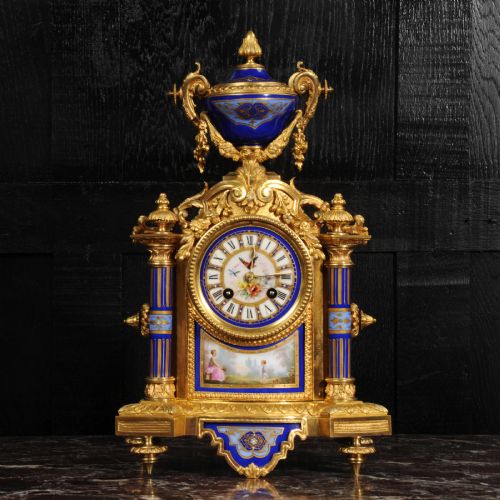
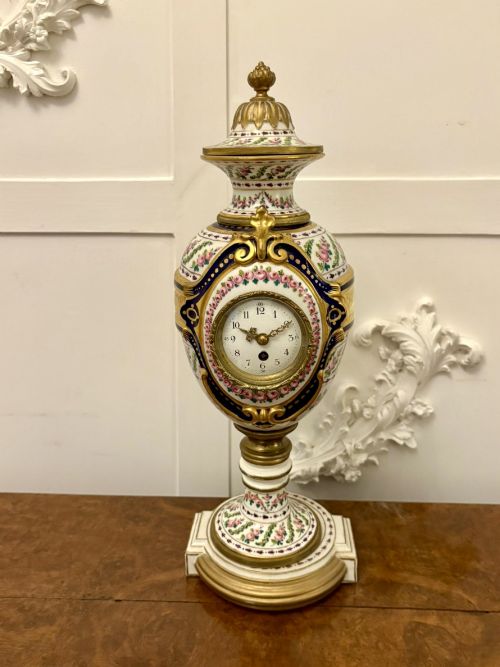
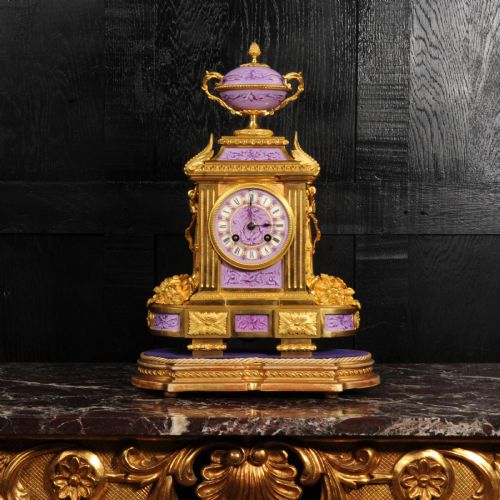
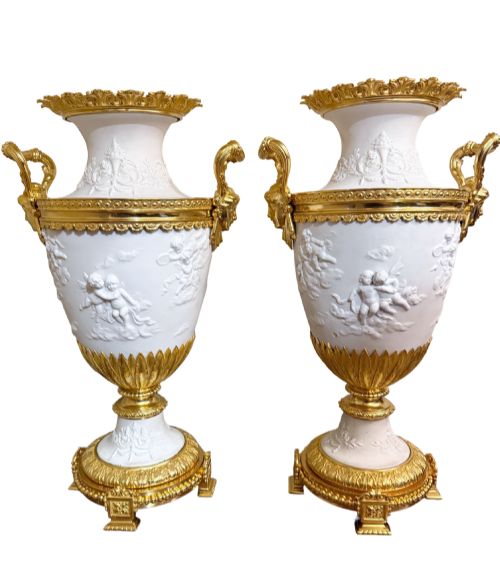
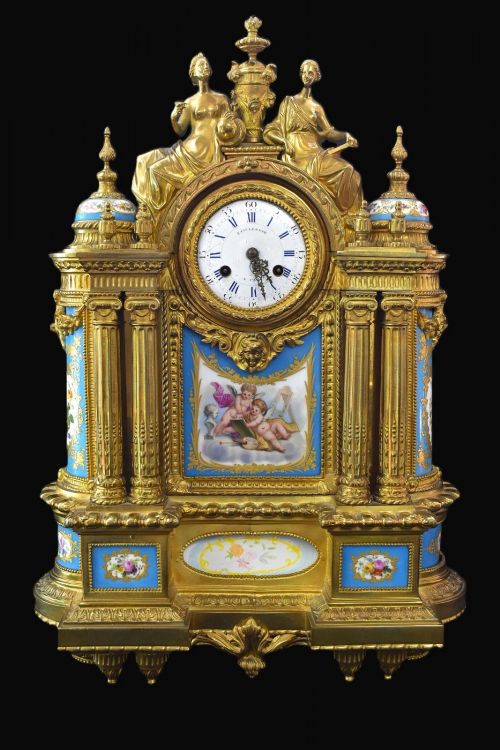
Nineteenth century sevres porcelain brings together elaborate French horology and decorative arts, offering grand mantel clocks and painted vases mounted in ormolu.
Nineteenth Century Sevres Porcelain
Nineteenth century sevres porcelain encompasses a range of decorative objects produced during the Victorian era and across various decades of the nineteenth century, reflecting historical French revivals. The inventory on this page centres heavily on monumental mantel clocks, clock garnitures, and large lidded vases accented with metal mounts.
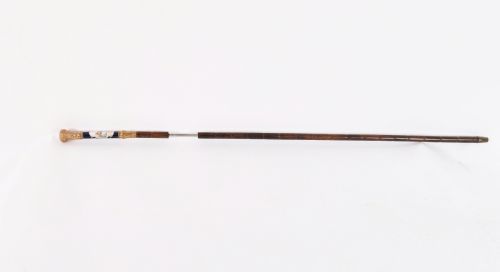
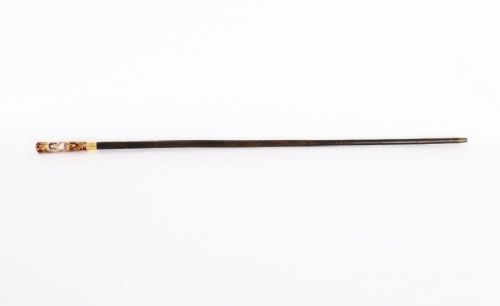
Makers and horologists incorporated these ceramic panels into functional ormolu cases, merging timepieces with ornate sculptural forms. Alongside clocks and urns, buyers encounter smaller domestic items including table lamps, walking sticks, and dishes.
The aesthetic leans towards decorative luxury, drawing on Louis XVI style and French Rococo Revival idioms. Pieces often feature hand-painted surfaces housed within gilt bronze or brass frames.
Materials and construction
Makers combined ceramic bodies with cast metal mounts, relying on porcelain, ormolu, and gilt bronze to build substantial structural weight. Ormolu trim frames the ceramic plaques and dials, fixed securely to bodies formed from white or coloured porcelain.
Enamel dials and hand-painted details decorate the ceramic elements, frequently complemented by secondary materials like glass, wood, and gold leaf on cabinetwork. Artisans shaped these components to fit the rigorous symmetrical demands of nineteenth century French design.
Some nineteenth century gentlemen carried walking sticks containing hidden porcelain sections alongside traditional sword blades.
Assessing quality in nineteenth century sevres porcelain
The calibre of a piece rests upon the crispness of the bronze casting and the delicacy of the hand-painted ceramic scenes. Superior examples display finely chased ormolu mounts that integrate seamlessly with the porcelain body, whereas lesser pieces show blunt casting details and simpler surface decoration.
Horological components and cabinetry also dictate overall merit, separating standard production pieces from exhibition-grade works signed by known clockmakers and bronze founders.
Japy Freres·Achille Brocot·Etienne Lenoir·Delettrez·Vincenti of Paris·Miroy Freres
The Nineteenth Century Sevres Porcelain Glossary
- Ormolu
- Gilded bronze used extensively for decorative mounts, feet, and bezels on nineteenth century clocks and vases.
- Garniture
- A set of matched ornamental objects, typically comprising a central clock flanked by matching vases or candelabra.
- Bureau plat
- A type of freestanding French writing desk, often featuring inset leather tops and gilt bronze mounts.
- Credenza
- A low cabinet enclosed by doors, utilised during the Victorian period for storage and display.
- Bonheur du jour
- A small, light ladies' writing desk featuring a tiered superstructure with shelves or small drawers above the main work surface.
Nineteenth Century Sevres Porcelain: Frequently Asked Questions
How do I identify a nineteenth century sevres porcelain clock?
These clocks combine painted ceramic dials and panels with heavy ormolu cases cast in French revival styles. Look for signatures from established horologists inscribed on the movement plates.
Many examples incorporate matching side urns to form a complete garniture set for a mantelpiece.
Where were these porcelain items displayed in a home?
Nineteenth century owners placed large vases and clock garnitures on principal mantelpieces in reception rooms to demonstrate taste and affluence. Smaller pieces like table lamps and dishes found places on boudoir side tables.
Cabinets and desks decorated with porcelain plaques added colour to grand Victorian drawing rooms.
What is the difference between true sevres and sevres style?
True pieces originate directly from the French state porcelain works, while sevres style denotes nineteenth century factory reproductions and decorative items made elsewhere in France. Both categories utilise similar hand-painted techniques and gilt bronze mounts.
Marks on the underside often assist in distinguishing between factory origins.
How should I care for ormolu mounted porcelain?
Dust the surfaces gently with a soft dry cloth and avoid harsh chemical cleaners that can strip the gold leaf or damage the hand-painted enamel. Keep the pieces away from direct sunlight to preserve the vibrancy of the ceramic colours.
Metal mounts require minimal intervention beyond occasional gentle dusting.