
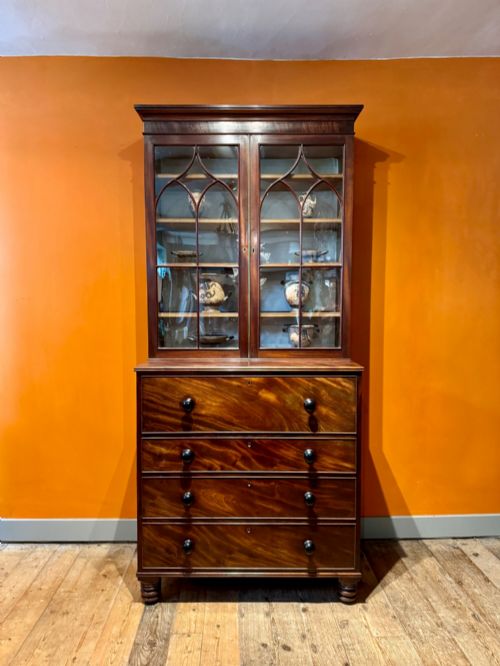
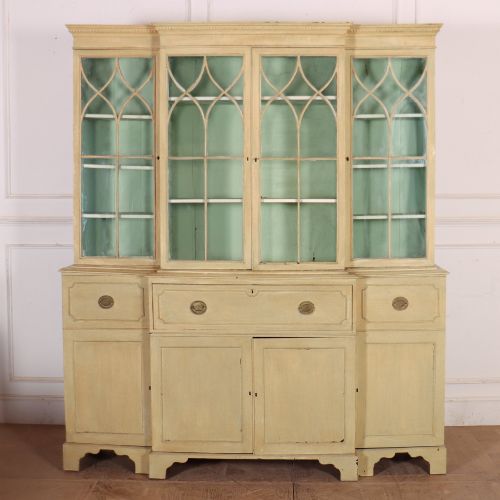


Nineteenth Century Secretary Cabinet
A nineteenth century secretary cabinet combines a practical writing desk with upper shelving and closed storage, offering timeless utility for the home.
Nineteenth Century Secretary Cabinet
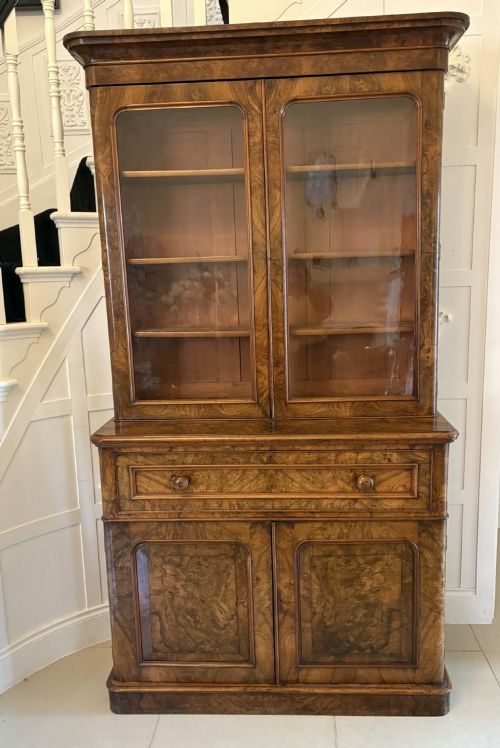
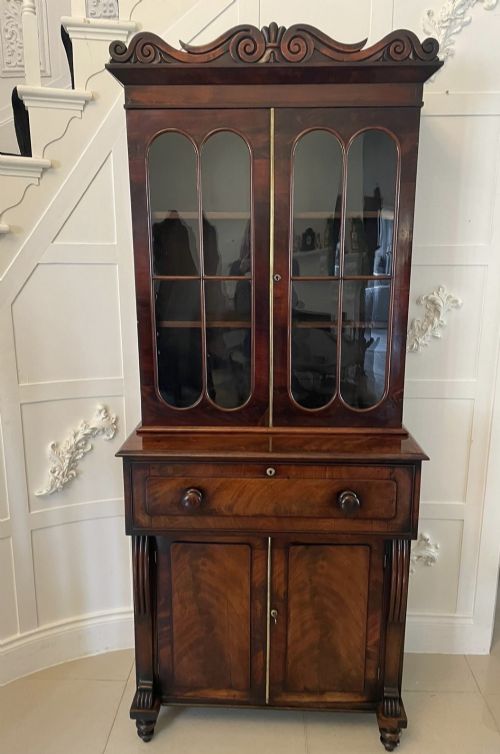
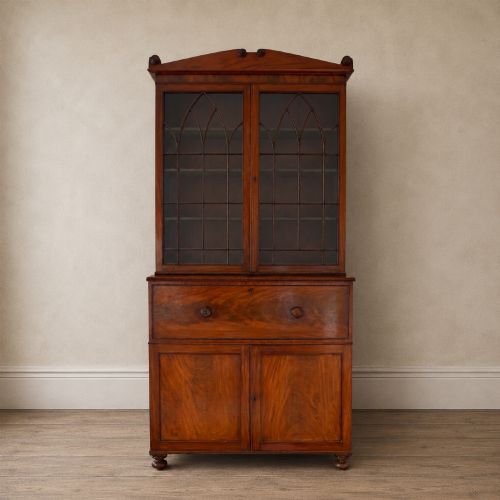
A nineteenth century secretary cabinet typically manifests as a tall secretaire bookcase or bureau bookcase combining glazed upper shelving with a fitted writing drawer. These pieces originate from Georgian, Regency, and Victorian periods, alongside continental expressions such as French Empire and Biedermeier examples.
Buyers encounter diverse configurations ranging from substantial mahogany bookcases with glazed doors to compact cylinder desks and marquetry-adorned bonheur du jour cabinets. The selection spans domestic mahogany and walnut constructions to exotic woods like kingwood, rosewood, and Karelian birch.
Materials and Construction
Cabinetmakers utilised rich timber veneers including figured mahogany, flame mahogany, burr walnut, and pollard oak applied over solid secondary woods. Structural integrity relies on traditional joinery techniques suited to supporting heavy loaded bookshelves and drop-front writing surfaces.
Decorative embellishments incorporate brass inlay, ormolu mounts, marquetry patterns, and glass panels within upper cabinet doors. Marble tops occasionally cap continental forms, while interior compartments feature intricate small drawers and pigeonholes.
Some nineteenth-century desks contain secret compartments hidden behind dummy book spines or false drawer bottoms for storing private treasures.
Assessing Quality
Quality rests upon the selection and matching of wood veneers across large expanses, where continuous grain patterns elevate the visual impact. The refinement of interior fittings within the writing section demonstrates the maker's dedication to detail.
Proportion and execution of decorative elements, such as precise brass inlay or finely cast ormolu mounts, separate standard production from superior examples. The integration of functional elements like smooth-operating cylinders and balanced fall-front desks indicates robust historical construction.
Edwards & Roberts·Wells Fargo Wooton·Wiggers
The Nineteenth Century Secretary Cabinet Glossary
- Secretaire
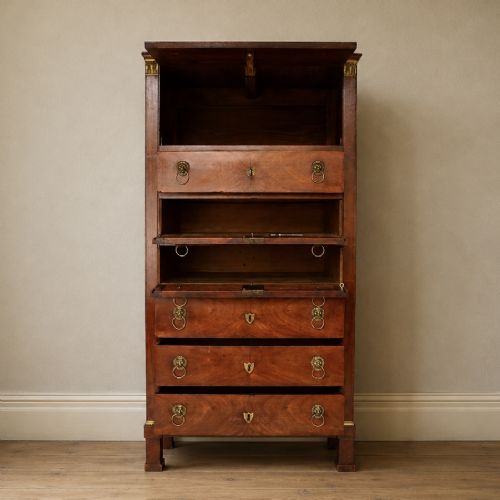
- A writing cabinet featuring a drop-front drawer that conceals a fitted interior of small drawers and pigeonholes. This clever mechanism allows the piece to function simultaneously as a chest or bookcase and a proper desk.
- Abattant
- A vertical wall cabinet with a drop-down writing flap, often associated with French furniture styles. It provides concealed desktop space above lower panelled doors.
- Ormolu
- Gilded bronze mounts applied to furniture for decorative effect. It gained popularity in French Empire and revival pieces.
- Bonheur du jour
- A light lady's writing desk featuring an upper cabinet or tiered shelving. These diminutive pieces emerged during the eighteenth century and continued into Victorian production.
- Cylinder desk
- A writing desk with a curved, rolling cylinder shutter that conceals the writing surface and interior compartments. It offers a secure method of covering paperwork.
Nineteenth Century Secretary Cabinet: Frequently Asked Questions
How do I identify a Regency secretary?
Regency examples often display classical architectural influences, featuring mahogany or rosewood timbers enhanced by contrasting brass inlay. Look for clean geometric lines and restrained ornamentation that reflect early nineteenth-century taste.
Proportions tend to be balanced, and hardware is typically understated compared to later Victorian iterations.
Where should I place a secretary cabinet?
These cabinets work well in studies, living rooms, or hallways where their vertical presence makes efficient use of floor space. Ensure the room has adequate clearance for the fall-front writing surface to open fully.
Keep the timber away from direct heat sources and strong sunlight to protect the polished wood veneers and interior fittings.
How do I care for the wood finish?
Maintain the polished timber surfaces by dusting regularly with a soft, dry cloth and applying appropriate furniture wax sparingly. Avoid using modern silicone sprays that can penetrate the grain and damage historical finishes.
Stable indoor humidity levels prevent the wood and veneers from expanding or contracting excessively over time.