

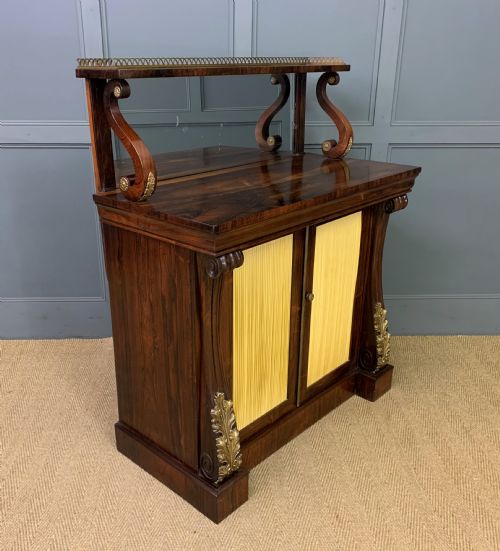


Nineteenth Century Rosewood Sideboard
A nineteenth century rosewood sideboard brings rich timber and refined brass work to a room, offering both display space and concealed storage.
Nineteenth Century Rosewood Sideboard
A nineteenth century rosewood sideboard encompasses low side cabinets, chiffoniers, and credenzas spanning the Regency and Victorian eras. These items serve primarily as dining room or salon storage, frequently combining open shelving, glass doors, and enclosed cupboards.
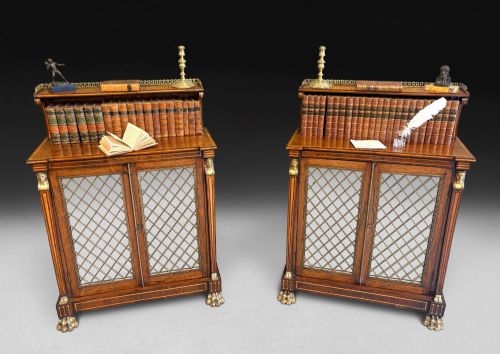
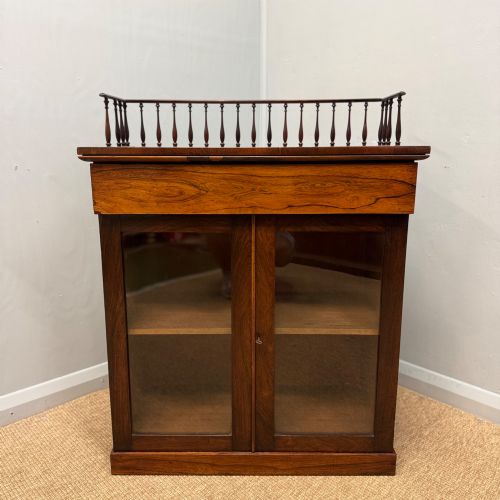
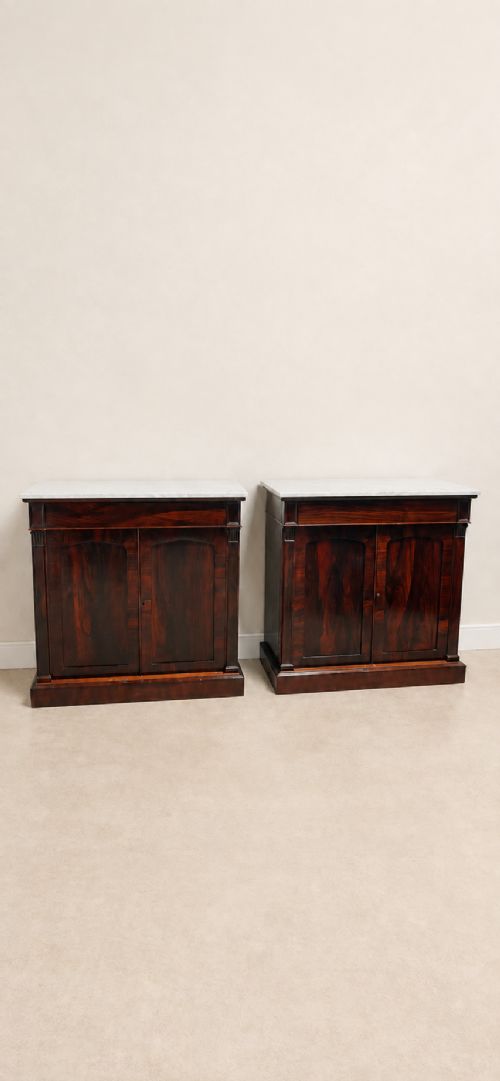
The majority of pieces encountered here belong to the Regency period or the wider nineteenth century, often taking the form of a compact chiffonier or a low side cabinet. Makers utilised rich rosewood veneers, occasionally enhanced by simulated grain or figured figuring.
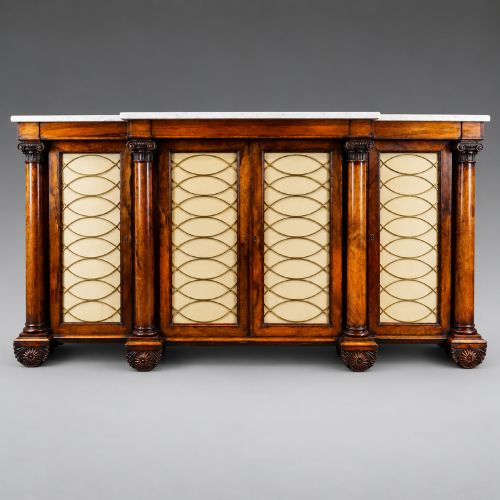
Forms range from simple brass-inlaid chiffoniers with silk-backed grilles to grander breakfront cabinets and credenzas featuring marble tops. Buyers frequently discover variants equipped with upper bookcases or secretaire drawers designed for domestic utility.
How they were made
Carpenters constructed carcasses from solid timber and applied carefully selected rosewood veneers to primary surfaces. Fine boxwood stringing and brass inlay frequently decorate the doors and upstand panels.
Interiors often incorporate adjustable shelving alongside fabric linings behind glass or brass-grille doors. Heavier items integrate heavy marble tops resting on polished stone or timber bases.
Nineteenth Century Rosewood Sideboard Retail Price Guide 2026
Typical asking prices for nineteenth century rosewood sideboard among the pieces listed under this phrase on Sellingantiques today, from the lower quarter to the upper quarter. They describe what is for sale here now, not the wider market.
Some nineteenth century chiffoniers thoughtfully hide a fitted secretaire drawer for writing letters between courses.
What varies in quality
The choice of timber grain significantly alters the visual presence of a nineteenth century rosewood sideboard. Heavily figured rosewood or precise marquetry inlay denotes higher workshops compared to simpler simulated finishes.
Hardware and secondary materials also set examples apart. Finely cast brass mounts, intact mirror glass, and original silk panels reflect superior original commissioning.
John McClean·Collinson and Lock·Stephen Webb
The Nineteenth Century Rosewood Sideboard Glossary
- Chiffonier
- A low sideboard or cabinet featuring a raised shelf or upstand at the back. These items typically include enclosed lower cupboards.
- Credenza
- A sideboard or display cabinet originating in the nineteenth century, often featuring curved serpentine shaping and glass doors. This form suits formal reception rooms.
- Marquetry
- Decorative patterns formed by inserting thin slices of tinted wood and other materials into a veneered surface. This technique creates complex floral or geometric motifs.
- Secretaire
- A cabinet incorporating a pull-down drawer front that reveals a writing surface and small compartments. Such items blend storage with functional desk space.
Nineteenth Century Rosewood Sideboard: Frequently Asked Questions
What is a nineteenth century rosewood sideboard?
It is a low storage cabinet or chiffonier made during the Regency or Victorian periods using rosewood veneer.
These items were placed in dining rooms and parlours to store tableware or display decorative objects.
Where should I place a side cabinet?
These cabinets suit dining rooms, hallways, or living spaces where low surface area and enclosed storage are useful.
Ensure the room humidity remains stable to protect the rosewood veneer and any integrated marble tops.
How do I care for rosewood furniture?
Clean surfaces with a soft, dry cloth and avoid placing the timber in direct sunlight or near heat sources.
Polishing should be done sparingly with traditional wax formulated for antique timber.