

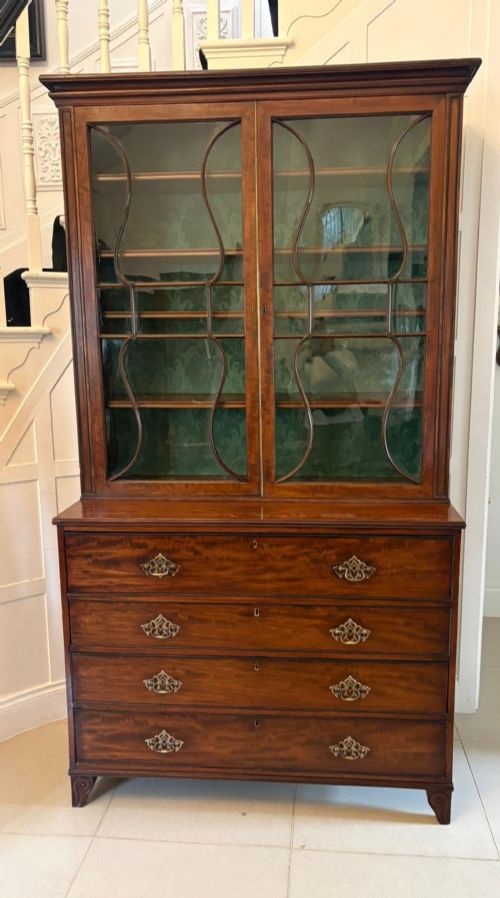
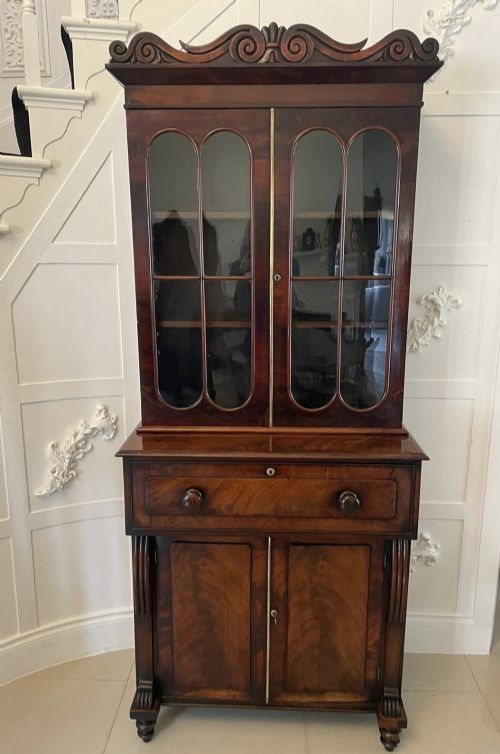
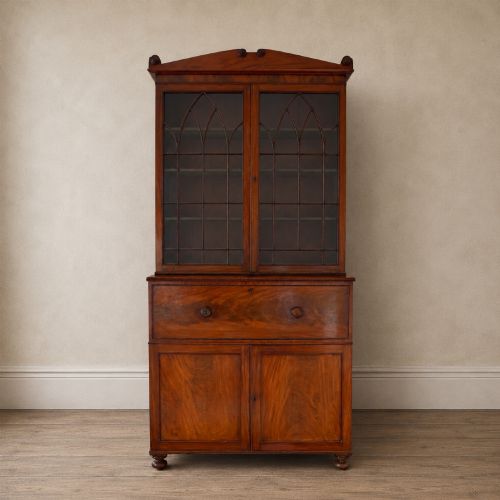
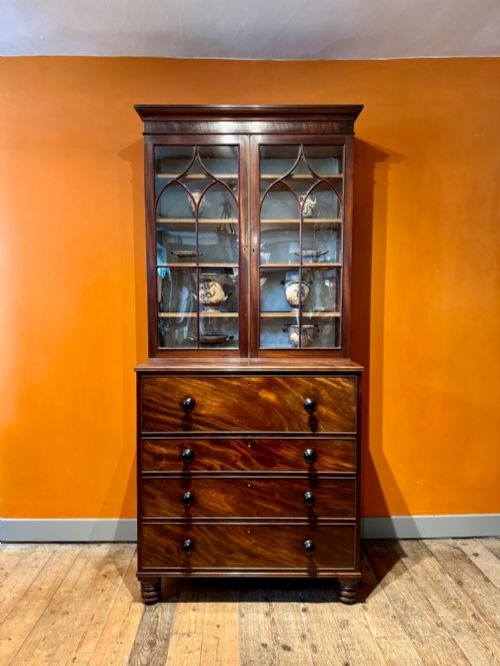


Nineteenth Century Mahogany Secretaire
A nineteenth century mahogany secretaire brings a drop-down writing surface together with deep library storage, offering both handsome timber and practical daily utility for the home.
Nineteenth Century Mahogany Secretaire
A nineteenth century mahogany secretaire combines a hidden writing drawer with upper shelving or lower cupboard space, presenting a formal yet functional piece of furniture. Buyers searching this phrase will find a strong selection of tall library bookcases alongside lower commodes and chiffoniers.
Most examples encountered on this page take the form of tall secretaire bookcases featuring glazed doors to the upper section and fitted drawers within. Pieces span the Regency, William IV, and Victorian periods, reflecting the evolving domestic tastes of the eighteen hundreds.
Alternative configurations include breakfront bookcase formats and compact commodes designed for more intimate chambers. These variations allow collectors to choose a scale that suits their room while retaining the core drop-front writing function.
How they were made
Makers relied upon solid mahogany and figured flame mahogany veneers applied to structural timbers to create rich, varied surface patterns. The timber is frequently contrasted with brass hardware and glass panels set into the upper bookcase doors.
Internal writing surfaces are typically lined with leather or baize, providing a durable and tactile plane for correspondence. Structural joinery ensures the heavy drop-front mechanism supports the weight of daily writing without strain.
Nineteenth Century Mahogany Secretaire Retail Price Guide 2026
Typical asking prices for nineteenth century mahogany secretaire among the pieces listed under this phrase on Sellingantiques today, from the lower quarter to the upper quarter. They describe what is for sale here now, not the wider market.
Many secretaires feature hidden internal spring-loaded release buttons that only the owner knows, designed to pop open secret compartments for stashing valuables.
What varies in quality
The selection of timber grain largely dictates the visual impact, with high-end pieces displaying striking flame mahogany veneers across the principal drawer fronts and fall-front panels. Lesser examples utilise plain, straight-grained mahogany with simpler internal compartment layouts.
The sophistication of the internal stationery drawers, pigeonholes, and secret compartments separates standard utility pieces from exceptional cabinet work. Furthermore, the proportion of the glazing bars and the weight of the brass fittings indicate the original maker's investment in time and materials.
The Nineteenth Century Mahogany Secretaire Glossary
- Secretaire
- A desk or cabinet featuring a pull-down or drop-front drawer that reveals a fitted interior of small drawers and pigeonholes. This clever mechanism allows a tall bookcase or chest to serve double duty as a writing desk.
- Flame mahogany
- A distinctive wood veneer cut from the fork of the mahogany tree to produce a swirling, flame-like pattern. Cabinet makers reserved this striking material for the most prominent exterior surfaces.
- Glazed doors
- Glass-fronted upper doors used on bookcases to display a library collection while protecting the volumes from dust. These are typically divided into smaller panes by timber glazing bars.
- Breakfront
- A cabinet design where the central section projects forward from the flanking wings. This architectural arrangement adds visual depth and presence to large library bookcases.
- Baize
- A coarse woolen material, similar to felt, traditionally used to line the writing surfaces of desks and secretaire drawers. It provides a soft, protective pad for paper and quills.
Nineteenth Century Mahogany Secretaire: Frequently Asked Questions
What is a secretaire bookcase?
A secretaire bookcase is a tall piece of furniture that combines upper bookshelf storage behind glass doors with a middle drawer that folds down to form a writing desk. Below this drop-front writing section, further shelving or cupboards provide enclosed storage.
These pieces were essential for home administration and library management during the Georgian and Victorian eras, allowing owners to write letters and consult ledgers in the same cabinet where books were kept.
How do I use a secretaire desk?
To use a secretaire desk, you release the catches and lower the fall-front drawer panel to a horizontal position, supported by sliding arms or hinges. This reveals a fitted interior of small drawers, pigeonholes, and sometimes secret compartments.
When writing is finished, simply lift the fall-front back into place and secure the lock, hiding away your stationery and correspondence to leave a neat chest or bookcase exterior.
How do I tell Regency from Victorian pieces?
Regency pieces, dating from roughly eighteen hundred to eighteen thirty, often display classical architectural influences, bold brass inlay, and rich flame mahogany veneers. They lean towards refined elegance and symmetry inspired by antiquity.
Victorian pieces, produced after eighteen thirty-seven, tend to be heavier in proportion with darker finishes and sturdier, less ornate decorative carving. Examining the secondary timbers and the style of the internal drawer construction helps confirm the period.
Where should I place a secretaire in my home?
A secretaire works well in a home study, library, or drawing room where its dual function as a bookcase and desk can be fully utilised. Ensure there is adequate floor space in front of the piece for the fall-front to lower comfortably.
Keep the timber away from direct sunlight and strong heat sources to prevent the mahogany veneers from drying out or fading over time.