

Nineteenth Century Landscape Artwork
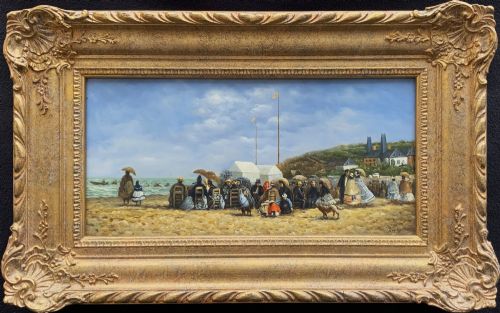
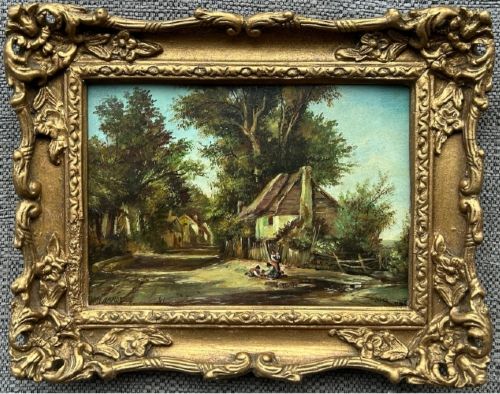
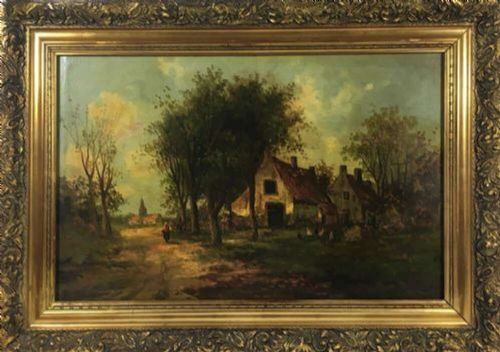
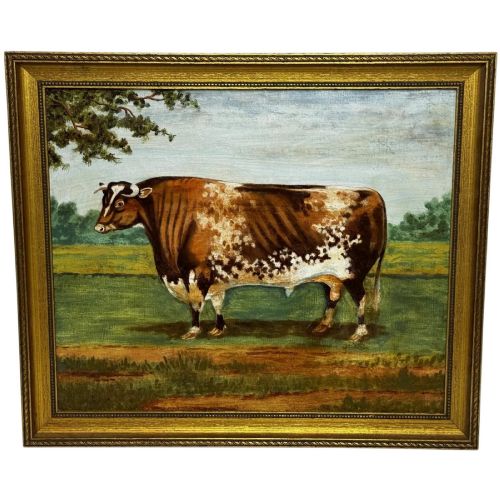
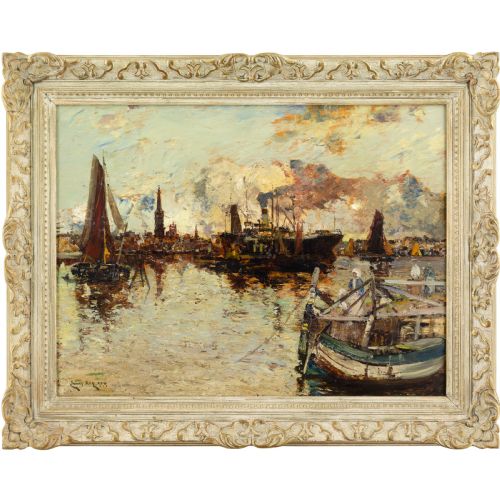
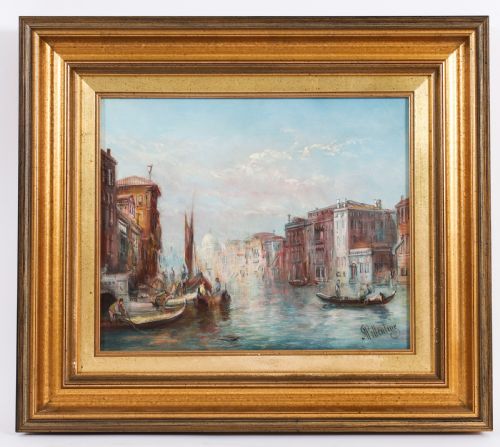
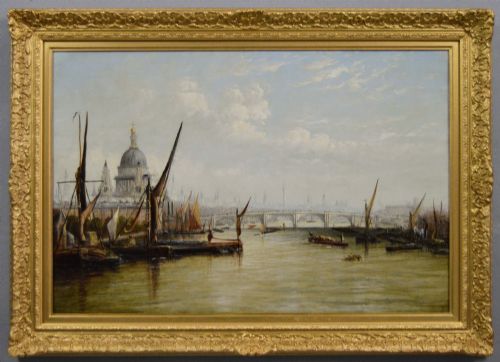
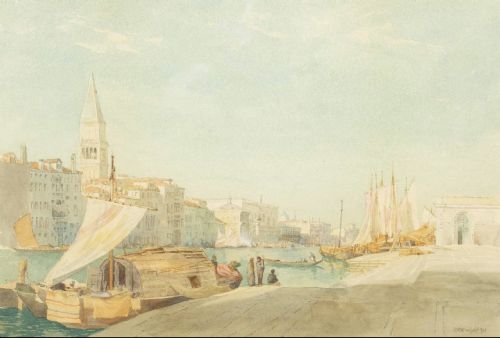
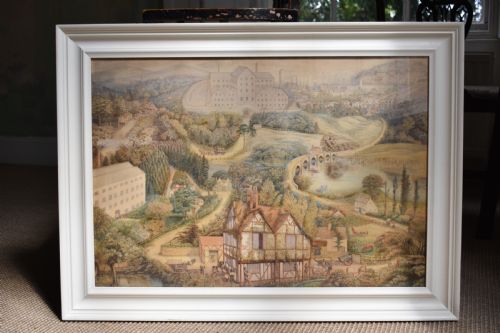
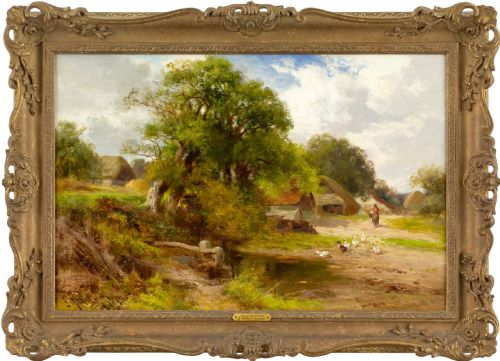
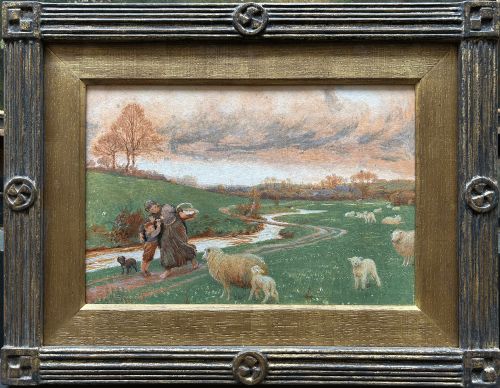
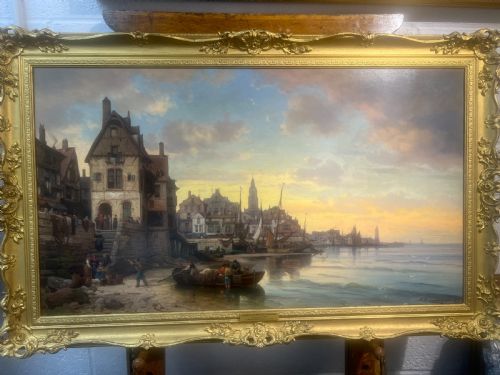
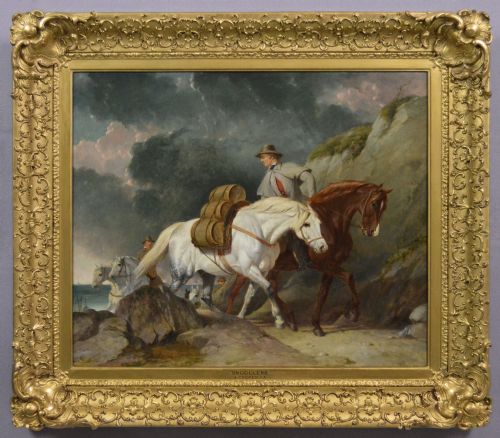
Nineteenth century landscape artwork captures pastoral scenes, coastal views and maritime settings through oil on canvas and watercolour.
Nineteenth Century Landscape Artwork
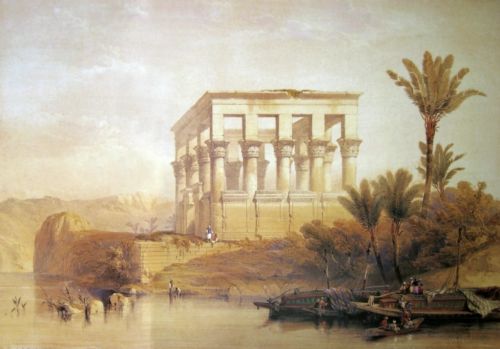
Nineteenth century landscape artwork encompasses oil paintings and watercolours depicting rivers, mountains, and rural settings from the Victorian era onwards. These pieces range from British pastoral scenes to French coastal views and Venetian waterways.
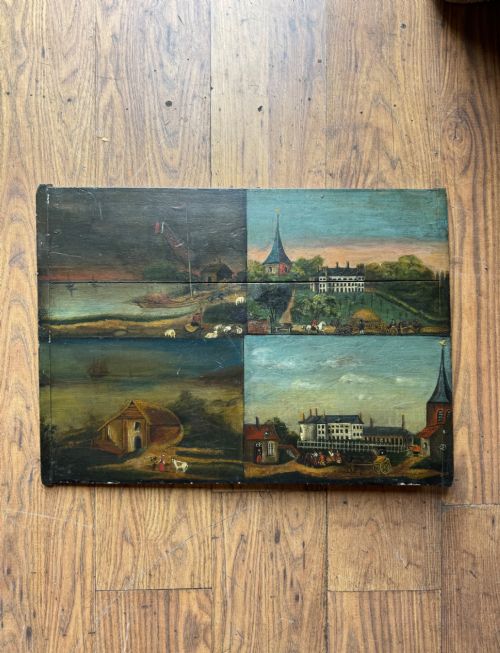
The selections on this page lean heavily towards framed oil paintings on canvas or panel, alongside delicate watercolours on paper. Buyers encounter provincial naive works alongside academic paintings executed by named European masters.
How they were made
Artists painted primarily with oil on canvas or panel, building up pigments to capture light and atmosphere in rural and marine settings. Watercolours were applied to paper to achieve lighter, more translucent tonal gradations.
Many works retain their original giltwood, gesso, or wood frames, often embellished with intricate moulding that complements the period aesthetic of the painting.
Listings feature works spanning the nineteenth century alongside pieces from the early twentieth century, utilising oil and watercolour on canvas, wood, and paper.
What varies in quality
The standard of execution depends on the artist's command of light, perspective, and brushwork, distinguishing accomplished academic output from provincial works. Works by documented painters demonstrate greater anatomical and atmospheric precision in natural settings.
The integrity of the canvas, the stability of the paint layer, and the preservation of the original frame influence the overall physical standing of a piece.
William Howard Hardy·James Kay RSW·Alfred Pollentine·Francis Moltino·John Horace Hooper·David Roberts·Frederick Walker·Abraham Cooper RA·Johann Friedrich Voltz·Cornelius Pearson·Edwin Lord Weeks·Jean-Baptiste Olive·Thomas Edward Roberts·Henry Hillier Parker·William Barraud·Sidney Richard Percy·Robert John Hammond·Willem Anton Alexander Knip·Giulio Cecchini·Heinrich Harder·William Greaves·Kunisada·CHARLES MALFROY·Arthur Longley Vernon·J Barclay
The Nineteenth Century Landscape Artwork Glossary
- Oil on canvas
- Pigment mixed with drying oil applied to a woven fabric support stretched across a wooden frame. This medium allowed artists to work with rich textures and deep colour ranges.
- Watercolour
- A paint consisting of water-soluble pigments applied to paper. It is often utilised for luminous landscape sketches and topographical views.
- Giltwood
- Wood carved and coated with gold leaf or a gold-coloured metallic finish. It forms the decorative border for many period paintings.
- Gesso
- A paint mixture consisting of a neutral binder mixed with chalk, gypsum, or pigment. It served as a smooth preparation base for wooden panels and ornate frames.
Nineteenth Century Landscape Artwork: Frequently Asked Questions
What defines nineteenth century landscape artwork?
These pieces comprise oil paintings and watercolours produced during the eighteen hundreds, focusing on natural scenery, rivers, and rural life.
They reflect diverse regional schools from Britain, France, and Italy, spanning realistic depictions to early impressionist tendencies.
How were these paintings displayed originally?
Works were framed in heavy giltwood or gesso mouldings designed to project the artwork forward on domestic parlour walls.
Original frames often feature decorative corner ornaments matching the prevailing Victorian interior style.
How do I care for antique watercolours?
Watercolour paintings on paper require protection from direct sunlight to prevent the fading of delicate pigments.
Glazing with appropriate conservation glass helps shield the paper support from ambient moisture and environmental pollutants.
Can I identify the exact year of a painting?
Some pieces carry artist signatures, exhibition labels, or biographical dates that narrow down the creation period.
Unsigned works are generally attributed to decades or broader artistic movements based on materials, subject matter, and stylistic traits.