


Nineteenth Century Gold Jewellery
Nineteenth century gold jewellery encompasses ornate brooches, rings, and pendants crafted during the Victorian and Edwardian eras using precious metals and gemstones.
Nineteenth Century Gold Jewellery
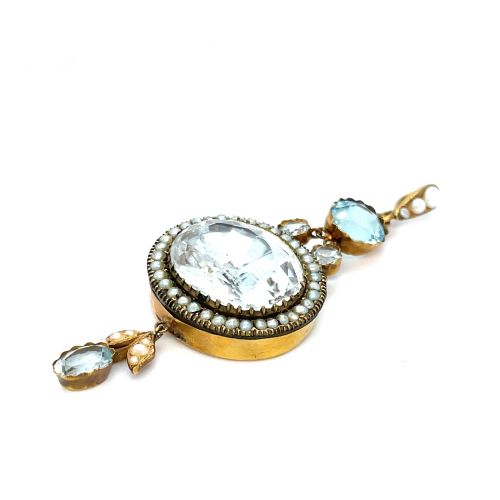
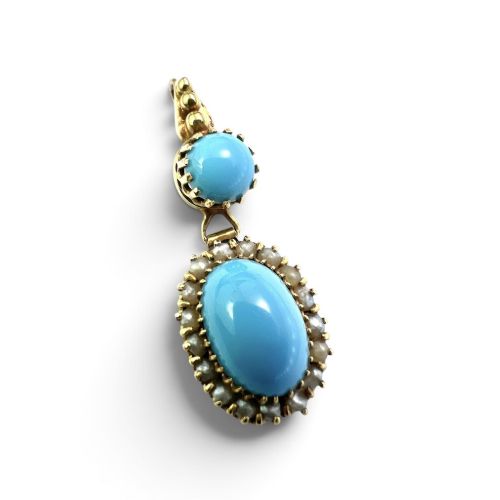
Nineteenth century gold jewellery spans Victorian, Edwardian, and late nineteenth-century periods, capturing the distinct aesthetic shifts of the era. Buyers searching for nineteenth century gold jewellery encounter a diverse array of forms, including rings, brooches, earrings, and pendants.
The pieces appearing on this page originate from various cultural contexts, ranging from British Victorian workshops to Austro-Hungarian, Imperial Russian, and Japanese Meiji period origins. Rings and brooches set with diamonds, pearls, and garnets form the most frequent encounters for collectors browsing this selection.
Mourning jewellery, Etruscan Revival styles, and convertible tiaras represent the specialised forms that occasionally emerge within these listings. Each piece reflects the dominant decorative impulses of its specific decade, from mid-century romanticism to late-century starburst motifs.
Materials and Construction
Goldsmiths utilised varying purities of gold, including 9ct, 12ct, 14ct, 15ct, and 18ct variants, alongside silver-gilt settings that enhanced the brilliance of mounted stones. Gemstones such as diamonds, turquoise, amethysts, peridots, and pearls were hand-set into intricate configurations.
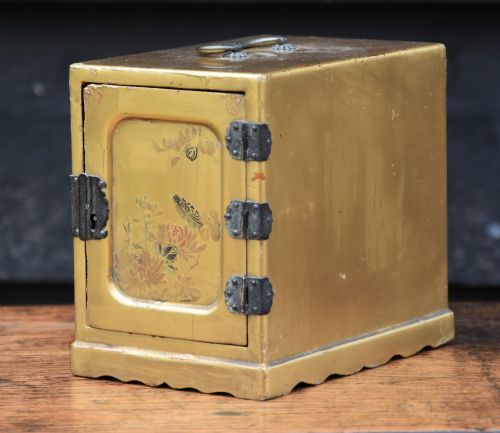
Specialised techniques included foil backing to intensify stone colours, enamel work for surface decoration, and gilt lacquer applications seen in Japanese imported pieces. Metalwork often featured granulation and wirework, particularly in revivalist pieces echoing ancient Etruscan ornamentation.
Several items retain their original Parisian retail cases, protecting centuries of accumulated sparkle.
Quality Variations
The standard of execution in nineteenth century gold jewellery rests upon the precision of the stone setting and the integrity of the underlying metalwork. Finer examples display meticulous claw or collet work that securely holds fragile old European cut diamonds and softer gems like pearls and turquoise without excess solder.
Design complexity and the prestige of the maker or original case elevate certain pieces above standard production. The preservation of original components, such as convertible brooch fittings on starburst pendants or intact enamel work, dictates the distinction between ordinary survival and exceptional craftsmanship.
G. Colani
The Nineteenth Century Gold Jewellery Glossary
- Old European cut
- An early form of brilliant-cut diamond characterised by a small table, a heavy crown, and a noticeable open culet. This cut predates modern round brilliants and exhibits a distinct hand-polished scintillation under candlelight.
- Foil back
- A historical technique where a thin sheet of coloured metal foil is placed behind a gemstone within a closed setting to enhance its hue and reflectivity. It requires careful protection from moisture to prevent degradation.
- Pinchbeck
- An alloy of copper and zinc invented in the eighteenth century to imitate gold, frequently utilised for affordable chains and mounts. It offers a warm metallic tone that mimics high-carat gold without the intrinsic bullion value.
- Etruscan Revival
- A nineteenth-century design movement inspired by archaeological excavations in Italy, characterised by applied gold granules and wirework. Makers utilised these classical motifs to create pieces of distinct historical pastiche.
- Kodansu
- A traditional Japanese portable cabinet or box, often decorated with lacquer and gilt work during the Meiji period. These decorative containers frequently served as luxury goods exported to Western markets.
Nineteenth Century Gold Jewellery: Frequently Asked Questions
What is Victorian mourning jewellery?
Victorian mourning jewellery was created to commemorate deceased loved ones, often incorporating dark materials such as jet, black enamel, or woven human hair. These pieces served as tangible tokens of remembrance during a period marked by high mortality rates.
Gold settings frequently enclosed braided hair beneath rock crystal or framed miniature portraits and sentimental inscriptions. They range from sombre brooches to intricate rings bearing Latin mottoes.
How can I date nineteenth century gold pieces?
Dating relies upon a combination of stylistic clues, gemstone cuts, and metal hallmarks stamped inside the shank or catch. Distinctive motifs like Etruscan granulation or starburst diamond clusters correspond to specific decades within the Victorian and Edwardian timelines.
Assay office marks and maker's stamps provide precise geographical and chronological anchors for British pieces. Examining the construction methods, such as closed-back settings versus open settings, offers further clues to the period of manufacture.
Are convertible pieces common in this era?
Convertible jewellery, such as tiaras that transform into brooches or necklaces, gained immense popularity during the late nineteenth century. These versatile designs allowed wealthy owners to adapt grand evening ornaments for daytime wear.
Mechanisms typically involved hidden screw threads, detachable frames, or sliding bails that secured the central starburst or floral cluster. Surviving original fittings and cases indicate high-status commission work.