


Blue Cabochon Pendant
A blue cabochon pendant offers smooth, polished stones set in silver or gold, bringing organic colour and tactile depth to the neckline.
Blue Cabochon Pendant
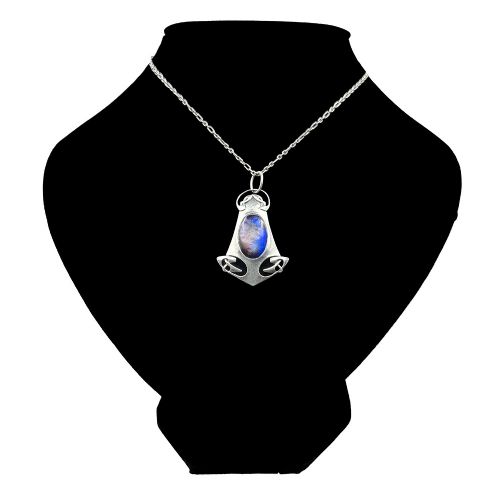
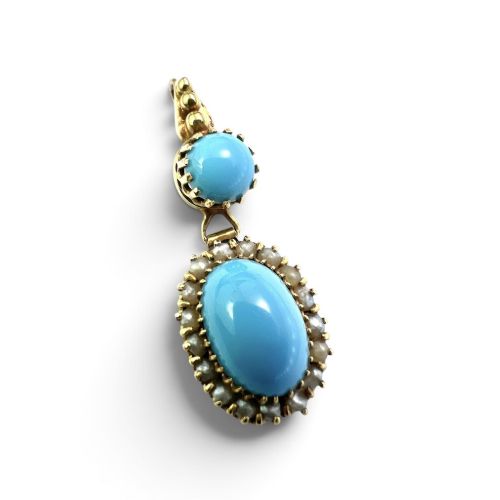
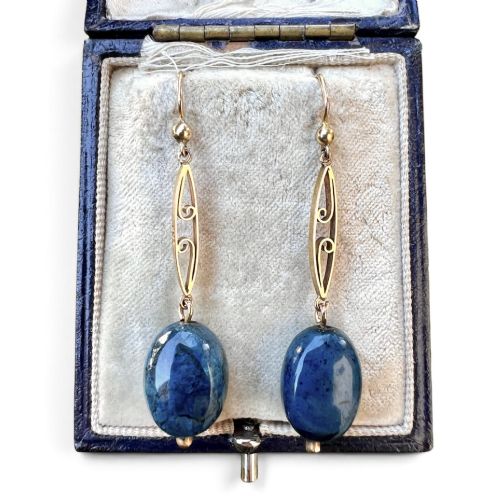
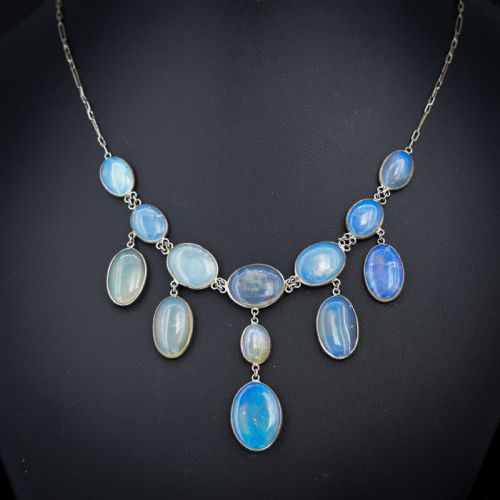
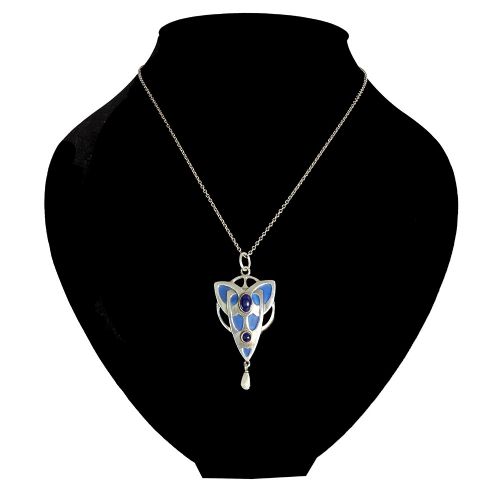
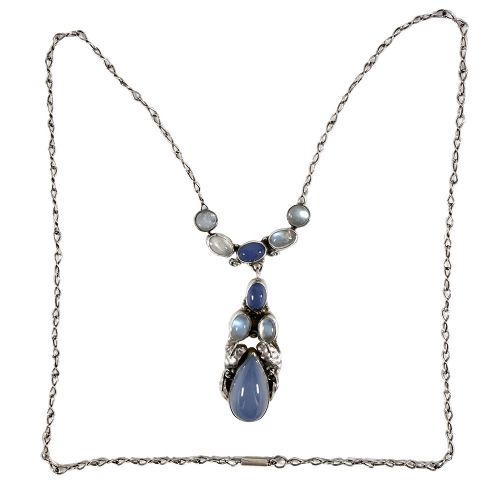
A blue cabochon pendant draws the eye through polished, unfaceted stones such as turquoise, moonstone, sapphire, chalcedony, and apatite set into precious metals. When searching for a blue cabochon pendant, buyers encounter examples stretching from the Victorian era and the Edwardian period through to Art Nouveau, Arts and Crafts designs, and mid-century pieces.
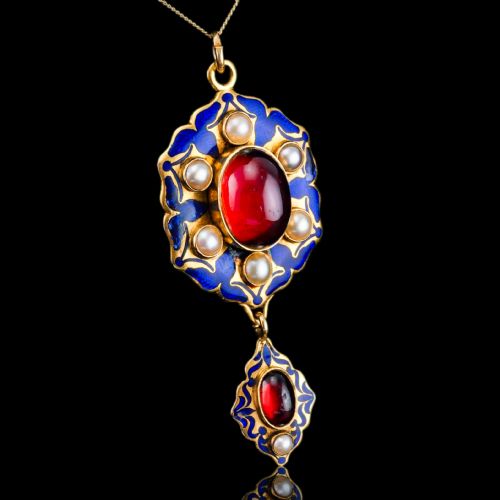
The form appears as single drop pendants, elaborate halo arrangements surrounded by pearls or diamonds, and larger Arts and Crafts creations. Silver and gold settings frame these blue stones, creating distinct profiles that reflect the aesthetic priorities of their respective decades.
Materials and construction
Goldsmiths and silversmiths utilised 9ct gold, 18ct gold, silver, and silver gilt to mount the polished blue gems. These metals were shaped into delicate filigree work, hammered Arts and Crafts mounts, or structured Victorian frames.
Stones were cut and polished into smooth cabochons rather than faceted gems, allowing the natural grain and light play of turquoise, moonstone, and chalcedony to dominate. Artisans often enhanced these central blue stones with seed pearls, enamel, garnets, or diamonds.
Listings feature pieces fashioned from silver and gold, incorporating turquoise, moonstone, chalcedony, sapphire, and enamel across Victorian, Edwardian, and Arts and Crafts styles.
Evaluating craftsmanship and design
Quality rests in the harmony between the polish of the blue cabochon stone and the integrity of the surrounding metalwork. Hand-wrought silver or gold frames by known makers demonstrate superior artistic vision compared to mass-produced settings.
The selection of the blue gem itself dictates the character of the piece, with even colour distribution, secure bezel settings, and complementary secondary stones elevating the overall execution.
Mary Thew·Dorrie Nossiter·Amy Sandheim
The Blue Cabochon Pendant Glossary
- Cabochon
- A gemstone shaped and polished with a smooth, rounded surface rather than faceted edges. This cut highlights the inherent lustre and depth of opaque or translucent stones.
- Arts and Crafts
- A design movement spanning the late nineteenth and early twentieth centuries that prioritised handcraftsmanship and simple, natural forms. Pieces from this style often feature hand-beaten silver and moonstones.
- Holbeinesque
- A Victorian revival style inspired by sixteenth-century ornamentation, characterised by complex geometric metalwork, suspended drops, and rich combinations of gems and pearls.
- Festoon
- A necklace style featuring chains, swags of metal, or beadwork draped across the collarbone, frequently suspending a central pendant drop.
Blue Cabochon Pendant: Frequently Asked Questions
How do I care for my pendant?
Clean silver and gold settings gently with a soft cloth while avoiding harsh chemical dips that damage soft cabochon stones like turquoise and moonstone.
Store the pendant separately in a lined box to prevent scratching from harder jewellery pieces.
Are these pendants suitable for daily wear?
Gold and silver pieces from the Victorian and later eras withstand regular wear when handled with care. Softer gems require mindfulness to avoid impacts against hard surfaces.
Removing the necklace before swimming or heavy physical activity protects the metalwork and stone settings.
How can I date my pendant?
Examine the metal purity marks, fastening types, and stylistic cues such as Art Nouveau whiplash lines or Arts and Crafts hand-beating. Comparing the setting techniques to established Victorian or Edwardian conventions provides a clear timeline.
Maker marks and accompanying chains often offer further clues to the decade of creation.
What chains work best with these pendants?
Match the metal colour and fineness of the chain to the pendant frame, ensuring the suspension ring accommodates the link width. Antique and vintage pieces often pair well with period-appropriate trace or curb chains.
Weight balance remains important so the pendant hangs straight without pulling on delicate links.