

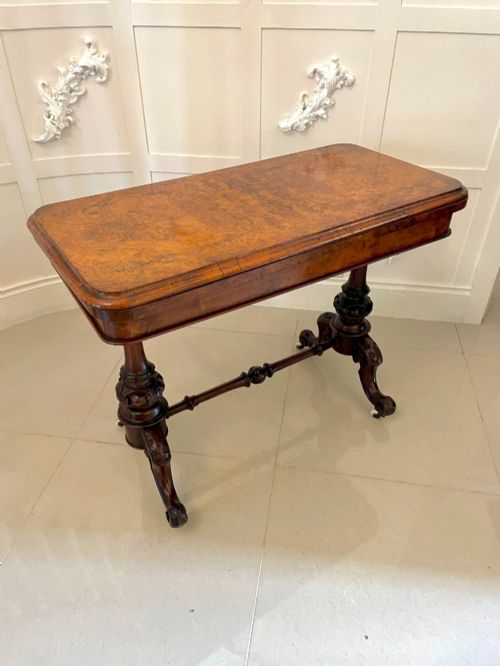
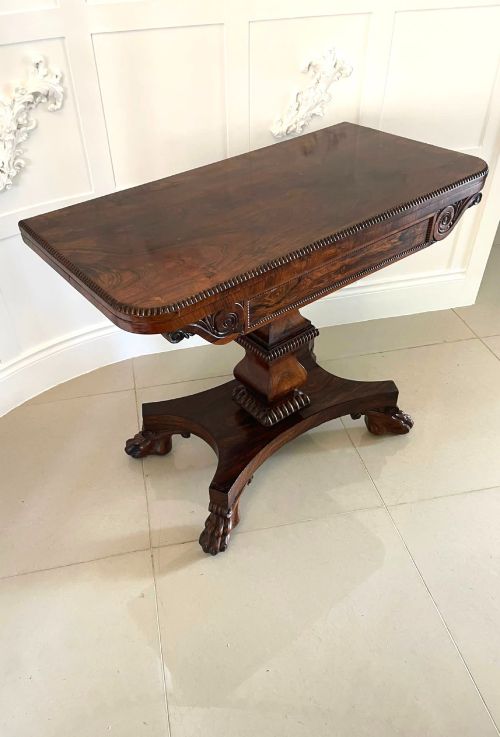
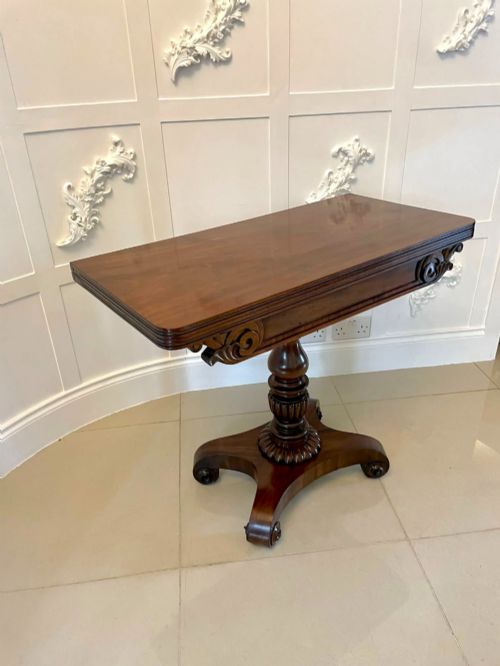
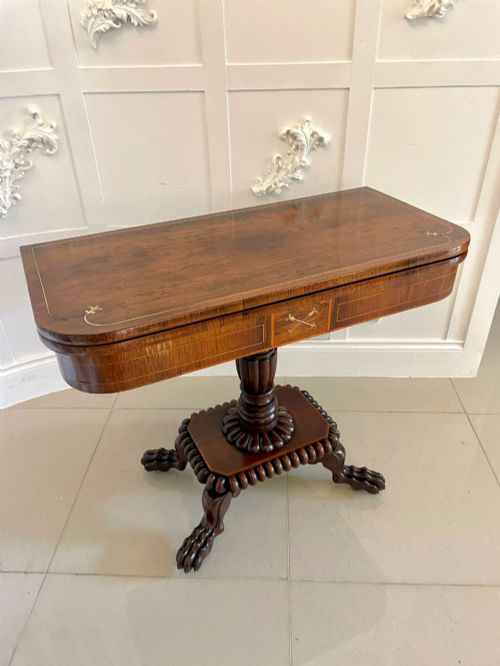

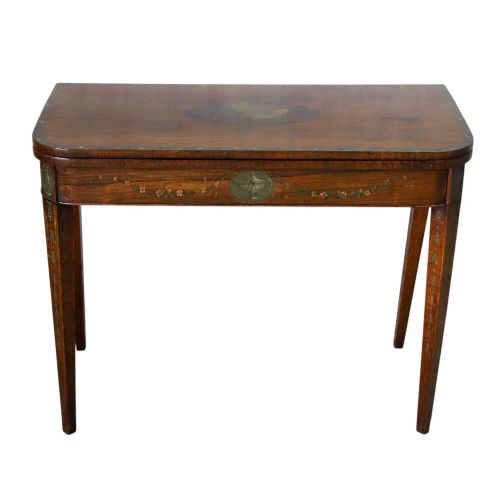


Nineteenth Century Gaming Table
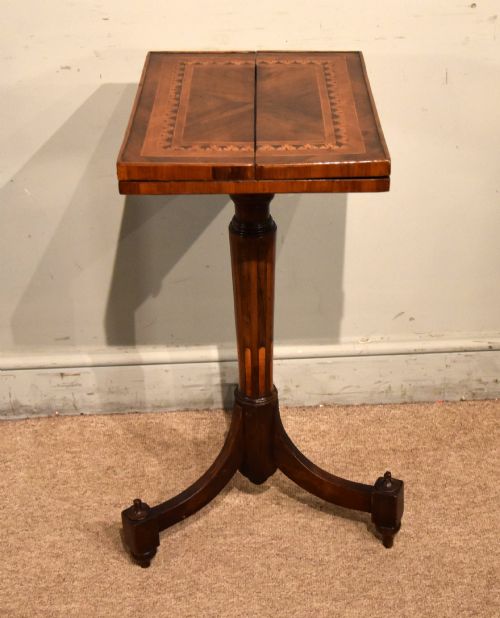
A nineteenth century gaming table brings fold-over baize and polished wood into the drawing room, offering both a surface for cards and a handsome piece of period furniture.
Nineteenth Century Gaming Table
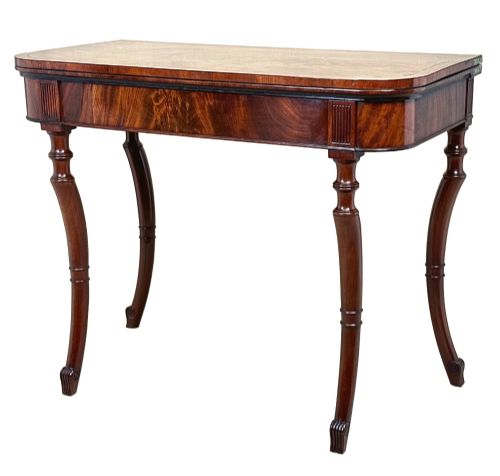
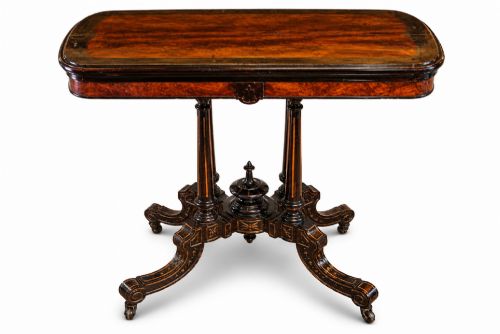
A nineteenth century gaming table serves multiple functions in the period interior, often opening out from a compact console or tea table into a baize-lined surface for cards, chess or backgammon. Buyers searching this phrase most frequently encounter mahogany and rosewood examples from the Regency and Victorian eras, alongside walnut and satinwood variations designed for occasional play.
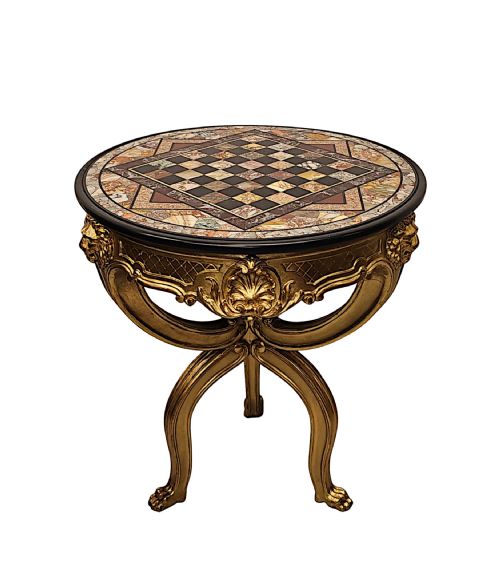
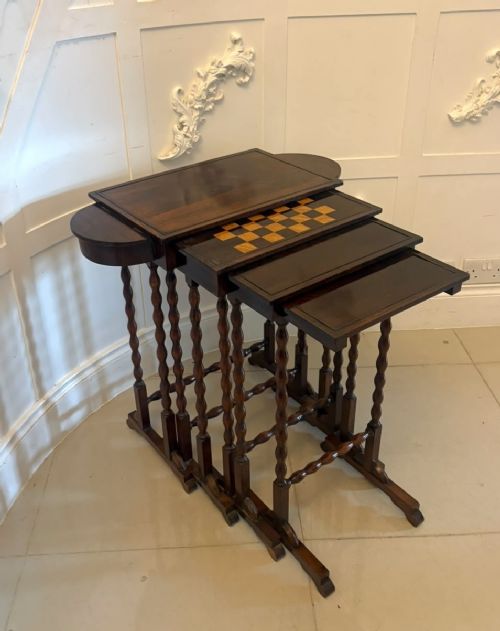
The forms span from fold-over card tables and games-cum-work tables fitted with storage bags to specialised specimen marble chess boards and nested quartetto tables with integrated chess boards. These pieces reflect the social habits of the Georgian, Regency and Victorian periods, where parlour games formed a central part of evening entertainment.
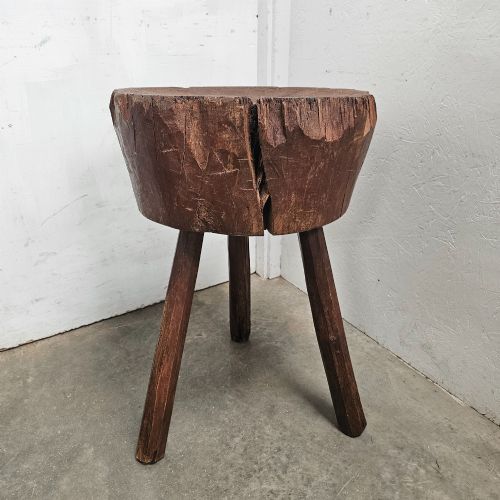
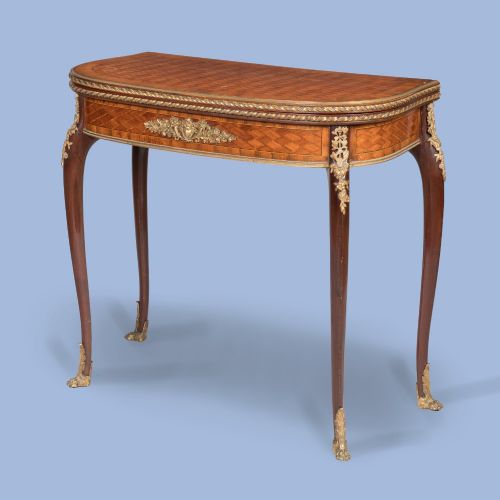
Origins range from English workshops influenced by Gillows or George Bullock to French ateliers utilising parquetry and ormolu mounts. Simpler provincial forms, such as French beech game blocks, also appear alongside grander pedestal and pillar designs supported by carved dolphins, lyres or lion paw feet.
Materials and construction
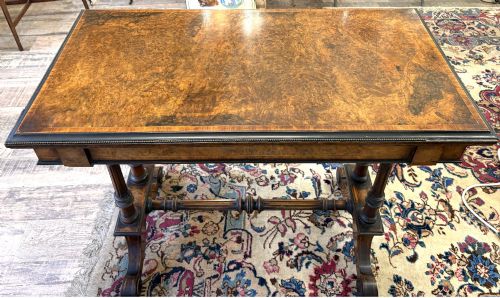
Cabinetmakers constructed these tables using dense hardwoods such as mahogany, rosewood and walnut, frequently applying figured veneers like burr walnut, satinwood and birdseye maple to the primary surfaces. Brass inlay, marquetry and ormolu mounts added decorative contrast to the timber, particularly during the Regency and Louis XV Revival styles.
Internal framing relied on solid secondary woods to support the pivoting or folding top mechanisms that concealed shallow wells for counters and cards. Pedestal bases, turned columns and carved pillar supports distributed the weight of the heavier marble or solid timber tops down to platform bases with brass castors.
Nineteenth Century Gaming Table Retail Price Guide 2026
Typical asking prices for nineteenth century gaming table among the pieces listed under this phrase on Sellingantiques today, from the lower quarter to the upper quarter. They describe what is for sale here now, not the wider market.
Some tables include hidden wells beneath the folding leaves to keep stray dice from rolling onto the parlour carpet.
Evaluating the craftsmanship
Quality rests upon the selection of timber veneers and the precision of the brass inlay or marquetry work across the folding top. Finer examples display continuous grain matching and crisp, deep carving on the pillar supports, whereas simpler iterations rely on plain mahogany or walnut without decorative banding.
The integrity of the hinge mechanism and the smoothness of the pivoting action dictate the mechanical standard of a piece. Superior workshops ensured that tables remained level and stable when opened, maintaining tight joints in the frame even after generations of use.
Gillow and Co·George Bullock·François Linke·William Trotter
The Nineteenth Century Gaming Table Glossary
- Fold-over top
- A hinged table top that opens to double the surface area, frequently revealing a lined playing surface beneath. This design kept gaming cloths hidden when the furniture stood against a wall as a console.
- Parquetry
- Geometric wood-mosaic work used to create decorative patterns on table tops and friezes. Craftsmen arranged contrasting timber veneers in precise diagonal or checkered grids.
- Ormolu
- Gilded bronze mounts applied to the corners, legs and aprons of finer tables. This decorative technique draws upon French cabinetmaking traditions seen in revival styles.
- Quartetto tables
- A nested set of four graduated occasional tables that pull out from beneath one another. Some Regency variants incorporate integrated chess boards on the smallest top.
- Baton
- An internal wooden bar used to lock the folding leaf of a table in position when open. It slides across the frame to support the swinging rear leg.
Nineteenth Century Gaming Table: Frequently Asked Questions
What is a nineteenth century gaming table?
A nineteenth century gaming table is a piece of furniture designed with a fold-over top or specialised surface for playing cards, chess or backgammon. These tables functioned as decorative console or tea tables during the day before opening up for evening entertainment.
They emerged from periods like the Regency and Victorian eras, utilising timbers such as rosewood, mahogany and burr walnut. Many include hidden compartments for storing counters, dice and playing cards.
How do you use a fold-over card table?
To use a fold-over card table, the top leaf is lifted and pivoted ninety degrees to rest upon the extended wooden frame or swing leg. This action reveals a baize or leather playing surface.
When not in use for games, the top folds flat against the base so the piece functions as a standard side table or console against a drawing room wall.
How do I tell Regency from Victorian tables?
Regency gaming tables generally display clean architectural lines, rosewood veneers, brass inlay and classical carved supports like dolphins or lyres. They reflect the influence of designers like George Bullock and Gillows.
Victorian tables tend to feature heavier proportions, burr walnut veneers, ebonised detailing and serpentine aprons. They frequently combine card playing surfaces with sewing wells and wool bags.
Where were these tables placed in a home?
These tables stood against the walls of drawing rooms, parlours and reception rooms when closed. Their compact profiles allowed them to occupy minimal space until needed for social gatherings.
During evening entertainment, hosts moved them into the centre of the room to provide a stable surface for card games and board play.