



Nineteenth Century French Garniture
Nineteenth century french garniture sets combine matching mantel clocks and decorative sidepieces in bronze, porcelain, and marble to anchor a room.
Nineteenth Century French Garniture
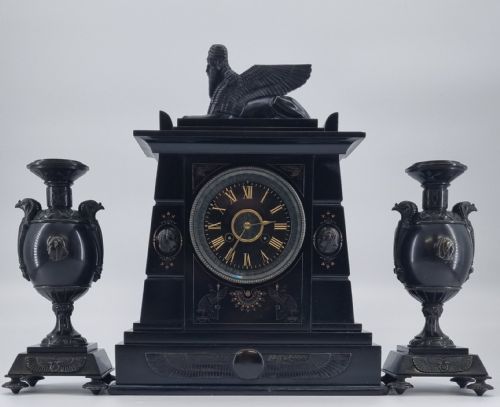
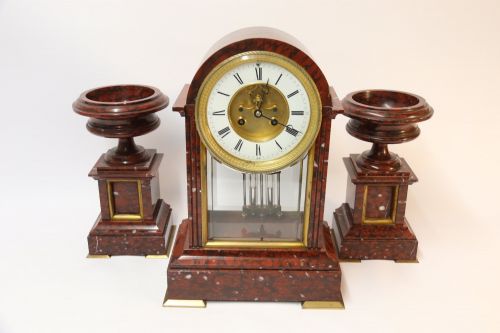
A nineteenth century french garniture typically comprises a central mantel clock accompanied by a matching pair of sidepieces such as candelabra, vases, or urns. These three-piece sets were designed to sit harmoniously upon a mantelpiece, chest, or console table as a unified decorative scheme.
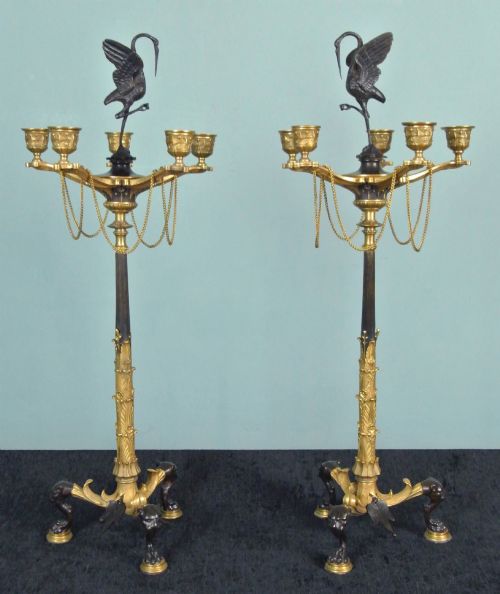
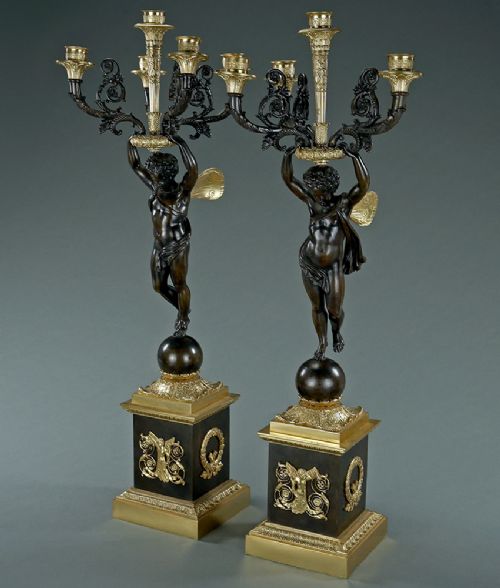
The objects span various stylistic revivals popular across the period, including French Rococo Revival, French Empire, Louis XVI Revival, and Gothic Revival. Pieces range from grand Sevres porcelain sets and marble clock garnitures to bronze and ormolu candelabra.
Buyers encounter matching pairs of vases or urns alongside striking clock sets, often featuring enamel dials or specialised movements. The combinations reflect the diverse aesthetic tastes of nineteenth century interiors, moving from classical formality to ornate decorative display.
Materials and Construction
Maker workshops relied heavily on cast metals, combining gilt bronze, ormolu, patinated bronze, and brass to form structural mounts and intricate decorative figures. These metallic elements were frequently paired with natural stones including white marble, block marble, siena marble, and onyx.
Ceramic elements utilise porcelain, often in the Sevres style or featuring hand-painted panels, alongside glass, enamel details, and painted toleware. Bronze and ormolu components were cast, chased, and gilded to create rich surface contrasts against the polished stone bases.
Materials recorded across the inventory include gilt bronze, ormolu, porcelain, glass, enamel, brass, bronze, patinated bronze, marble, onyx, and toleware.
Evaluating the Pieces
Quality rests in the crispness of the bronze casting and the precision of the ormolu gilding. Superior examples display sharply defined ornamentation, deeply chased details, and harmonious proportions between the central clock and its flanking sidepieces.
The integration of materials dictates distinction, such as the seamless fitting of porcelain panels into gilt bronze mounts or the selection of unblemished marble and onyx. Movement integration by known makers adds further weight to a set.
Barbedienne·Samuel Marti·H Luppens Paris·Vincenti of Paris
The Nineteenth Century French Garniture Glossary
- Garniture
- A set of matching decorative objects, typically a central clock flanked by two matching vases, urns, or candelabra designed for display together.
- Ormolu
- A technique of applying finely ground, high-carat gold to a bronze object using a mercury amalgam, creating a rich golden finish.
- Sevres
- A style of fine French porcelain associated with the royal porcelain factory, frequently characterised by rich blue grounds and hand-painted scenes.
- Toleware
- Painted or lacquered sheet metal items used for decorative domestic wares during the period.
- Candelabra
- Branched candlesticks designed to hold multiple candles, commonly used as sidepieces in a garniture set.
Nineteenth Century French Garniture: Frequently Asked Questions
What is a garniture set?
A garniture set is a matched group of decorative objects designed to be displayed together on a mantelpiece or sideboard. It typically consists of a central clock accompanied by two matching side pieces such as vases, urns, or candelabra.
These sets were created to provide a balanced and harmonious decorative scheme for formal rooms during the nineteenth century.
How do I identify the period?
Period identification relies on examining the stylistic revival, materials, and construction methods used in the pieces. Stylistic markers such as French Rococo Revival, French Empire, or Gothic Revival point toward specific decades within the nineteenth century.
Maker signatures on clock movements or bronze mounts, alongside the specific type of marble or porcelain, help narrow down the date of manufacture.
Were these sets purely decorative?
While highly ornamental, many components served practical functions in nineteenth century homes. Mantel clocks told the time, while matched candelabra provided illumination for rooms before electric lighting was common.
Lidded vases and urns could also function as decorative containers while maintaining visual symmetry on the mantelpiece.
How do I care for marble and ormolu?
Maintenance requires gentle dusting with a soft, dry cloth to prevent the accumulation of dirt on delicate gilt bronze surfaces. Harsh chemical cleaners must be avoided, as they can strip the ormolu gilding or damage vulnerable marble and onyx.
Porcelain elements should be handled with care, using only damp cloths when necessary to preserve painted and enameled details.