





Nineteenth Century Empire Clock
A nineteenth century empire clock brings monumental bronze work and classical architectural forms directly into the domestic interior.
Nineteenth Century Empire Clock
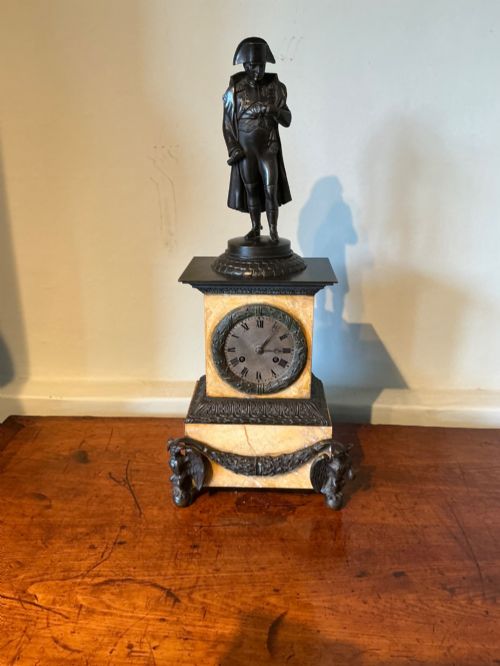
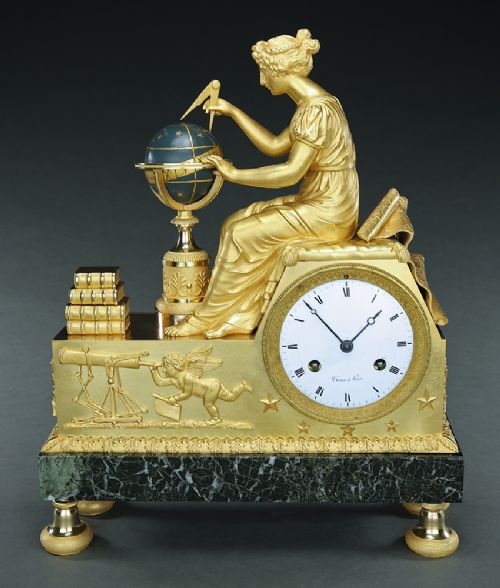
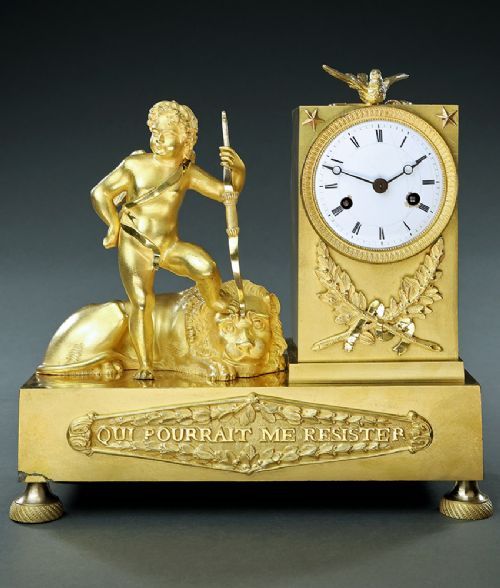
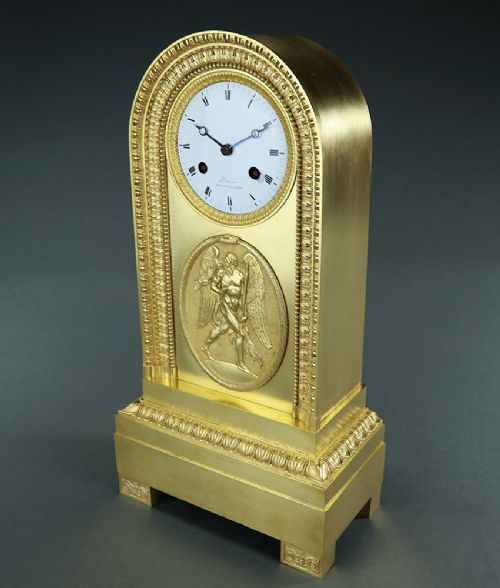
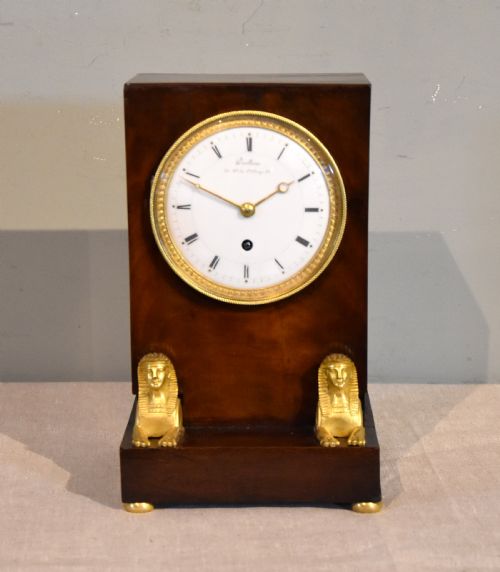
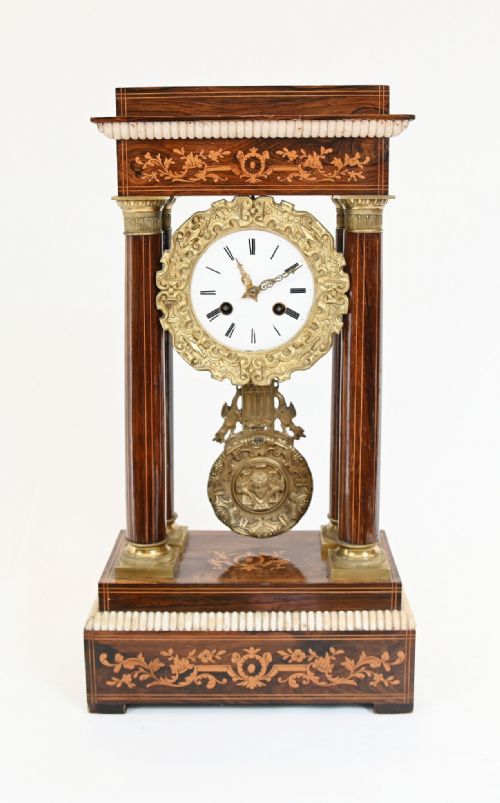
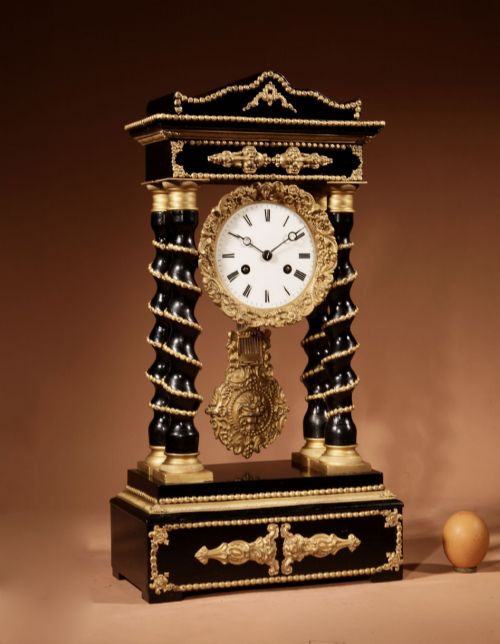
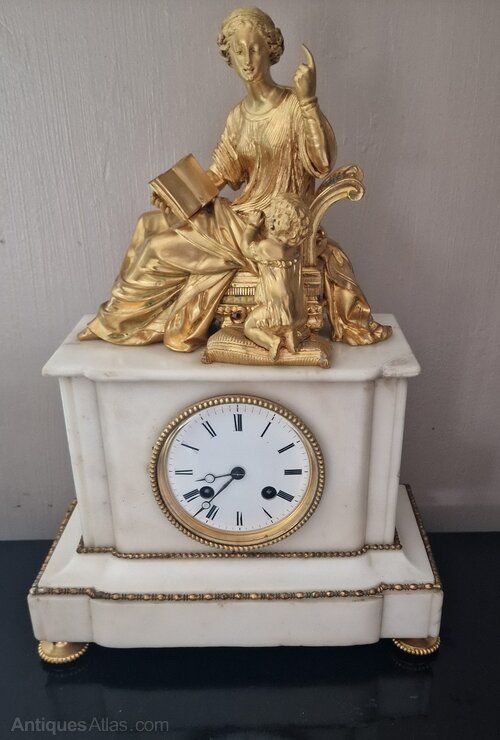
A nineteenth century empire clock typically manifests as a figural mantel clock or a architectural portico design displaying classical themes, mythological figures, or military triumphs. These pieces frequently appear in French Empire, Charles X, and Napoleon III styles, anchoring rooms with substantial presence.
Buyers encounter both striking mantel timepieces and complex mantel clock garnitures alongside occasional longcase clocks. Materials span gilt bronze, ormolu, patinated bronze, and marble, often paired with enamel dials.
The aesthetic draws heavily on French Neoclassical, Egyptian Revival, and Louis XVI Revival vocabularies. Figures such as Napoleon, Cronos, and Urania frequently populate the sculptural mounts of these works.
Materials and construction
Gilt bronze and ormolu provide the brilliant metallic surfaces characteristic of the style, cast and meticulously chased before undergoing mercury gilding. Patinated bronze supplies a contrasting dark metallic finish for figural elements and classical drapery.
White and coloured marble foundations give these timepieces substantial weight and architectural geometry, complemented by intricate marquetry inlay in wood examples and delicate enamel dial faces with painted numerals.
Listings feature gilt bronze, marble, and patinated bronze across nineteenth century French styles.
Evaluating the work
Integration between the sculptural bronze figures, marble plinths, and mechanical movements defines the overall cohesion of the piece. Well-balanced proportions and signed movements by known makers elevate the standing of the clock.
Japy Frères·Charpentier Paris·Vincenti of Paris·Baltazart
The Nineteenth Century Empire Clock Glossary
- Ormolu
- A gilded bronze technique utilising finely ground high-carat gold mercury-gilded to a cast brass or bronze object. This surface treatment creates a rich, lasting metallic lustre seen across many French mantel pieces.
- Portico clock
- A mantel clock built within a distinct architectural framework supported by four freestanding columns. These structures often feature wood inlay or marble construction.
- Garniture
- A matching set consisting of a central clock flanked by decorative side pieces such as candelabra or urns. They create a symmetrical display on a mantelpiece.
- Silk suspension
- A delicate clock movement suspension system where the pendulum hangs from a fine silk thread. This mechanism appears in earlier nineteenth century French timepieces.
- Chain fusee
- A mechanical device maintaining constant driving force on the clock movement as the mainspring unwinds. It ensures consistent timekeeping accuracy.
Nineteenth Century Empire Clock: Frequently Asked Questions
What is a nineteenth century empire clock?
A nineteenth century empire clock is a decorative timepiece inspired by classical antiquity and French imperial design. These clocks typically feature cast bronze figures and architectural marble cases.
They serve as prominent decorative objects as well as working timekeepers, reflecting the aesthetic tastes of the nineteenth century.
How do I wind the movement?
Winding requires a matching key inserted into the dial holes to tension the mainspring barrels. Care must be taken not to over-wind the mechanism.
Most examples run for eight days per wind, though single fusee and timepiece variants operate differently depending on their specific gear train.
Where should I place a portico clock?
A portico clock needs a stable, level surface such as a heavy mantelpiece, sideboard, or dedicated pier table. Because of their marble and bronze weight, sturdy furniture is essential.
Keep them away from direct sunlight, draughts, and damp environments to protect the mercury gilding and delicate internal movements.
How do I identify the period?
Dating relies on stylistic clues such as the transition from strict French Empire Neoclassicism to the softer lines of the Charles X and Napoleon III periods. Details like dial signatures, case materials, and casting techniques offer further chronological markers.
Examining the movement type, such as silk suspension versus anchor escapement, also helps narrow down the decade of production.