



Nineteenth Century Dining Server
A nineteenth century dining server organises the grand business of formal meals with timber and proportion.

Nineteenth Century Dining Server
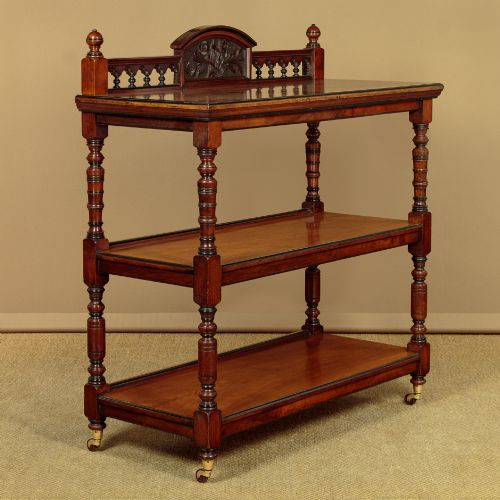
A nineteenth century dining server encompasses the heavy timber sideboards, serving tables, and tiered buffets that populated formal dining rooms throughout the Regency and Victorian eras. These pieces were built to hold silver, linen, and food service equipment close to the table during large meals.
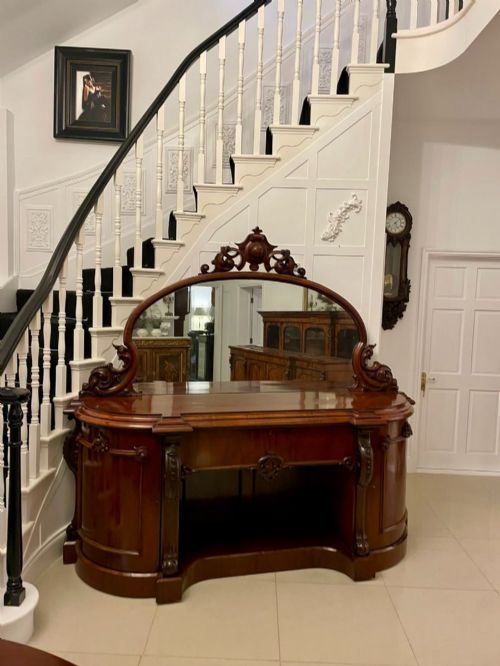
The selections available here range from austere Regency serving tables and inlaid breakfronts to elaborate Victorian mirror-back sideboards and Walnut buffets. Mahogany remains the dominant timber across these forms, appearing alongside walnut, burr elm, and oak.
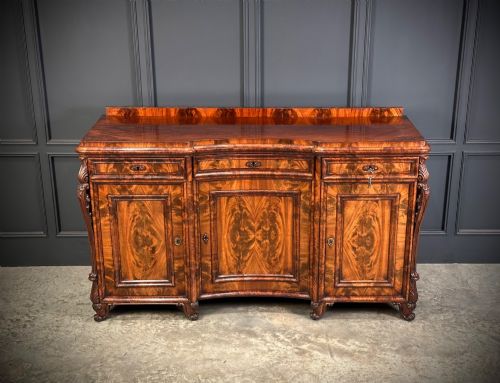
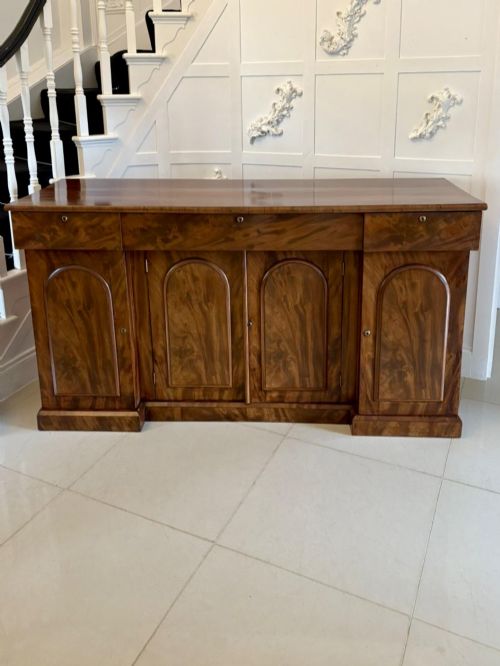
Buyers will most frequently encounter nineteenth century dining server examples finished in figured mahogany and flame mahogany veneer, often featuring pedestals, brass inlay, or carved details characteristic of Victorian and William IV design.
Evaluating Quality and Craftsmanship
The standard of a nineteenth century dining server rests in the selection of its veneers and the precision of its joinery. Superior examples display symmetrical flame mahogany or figured grain that flows naturally across the drawer fronts and cabinet doors without awkward interruptions.
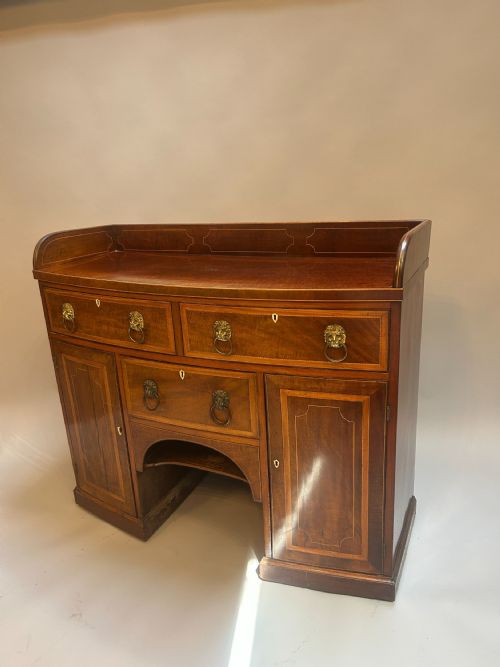
Hardware, inlay work, and carved decoration reveal the tier of the piece. Crisp brass inlay, neatly fitted drawers, and substantial secondary timbers distinguish high workshop production from utilitarian commercial cabinetmaking of the period.
Listings span the Regency, William IV, and Victorian periods, alongside specific years such as 1850, 1860, and 1880.
The Woodworkers Ltd Kilkenny
The Nineteenth Century Dining Server Glossary
- Breakfront
- A cabinet or sideboard whose central section projects forward from the flanking outer sections. This configuration creates visual depth and extra internal storage.
- Dumb waiter
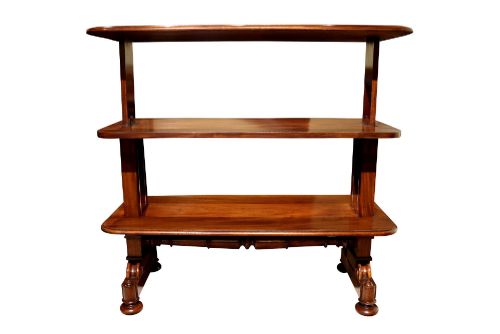
- A tiered piece of furniture, often featuring revolving or rise-and-fall shelves, used to hold dishes near the dining table without requiring servants. These items appeared in various forms throughout the nineteenth century.
- Chiffonier
- A low cabinet, similar to a small sideboard, typically featuring doors enclosing shelves and sometimes a raised superstructure with a mirror or small shelf. They became common storage items in Victorian dining and living spaces.
- Pedestal sideboard
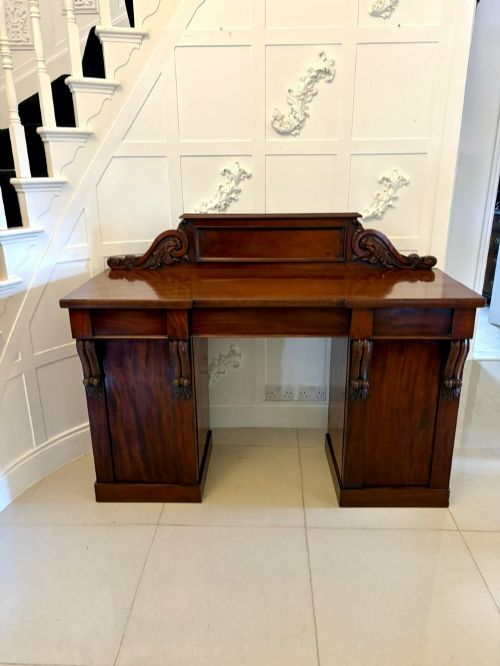
- A heavy dining room piece comprising two distinct pedestals connected by a central board or recessed table section. The pedestals often contained cellarettes or deep drawers for bottles.
- Stringing
- Thin lines of contrasting wood or light-coloured inlay set flush into the surface of a panel or drawer front. Cabinetmakers used ebony and boxwood stringing to define borders on Regency furniture.
Nineteenth Century Dining Server: Frequently Asked Questions
What is a nineteenth century dining server?
A nineteenth century dining server is a heavy timber cabinet, sideboard, or serving table designed to hold tableware and food during formal meals.
These items range from simple Regency serving tables to elaborate Victorian mirror-back sideboards made from mahogany and walnut.
How do I date a sideboard?
Dating relies on identifying stylistic markers, timber choices, and construction methods associated with periods like the Regency, William IV, or Victorian eras.
Brass inlay and ebony stringing point towards early nineteenth-century work, while heavy carved mirror backs are characteristic of the Victorian period.
Where were these pieces used?
These servers were positioned against dining room walls to hold serving dishes, silver, and wine bottles away from the main dining table.
They served as practical storage furniture and decorative centrepieces in nineteenth-century homes.
What woods were commonly used?
Mahogany is the primary timber found in these nineteenth-century dining servers, frequently enhanced with flame mahogany veneer.
Other examples incorporate walnut, burr elm, oak, and contrasting inlay woods like boxwood and ebony.