



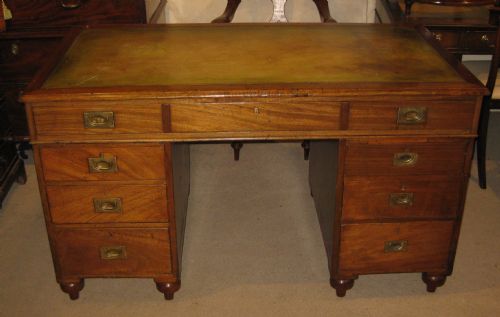

Nineteenth Century Campaign Desk
Nineteenth century campaign desk options combine portable utility with rich timbers, designed for officers on the move.
Nineteenth Century Campaign Desk
Buyers searching for a nineteenth century campaign desk encounter a specialised form of portable writing furniture designed for travel. These pieces reflect the functional requirements of military life during the nineteenth century, ranging from compact writing slopes to larger secretaire chests.
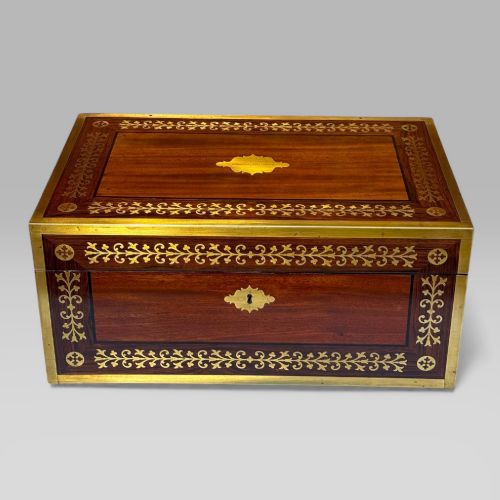
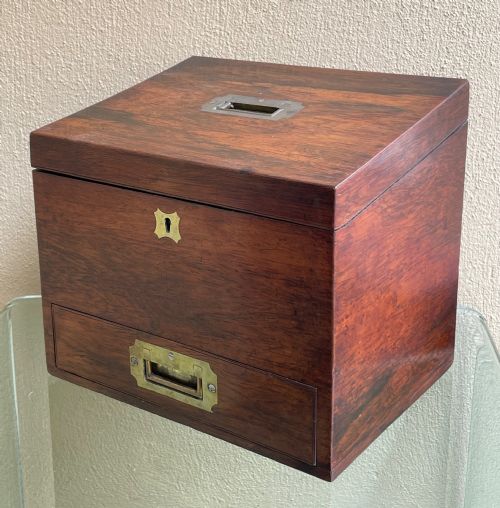
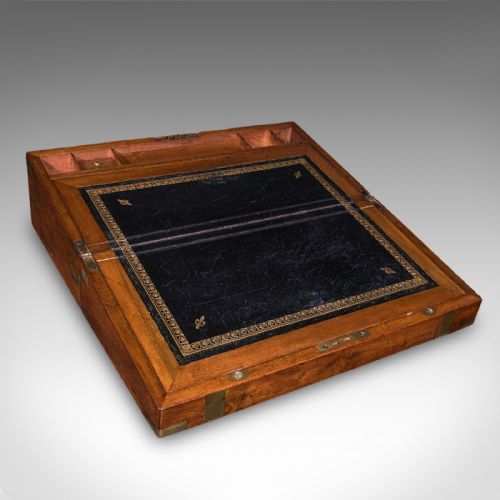
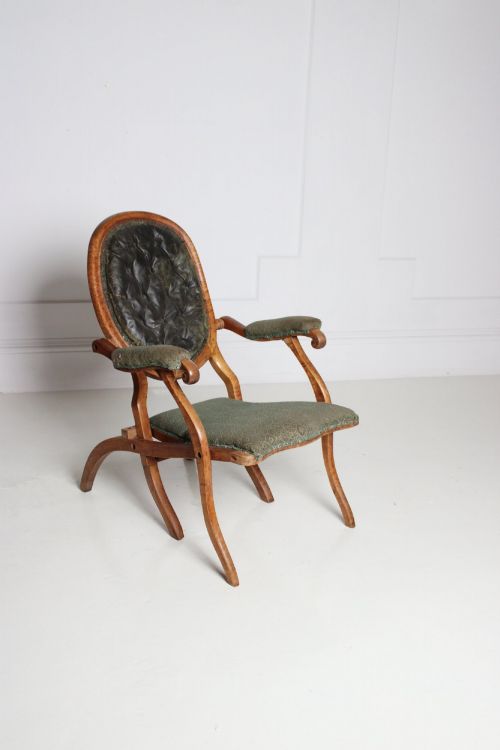
The most common variants on this page include mahogany and rosewood writing slopes, alongside brass-bound writing boxes and folding chairs. Walnut, teak, birds eye maple, and fabric also appear across the selection of desks and chests.
Origins span standard nineteenth century styles to specific Anglo-Indian and British Colonial campaign designs. Makers utilised durable construction to withstand transport across distant territories.
How they were made
Constructed primarily from dense hardwoods like mahogany, rosewood, teak, and walnut, these pieces relied on robust timber to endure rigorous travel. Cabinet makers incorporated birds eye maple for specific internal surfaces to provide textural contrast.
Brass corners, handles, and binding reinforce the edges and joints of boxes and desks, protecting the wood from heavy impact during transit. Inset flush handles and folding mechanisms allow bulky chests and chairs to pack down into manageable proportions.
Captain Fairbrother and Major Whitmore left their names attached to pieces that travelled across the empire.
What varies in quality
The sophistication of the internal fittings and the selection of timber distinguish superior examples from standard utility items. Dense mahogany and figured rosewood paired with precise brass inlay indicate higher workshop standards.
The integration of brass hardware, such as flush-fitting handles and corner braces, demonstrates the maker's attention to practical durability. Elaborate secretaire drawers and fitted writing boxes reveal greater mechanical complexity.
The Nineteenth Century Campaign Desk Glossary
- Campaign desk
- A portable desk designed for military officers, featuring folding elements and protective brass mounts for travel. These items dismantle or fold to ease transportation.
- Writing slope
- A portable box with an angled writing surface that often opens to reveal storage compartments for stationery. They frequently include leather writing inserts.
- Secretaire chest
- A chest of drawers where the top drawer pulls out or folds down to form a writing desk fitted with small compartments. It combines chest storage with writing utility.
- Brass-bound
- Furniture reinforced with brass strips and corners to protect edges from damage during military transit. This detail is characteristic of campaign pieces.
- Anglo-Indian
- Items manufactured in the Indian subcontinent during the British period, often utilising local timbers like teak and rosewood with distinctive decorative carving.
Nineteenth Century Campaign Desk: Frequently Asked Questions
What is a nineteenth century campaign desk?
A nineteenth century campaign desk is portable furniture built for military officers on active service. These pieces utilise clever folding designs and protective brass fittings to survive long journeys.
They encompass writing slopes, secretaire chests, and folding chairs made from dense hardwoods like mahogany and teak. Their primary purpose was to provide a stable writing surface and secure storage in temporary quarters.
How were campaign desks transported?
Campaign desks were built to dismantle, fold, or lock securely into compact boxes for transport on horseback, wagons, or ships. Flush brass handles and recessed hardware prevented snags during loading.
Heavier secretaire chests separated into distinct sections for easier carrying. Every joint and corner was reinforced with brass to withstand rough handling on active campaigns.
What woods were used for campaign furniture?
Cabinet makers relied on durable hardwoods such as mahogany, rosewood, teak, and walnut to resist warping in different climates. These timbers provided the necessary strength for portable furniture.
Some examples incorporate birds eye maple for interior compartments to add visual interest. Brass was the standard metal used for reinforcement and hardware.
How do I identify an Anglo-Indian piece?
Anglo-Indian campaign pieces are identified by their regional timber choices, such as dense teak and exotic rosewood, combined with specific colonial construction methods. They reflect the exchange of British furniture forms with local craftsmanship.
These items often feature brass mounts and folding configurations suited to tropical climates. Their design mirrors standard military requirements while exhibiting regional decorative details.