

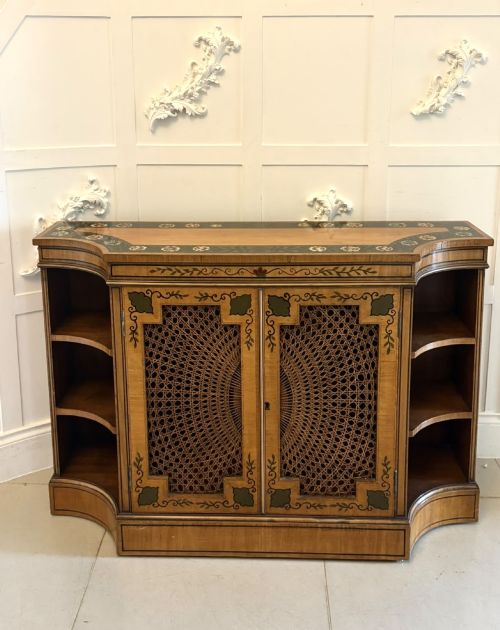
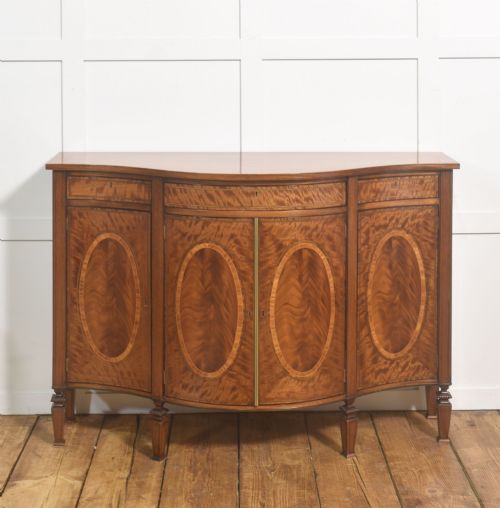
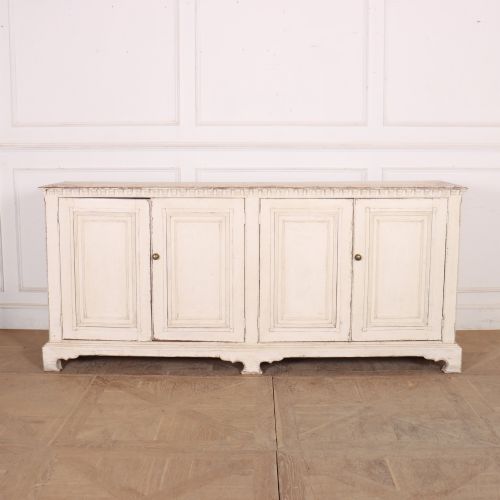
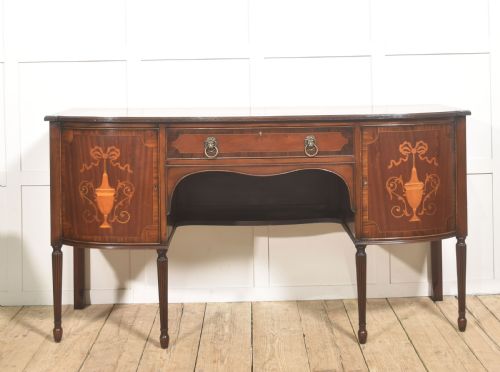


Neoclassical Wooden Sideboard
A neoclassical wooden sideboard brings architectural proportion and disciplined ornament to a dining room, combining classical motifs with timber construction.
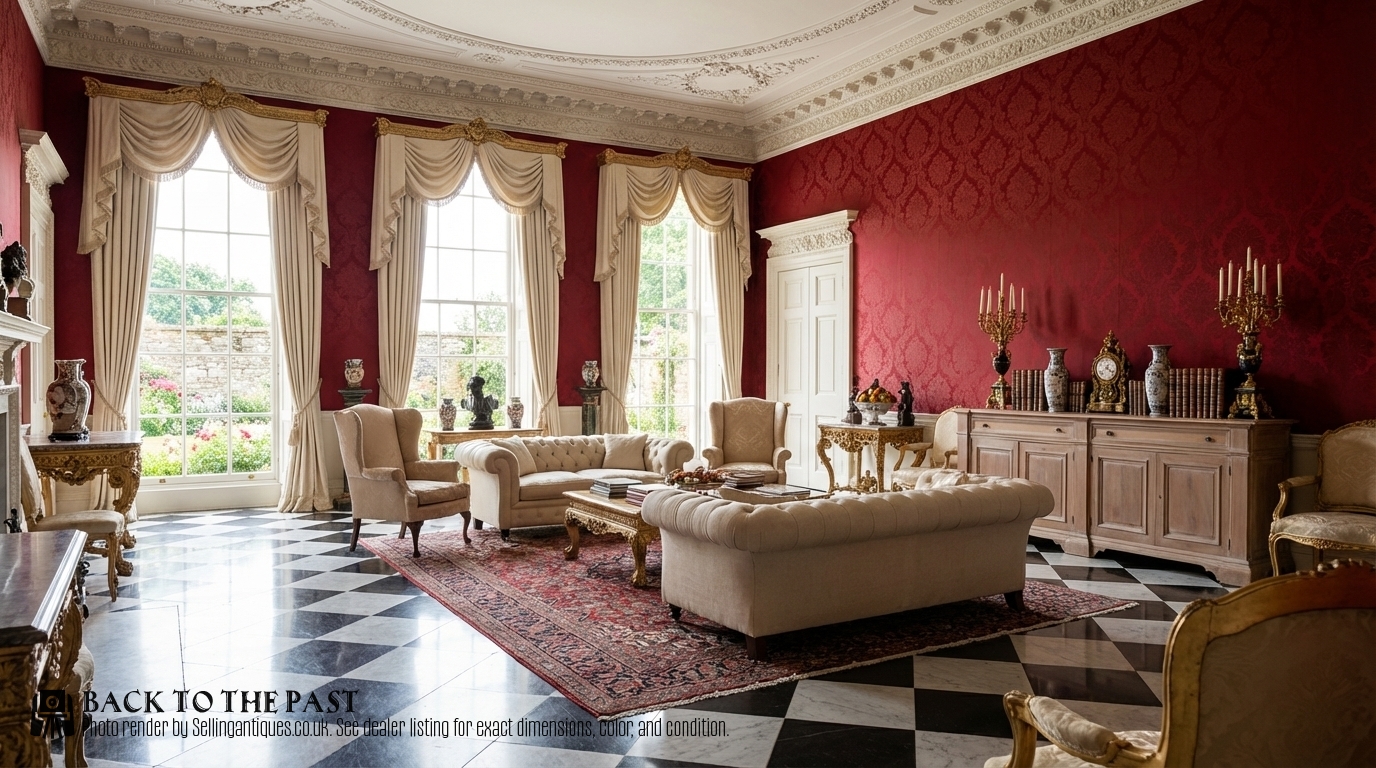
Neoclassical Wooden Sideboard
A neoclassical wooden sideboard serves as a formal dining room serving surface, taking the form of sideboards, serving tables, commodes, and side cabinets. These pieces emerge across periods spanning the eighteenth century through the early twentieth century, including Victorian and 1930 examples.
The aesthetic draws on Georgian, Sheraton Revival, French, Dutch, Italian, and Louis XVI design traditions. Buyers encounter bow-front sideboards, breakfront commodes, and demi-lune cabinets alongside marble-topped commodes and serving tables.
Continental pieces from Italy, Austria, France, and the Netherlands sit alongside English productions. Forms range from strict rectangular enfilades and tambour front cupboards to serpentine chests and carved hall tables.
Distinctions in construction and finish
Quality reveals itself in the precision of the timber matching and the execution of the inlay work, such as satinwood stringing and geometric parquetry. The crispness of carved details and the integration of secondary woods indicate the level of workshop care.
Structural integrity depends on the stability of joints in large forms like breakfront commodes and enfilades, as well as the preservation of original painted surfaces and marble tops. Exhibition quality pieces demonstrate superior proportion, rarer timber selections, and sophisticated hardware execution.
Neoclassical Wooden Sideboard Retail Price Guide 2026
Typical asking prices for neoclassical wooden sideboard among the pieces listed under this phrase on Sellingantiques today, from the lower quarter to the upper quarter. They describe what is for sale here now, not the wider market.
Lord Leverhulme clearly knew a fine serving table when he commissioned one.
Pietro Ferrario·Marsh and Tatham
The Neoclassical Wooden Sideboard Glossary
- Enfilade
- A suite of rooms or a long sideboard aligned in a straight run. This form provides substantial storage and a continuous surface for serving.
- Commode
- A low chest of drawers or cabinet developed in France. These pieces frequently feature marble tops and decorative parquetry.
- Demi-lune
- A half-moon shape used for tables and side cabinets. This curved profile allows the furniture to sit flush against a wall in smaller spaces.
- Parquetry
- Geometric wood inlay patterns resembling mosaic work. Craftsmen use contrasting timbers to create decorative surface designs.
- Tambour
- Slats of wood glued to a canvas backing to form a flexible sliding door. This mechanism conceals cabinet interiors without requiring swinging doors.
Neoclassical Wooden Sideboard: Frequently Asked Questions
What is a neoclassical wooden sideboard?
A neoclassical wooden sideboard is a formal dining or entertaining furniture piece defined by classical architectural lines, symmetrical proportions, and restrained ornamentation.
These items encompass sideboards, serving tables, and commodes produced across British and continental European workshops from the eighteenth century onward.
How were these sideboards used?
Households utilised these pieces in dining rooms and drawing rooms for serving food, displaying silver, and storing cutlery or linens.
Larger forms provided ample surface area during formal meals, while smaller commodes and cabinets served as decorative storage units in reception spaces.
How do I style a wooden sideboard?
Position the piece against a principal dining room wall, allowing its linear form and timber grain to serve as a focal point.
Pair the top surface with compatible serving items, such as cutlery urns or decorative ceramics, keeping surrounding decor balanced and uncluttered.
How can I tell eighteenth century pieces apart?
Eighteenth century examples rely on authentic period construction techniques, native timber ageing, and traditional joinery methods appropriate to their regional origin.
Later revivals, such as Sheraton Revival pieces from the early twentieth century, imitate these earlier aesthetic vocabularies using contemporary workshop standards.